


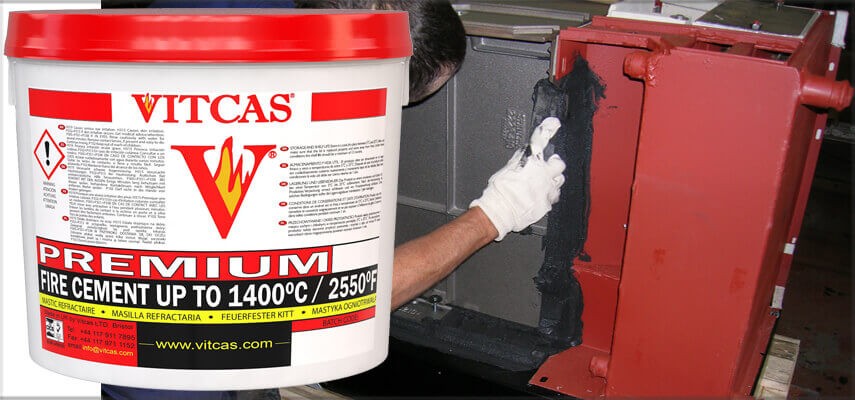

Refractory & Heat Resistant Materials
Refractory Materials - High-Performance Heat Resistant Solutions
Vitcas supplies refractory materials for the construction, installation, maintenance and repair of industrial equipment operating at high temperatures. The range includes refractory mortars, castables, plastic mouldables, specialist coatings, zircon refractories, fire cements and repair compounds for use in furnaces, kilns, boilers, foundries and other thermal processing equipment.
Designed for professional, trade and industrial users, these products cover different application methods and service conditions. Select the refractory according to its required function, operating temperature, substrate and exposure conditions, always checking the individual product specification before use.
Refractory Materials for Industrial Installation, Maintenance & Repair
Refractory materials are used where conventional construction materials are unsuitable for sustained exposure to high temperatures. Within industrial installations, different refractory products perform specific functions, from setting refractory brickwork and forming linings to repairing worn areas, sealing joints and protecting refractory surfaces.
The Vitcas range brings together a variety of refractory product types for engineers, refractory installers, maintenance teams, production facilities and technical buyers carrying out new installations, planned maintenance and repairs.
Refractory Mortars for Brickwork & Jointing
Refractory mortars are used for setting and jointing fire bricks and other refractory components. The range includes air-setting and hydraulic products for different applications and service conditions.
Depending on the grade, refractory mortar may be suitable for setting, dipping, coating, patching or other installation work involving refractory brickwork and associated materials. Selection should take account of the required temperature rating, application method and compatibility with the materials being joined.
Refractory Castables for Linings & Repairs
Refractory castables are used to form or repair refractory sections where a monolithic material is required. The range includes both dense refractory castables and insulating grades for different lining and maintenance requirements.
Applications can include furnace and kiln linings, boiler components, incinerators, burner areas and other high-temperature installations. As individual castables differ in their properties and service temperatures, the grade should be selected for the specific location and operating conditions.
Plastic Mouldable Refractories for Localised Repairs
Plastic mouldable refractories provide a practical option where refractory material needs to be shaped, packed or formed around the area being repaired.
Products in this group are suitable for selected industrial maintenance applications, including repairs to boiler linings, boiler doors, ladles, launders and induction furnace components. Their mouldable form is particularly useful for localised repairs and irregular areas where brickwork or a poured castable may not be the most appropriate solution.
Refractory Coatings & Zircon Refractories
Refractory coatings are applied to suitable refractory and high-temperature surfaces where an additional protective layer is required for the operating environment.
The range also includes zircon refractory products for specialist industrial applications. Depending on the individual product, these may be used with furnaces, ladles, ceramic fibre linings, induction furnaces and refractory surfaces exposed to molten alloys or glass.
Compatibility with the substrate, process materials and operating temperature should always be confirmed from the individual product specification.
Fire Cements & Refractory Repair Compounds
Fire cements and refractory repair compounds are used for sealing, filling, luting and repairing selected high-temperature areas. They are particularly useful where a localised repair or seal is required rather than the installation of a complete refractory lining.
The correct product depends on the type of repair, the materials involved and the service conditions. Fire cement, refractory mortar and mouldable repair compounds perform different functions and should not be treated as interchangeable products.
Industrial Applications for Refractory Materials
Refractory products are used throughout industries where equipment is exposed to sustained high temperatures and demanding operating environments. Typical applications include:
- industrial furnaces and heat treatment equipment;
- kiln linings and kiln maintenance;
- boilers and combustion areas;
- incinerator linings;
- foundries and metal processing;
- ladles and launders;
- induction furnace components;
- refractory brickwork;
- ceramic and glass processing equipment.
Not every refractory material is suitable for every application. Temperature is an important selection criterion, but the installation method, substrate, existing refractory system and exposure to mechanical wear, molten materials or chemically aggressive conditions may also affect product choice.
Choosing the Right Refractory Material
Before selecting a refractory product, compare its specification with the actual installation and operating conditions.
- Application – establish whether the material is required for brick setting, lining, patching, sealing, coating or another specific task.
- Service temperature – use the stated temperature rating of the individual product rather than a category-wide figure.
- Product format – choose between mortar, castable, plastic mouldable, fire cement, coating or repair compound according to the installation method.
- Substrate and compatibility – check that the product is suitable for the refractory brick, ceramic fibre, existing lining or other material involved.
- Operating conditions – consider exposure to thermal cycling, mechanical wear, molten materials, slag or chemicals where relevant.
- Preparation and application – establish whether the product is supplied ready mixed, requires preparation with water or uses another installation method.
- Setting, curing and drying – follow the instructions for the individual product before bringing newly installed or repaired equipment into service.
For specialist industrial installations or particularly demanding process conditions, product selection should be based on the complete technical specification rather than temperature resistance alone.
Frequently Asked Questions
What are refractory materials used for?
Refractory materials are used to construct, install, maintain and repair equipment exposed to high operating temperatures. Depending on the product, applications can include furnace and kiln linings, refractory brickwork, boilers, incinerators, foundry equipment and other thermal processing installations. Different refractory formats perform different functions, so the material should be selected according to the specific task and service conditions.
How do I choose between fire cement, heatproof mortar and a refractory repair compound?
Choose the material according to the type of work being carried out. Fire cement is commonly used for sealing joints and smaller high-temperature repairs, while heatproof or refractory mortar is primarily used for bonding and jointing fire bricks and other refractory components. A refractory repair compound or plastic mouldable may be more suitable where damaged, irregular or localised sections need to be filled or rebuilt. Always check the individual product specification for temperature and application suitability.
What is the difference between refractory mortar and refractory castable?
Refractory mortar is primarily used for setting and jointing refractory bricks and components, whereas refractory castable is used to form or repair larger refractory sections and linings. Castables create a monolithic refractory section rather than joints between individual bricks. The correct choice depends on the construction or repair method, required service temperature and operating environment.
When should I use a plastic mouldable refractory?
A plastic mouldable refractory is useful when material needs to be shaped, packed or formed into a localised repair area. Products within the range are suitable for selected applications including boiler repairs, ladles, launders and induction furnace components. Check the individual specification because mouldable refractories differ in their temperature ratings and intended industrial uses.
How do I choose the correct temperature rating for a refractory material?
Choose a product with a stated service temperature suitable for the location in which it will be installed. Temperature ratings differ between refractory mortars, castables, mouldables, fire cements, coatings and repair compounds. Do not assume that every product within the category has the same maximum temperature; always check the specification of the individual material before selection.
Are all refractory materials suitable for furnaces and kilns?
No. Refractory materials should be selected according to their intended function as well as their temperature rating. Some products are designed for setting brickwork, some for forming linings, while others are intended for patching, sealing, coating or specialist repairs. Substrate, installation method and operating conditions should therefore be considered before selecting a material for a furnace or kiln.
What are zircon refractory products used for?
Zircon refractory products include specialist coatings, cements and other materials for selected industrial applications. Depending on the individual product, uses may include furnaces, ladles, ceramic fibre linings, induction furnaces and refractory surfaces exposed to molten alloys or glass. Suitability should always be checked against the individual product specification and the materials it will contact.
Can refractory materials be used to repair an existing lining?
Yes. Selected refractory products are specifically intended for repair and maintenance work. Depending on the lining and type of damage, suitable options may include refractory castables, plastic mouldables and patching compounds. The existing refractory material, extent of deterioration, operating temperature and service conditions should all be considered when choosing a repair product.
Do refractory mortars and fire cements need to cure before heating?
Yes, products of this type normally require the appropriate setting, drying or curing procedure before exposure to operating temperatures. Air-setting mortars, hydraulic materials, castables, fire cements and other refractory products can have different requirements. Follow the instructions for the specific product, including any stated drying time or controlled initial heating procedure.