
Heat Resistant Adhesives
Heat Resistant Adhesives - Bonding Solutions for High-Temperature Environments
Vitcas heat resistant adhesives are for bonding refractory, insulation and construction materials used in high-temperature installations. The range includes ceramic fibre adhesives, heat resistant board adhesives, rapid-setting bonding compounds and specialist refractory cements for applications involving ceramic fibre, insulation boards, refractory brickwork and other heat-exposed materials.
Suitable for professional, trade and industrial projects, these products are used in furnace and kiln insulation, refractory construction, thermal enclosures and other high-temperature assemblies. Adhesives within the range differ in temperature rating, setting method, substrate compatibility and intended use, so the correct product should be selected according to the materials being bonded and the operating conditions.
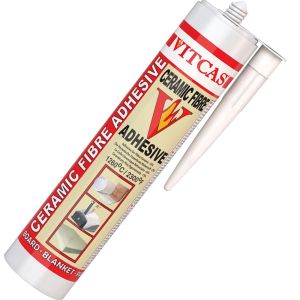 CFA - Ceramic Fibre AdhesiveSpecial Price £11.99 £9.99 Regular Price £23.99 £19.99
VITCAS CFA Ceramic Fibre Adhesive is a versatile bonding solution for ceramic fibre products like blankets, boards, and modules. Ideal for affixing insulation to brick, concrete, or metal, it’s perfect for reinforcing forge interiors or insulating wood-fired ovens.
Read more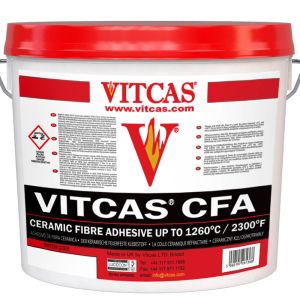 CFA - Ceramic Fibre Adhesive-VitcasAs low as £11.99 £9.99 Regular Price £23.99 £19.99
CFA - Ceramic Fibre Adhesive is a high-temperature, air-setting cement that is specifically designed for use as an adhesive for sticking ceramic fibre materials to brickwork, pizza ovens, or metal. This silica-based adhesive is ideal for use in a wide range of applications where high temperatures are involved, and a strong, durable bond is required.
Read more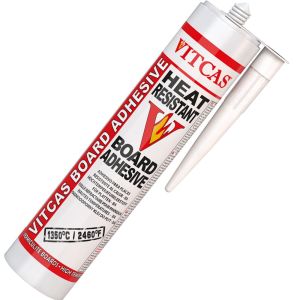 BA - Heat Resistant Board AdhesiveSpecial Price £11.99 £9.99 Regular Price £23.99 £19.99
Vitcas Heat Resistant Board Adhesive (310ml) is capable of withstanding temperatures up to 1350°C. It is ideal for jointing and adhering high-temperature plasterboards, vermiculite boards, insulation boards, and construction boards to brickwork or blockwork. Perfect for use in high-temperature applications.
Read more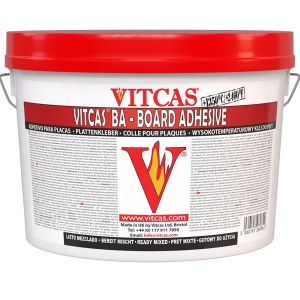 BA - Heat Resistant Board Adhesive 1300°CSpecial Price £23.99 £19.99 Regular Price £35.99 £29.99
Vitcas Board Adhesive - a specially formulated, heat resistant adhesive ideal for securing and sealing joints across a wide range of boards. This includes Vermiculite Board, High Temperature Plasterboard, Fireplace Construction Board, among other insulation and fireproof boards. Uniquely designed to handle extreme conditions, Vitcas Board Adhesive can resist temperatures up to an impressive 1350°C.
Read more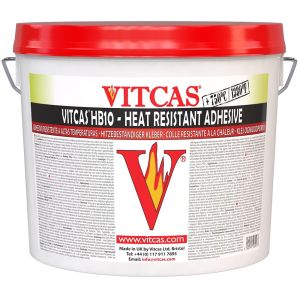 HB10-Rapid Setting Adhesive 750°CAs low as £23.99 £19.99 Regular Price £35.99 £29.99
VITCAS HB10 Rapid Setting Heat Resistant Adhesive for building fireplaces, stoves, tiled stoves and especially with heat accumulation boards. The short working time and setting time facilitates continuous construction without waiting for the material to set.
Read more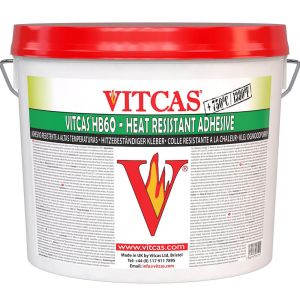 HB60-Hydraulic Bonded AdhesiveAs low as £23.99 £19.99 Regular Price £35.99 £29.99
Vitcas HB60 is a hydraulically setting, heat-resistant adhesive formulated for fixing tiles, fire bricks, and for use in the construction of stoves, wood-fired pizza ovens, tiled stoves, barbecue grills, and fireplaces. It is also suitable for gap filling and offers an extended working time, allowing for accurate positioning and adjustment during installation.
Read more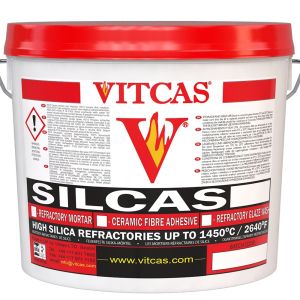 Silcas 1CSpecial Price £59.99 £49.99 Regular Price £70.80 £59.00
Vitcas Silcas 1C- a high silica content, high temperature resistant, air setting cement. The maximum service temperature at which the refractory silica-based cement can be exposed to is 1550°C/2820°F. The high silica, heatproof mortar was especially designed for use with Grade 30 insulating bricks.
Read moreEnquire about this product
Heat Resistant Adhesives for Industrial Bonding & Refractory Installation
High-temperature bonding applications require adhesives that are compatible with both the materials being joined and the thermal conditions of the installation. Temperature resistance alone is not sufficient when selecting a product; the substrate, application method, setting characteristics and function of the bonded assembly must also be considered.
The Vitcas range includes adhesives and refractory bonding compounds for installing ceramic fibre insulation, fixing high-temperature boards, joining compatible refractory materials and completing specialist high-temperature construction work.
Ceramic Fibre Adhesives for High-Temperature Insulation
Ceramic fibre adhesives are designed specifically for bonding ceramic fibre products such as blankets, boards and modules to compatible surfaces including brickwork, concrete and metal.
These products are particularly relevant to furnace, kiln, forge and other thermal insulation systems where ceramic fibre needs to be secured as part of the lining or insulation assembly. Vitcas Ceramic Fibre Adhesive is silica based and air setting, with individual products in the range specified for high-temperature service.
The substrate and ceramic fibre product should always be checked for compatibility before installation, together with the stated application and curing requirements.
Heat Resistant Board Adhesives for Thermal Construction
Heat resistant board adhesives are formulated for fixing and jointing compatible boards used in high-temperature construction and insulation systems.
Vitcas Board Adhesive can be used with materials including high-temperature plasterboard, vermiculite board, insulation board and other compatible construction boards, with products available for bonding to suitable brickwork or blockwork.
Board adhesives in this category are rated for high-temperature service, but the temperature limit and substrate requirements should be checked on the individual product page before use.
Rapid-Setting Adhesives for High-Temperature Assembly
Rapid-setting heat resistant adhesives are useful where a shorter working and setting time is required during construction. Vitcas HB10 is formulated for high-temperature building applications involving materials such as heat accumulation boards and other compatible components.
The shorter setting time can support sequential construction work where waiting between stages needs to be reduced. Because rapid-setting products provide less time for adjustment, materials should be positioned accurately and the manufacturer's preparation and application instructions followed carefully.
Silica-Based Refractory Cements for Insulating Brickwork
The range also includes high-silica refractory cement for specialist bonding applications. Vitcas Silcas 1C is an air-setting, silica-based refractory cement designed specifically for use with Grade 30 insulating bricks.
With a stated maximum service temperature of 1550°C, it is intended for high-temperature refractory applications where its specified material compatibility and temperature capability are required. This rating applies to Silcas 1C specifically and should not be treated as the service temperature of other adhesives within the category.
Industrial Applications for Heat Resistant Adhesives
Heat resistant adhesives are used in a range of thermal construction, insulation and refractory installation tasks. Depending on the selected product, applications may include:
- industrial furnace insulation and lining systems;
- kilns and other thermal processing equipment;
- ceramic fibre blanket, board and module installation;
- high-temperature insulation boards;
- vermiculite board assemblies;
- refractory and insulating brickwork;
- heat accumulation board construction;
- thermal enclosures and high-temperature construction systems.
The correct adhesive depends on the materials being bonded and the function of the assembly. A ceramic fibre adhesive, board adhesive and refractory cement are formulated for different applications and should not be treated as interchangeable simply because they all resist high temperatures.
Choosing the Right Heat Resistant Adhesive
Before selecting an adhesive, compare the product specification with the materials, installation method and expected service conditions.
- Materials being bonded – identify whether the installation involves ceramic fibre, insulation board, vermiculite board, refractory brick or another compatible substrate.
- Service temperature – check the stated temperature rating of the individual adhesive rather than assuming that all products in the category have the same limit.
- Substrate compatibility – confirm suitability for brickwork, blockwork, concrete, metal or other surfaces involved in the installation.
- Application method – consider whether the product is supplied ready mixed, requires preparation or is intended for a specific installation technique.
- Setting characteristics – distinguish between air-setting, rapid-setting and other formulations according to the time available for positioning and assembly.
- Thermal conditions – consider the expected operating temperature and other service conditions relevant to the installation.
- Curing and first heating – follow the product-specific drying, curing and commissioning instructions before exposing the bonded assembly to operating temperatures.
The adhesive with the highest temperature rating is not necessarily the correct choice. Product selection should begin with the materials being bonded and the required function, followed by confirmation that the temperature rating and installation requirements are suitable.
Frequently Asked Questions
Which adhesive is heat resistant?
Heat resistant adhesives include ceramic fibre adhesives, high-temperature board adhesives, refractory cements and other specialist bonding compounds. Each formulation is designed for particular substrates and operating conditions, so ordinary multipurpose adhesive should not be used as a substitute. Select a product whose intended application, compatible materials and stated service temperature match the installation.
What is the difference between ceramic fibre adhesive and heat resistant board adhesive?
Ceramic fibre adhesive is formulated specifically for bonding ceramic fibre materials such as blankets, boards and modules to compatible surfaces. Heat resistant board adhesive is intended for fixing and jointing compatible construction and insulation boards, including high-temperature plasterboard and vermiculite board. The two products serve different installation purposes and should be selected according to the material being bonded.
What glue can withstand 1000 degrees?
Several specialist refractory and heat resistant adhesives have service temperatures above 1000°C, but the correct product depends on the substrate and application. Vitcas products within this category include board adhesives, ceramic fibre adhesives and refractory cements with different temperature ratings. Always confirm whether the required temperature is stated in Celsius or Fahrenheit and check the individual product specification before use.
Is there a glue that doesn't melt with heat?
Inorganic refractory adhesives and cements are designed for high-temperature applications where conventional household adhesives would be unsuitable. Rather than relying on a general claim that an adhesive will not melt, select the product according to its stated service temperature, material compatibility and intended application. No adhesive should be assumed to withstand unlimited heat.
What glue can withstand 500 degrees?
Heat resistant adhesives with a stated service temperature above 500°C may be suitable, provided they are also compatible with the materials being bonded. Products in this category are designed for different substrates including ceramic fibre, insulation boards and refractory materials. If the requirement is 500°F rather than 500°C, convert the temperature before comparing it with the product specification.
Can heat resistant adhesive be used on ceramic fibre insulation?
Yes, but a product designed specifically for ceramic fibre should be used. Ceramic Fibre Adhesive is formulated for bonding ceramic fibre blankets, boards and modules to compatible substrates such as brickwork, concrete or metal. Check the individual product instructions for application, setting and temperature requirements before installing the insulation.
Can heat resistant adhesive be used for refractory bricks?
Selected refractory bonding products can be used with specified refractory or insulating bricks, but suitability depends on the formulation. For example, Silcas 1C is specifically designed for Grade 30 insulating bricks. Do not assume that a board adhesive or ceramic fibre adhesive is suitable for refractory brickwork unless that use is stated in the individual product information.
How do I choose an adhesive for parts exposed to extreme temperatures?
Start with the materials being bonded, then check the maximum service temperature, substrate compatibility, setting method and installation requirements. Ceramic fibre, high-temperature boards and refractory bricks may each require a different adhesive. The highest temperature rating does not automatically indicate the best product if the adhesive is not designed for the substrate or type of assembly.
What is the advantage of a rapid-setting heat resistant adhesive?
A rapid-setting adhesive reduces the waiting time between stages of suitable high-temperature construction work. Vitcas HB10 has a short working and setting time, allowing installation to continue without a prolonged delay while the material sets. The shorter working period also means that components need to be positioned promptly and accurately during application.
Do heat resistant adhesives require heat curing?
Not every heat resistant adhesive uses the same curing method. Some products are air setting, while others have different setting and drying requirements. The adhesive should be allowed to set or cure according to its individual instructions before the installation is exposed to operating temperatures. Do not apply a single curing procedure to every product within the category.
Can I use the same high-temperature adhesive for boards, ceramic fibre and refractory bricks?
Not necessarily. These materials can require different adhesive formulations. Ceramic fibre adhesives are designed for fibre insulation products, board adhesives for compatible high-temperature boards, and specialist refractory cements may be specified for particular refractory bricks. Matching the adhesive to the substrate is as important as checking its temperature rating.