
Decorative Coloured Fire Bricks
Coloured Fire Bricks for Fireplaces, Pizza Ovens and Barbecues
VITCAS coloured fire bricks combine refractory fireclay performance with a decorative finish for fireplaces, wood-fired bread and pizza ovens, barbecues and other compatible high-temperature features. Colour options include subtle red, antique off white, sand yellow, earthy brown and charcoal black, with temperature capability up to 1200°C.
Suitable for compatible indoor and outdoor installations, these decorative fire bricks allow refractory performance to be coordinated with traditional or contemporary designs. Select the colour, brick format and jointing system to suit the required layout, exposed face and installation conditions.
As with other fired ceramic materials, natural variation in shade and dimensions can occur. Visible brickwork should therefore be dry-laid where appearance and pattern are important, and the complete fireplace, oven or barbecue system should be designed according to its own thermal and construction requirements rather than brick temperature rating alone.
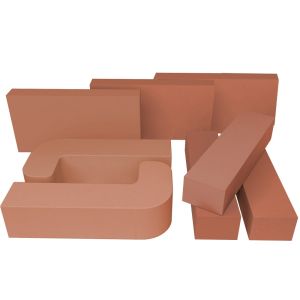 VITCAS Fire Bricks-Red£3.00 £2.50 Regular Price £4.80 £4.00
Red Fire Bricks, expertly manufactured for both function and beauty. These red-hued bricks are perfect for adding a touch of colour and elegance to any setting. Ideal for use in fireplaces, wood-fired ovens, barbeques, and other heating applications, they not only enhance the aesthetic appeal of your space but also provide durable and efficient heat resistance.
Read more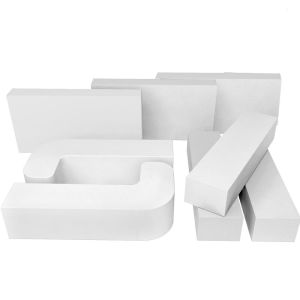 Vitcas-Fire Bricks-White£3.00 £2.50 Regular Price £4.80 £4.00
Coloured Fire Bricks in an antique Off White shade. These firebricks are perfect for decorative purposes in both interior and exterior settings. Ideal for use in wood-fired bread and pizza ovens, barbeques and fireplaces, they add a sophisticated touch to any space while offering functional versatility.
Read more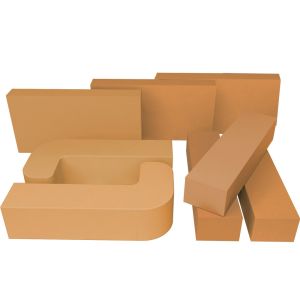 Vitcas-Fire Bricks-Yellow£3.00 £2.50 Regular Price £4.80 £4.00
Sand Yellow Fire Bricks - where functionality meets a warm aesthetic. Their soft, sand-yellow hue evokes the tranquillity of sunlit beaches, adding a light, airy touch to any setting. Ideal for fireplaces, garden wood-fired pizza ovens and barbeques, due to their exceptional heat resistance and enduring quality.
Read more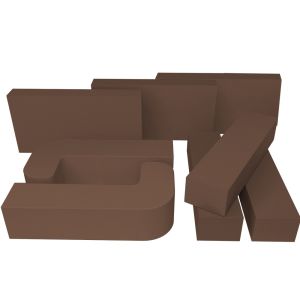 VITCAS Fire Bricks-Brown£3.00 £2.50 Regular Price £4.80 £4.00
Earthy Brown Fire Bricks, exuding a natural, earth-toned radiance. Made to complement any setting, these bricks emanate rustic elegance and organic beauty. Perfectly suited for fireplaces, outdoor pizza ovens and barbeques, they not only enhance your space with their warm, earthy hues but also offer outstanding durability and superior heat resistance.
Read more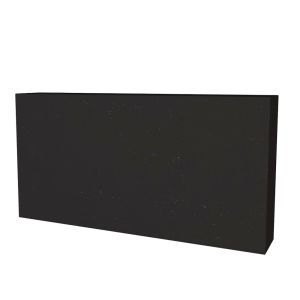 VITCAS Fire Bricks-BlackSpecial Price £3.00 £2.50 Regular Price £4.80 £4.00 As low as £1.92 £1.60
Charcoal Black Fire Bricks provide a unique fusion of style and functionality. These firebricks boast a deep, charcoal black hue, exuding a contemporary, chic appeal. Perfectly suited for high-temperature environments like fireplaces, wood-fired pizza ovens and barbeques, they offer not just a striking visual impact but also unparalleled durability and efficient heat management.
Read more
Choosing Decorative Coloured Fire Bricks
VITCAS decorative coloured fire bricks from refractory fireclay for visible high-temperature masonry in fireplaces, wood-fired ovens, barbecues and other compatible heat-exposed features. The bricks combine temperature resistance up to 1200°C with a choice of colours and formats for traditional, rustic and contemporary designs.
Selection should consider more than appearance. Choose the brick according to the required format, exposed face, joint pattern, installation environment and local operating temperature. Decorative fire bricks provide a refractory finish and useful thermal mass, but they do not replace a dedicated insulation layer where heat-flow control is required.
VITCAS Decorative Fire Brick Colours
| Colour | Visual character | Typical design use | Temperature capability |
|---|---|---|---|
| Subtle Red | Warm traditional firebrick tone | Fireplaces, rustic ovens, barbecue structures and traditional masonry features | Up to 1200°C |
| Antique Off White | Light neutral refractory finish | Traditional or contemporary fireplaces, ovens and lighter-coloured masonry schemes | Up to 1200°C |
| Sand Yellow | Soft warm natural appearance | Garden ovens, fireplaces, barbecues and pale earthy masonry designs | Up to 1200°C |
| Earthy Brown | Deep rustic earth tone | Traditional hearth features, outdoor ovens and natural masonry palettes | Up to 1200°C |
| Charcoal Black | Dark contemporary refractory finish | Modern fireplaces, contrasting oven details and monochrome designs | Up to 1200°C |
Colour choice affects appearance rather than the basic temperature classification of the decorative fireclay. Final selection should also account for brick geometry, installation position, jointing system and the thermal design of the complete construction.
Decorative Fire Brick Formats
VITCAS decorative fire brick formats include rectangular and shaped units that allow different bond patterns, exposed faces and corner details to be created.
| Brick format | Nominal dimensions | Typical layout use | Selection consideration |
|---|---|---|---|
| Narrow rectangular brick | 220 × 50 × 40mm | Linear patterns, narrow courses, edging and detailed masonry | Confirm orientation and availability for the selected colour |
| Thin rectangular brick | 220 × 110 × 30mm | Broad visible faces and decorative refractory lining where a thin section is appropriate | Do not treat a thin decorative brick as a direct substitute for a thicker load-bearing or heat-storage refractory |
| L-shaped brick | 220 × 100 × 55mm | Corners, returns and details where a wrapped brick appearance is required | Confirm the profile, exposed faces and bond arrangement before installation |
Not every colour necessarily uses every format, so the required size and colour combination should be confirmed before quantities and joint layouts are finalised.
Decorative Fire Bricks for Fireplaces
Coloured fire bricks can form visible refractory surfaces around compatible fireplaces, including chamber details, surrounds, hearth features and openings where the selected brick is suitable for the local thermal conditions.
Subtle red and earthy brown support traditional masonry schemes, while antique off white, sand yellow and charcoal black provide lighter or more contemporary alternatives.
Different fireplace zones can experience different temperatures and mechanical conditions. The combustion chamber, opening, hearth and outer decorative areas should therefore be assessed separately. Where decorative bricks are used to replace internal appliance liners, dimensions, thickness and refractory function should match the appliance specification.
Decorative Fire Bricks for Pizza and Bread Ovens
VITCAS coloured fire bricks can be incorporated into compatible wood-fired bread and pizza oven construction, including arches, entrances, landing areas and visible internal or external masonry.
The decorative brickwork should form part of a complete refractory system incorporating the required structural refractory material, insulation, jointing system, expansion allowance and exterior weather protection.
A decorative fire brick rated to 1200°C should not automatically be assumed to be the optimum material for every part of an oven. Hearths and heavily loaded cooking floors may require different thickness, thermal mass or refractory properties from decorative walls and arches.
Where a brick is intended to form a direct cooking surface, suitability for that specific duty should be confirmed rather than inferred from temperature resistance alone.
Barbecues and Outdoor Fire Features
Decorative fire bricks are suitable for compatible masonry barbecue structures and other outdoor heat-exposed features where both refractory performance and appearance are important.
The hot-face refractory, supporting masonry, work surfaces and external finishes should be treated as different functional parts of the construction. Stable support, ventilation, drainage, weather protection and suitable clearances remain part of the overall design.
The brick's 1200°C temperature capability applies to the refractory material itself and does not establish the operating limit or structural performance of the complete barbecue, fireplace or outdoor oven.
Natural Colour Variation in Fireclay Bricks
Fired fireclay is a natural ceramic material, so some variation in colour, texture and surface appearance should be expected. Raw-material variation, firing conditions and surface texture can all influence the final shade.
Lighting also changes how red, yellow, off-white, brown and black brickwork appears. During service, flame, soot, ash, smoke, repeated heating and atmospheric exposure can gradually alter the visible surface.
Where appearance is important, dry-lay a representative section before fixing and distribute natural shade variation across the visible masonry rather than relying on every unit appearing identical.
Dimensional Tolerance and Small Edge Chips
VITCAS decorative fire bricks can show manufacturing dimensional variation of approximately ±3mm. Small edge chips and minor natural surface variation can also occur as characteristics of fired fireclay manufacture and handling.
Brickwork should therefore be set out with suitable refractory joints rather than expecting precision ceramic-tile tolerances. Representative bricks should be checked before finalising course heights, returns and prominent design details.
Minor edge imperfections can often be positioned within a joint where appearance and stability remain acceptable. Bricks with significant cracks, severe distortion or damage that prevents secure bedding should not be used in critical positions.
Choosing Mortar or Outdoor Oven Cement
The jointing product should be compatible with the decorative fire brick, local operating temperature, required joint thickness and indoor or outdoor exposure.
| Installation | Typical VITCAS jointing material | Jointing consideration |
|---|---|---|
| Protected internal firebrick masonry | HPM Heatproof Mortar | Typically used for controlled thin joints of approximately 3–5mm in compatible internal firebrick construction |
| Outdoor ovens, barbecues and exterior firebrick masonry | OC Outdoor Oven Cement | Typically used for compatible weather-exposed firebrick joints of approximately 5–10mm |
| Larger compatible gaps or refractory filling | HPS Heatproof Screed | Used where the construction requires larger refractory filling rather than a conventional thin mortar joint |
The jointing material must remain suitable for the local operating temperature and installation environment. A brick temperature capability of 1200°C does not increase the service capability of a lower-rated mortar, cement or surrounding construction material.
Ordinary building mortar, conventional tile adhesive and general-purpose grout should not be used in a high-temperature working zone unless their technical specification explicitly permits the intended duty.
Mortar marks can be particularly visible on pale off-white bricks and dark charcoal surfaces. Work cleanly around exposed faces and follow the jointing material manufacturer's instructions for removal of residues.
Setting Out Decorative Fire Brickwork
- Confirm that the supporting masonry or foundation is stable and suitable for the required load.
- Establish centre lines, openings, corners, returns and changes in brick orientation before fixing.
- Dry-lay prominent courses to balance cuts and establish the intended visual joint pattern.
- Allow for natural dimensional variation when setting course heights and joint widths.
- Keep designed expansion or movement details clear.
- Avoid rigidly bonding across interfaces that need to accommodate differential thermal movement.
- Maintain the insulation and clearances required by the complete fireplace, oven or barbecue construction.
Cutting Decorative Fire Bricks
Decorative fireclay bricks can be cut using suitable masonry or refractory cutting equipment, including an appropriate diamond cutting disc.
Mark the visible face accurately, support the brick securely and select a cutting method that minimises edge breakout. Trial cuts are useful where a sawn edge will remain visible in the completed masonry.
Cutting fired refractory materials can generate respirable mineral dust, potentially including crystalline silica. Use suitable extraction or controlled wet-cutting methods where permitted, together with appropriate respiratory, eye, hearing and hand protection.
Estimating Decorative Fire Brick Quantities
Calculate walls, arches, returns and other masonry sections individually. Start from the nominal exposed face and then allow for joint width, brick orientation, cuts, openings, natural colour distribution, handling loss and maintenance spares.
| Nominal exposed face | Face area | Theoretical units per m² without joints |
|---|---|---|
| 220 × 110mm | 0.0242m² | Approximately 42 |
| 220 × 50mm | 0.0110m² | Approximately 91 |
These figures are mathematical starting points rather than final ordering quantities. Actual consumption depends on joint dimensions, orientation, cutting pattern and the geometry of the installation.
The L-shaped brick should be calculated from the actual exposed profile and bond arrangement rather than its overall bounding dimensions.
Curing and Controlled First Firing
New refractory masonry contains moisture from mortar, cement and site conditions. Allow the complete construction to cure and dry according to the requirements of the selected jointing and refractory materials before substantial heat is applied.
Initial heating should be controlled so that residual moisture can leave progressively. Rapid heating of damp masonry can create internal steam pressure and contribute to joint failure, cracking or spalling.
Outdoor brickwork that has absorbed rain should also be allowed to dry before firing.
Cleaning and Maintaining Decorative Fire Bricks
- Remove mortar residues using the method and timing specified for the selected jointing material.
- Allow fireplaces, ovens and barbecues to cool before cleaning visible brick surfaces.
- Use a soft brush for loose soot, ash and dry deposits where appropriate.
- Test unfamiliar cleaning products on a spare or inconspicuous brick before treating visible masonry.
- Avoid coatings or sealers that are not specified for the operating temperature and application.
- Expect the appearance of fired fireclay to develop naturally through heat, flame, soot and atmospheric exposure.
Engineering & Application Considerations
- The 1200°C temperature capability applies to the decorative brick itself rather than automatically to mortar, insulation or the complete fireplace, oven or barbecue.
- Decorative fire bricks provide refractory fireclay performance and thermal mass but are not a substitute for insulating fire brick or another dedicated insulation layer.
- Natural shade, texture and dimensional variation are characteristics of fired fireclay and should be incorporated into the masonry layout.
- Outdoor applications require drainage and weather protection in addition to heat-resistant materials.
- Appliance replacement bricks should match the required refractory function and geometry rather than being selected only for colour or temperature resistance.
- Thin decorative formats should not automatically be substituted for thicker refractory bricks where greater section depth, thermal mass or mechanical duty is required.
- Structural support and fire-safety performance depend on the complete construction, not the decorative brick alone.
Why Choose VITCAS Decorative Fire Bricks?
- Refractory fireclay construction combining high-temperature capability with a decorative architectural finish.
- Temperature resistance up to 1200°C for compatible fireplaces, ovens, barbecues and heat-exposed masonry.
- Five decorative colour options ranging from traditional red and earthy brown to antique off white, sand yellow and charcoal black.
- Multiple brick formats for visible courses, narrow detailing, corners and shaped masonry features.
- Indoor and outdoor application capability when incorporated into a correctly designed refractory system.
- Compatible VITCAS refractory jointing materials for internal and weather-exposed firebrick construction.
- Manufacturer expertise in refractory fireclay and high-temperature materials for domestic, commercial and specialist applications.
VITCAS decorative coloured fire bricks allow visible refractory masonry to be designed around both thermal duty and architectural appearance. By coordinating colour, brick format, jointing material, insulation and construction geometry, fireplaces, ovens and barbecues can combine durable fireclay performance with a distinctive finished surface.
Frequently Asked Questions
What are decorative fire bricks?
Decorative fire bricks are refractory fireclay bricks manufactured to provide both high-temperature resistance and a visible coloured finish. They are used in compatible fireplaces, wood-fired ovens, barbecues and other heat-exposed masonry.
What temperature can VITCAS decorative fire bricks withstand?
VITCAS coloured fire bricks are rated for temperatures up to 1200°C / 2190°F. The operating limit of the complete construction can be lower depending on the mortar, insulation, supporting materials and installation design.
Can decorative fire bricks be used in a fireplace?
Yes. They can be used in compatible fireplace applications where the brick dimensions, temperature capability and construction method suit the specific location within the fireplace.
Are decorative fire bricks suitable for pizza ovens?
Yes. They can be incorporated into compatible wood-fired bread and pizza oven construction, particularly visible masonry, arches, entrances and other suitable refractory features. The complete oven should also include the required insulation, jointing and weather protection.
Can decorative fire bricks be used in a barbecue?
Yes. Coloured fire bricks can be used in compatible masonry barbecue construction where the refractory lining, support, ventilation, jointing and weather protection are correctly designed.
Can decorative fire bricks be installed outdoors?
Yes. VITCAS coloured fire bricks are suitable for compatible outdoor applications. The completed construction still requires suitable drainage, weather protection and an exterior jointing system appropriate to the exposure.
Will every decorative fire brick have exactly the same colour?
No. Natural variation in raw materials, firing conditions, texture and lighting can produce differences in shade. Dry-laying visible brickwork before fixing helps distribute this variation across the finished surface.
Can the brick colour change after firing?
Yes. Repeated heating, flame, soot, ash and atmospheric exposure can gradually alter the visible appearance of fired fireclay. This is a normal characteristic of refractory masonry in service.
Can decorative fire bricks be cut?
Yes. Decorative fireclay bricks can be cut with suitable masonry or refractory cutting equipment, typically using an appropriate diamond disc. Control refractory dust and take additional care where the cut edge will remain visible.
Which mortar should be used with decorative fire bricks?
For compatible protected internal firebrick masonry, HPM Heatproof Mortar can be used for controlled thin joints. For compatible outdoor ovens, barbecues and exterior firebrick masonry, OC Outdoor Oven Cement is used for weather-exposed joints. Larger refractory gaps may require HPS Heatproof Screed.
Do decorative fire bricks provide thermal insulation?
No. Decorative fireclay bricks provide refractory performance and thermal mass rather than low thermal conductivity. Where reducing heat flow is required, use the appropriate insulating fire brick, board, blanket or other compatible insulation layer within the complete system.
Can decorative fire bricks replace internal stove bricks?
Only where the brick material, dimensions, thickness and thermal function match the appliance specification. Decorative appearance or temperature resistance alone does not establish suitability as a replacement stove liner.
How should new decorative fire brick masonry be fired for the first time?
Allow the jointing materials and complete refractory construction to cure and dry before controlled heating. Increase temperature progressively so that retained moisture can escape before normal operating conditions are reached.