Refractory Fire Bricks
Dense Refractory Fire Bricks for Kilns, Furnaces and Ovens
VITCAS manufactures dense refractory fire bricks for strong, heat-resistant working surfaces in kilns, furnaces, forges, incinerators, hearths and high-temperature ovens. Refractory brick solutions include dense fireclay grades containing 42% or 60% Al2O3, tapered arch bricks for curved roofs and openings, and acid-resistant refractory bricks for chemically aggressive process environments.
Each brick technology performs a different function within the refractory system. The 42% alumina grade is rated to 1430°C, the 60% alumina grade to 1600°C, while acid-resistant brick is designed primarily for chemical and abrasion resistance at temperatures up to 400°C. Selection should therefore consider the actual hot-face temperature, refractory chemistry, furnace atmosphere, mechanical loading, abrasion, thermal cycling, joint geometry and any potential exposure to slag, flux or molten material.
Dense refractory bricks provide mechanical strength and useful thermal mass rather than low thermal conductivity. Where reduced heat loss or lower casing temperature is required, they can be combined with insulating fire bricks or another compatible back-up insulation layer. The brick should also be matched to the appropriate refractory or acid-resistant mortar, with suitable allowance for dimensional tolerances, thermal expansion and lining geometry. Completed refractory masonry should be allowed to dry before controlled commissioning and progressive heating.
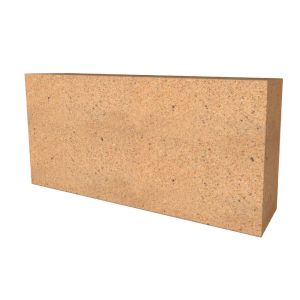 VITCAS Refractory Fire bricks 60% AL2O3Special Price £4.20 £3.50 Regular Price £6.00 £5.00
VITCAS Fire Bricks, 60% Alumina, sized at 230x114x64mm. These high-grade refractory bricks are designed for extreme temperatures up to 1600°C / 2910°F. Ideal for demanding applications like kiln linings, ceramics, metal casting, forges, and brazing hearths, they offer exceptional durability for the most challenging environments.
Read more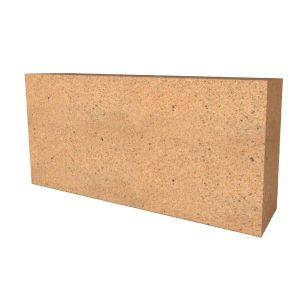 VITCAS Fire bricks 230x114x76mmSpecial Price £3.00 £2.50 Regular Price £4.79 £3.99
VITCAS Fire Bricks, made with 42% Alumina content. Sized at 230 x 114 x 76mm and designed to endure extreme conditions up to 1430°C. Ideal for a range of high-temperature applications including kiln linings, ceramics, metal casting, forges, and brazing hearths, these bricks are the perfect choice for ensuring durability and efficiency in your heat-intensive projects.
Read more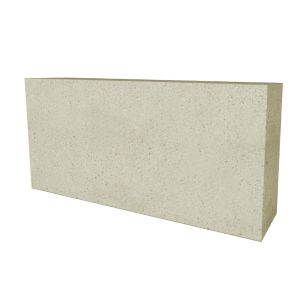 Acid Resistant BricksSpecial Price £3.60 £3.00 Regular Price £4.80 £4.00
Vitcas Acid Resistant Clay Firebricks are heat resistant to 400°C / 752°F. The acid resistant bricks are also resistant to chemicals including most mineral acids and resistant to abrasion. They are suitable for use in applications such as in power generation and in the cement, steel, and aluminium industries.
Read more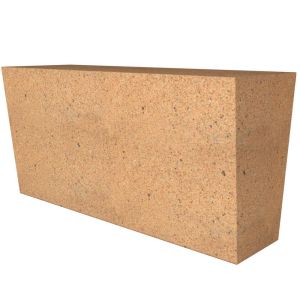 VITCAS Arch Fire bricksSpecial Price £3.00 £2.50 Regular Price £6.00 £5.00
Vitcas Arch Fire Bricks. Dimensions: 230mm x 114mm x54mm ->76mm. Used to form the arch of a doorway in a Wood Fired Bread/ Pizza Oven or is used to construct the roof of a tunnel shaped oven.
Read more
Selecting Refractory Fire Bricks by Grade and Duty
VITCAS manufactures dense fireclay, high-alumina and specialist refractory bricks for high-temperature and chemically demanding applications. Dense refractory bricks are engineered to provide strong working surfaces, mechanical durability and useful thermal mass in kilns, furnaces, forges, incinerators, hearths, ovens and industrial process equipment.
The compact structure of a dense refractory brick provides greater resistance to mechanical loading, impact and abrasion than lightweight insulating fire brick, while also absorbing and storing more heat. Different refractory compositions perform different duties, so brick selection should consider maximum service temperature together with alumina content, furnace atmosphere, chemical attack, mechanical loading, thermal cycling, abrasion, flame pattern, joint design and possible contact with slag, flux or molten material.
VITCAS also manufactures higher-alumina refractory brick technologies for specialised industrial applications, allowing refractory chemistry to be matched more closely to severe thermal, mechanical and process conditions.
Refractory Fire Brick Comparison
| Brick type | Maximum service temperature | Nominal dimensions | Composition or geometry | Recommended jointing material | Typical selection basis |
|---|---|---|---|---|---|
| 42% Alumina Fire Brick | 1430°C / 2600°F | 230 × 114 × 76mm | Minimum 42% Al2O3; approximately 4.5kg per brick | Vitset 45 Refractory Mortar | Dense working linings for kilns, ceramic furnaces, metal-processing furnaces, incinerators and cremators |
| 60% Alumina Fire Brick | 1600°C / 2910°F | 230 × 114 × 64mm | Minimum 60% Al2O3; approximately 4.5kg per brick | Vitset 45 Refractory Mortar is recommended; Vitset 80 or Vitset 90 may be used where the mortar itself requires a higher temperature classification | Higher-temperature industrial lining zones requiring greater refractoriness and mechanical durability |
| Tapered Arch Fire Brick | 1300°C / 2370°F | 230 × 114mm; tapering from 76mm to 54mm | Wedge-shaped refractory unit for arches, vaults and curved construction | OC Outdoor Oven Cement for 4–6mm joints, or HPS Heatproof Screed for 10–12mm joints, as specified for the construction | Bread- and pizza-oven arches, tunnel roofs, fireplace arches and suitable curved refractory structures |
| Acid-Resistant Brick | 400°C / 752°F | 230 × 114 × 64mm | Low-porosity fireclay refractory resistant to compatible mineral acids other than hydrofluoric acid | Acidcas M Acid-Proof Cement Mortar | Chemical-process floors, vessels, pits, chimneys and surfaces where chemical and abrasion resistance are the primary requirements |
Each refractory brick should be evaluated according to its own temperature classification, material chemistry and intended duty. Temperature limits are product-specific and should not be transferred between different refractory technologies. An acid-resistant brick designed for chemical service, for example, performs a fundamentally different function from a high-alumina furnace brick.
What the Refractory Brick Temperature Rating Means
Maximum service temperature is an upper material classification rather than a universal continuous design temperature for every installation. Burner hot spots, charge temperature, exothermic reactions, process upset conditions and temperature gradients through the refractory lining can expose local areas to conditions more severe than the nominal chamber setpoint.
The complete refractory construction must also be evaluated as a system. Mortar, insulation, anchors, steelwork, seals, expansion joints and protective materials should each remain suitable for the operating environment. A mortar with a higher temperature classification cannot increase the maximum service temperature of the brick itself.
Dense Refractory Fire Brick vs Insulating Fire Brick
| Property | Dense Refractory Fire Brick | Insulating Fire Brick |
|---|---|---|
| Structure | Compact, strong and comparatively heavy | Porous, lightweight and comparatively soft |
| Primary function | Durable working face, mechanical protection and thermal mass | Reduction of heat transfer and lining thermal mass |
| Mechanical duty | Better suited to loading, impact and abrasion, subject to grade | More vulnerable to point loading, wear and handling damage |
| Heating behaviour | Absorbs more energy and releases stored heat more gradually | Lower thermal mass supports faster response in cyclic equipment |
| Typical position | Hot face, hearth, floor, sidewall, arch or wear zone | Clean-duty hot face or back-up insulation behind a stronger refractory |
A dense refractory brick is normally selected where mechanical strength, wear resistance or heat retention is important. Insulating fire bricks are selected where reducing heat loss and refractory mass is the primary objective.
Composite industrial linings frequently combine both technologies: a chemically and mechanically suitable dense refractory forms the working hot face while insulating fire brick or another compatible insulation layer reduces heat flow towards the furnace casing.
42% vs 60% Alumina Refractory Fire Bricks
The 42% alumina fire brick is a dense refractory brick rated to 1430°C. Its 76mm thickness provides substantial refractory mass for kilns, furnaces, incinerators, cremators and other high-temperature linings.
The grade can provide a technically appropriate solution where operating temperature, atmosphere, mechanical loading and wear remain within its material capability.
The 60% alumina fire brick extends dense refractory brick technology to 1600°C. Its increased alumina content, together with low iron and low alkali characteristics, supports refractoriness and performance in more demanding industrial environments.
Higher alumina content should not be treated as a universal measure of chemical compatibility. Slag composition, ash, vapours, reducing or oxidising atmosphere, fluxes and molten phases can interact differently with refractory materials. The correct grade is the one whose chemistry and physical properties match the actual furnace zone.
For specialist industrial applications beyond these grades, VITCAS manufacturing capability also extends to higher-alumina refractory brick technologies developed for demanding temperature, abrasion and process conditions.
Tapered Arch Fire Bricks
VITCAS tapered arch fire bricks simplify curved refractory masonry by producing more regular radial joints than rectangular bricks laid in a fan arrangement.
The brick measures 230 × 114mm and tapers from approximately 76mm to 54mm. Manufacturer guidance indicates that approximately 17 bricks can form an opening around 640mm wide, although final geometry depends on span, rise, brick orientation and mortar-joint thickness.
Typical applications include bread- and pizza-oven entrances, tunnel-shaped roofs, fireplace arches and other suitable curved refractory structures.
Refractory arches work primarily in compression and depend on correct geometry, stable temporary formwork and sufficient abutment strength. Large industrial arches, roofs or structures carrying additional masonry loads should be designed according to the required structural and refractory duty rather than temperature rating alone.
Acid-Resistant Bricks for Chemical Duty
VITCAS acid-resistant bricks are low-porosity refractory clay units developed primarily for chemical durability, mechanical strength and abrasion resistance at temperatures up to 400°C.
They provide resistance to compatible mineral acids other than hydrofluoric acid and can be used in suitable process floors, tanks, pits, chimneys, vessels and chemically exposed industrial structures.
Chemical compatibility depends on the exact substance, concentration, temperature and exposure conditions. The bricks should be installed with Acidcas M Acid-Proof Cement Mortar where continuity of the acid-resistant jointing system is required.
Industries & Applications
- Ceramics & Kiln Firing – dense hot-face walls, arches and refractory zones in kilns and ceramic furnaces.
- Foundry & Metallurgy – furnace linings, forge chambers, brazing hearths and suitable high-temperature metal-processing zones.
- Heat Treatment – furnace chambers requiring a strong refractory working surface and resistance to repeated thermal cycling.
- Incineration, Cremation & Boilers – combustion zones exposed to heat, ash, mechanical wear and process gases.
- Cement, Lime & Process Industries – selected kiln, calciner, furnace and duct zones where refractory chemistry and abrasion resistance match the duty.
- Chemical Processing – acid-resistant floors, vessels and plant surfaces requiring compatible brick and jointing systems.
Kilns, Furnaces and Heat-Treatment Chambers
Dense refractory fire bricks can form working faces in ceramic kilns, industrial furnaces and heat-treatment equipment. Selection should account for the highest operating temperature together with element or burner temperature, atmosphere, workpiece loading, mechanical wear and thermal cycling.
Door reveals, burner zones, hearths and charge-entry areas often experience greater impact, abrasion or thermal stress than sheltered walls. These zones should therefore be assessed independently rather than assuming that one refractory grade is optimal throughout the complete furnace.
Dense bricks also store substantial thermal energy. This can help stabilise chamber temperature but increases the amount of energy absorbed by the lining during warm-up. In cyclic equipment, a correctly designed insulating layer behind the dense hot face can reduce heat loss and casing temperature.
Forges, Foundries and Metalworking
Dense 42% and 60% alumina refractory bricks can be used in compatible forge chambers, brazing hearths and furnace lining zones where their temperature and mechanical properties match the duty.
Direct molten-metal, slag or flux exposure should be considered separately from temperature classification. Borax-containing fluxes, non-ferrous metals, iron-rich slag and reducing atmospheres can affect refractory materials through different chemical and penetration mechanisms.
For metal-processing equipment, define the normal melt line, splash zone, charging impact and credible overflow conditions. Areas exposed directly to molten material may require a specialist refractory composition or sacrificial working layer.
Incinerators, Cremators, Boilers and Process Furnaces
Combustion equipment exposes refractory linings to a combination of temperature, ash chemistry, alkali vapours, sulphur compounds, thermal cycling, high-velocity gas and mechanical cleaning.
Burner areas, doors, ash lines and transitions can therefore require different materials or shaped refractory solutions. Where rectangular brick geometry cannot maintain sound joints or accommodate complex shapes, compatible refractory castables or specialist components can be integrated into the lining.
Abnormal casing temperature can indicate open joints, erosion of the hot face or deterioration of back-up insulation and should be investigated as part of refractory maintenance.
Bread Ovens, Pizza Ovens and Refractory Arches
Tapered refractory bricks simplify oven entrances and tunnel-shaped roof construction by providing the geometry required for regular curved joints.
The arch should be built over stable formwork with consistent brick orientation and suitable abutments capable of receiving horizontal thrust. Formwork should remain in place until the selected setting material has developed sufficient strength.
For oven floors and cooking surfaces, thermal mass, lining thickness, insulation and the suitability of the complete oven construction should be considered together with maximum temperature.
Mortar and Joint Selection
Refractory brick and mortar function together as a lining system. The jointing material should therefore be selected according to brick chemistry, operating temperature, atmosphere and required joint geometry. Mortar temperature classification should not be used as the sole selection criterion.
| Brick type | Recommended VITCAS setting material | Engineering consideration |
|---|---|---|
| 42% alumina fire brick | Vitset 45 Refractory Mortar | Vitset 45 is the specified setting mortar for the VITCAS 42% alumina fire brick. Follow the mortar instructions for preparation, joint thickness, drying and commissioning. |
| 60% alumina fire brick | Vitset 45 Refractory Mortar; alternatively Vitset 80 or Vitset 90 where a higher mortar temperature classification is required | Vitset 45 is the recommended setting mortar. Selecting Vitset 80 or Vitset 90 does not increase the fire brick's maximum service temperature of 1600°C. |
| Acid-resistant brick | Acidcas M Acid-Proof Cement Mortar | Acidcas M is designed for bedding and jointing compatible acid-resistant bricks and tiles so that the joints form part of the chemical-resistant lining system. |
| Tapered arch fire brick | OC Outdoor Oven Cement for 4–6mm joints; HPS Heatproof Screed for 10–12mm joints | These joint ranges follow the specific VITCAS arch-brick guidance. Use the selected product according to its own preparation, curing and drying instructions. |
Keep refractory joints within the geometry specified for the brick and jointing material. Excessively thick mortar beds can affect dimensional accuracy, drying behaviour and lining stability. A higher-rated mortar cannot compensate for unsuitable brick chemistry, incorrect geometry or inadequate expansion allowance.
Dimensional Tolerance and Site Checks
Fired refractory bricks can show dimensional variation of approximately ±3mm, together with natural colour differences and occasional minor edge chips resulting from manufacture and handling.
These characteristics do not normally affect performance where the required bearing area, lining thickness and joint continuity remain intact. Representative bricks should nevertheless be measured before finalising formwork, course heights, arch geometry or steel clearances.
Where precise arches, reveals or equipment interfaces are required, bricks can be sorted before installation to maintain more consistent geometry.
Cutting and Shaping Dense Refractory Bricks
Dense refractory bricks are considerably harder to cut than lightweight insulating bricks. Suitable diamond masonry or refractory cutting equipment should be used with the brick securely supported on both sides of the cut.
Very narrow pieces should be avoided where possible because they can be difficult to bed securely and may be more vulnerable to mechanical or thermal damage.
Cutting refractory materials can generate respirable mineral dust, potentially including crystalline silica. Appropriate extraction or controlled wet-cutting methods should be used where permitted, together with suitable respiratory, eye, hearing, hand and clothing protection.
Estimating Refractory Brick Quantities
The following theoretical coverage figures provide a starting point for standard rectangular brickwork. They exclude mortar joints, cuts, openings, arches and installation waste.
| Brick format | Lining depth | Visible unit face | Theoretical units per m² |
|---|---|---|---|
| 230 × 114 × 76mm | 76mm | 230 × 114mm | Approximately 38.1 |
| 230 × 114 × 76mm | 114mm | 230 × 76mm | Approximately 57.2 |
| 230 × 114 × 76mm | 230mm | 114 × 76mm | Approximately 115.4 |
| 230 × 114 × 64mm | 64mm | 230 × 114mm | Approximately 38.1 |
| 230 × 114 × 64mm | 114mm | 230 × 64mm | Approximately 67.9 |
| 230 × 114 × 64mm | 230mm | 114 × 64mm | Approximately 137.1 |
Final quantities should include appropriate allowance for joints, cutting, breakage and maintenance spares. Arches, domes, burner openings and complex repairs generally require greater allowance than straight rectangular walls.
Tapered arch bricks should be calculated from the actual span, rise, mortar-joint width and brick orientation rather than a simple square-metre coverage figure.
Installation and Thermal Expansion
The supporting shell or masonry should be sound, stable and designed for the weight of the refractory lining. Brick courses should be set out to minimise small cut pieces and avoid unnecessary continuous joints through multiple refractory layers.
Refractory masonry expands and contracts during operation. Suitable movement allowance should therefore be incorporated around walls, corners, arches, penetrations, doors and transitions to steelwork.
Expansion details should reflect lining length, brick grade, operating temperature and surrounding restraint. Excessive rigid restraint can create crushing, displaced brickwork or spalling even where the refractory remains below its maximum service temperature.
Drying and Controlled First Firing
Mortar and site conditions introduce moisture into newly constructed refractory masonry. The installation should be allowed to cure and air dry according to the requirements of the selected jointing material before controlled heating begins.
Heating damp masonry too rapidly can generate steam pressure, open joints and contribute to cracking or spalling.
The brick temperature classification does not define the permissible commissioning rate. Lining thickness, mortar type, insulation, ventilation, equipment volume and ambient conditions all influence the required heat-up procedure.
Inspection and Maintenance
- Inspect working faces for open joints, displaced bricks, spalling, deposits, abrasion and chemical attack.
- Investigate new or abnormal hot spots on the casing or surrounding construction.
- Remove unstable refractory material before it can fall into the process or obstruct burners and gas paths.
- Investigate repeated refractory failure rather than repeatedly repairing an unsuitable material or lining detail.
- Replace critical bricks with the confirmed specification or a technically appropriate equivalent.
- Maintain spare shaped units where proprietary arch or refractory geometry would be difficult to reproduce rapidly on site.
- Store replacement bricks dry, covered and clear of contaminated or wet ground.
Engineering & Application Considerations
- Dense fire bricks provide mechanical strength and thermal mass rather than low-conductivity thermal insulation.
- Temperature classification is only one selection parameter. Atmosphere, abrasion, mechanical loading and process chemistry should also be evaluated.
- Molten metal, slag, flux, glass and aggressive process gases require chemistry-specific refractory assessment.
- The acid-resistant brick is designed primarily for chemical duty and its 400°C classification differentiates it from high-temperature alumina furnace bricks.
- A higher-rated refractory mortar does not increase the temperature capability of the brick.
- Direct molten-glass contact requires a refractory selected specifically for glass service.
- Structural arches and industrial roofs require appropriate mechanical design in addition to refractory material selection.
- The complete lining system governs performance, including brick, mortar, insulation, expansion allowance, support and commissioning procedure.
Why Specify VITCAS Refractory Fire Bricks?
- Refractory manufacturing expertise covering dense fireclay, high-alumina, shaped and specialist brick technologies.
- Multiple alumina and temperature grades allowing refractory chemistry to be matched to different thermal and process duties.
- Dense high-strength working-face materials for kilns, furnaces, forges and industrial thermal equipment.
- Higher-alumina refractory capability for increasingly demanding industrial applications.
- Shaped refractory bricks for arches, openings and specialised masonry geometry.
- Chemically resistant brick technology for compatible acid and abrasion service.
- Matched refractory mortars and jointing systems for complete high-temperature masonry construction.
By matching alumina content, refractory chemistry, geometry and jointing system to the actual thermal, mechanical and chemical duty, VITCAS refractory fire bricks can form durable working linings across domestic, commercial and industrial high-temperature applications.
Frequently Asked Questions
What are refractory fire bricks?
Refractory fire bricks are dense fired ceramic materials designed to retain strength and dimensional stability at temperatures beyond the capability of ordinary building bricks. They are used in kilns, furnaces, forges, hearths, ovens, incinerators and other high-temperature equipment.
What is the difference between 42% and 60% alumina fire bricks?
The 42% alumina brick is rated to 1430°C and provides a dense refractory working material for many kiln and furnace applications. The 60% alumina brick provides higher refractory capability at 1600°C and is intended for more demanding industrial service. Atmosphere, chemical exposure, abrasion and mechanical loading should also guide selection.
Are dense refractory fire bricks insulating?
Dense fire bricks provide thermal mass, mechanical strength and wear resistance rather than low thermal conductivity. Where reducing heat loss is important, they can be combined with insulating fire brick or another compatible back-up insulation layer.
Which refractory fire brick is suitable for a ceramic kiln?
Both 42% and 60% alumina grades can be used in compatible kiln applications. Selection should consider maximum firing temperature, element or burner hot spots, kiln atmosphere, thermal cycling and mechanical loading.
Can dense refractory bricks be used in a forge?
Yes. Dense refractory grades can be used in suitable forge chambers and hearths where their temperature and mechanical properties match the operating conditions. Flux exposure, burner impingement and mechanical wear should also be considered.
Can refractory fire bricks contact molten metal?
Temperature classification alone does not establish compatibility with molten metal. Alloy chemistry, slag, flux, operating temperature, exposure duration and penetration behaviour should be considered before selecting a direct-contact refractory.
Can 60% alumina fire brick contact molten glass?
The 60% alumina grade is suitable for selected glass-furnace areas where there is no direct molten-glass contact. Melt-line, tank and overflow zones require refractory materials specifically selected for direct glass exposure.
What are tapered arch fire bricks used for?
Tapered refractory bricks are used to create more regular curved joints in oven entrances, tunnel roofs, fireplace arches and other compatible refractory arches. Final quantity and geometry depend on span, rise and mortar-joint thickness.
What are acid-resistant bricks used for?
Acid-resistant refractory bricks are selected primarily for chemical durability, low porosity and abrasion resistance in compatible process floors, vessels, pits, chimneys and chemically exposed industrial structures. Their maximum service temperature is 400°C.
Which mortar should be used with 42% alumina fire bricks?
Vitset 45 Refractory Mortar is the recommended setting material for VITCAS 42% alumina fire bricks. Follow the mortar instructions for preparation, joint thickness, drying and commissioning.
Which mortar should be used with 60% alumina fire bricks?
Vitset 45 Refractory Mortar is recommended for VITCAS 60% alumina fire bricks. Vitset 80 or Vitset 90 may be selected where the mortar itself requires a higher temperature classification. Using a higher-grade mortar does not increase the brick's 1600°C maximum service temperature.
Which jointing material should be used with tapered arch fire bricks?
VITCAS specifies OC Outdoor Oven Cement for 4–6mm joints between tapered arch bricks and HPS Heatproof Screed for 10–12mm joints. The required joint geometry should be established from the arch design before installation.
Which mortar should be used with acid-resistant bricks?
Acidcas M Acid-Proof Cement Mortar is designed for bedding and jointing compatible acid-resistant bricks and tiles. Ordinary Portland-cement or general refractory mortar should not replace the specified acid-resistant jointing system in chemically exposed areas.
Can dense refractory fire bricks be cut?
Yes. Dense refractory bricks generally require suitable diamond masonry or refractory cutting equipment. The brick should be securely supported and refractory dust controlled using suitable extraction or suppression and appropriate personal protective equipment.
Do refractory brick linings require expansion allowance?
Yes. Refractory masonry expands and contracts during heating and cooling. Expansion detailing should reflect brick grade, lining dimensions, operating temperature, geometry and restraint.
How should a new refractory brick lining be fired for the first time?
Allow the mortar and completed refractory masonry to cure and dry before controlled heating. The initial heat-up procedure should account for lining thickness, mortar, insulation and equipment conditions so that residual moisture can leave progressively before full operating temperature is reached.