
Flues & Chimneys
Flue & Chimney Materials for Insulation, Sealing, Jointing & Maintenance
VITCAS heat-resistant materials for the installation, insulation, sealing and maintenance of flues, chimney liners and chimney systems serving fireplaces, wood-burning and multi-fuel stoves, boilers, ovens and other compatible heating appliances. The range includes flue insulation wraps, flue cement, fire cement, high-temperature sealants, lagging rope and chimney-cleaning products.
A flue is the passage that carries combustion gases from the appliance, while the chimney is the wider structure containing or supporting that passage. Different parts of the system may therefore require different materials for liner jointing, thermal insulation, flexible or rigid sealing and routine maintenance.
Select each product according to the flue or liner material, joint design, operating temperature, insulation requirement and appliance specification. Temperature capability is only one factor; liner compatibility, movement, condensation conditions and the required sealing or insulation function are equally important.
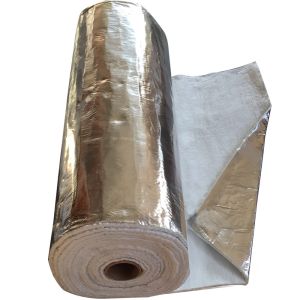 Aluminium Coated Insulation - Flue Wrap 12mm x 1mSpecial Price £166.80 £139.00 Regular Price £300.00 £250.00
Vitcas Aluminium Coated Insulation Flue Wrap provides high-performance thermal insulation for flues and liners in stove chimneys, enhancing efficiency and safety by minimising heat loss, condensation, and the risk of chimney fires.
Read more Flue Insulation WrapSpecial Price £59.99 £49.99 Regular Price £96.00 £80.00
Vitcas Flue Insulation Wrap Jacket is made from e-glass which is safe for the environment. The insulation wrap can withstand temperatures reaching 550°C /1020°F and has a very low thermal conductivity. The wrap is used inside chimney flues for insulation and to prevent chimney fires and reduce tar, etc.
Read more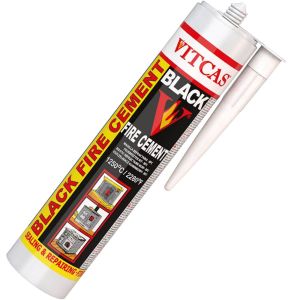 BFC - Black Fire Cement 1250°CSpecial Price £3.59 £2.99 Regular Price £5.99 £4.99
Black fire cement for both domestic and commercial applications, ideal for use on fire bricks, grates, flue pipes, boilers, and other areas exposed to extreme heat. It provides excellent adhesion to fire bricks, blockwork, stone, and clayware. Resistant to high temperatures up to 1250°C / 2280°F
Read more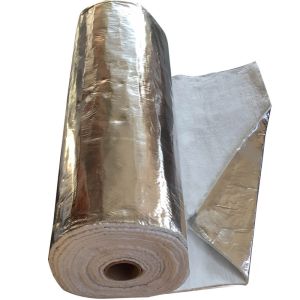 Aluminium Coated Insulation - Flue Wrap 12mm x 1m -per MetreSpecial Price £24.00 £20.00 Regular Price £30.00 £25.00
Flue Chimney Wrap Insulation Blanket suitable for insulating flues and flue liners inside the chimney. Aluminium Coated Glass Fibre Insulating Mat will reduce risk of condensation, tar formation, as well as chimney fires and hence elongate the life of your flue liner and maximise its performance.
Read more Heat Resistant SILICONE 315°CSpecial Price £5.99 £4.99 Regular Price £11.99 £9.99
VITCAS High Temperature Silicone is a flexible sealant designed to withstand high temperatures up to 315ºC. It is perfect for joints in contact with high temperatures, such as flues, ovens, gaskets, stoves, boilers, and more. Heat Resistant silicone sealant provides excellent adhesion to most building materials, ensuring a strong and durable bond.
Read more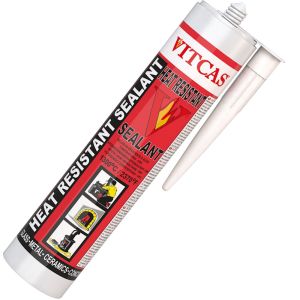 HRS - Heat Resistant Sealant 1300°CSpecial Price £9.59 £7.99 Regular Price £11.99 £9.99
VITCAS Heat Resistant Sealant is a high-performance, high-temperature caulking compound engineered for fixing, jointing and fire-sealing applications. Rated for continuous exposure up to 1300°C / 2370°F, it provides reliable bonding and airtight sealing on ceramics, metals, silica-based materials and glass in demanding high-heat environments.
Read more Glass Fibre Lagging RopeAs low as £3.00 £2.50 Regular Price £6.00 £5.00
Fibreglass Lagging Fire Rope – Stove Fire Rope Seal, available in diameters from 20mm to 50mm, is rated up to 550°C (1020°F). It offers excellent thermal insulation and resistance to chemicals, oils, and solvents, making it perfect for wrapping around flue pipes and hot pipes in high-temperature environments.
Read more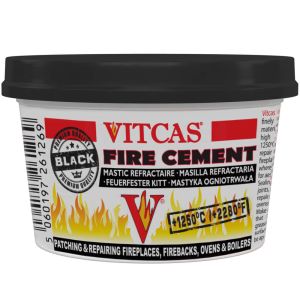 BLACK Fire Cement - VITCASAs low as £3.11 £2.59 Regular Price £4.19 £3.49
Vitcas® BLACK Fire Cement is a high-temperature resistant sealant specifically designed for repairing and patching firebricks, fireplaces, solid fuel ovens, and boilers. Withstanding temperatures up to 1250ºC / 2280°F, it provides excellent adhesion and durability, making it ideal for sealing joints and cracks in high-heat environments.
Read more CFC - Chimney & Flue CleanerSpecial Price £9.59 £7.99 Regular Price £15.59 £12.99
Vitcas CFC Chimney and Flue Cleaner is a high-performance cleaning agent designed to eliminate creosote, soot, and tar deposits from chimneys and flue linings, including stainless steel flexible liners. Regular use not only ensures internal cleanliness but also helps to prevent chimney fires. For optimal effectiveness, apply 2–4 scoops of the cleaner twice weekly.
Read more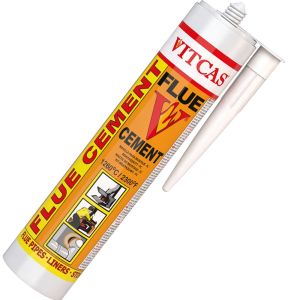 FC - Flue Cement 1250°CSpecial Price £2.39 £1.99 Regular Price £5.99 £4.99
VITCAS Flue Cement is a high-temperature, ready-mixed fireproof mortar, specially formulated for the safe installation and jointing of clay and concrete flue liners. It is ideal for use with domestic fires and stoves, including coal, wood-burning, and gas (including flame effect) appliances.
Read more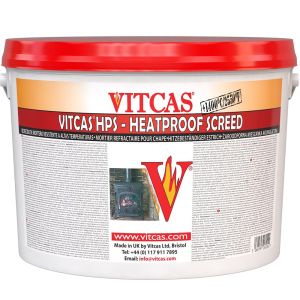 HPS - Heatproof ScreedAs low as £23.99 £19.99 Regular Price £35.99 £29.99
Fireproof Screed, a cement-like product, is resistant to 1400°C / 2550°F. For interior and exterior use. Its function is for Screeding Masonry and making replacement fire bricks for Kilns, Fireplaces, Barbeques and Pizza Ovens. Protects vulnerable materials, which are in danger of being damaged by high heat exposure.
Read more
Materials for Flue Liners, Chimneys & High-Temperature Exhaust Systems
A chimney system must provide a suitable route for combustion gases while managing high temperatures, thermal cycling, condensation and deposits produced during appliance operation. Depending on the installation, the flue may use ceramic or clay liners, flexible stainless-steel liners, concrete or pumice systems, or prefabricated metal components.
VITCAS provides materials for four main functions within these systems: jointing, sealing, insulation and maintenance. The correct product depends on where it is used and how the joint or liner is designed to behave.
Flue & Chimney Material Guide
| Application | Recommended VITCAS Material | Primary Function |
|---|---|---|
| Ceramic flue liner joints | Flue Cement | Rigid high-temperature jointing of compatible ceramic flue liners and pipes |
| Flue liner insulation | Flue Insulation Wrap | Reducing heat loss from compatible flue liners and helping maintain flue-gas temperature |
| Flexible flue insulation | Aluminium Coated Flue Wrap | Glass-fibre insulation with an aluminium-facing layer for compatible flue and duct applications |
| Flexible heat-exposed joints | Heat Resistant Silicone | Flexible sealing where movement must be accommodated within the product temperature range |
| Higher-temperature caulking | Heat Resistant Sealant | High-temperature jointing and sealing on compatible ceramic, metal, glass and silica-based materials |
| Rigid stove and flue joints | Black Fire Cement | Fine rigid joints and compatible high-temperature sealing |
| Pipe and flue insulation | Glass Fibre Lagging Rope | Flexible local insulation around compatible hot pipes and flues |
| Chimney and flue deposits | Chimney & Flue Cleaner | Supporting removal and reduction of soot, tar and creosote deposits |
| Heat-exposed masonry repair | Heatproof Screed | Compatible refractory screeding and masonry repair around high-temperature installations |
Chimney vs Flue - What Is the Difference?
The terms describe different parts of the combustion-gas system. A flue is the internal passage or duct that carries gases from the appliance towards the outlet. A chimney is the complete structure that contains, supports or surrounds the flue and may include the chimney breast, stack and termination.
This distinction matters when selecting materials. A product designed for joining a flue liner performs a different function from insulation placed around the liner or repair material used on surrounding masonry.
Flue Cement for Ceramic Flue Liners
VITCAS Flue Cement is a ready-to-use high-temperature mortar paste rated up to 1250°C. It is formulated for installing and jointing compatible ceramic flue liners and pipes and can also be used for selected refractory jointing applications.
The product specification references BS EN 1857 for ceramic flue liners. For international installations, also follow the appliance, chimney-system and building requirements applicable in the country of use.
Flue Cement forms a rigid joint. It should therefore be selected where the liner or component arrangement is designed for rigid mortar jointing rather than where a flexible movement seal is required.
Flue Cement vs Fire Cement
Although both materials tolerate high temperatures, their intended applications differ. Flue Cement is specifically formulated for compatible ceramic flue liner installation and jointing. Fire Cement is used more broadly for fine rigid joints and small repairs around firebricks, flue pipes, fireplaces, stoves and boilers.
Choose according to the component being joined and the joint design rather than treating the products as interchangeable because both are rated to 1250°C.
Flue Liner Insulation
Insulating a compatible flue liner reduces heat transfer from the flue gases into the surrounding chimney structure. Maintaining a warmer liner can also help reduce conditions that encourage condensation and tar formation within suitable solid-fuel systems.
VITCAS Flue Insulation Wrap is manufactured from E-glass fibre, is 12mm thick and is rated for continuous exposure up to 550°C. The jacket format is designed for compatible 125mm (5-inch) and 200mm (8-inch) flue liners.
The expected temperature at the insulation location should remain within the product limit, and the wrap should be secured so that it remains correctly positioned around the liner during service.
Aluminium-Coated Flue Wrap
VITCAS Aluminium Coated Insulation Flue Wrap combines glass-fibre insulation with an aluminium-facing layer. The glass-fibre mat is rated up to 550°C, while the aluminium facing has a lower temperature capability and is best suited to exposure up to approximately 300°C.
This distinction is important when designing the installation. The 550°C rating of the glass fibre should not automatically be applied to the aluminium facing. Where temperatures exceed the facing limit, its position relative to the heat source should follow the product instructions.
Flue Insulation Wrap vs Lagging Rope
Insulation wrap and lagging rope provide different installation formats. Flue wrap covers a broader continuous surface around a compatible liner, while Glass Fibre Lagging Rope provides flexible local insulation around smaller-diameter pipes, flues, irregular sections or areas where a rope format better suits the geometry.
VITCAS Glass Fibre Lagging Rope is available in larger diameters and is rated up to 550°C. Select the format according to the available space, required insulation thickness, component geometry and method of retention.
Heat Resistant Silicone for Flexible Flue Joints
VITCAS Heat Resistant Silicone is a flexible sealant rated up to 315°C. It is suitable for compatible flue, stove, oven and boiler joints where flexibility is required and the local temperature remains within its published limit.
Because silicone remains elastomeric, it is selected for a different joint behaviour from rigid Flue Cement or Fire Cement. Confirm both the expected temperature and required movement before selecting the sealant.
Heat Resistant Sealant for Higher-Temperature Joints
VITCAS Heat Resistant Sealant is a high-temperature caulking compound rated for continuous exposure up to 1300°C. It bonds to compatible ceramics, metals, silica-based materials and glass and is suited to high-temperature fixing, jointing and sealing applications.
Its higher temperature capability does not make it a universal replacement for flexible silicone or specialised Flue Cement. Joint movement, substrate and installation method still determine which sealing system is appropriate.
Fire Cement for Stove-to-Flue & Rigid Joints
VITCAS Black Fire Cement is rated up to 1250°C and is suitable for compatible rigid sealing around firebricks, grates, flue pipes, boilers and other heat-exposed components.
It cures hard and is therefore most appropriate where the joint is intended to remain substantially rigid. Where movement must be accommodated, select a sealing material with the required flexibility.
Chimney & Flue Cleaning
Solid-fuel combustion can produce soot, tar and creosote deposits within chimneys and flues. VITCAS Chimney & Flue Cleaner is a non-corrosive powder treatment designed for compatible chimney and flue systems, including stainless-steel flexible liners.
The product is used during appliance operation according to the supplied instructions to help loosen and reduce deposits. It forms part of routine chimney maintenance but does not replace inspection, removal of physical obstructions or mechanical sweeping where these are required.
Condensation, Tar & Flue Temperature
As combustion gases cool while passing through a flue, moisture and condensable compounds can form deposits on the liner surface. Insulation can help maintain a more stable flue-gas temperature and reduce conditions that encourage condensation and tar formation.
Actual flue performance also depends on the appliance, fuel, firing conditions, liner dimensions, chimney height, draught and installation design. Flue insulation should therefore be treated as one part of the complete chimney system rather than as a substitute for correct appliance operation or maintenance.
Flue Liner Materials & Product Compatibility
Flues may use ceramic or clay liners, stainless-steel flexible liners, concrete or pumice sections, or prefabricated metal systems. The same jointing or sealing material is not automatically suitable for every liner type.
For example, VITCAS Flue Cement is specifically formulated for compatible ceramic flue liners, while Chimney & Flue Cleaner is also suitable for stainless-steel flexible liners. Check the liner material and manufacturer requirements before selecting a cement, sealant, insulation or cleaning product.
Selecting Materials for a Flue or Chimney System
- Liner jointing: match the cement or mortar to the liner material and joint design.
- Flexible sealing: choose a sealant according to required movement and local service temperature.
- Rigid sealing: use a compatible fire or flue cement where the joint is designed to cure hard.
- Insulation: check liner diameter, insulation thickness, available space and the temperature limit of each material layer.
- Deposit control: include suitable chimney cleaning within the regular maintenance programme.
- System condition: inspect liners, joints and surrounding chimney construction for damage before applying repair or sealing materials.
Appliance and chimney-system instructions should take priority where liner type, jointing material, insulation arrangement, clearance or maintenance procedures are specified for a particular installation.
Frequently Asked Questions About Flues & Chimneys
What is the difference between a chimney and a flue?
The flue is the internal passage or duct that carries combustion gases away from the appliance. The chimney is the larger structure that contains or supports the flue and conveys the system to its termination above the building.
Which cement should be used for ceramic flue liners?
VITCAS recommends Flue Cement for compatible ceramic flue liner installation and jointing. It is a ready-to-use rigid mortar paste rated up to 1250°C and formulated specifically for this type of application.
Is Flue Cement the same as Fire Cement?
No. Both are high-temperature rigid materials, but Flue Cement is specifically formulated for compatible ceramic flue liners, while Fire Cement has broader applications for fine joints and small repairs around stoves, fireplaces, firebricks and flue pipes.
Why insulate a chimney flue liner?
Flue insulation reduces heat transfer from the liner and can help maintain warmer flue gases. In suitable solid-fuel systems, this can reduce conditions that promote condensation and tar formation. The insulation must still match the liner dimensions and operating temperature.
Does the aluminium-coated flue wrap have the same temperature rating on both sides?
No. The glass-fibre insulation is rated up to 550°C, while the aluminium-facing layer has a lower temperature capability of approximately 300°C. The facing should therefore be positioned according to the expected temperature and the product instructions.
When should Heat Resistant Silicone be used instead of Flue Cement?
Use Heat Resistant Silicone where a compatible joint requires flexibility and remains within its 315°C temperature limit. Flue Cement is intended for rigid jointing of compatible ceramic flue liners. The required joint movement is the main distinction.
Can Chimney & Flue Cleaner be used with a stainless-steel flexible liner?
Yes. VITCAS Chimney & Flue Cleaner is specified for compatible chimney and flue installations including stainless-steel flexible liners. Follow the product dosing and operating instructions when using it.
Does Chimney & Flue Cleaner replace sweeping?
No. Chemical treatment can help reduce soot, tar and creosote deposits, but it does not replace mechanical sweeping, inspection, blockage removal or liner repair where these are required.
When is lagging rope preferable to flue insulation wrap?
Lagging rope is useful around smaller-diameter pipes, irregular geometry and localised areas where a flexible rope format can be positioned more easily. Flue insulation wrap is better suited to broader continuous coverage around a compatible liner.
What should be checked before repairing or insulating a flue?
Identify the liner material, diameter, joint construction, expected temperature, condition of the liner and surrounding chimney, appliance type and insulation space. Existing damage or obstructions should be addressed before new sealing or insulation materials are installed.