
Refractory Repair Compounds
High-Temperature Putty and Refractory Repair Compounds
VITCAS high-temperature putty and refractory repair compounds are formulated for sealing, patching and local maintenance in domestic, commercial and industrial thermal equipment. The range includes fire cement for heat-exposed joints and refractory defects, a specialised luting compound for white-metal bearing casting, a purpose-designed repair cement for commercial catering equipment, and a silica-based hot-patch compound for coke ovens and non-ferrous foundries. Listed maximum service temperatures across the range extend from 1250°C to 1430°C. Select the product by repair type, substrate, application temperature, and operating atmosphere.
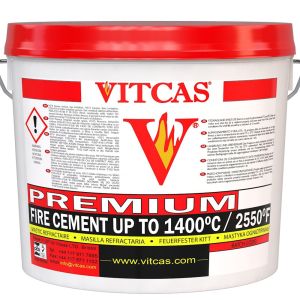 Premium 1P Sealing & Luting Compound 1400°CSpecial Price £35.99 £29.99 Regular Price £59.99 £49.99
Vitcas Premium 1P is a high temperature resistant, sealing and luting compound. It serves to a maximum temperature of 1400°C / 2550°F. It is very easy to apply and adheres exceptionally well in relining of bearings and manufacturing with white metals. It prevents attacks from white metals.
Read more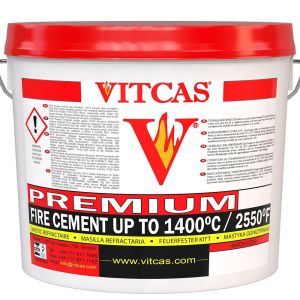 PREMIUM Fire Cement 1250°C -25KgSpecial Price £35.99 £29.99 Regular Price £59.99 £49.99
Vitcas Premium Fire Resistant Cement is designed to withstand temperatures up to 1250°C (2282°F). Its putty-like consistency makes it easy to apply, and it hardens when exposed to high heat. Suitable for both domestic and industrial applications, it is ideal for creating airtight joints in flue pipes and other high-temperature environments.
Read more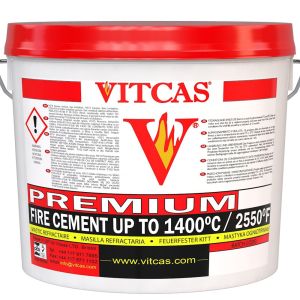 PREMIUM -T Fire CementSpecial Price £35.99 £29.99 Regular Price £59.99 £49.99
Premium T Fire Cement is specifically designed for repairing key components in fish and chip frying ranges, kebab cookers, and other equipment commonly found in fast food and takeaway establishments. It is also used in warming trays and chafing dishes found in restaurants and buffets. This fire cement withstands temperatures up to 1400°C (2550°F), making it ideal for high-heat applications.
Read more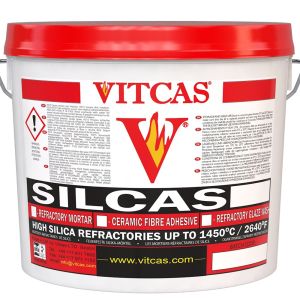 Silcas HP - Refractory Hot Patch CompoundSpecial Price £35.99 £29.99 Regular Price £59.99 £49.99
Vitcas Refractory Hot Patch - Silcas HP is a high silica content patching compound designed for high-temperature repairs. This silica-based, refractory patching compound withstands temperatures up to 1430°C / 2600°F, making it ideal for sealing and repairing door jambs in coke ovens and repairing ladles in non-ferrous foundries.
Read more
Refractory Putty and Repair Compounds for High-Temperature Sealing and Maintenance
VITCAS manufactures specialist refractory putties, fire cements and repair compounds for sealing, luting, stop-off protection, local refractory repair and high-temperature maintenance. Different formulations are engineered for specific duties ranging from white-metal bearing casting and foundry maintenance to furnace, boiler, catering equipment and domestic heating repairs.
These materials combine practical application characteristics with high-temperature performance and strong adhesion to suitable substrates. Depending on the formulation, a VITCAS repair compound may be used to form rigid heat-resistant seals, protect areas from molten metal during casting, repair refractory components or carry out controlled hot patching without a complete equipment cool-down.
Selection should be based primarily on the required function, substrate, repair geometry and operating environment. Service temperature is important, but refractory chemistry, thermal cycling, molten-metal exposure, joint movement and application conditions can be equally significant to long-term performance.
Refractory Putty and Repair Compound Selection Guide
| Product | Material or function | Principal applications | Key technical benefit |
|---|---|---|---|
| VITCAS Premium 1P | Heat-hardening sealing, luting and stop-off compound | Manufacture and relining of white-metal bearings; protection of bearing bases, header rings, oil passages and dowel holes during centrifugal or static casting | Strong adhesion during casting combined with practical removal after the white metal has solidified |
| VITCAS Premium Fire Cement | Finely ground, ready-mixed refractory putty | Sealing rigid heat-exposed joints and local repairs to firebricks and refractory components in furnaces, kilns, boilers, flues, ovens, fireplaces and heating appliances | Excellent adhesion and hard-setting performance with smoke- and gas-tight sealing capability in suitable static joints |
| VITCAS Premium T | Specialist fire cement for commercial catering equipment | Repairing nibbed cones and related heat-exposed components in fish and chip frying ranges, kebab cookers, chafing equipment and warming systems | Purpose-designed maintenance compound for specialist commercial cooking equipment |
| VITCAS Silcas HP | Silica-based refractory hot-patch compound | Controlled hot repairs to coke-oven door jambs and repairs to ladles and launders in non-ferrous foundries | Supports in-service refractory maintenance where approved hot-patching procedures can reduce the need for a complete cool-down |
Industries & Applications
VITCAS refractory putties and repair compounds are used across industrial, commercial and domestic high-temperature applications:
- Bearing Manufacture & White-Metal Casting – stop-off protection, sealing and luting during centrifugal and static bearing casting and relining.
- Foundry & Precision Casting – ladles, launders, mould-related components and specialist sealing or refractory repair duties.
- Coke, Steel & Metallurgical Processing – controlled refractory maintenance including coke-oven door-jamb hot patching.
- Furnaces, Kilns, Boilers & Industrial Ovens – local refractory repairs, rigid joint sealing and maintenance of suitable heat-exposed components.
- Commercial Catering – specialist maintenance of frying ranges, kebab cookers, chafing equipment and related high-temperature components.
- Domestic & Commercial Heating – suitable repairs and rigid joint sealing in fireplaces, stoves, firebacks, flues, boilers and solid-fuel appliances.
VITCAS Premium 1P – Sealing and Luting for White-Metal Bearing Casting
VITCAS Premium 1P is a specialist high-temperature sealing and luting compound developed for the manufacture and relining of bearings with white metal. During centrifugal or static casting, areas that must remain free of molten metal require reliable temporary stop-off protection.
Typical applications include sealing around bearing bases, header rings, oil holes, dowel holes and other areas where white-metal ingress must be prevented.
Premium 1P is rated to 1400°C / 2550°F and hardens when exposed to heat. Its formulation provides excellent adhesion to hot jigs and mandrels while remaining practical to handle during application.
A key engineering advantage is its behaviour after casting. Once the white metal has solidified, Premium 1P can be removed comparatively easily by conventional machining methods. This combination of effective sealing during casting and practical post-cast removal supports cleaner production and can reduce unnecessary machining effort.
Although developed specifically for white-metal bearing work, the sealing and masking characteristics of Premium 1P can also make it relevant to other suitable high-temperature stop-off and luting duties.
VITCAS Premium Fire Cement – Ready-Mixed High-Temperature Repair Putty
VITCAS Premium Fire Cement is a finely ground, ready-mixed refractory putty designed for sealing, jointing and small local repairs in heat-exposed equipment. Rated to 1250°C / 2280°F, it combines smooth application with strong adhesion and develops a hard, durable seal after drying and exposure to heat.
Typical applications include:
- Local repair of compatible firebricks and firebacks.
- Sealing suitable rigid joints in fireplaces, furnaces and heating appliances.
- Jointing internal flue connections where the product and joint design are appropriate.
- Small repairs in boilers, ranges, ovens and other heat-exposed equipment.
- Industrial sealing and refractory maintenance applications requiring a finely worked putty-like material.
Premium Fire Cement is particularly useful where a rigid refractory joint requires good adhesion and resistance to smoke and combustion gases. Correct surface preparation and joint design remain important to achieving a durable seal.
VITCAS Premium T – Specialist Commercial Catering Repair Compound
VITCAS Premium T is formulated for specialist repair and maintenance duties in commercial catering equipment exposed to repeated high-temperature operation.
A principal application is the repair of nibbed cones beneath fish and chip frying ranges and similar cooking equipment. These components help distribute the gas flame correctly and are important to efficient, even heating.
Premium T can also be used in suitable heat-exposed components associated with kebab cooking ranges, chafing dishes, warming trays and related commercial foodservice equipment.
Its application-specific formulation makes Premium T a more appropriate choice for these specialist maintenance duties than treating a general-purpose fire cement as a universal repair compound.
VITCAS Silcas HP – High-Temperature Hot-Patch Repair Compound
Silcas HP is a high-performance silica-based refractory repair compound developed for controlled hot patching in demanding industrial installations. It is rated to 1430°C / 2600°F and sets when exposed to heat.
Typical applications include repairing and sealing coke-oven door jambs and maintenance of ladles and launders in non-ferrous foundries.
The ability to carry out approved hot repairs can provide an important maintenance advantage. Where plant procedures and operating conditions permit, local refractory deterioration may be addressed without waiting for a complete furnace cool-down, helping maintenance teams reduce disruption and manage refractory condition during the operating campaign.
Hot patching remains a specialist operation. The permissible substrate condition, repair geometry and installation method should follow the applicable product instructions and the plant's approved hot-maintenance procedure.
How to Select the Correct Refractory Repair Compound
Repair compounds should be selected according to the actual duty rather than temperature rating alone. A useful specification sequence is:
- Define the function – sealing, luting, stop-off protection, local refractory patching, catering-equipment maintenance or hot repair.
- Identify the substrate – refractory brick, refractory lining, ceramic component, metal casting assembly or another specified surface.
- Assess the repair geometry – determine the depth, width, location and mechanical condition of the defect or joint.
- Confirm service temperature – consider normal operation, local hot spots, thermal cycling and expected peak conditions.
- Review application conditions – establish whether the repair is made cold, warm or under an approved hot-patching procedure.
- Assess the process environment – consider flame, combustion gases, molten metal, abrasion, vibration and chemical exposure.
- Consider movement – rigid heat-setting compounds should be used in locations where their cured behaviour matches the joint design.
- Plan drying and commissioning – follow the applicable requirements for repair thickness, curing and controlled return to temperature.
Repair Geometry and Substrate Condition
A high-quality repair depends on a stable substrate. Loose, friable, contaminated or structurally weakened material should be removed before the repair compound is applied.
Surface preparation can include removal of dust, grease, oil, soot, loose refractory and process deposits that would reduce adhesion. The prepared area should provide sufficient sound surface for the selected compound to develop effective contact.
Small putty or cement repairs are most effective when used within the geometry for which the material is designed. Larger missing sections, extensive brick damage or deep monolithic defects may require a refractory mortar, castable, plastic mouldable or replacement refractory component.
Rigid Sealing and Joint Movement
Fire cements and heat-setting refractory putties generally develop a rigid joint after drying or heating. This behaviour provides valuable sealing and bonding performance in correctly designed static joints.
Where substantial thermal expansion, vibration or repeated mechanical movement must be accommodated, the joint design should use a material or system specifically intended to tolerate that movement. Correctly distinguishing between a rigid refractory joint and a flexible expansion or sealing joint helps prevent premature cracking and loss of seal integrity.
Surface Preparation and Application
For conventional cold repairs, the equipment should be brought to an appropriate safe maintenance condition before work begins. Prepare the surface thoroughly and apply the selected compound within the recommended repair dimensions.
- Remove unstable and contaminated material.
- Clean the repair surface to promote effective adhesion.
- Apply the material consistently throughout the required repair profile.
- Maintain the joint or repair geometry specified for the application.
- Finish the surface without concealing deeper unresolved defects.
- Observe the relevant drying or heat-hardening requirements.
Ready-mixed products provide the advantage of controlled factory formulation and convenient site application. Their supplied consistency should be maintained unless adjustment is specifically permitted by the applicable technical instructions.
Drying, Heat Hardening and Return to Service
Different refractory putties and repair compounds develop their final properties in different ways. Some materials dry and cure at ambient temperature, while others harden more rapidly when exposed to heat.
Controlled drying and heat-up allow moisture to leave the repair progressively and help the compound develop the intended bond without excessive internal pressure.
The return-to-service procedure should take account of repair thickness, substrate condition, equipment geometry and the applicable product requirements. Maximum service temperature describes high-temperature capability under suitable conditions; it does not define the permissible heating rate.
Hot-Patch Refractory Maintenance
Hot-patch compounds such as Silcas HP are developed specifically for selected in-service maintenance duties. This can be valuable in continuous-process industries where refractory wear must be controlled while minimising production interruption.
The decision to perform a hot repair should consider the actual substrate temperature, access, repair depth, process conditions and plant maintenance procedure. Correct material selection must be combined with a controlled installation method suitable for the equipment and operating environment.
Putty, Mortar, Castable or Plastic Mouldable?
| Material type | Typical function | Typical application |
|---|---|---|
| Refractory putty / fire cement | Sealing, filling and local rigid repair | Small joints, local defects, stop-off duties and application-specific repairs |
| Refractory mortar | Setting and jointing refractory units | Thin-joint firebrick, insulating brick and refractory-shape installation |
| Refractory castable | Forming or rebuilding monolithic refractory sections | Larger lining areas, substantial repairs and cast refractory components |
| Plastic mouldable refractory | Mechanically compacted local repair or shaped refractory section | Rammed repairs, furnace details and mechanically retained lining work |
Matching the material form to the geometry and function of the repair is an important part of achieving reliable refractory performance.
Engineering & Application Considerations
VITCAS refractory putties and repair compounds are formulated for defined sealing and maintenance duties. Correct application within those duties helps achieve the intended high-temperature performance.
- Service temperature should be considered together with substrate chemistry and actual process conditions.
- Rigid fire cements and repair putties should be matched to joints and repairs where their hardened behaviour is appropriate.
- Molten-metal, chemical or combustion-gas exposure should be assessed against the selected formulation.
- Local patching requires a sufficiently stable underlying refractory or component.
- Large or structural lining defects may require a more substantial engineered refractory repair system.
- Pressure-containing and other safety-critical assemblies require appropriate engineering design and inspection.
- Hot-patch products should be used only within their specified application conditions and approved plant procedures.
- Drying, curing and heat-up requirements form part of the completed repair system.
Why Specify VITCAS Refractory Putty and Repair Compounds?
- Specialist high-temperature formulations for clearly defined sealing, repair and maintenance duties.
- VITCAS manufacturing expertise across industrial, commercial and domestic refractory applications.
- Strong adhesion to suitable heat-exposed substrates.
- Ready-mixed solutions for efficient and controlled site application.
- Specialist white-metal casting technology with Premium 1P sealing and luting compound.
- High-performance fire cement for rigid sealing and local refractory repair.
- Purpose-designed commercial catering maintenance with Premium T.
- Controlled hot-patch capability with Silcas HP for selected demanding industrial applications.
From precision white-metal bearing casting to foundry maintenance, furnace repair and heat-exposed joint sealing, VITCAS refractory compounds provide application-focused solutions designed to combine practical installation with reliable high-temperature performance.
Frequently Asked Questions
What is a refractory putty or repair compound?
A refractory putty or repair compound is a workable high-temperature material formulated for specific sealing, filling, luting or local patching duties. Depending on its formulation, it may dry at ambient temperature, harden under heat or be designed for specialist hot-repair work.
Are all refractory repair compounds interchangeable?
No. Different formulations are designed for different substrates and functions. Premium 1P is a specialist sealing and luting compound for white-metal bearing casting, Premium Fire Cement is a ready-mixed rigid sealing and repair material, Premium T is designed for specific catering-equipment repairs, and Silcas HP is formulated for controlled industrial hot patching.
Which compound is used for white-metal bearing casting?
VITCAS Premium 1P is specifically developed for sealing, luting and stop-off protection during centrifugal or static white-metal casting and bearing relining. It can protect bearing bases, header rings, oil holes, dowel holes and other areas where molten white metal must be excluded.
What is the maximum service temperature of Premium 1P?
VITCAS Premium 1P is rated to 1400°C / 2550°F. Its principal selection criteria remain the white-metal casting or suitable sealing duty for which its application characteristics are designed.
What is VITCAS Premium Fire Cement used for?
Premium Fire Cement is used for rigid high-temperature sealing, jointing and small local repairs in suitable firebricks, firebacks, flues, fireplaces, stoves, boilers, ovens and industrial refractory equipment.
What temperature is VITCAS Premium Fire Cement rated to?
VITCAS Premium Fire Cement is rated to 1250°C / 2280°F. The complete joint or refractory assembly should also be suitable for the operating temperature and service environment.
Does Premium Fire Cement form smoke- and gas-tight joints?
Premium Fire Cement is designed to provide tight sealing against smoke and combustion gases in suitable rigid joints. Performance depends on correct substrate preparation, joint geometry, application and curing.
What is Premium T used for?
VITCAS Premium T is a specialist fire cement for maintenance of heat-exposed commercial catering equipment, including nibbed cones beneath fish and chip frying ranges and suitable components in kebab cookers, chafing equipment and warming systems.
Which product is used for coke-oven hot repairs?
VITCAS Silcas HP is a silica-based hot-patch compound developed for applications including repair and sealing of coke-oven door jambs.
Can Silcas HP be used in foundries?
Yes. Silcas HP is suitable for specified repair duties in non-ferrous foundries, including maintenance of ladles and launders where the operating conditions are compatible with the product.
What temperature is Silcas HP rated to?
Silcas HP is rated to 1430°C / 2600°F. It is designed specifically for selected hot-patching applications rather than being selected on temperature rating alone.
Can refractory repair compounds be applied while equipment is hot?
Only products developed for the relevant hot-application duty should be used in this way. Silcas HP is specifically formulated for controlled hot-patching applications subject to the appropriate product and plant procedures.
Is fire cement the same as a flexible high-temperature sealant?
No. Fire cement normally dries or heat-hardens to form a rigid joint. Applications that require significant flexibility, vibration tolerance or movement accommodation need a sealing system designed for those conditions.
Can refractory putty repair a large missing section of furnace lining?
Refractory putties are primarily intended for local sealing, filling and repair duties. Larger or deeper refractory defects may require an appropriately specified mortar, castable, plastic mouldable or replacement refractory component.
Can VITCAS Premium Fire Cement be used in fireplaces and stoves?
Yes. Premium Fire Cement is suitable for specified small repairs and rigid heat-exposed joints in fireplaces, stoves, firebacks, flues and other compatible heating equipment.
How should a refractory repair compound be selected?
Select the material according to the repair function, substrate, geometry, service temperature, process atmosphere, joint movement, application conditions and required curing or heat-up procedure. Matching these factors to the formulation is more reliable than choosing a repair compound by temperature rating alone.