
Outdoor Pizza Oven Insulation
Pizza Oven Insulation for Wood-Fired & Outdoor Ovens
VITCAS high-temperature pizza oven insulation for wood-fired pizza ovens, bread ovens and other outdoor cooking installations. The range includes rigid ceramic fibre board for insulating beneath the oven floor, flexible ceramic and bio-soluble fibre blankets for curved oven chambers, loose-fill vermiculite for compatible enclosed cavities, and the adhesives, mesh and exterior refractory materials required to complete the insulation system.
Effective oven insulation works together with refractory thermal mass rather than replacing it. Dense fire bricks or precast refractory sections absorb and store cooking heat, while low-conductivity insulation reduces unwanted heat transfer through the base, dome and surrounding construction.
The position of the insulation determines its required format: use a supported rigid layer beneath the cooking chamber, flexible blanket around curved external surfaces, and a reinforced protective finish over exposed outdoor insulation so that each layer performs one clearly defined thermal or construction function.
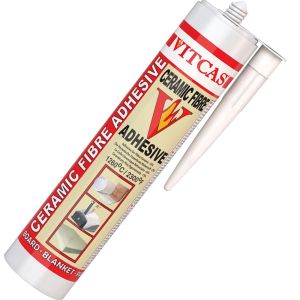 CFA - Ceramic Fibre AdhesiveSpecial Price £11.99 £9.99 Regular Price £23.99 £19.99
VITCAS CFA Ceramic Fibre Adhesive is a versatile bonding solution for ceramic fibre products like blankets, boards, and modules. Ideal for affixing insulation to brick, concrete, or metal, it’s perfect for reinforcing forge interiors or insulating wood-fired ovens.
Read more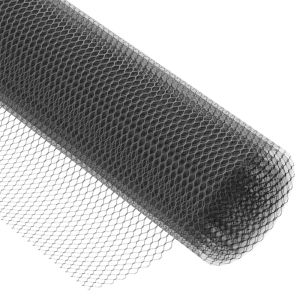 Pizza Oven Wire MeshSpecial Price £17.99 £14.99 Regular Price £29.99 £24.99
Vitcas Wire / Mesh Netting for reinforcing bread and pizza ovens. Its hexagonal structure allows the ceramic fibre insulation blanket to stay in position, tightly sticking to the fire bricks and providing a base for the next layer of material. Also prevents cracking of outdoor oven cement which goes on top of it.
Read more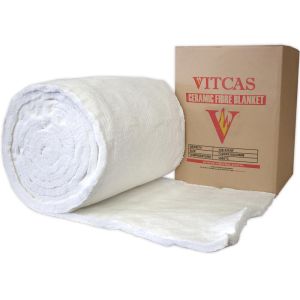 Ceramic Fibre Blanket 1260°C£66.00 £55.00 Regular Price £96.00 £80.00
VITCAS Ceramic Fibre Blanket is resistant to a maximum service temperature of 1260°C (2300°F), with a density of 128kg/m³. Available in thicknesses of 13mm, 25mm, and 50mm, it is widely used in industries like petrochemical, steel, and ceramics. Ideal for insulation and furnace lining applications.
Read more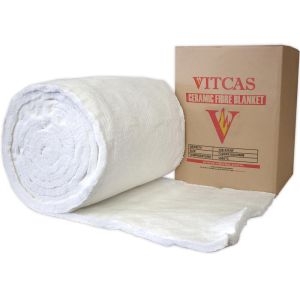 Ceramic Fibre Blanket 1260°C -per Metre£11.99 £9.99 Regular Price £19.19 £15.99
VITCAS Ceramic Fibre Insulation Blanket offers low thermal conductivity and high tensile strength, withstanding temperatures up to 1260ºC (2300ºF). Available by the metre, it comes in 13mm and 25mm thicknesses, 610mm wide, with a density of 128kg/m³, ideal for high-temperature insulation.
Read more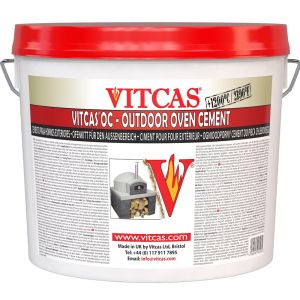 OC - Outdoor Oven CementAs low as £17.99 £14.99 Regular Price £23.99 £19.99
Vitcas Outdoor Pizza Oven Cement is an hydraulic-set mortar designed for exterior jointing with fire bricks in applications such as pizza ovens, barbecues, smokehouses, bread ovens, fire pits and other high-temperature applications. This kind of outdoor fire cement is water-insoluble, resistant to rain and frost and cures without the need for heat.
Read more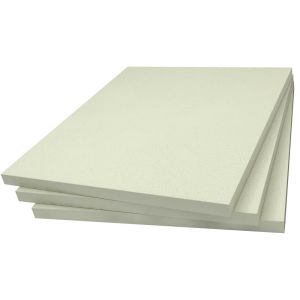 Ceramic Fibre Board 1260°C-VITCAS Insulating BoardAs low as £66.00 £55.00 Regular Price £95.99 £79.99
Vitcas Ceramic Fibre Insulating Board. Resistant to 1260°C/ 2300°F. Dimensions: 1200x1000x25mm and 1200x1000x50mm. Has a low heat conductivity at high temperatures and resists high gas velocity, which makes it ideal for boiler ducts, for kiln linings in glass and ceramics and for stack lining.
Read more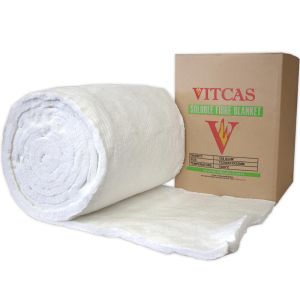 Bio-Soluble Insulation Blanket 1200°C - per Metre£14.39 £11.99 Regular Price £21.59 £17.99
VITCAS Bio soluble fibre insulation blanket is designed to withstand temperatures up to 1200°C (2192°F). This insulation blanket presents a very low health risk due to its low bio-persistence and is safe to handle, making it suitable for both industrial and environmental standards. The blanket is 25 mm thick, 610 mm wide, with a density of 128 kg/m³.
Read more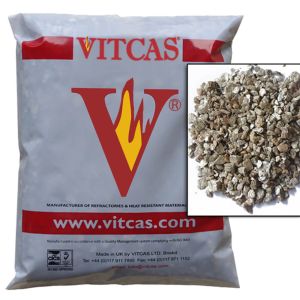 Vermiculite Loose Fill InsulationSpecial Price £35.99 £29.99 Regular Price £47.99 £39.99
Loose Fill Vermiculite in a 100-litre bag is a thermal insulation material that can withstand high temperatures up to 1100°C. It is lightweight and fire-resistant, making it suitable for pipe insulation and various other applications.
Read more
How to Insulate an Outdoor Wood-Fired Pizza Oven
A wood-fired pizza oven normally combines two very different types of material. Dense refractory materials provide thermal mass, absorbing heat from the fire and releasing it back into the cooking chamber, while lightweight insulation reduces the rate at which that stored heat escapes through the floor, dome or walls.
Good pizza oven insulation therefore depends on both material selection and placement. Rigid board is well suited beneath a supported oven base, flexible blanket follows a curved dome, loose vermiculite can fill suitable enclosed voids, and mesh plus an exterior refractory layer protect and reinforce the external insulation system.
Pizza Oven Insulation Material Guide
| Application | Recommended VITCAS Material | Primary Function |
|---|---|---|
| Insulation beneath the oven floor or precast chamber | Ceramic Fibre Board 1260°C | Rigid low-conductivity layer reducing downward heat transfer |
| Insulation around a pizza oven dome or curved chamber | Ceramic Fibre Blanket 1260°C | Flexible high-temperature insulation following curved refractory surfaces |
| Smaller quantities of dome insulation | Ceramic Fibre Blanket 1260°C – per Metre | Flexible insulation supplied by length for smaller or custom projects |
| Low-biopersistence flexible insulation | Bio-Soluble Insulation Blanket 1200°C | Flexible high-temperature insulation using bio-soluble fibre technology |
| Compatible enclosed insulation cavity | Loose-Fill Vermiculite | Lightweight granular insulation for enclosed voids and irregular spaces |
| Fixing fibre insulation to brick or refractory surfaces | CFA Ceramic Fibre Adhesive | High-temperature bonding of compatible ceramic fibre products |
| Retaining blanket and reinforcing the exterior build-up | Pizza Oven Wire Mesh | Secures flexible insulation and provides reinforcement for the rendered surface |
| Exterior rendered layer | Outdoor Oven Cement | Weather-resistant refractory finishing over the reinforced insulation system |
Why Insulate a Wood-Fired Pizza Oven?
The refractory chamber of a pizza oven stores heat during firing. Without suitable insulation, part of that energy is transferred into the supporting base and lost through the external walls or dome instead of remaining available within the oven.
Insulation reduces this unwanted heat flow, helping the refractory mass maintain useful cooking temperatures for longer. This is particularly important when using the oven for more than rapid live-fire pizza cooking, because bread, roasting and retained-heat cooking depend on the energy stored within the refractory chamber after the fire has reduced.
Thermal Mass vs Thermal Insulation
Fire bricks, refractory castings and insulation should not be treated as interchangeable materials. Dense refractory material stores heat; lightweight fibre or vermiculite insulation is selected primarily to restrict heat transfer.
A thick refractory dome can therefore have substantial thermal mass while still benefiting from an external insulation layer. Likewise, a lightweight fibre blanket provides excellent insulation but is not intended to replace the structural refractory cooking chamber.
Insulating Beneath the Pizza Oven Floor
Heat moves downward as well as through the sides and top of an oven. A low-conductivity layer beneath the refractory floor helps thermally separate the hot cooking chamber from its supporting structure.
VITCAS recommends 50mm Ceramic Fibre Board beneath compatible wood-fired pizza ovens. The board should be fully supported on a strong, level base because the insulation layer is not a substitute for the structural foundation required to carry the oven.
Ceramic Fibre Board for Base Insulation
VITCAS Ceramic Fibre Board is a rigid low-density insulation material rated up to 1260°C. It is available in approximately 1200 × 1000mm sheets in 25mm and 50mm thicknesses.
Its rigid format makes it particularly useful beneath pizza oven floors and pre-made refractory oven sections where a controlled insulation thickness is required. VITCAS specifically recommends the 50mm board for the bases of compatible Casa and Pompeii ovens.
Why Base Insulation Must Be Fully Supported
Pizza ovens can impose substantial loads on the materials beneath them. The Ceramic Fibre Board provides thermal insulation, but the structural foundation beneath the board must support the complete oven, including the refractory chamber, external insulation, finish and chimney components.
For modular ovens this is especially important: the base should be designed for the complete installed weight rather than relying on the insulation board itself as a load-bearing foundation.
Insulating the Pizza Oven Dome
Curved refractory chambers require an insulation material that can follow the external geometry. Ceramic Fibre Blanket is flexible enough to wrap around domes, tunnels and irregular oven surfaces while providing low thermal conductivity at high temperatures.
VITCAS Ceramic Fibre Blanket is rated up to 1260°C with a density of approximately 128kg/m³. Full rolls are available in 13mm, 25mm and 50mm thicknesses, while selected 13mm and 25mm formats are also available by the metre for smaller projects.
How the Dome Insulation System Is Built
For compatible wood-fired ovens, the VITCAS external insulation sequence is:
- Complete and appropriately cure the refractory oven chamber.
- Apply Ceramic Fibre Blanket around the external dome or chamber.
- Fix the blanket using CFA Ceramic Fibre Adhesive.
- Secure and reinforce the insulated chamber with Pizza Oven Wire Mesh.
- Apply Outdoor Oven Cement over the reinforced surface.
- Add a compatible decorative finish where required by the oven design.
Each layer has a separate function: the blanket insulates, the adhesive helps retain the blanket, the mesh reinforces the build-up and the Outdoor Oven Cement forms the external refractory finish.
Ceramic Fibre Adhesive
VITCAS CFA Ceramic Fibre Adhesive is a ready-to-use high-temperature adhesive rated up to 1260°C. It is suitable for bonding compatible ceramic fibre blankets and boards to surfaces including brick, refractory masonry and metal.
In pizza oven insulation systems it is used to hold flexible blanket against the refractory chamber during installation. The adhesive complements the mechanical retention provided by the exterior mesh rather than replacing the reinforced outer construction.
Why Pizza Oven Wire Mesh Is Used
VITCAS Pizza Oven Wire Mesh is a galvanised steel hexagonal mesh supplied at approximately 5m × 0.6m with 25mm openings.
Its function is mechanical rather than thermal. The mesh holds ceramic fibre blanket closely around the refractory chamber and creates a reinforced framework for the Outdoor Oven Cement applied over it.
This means wire mesh should not be described as an insulation material by itself. Its value comes from supporting and reinforcing the complete external insulation system.
Outdoor Oven Cement Over the Insulation
VITCAS Outdoor Oven Cement is a hydraulically setting refractory mortar designed for exterior high-temperature construction. After curing, it is water-insoluble and resistant to rain and frost.
When applied over reinforced pizza oven insulation, it provides an exterior refractory surface that protects the insulation build-up and prepares the oven for a compatible decorative finish such as paint or tiling.
Ceramic Fibre Blanket vs Bio-Soluble Blanket
VITCAS supplies more than one flexible high-temperature insulation option. Standard Ceramic Fibre Blanket is rated up to 1260°C, while Bio-Soluble Insulation Blanket is a low-biopersistence fibre product rated up to 1200°C.
Both provide lightweight flexible insulation, but they use different fibre chemistries and have different published temperature limits. Selection should therefore consider the required temperature class, material preference, thickness and installation geometry rather than treating all fibre blankets as identical.
Bio-Soluble Insulation for Outdoor Ovens
VITCAS Bio-Soluble Insulation Blanket is supplied at approximately 25mm thick, 610mm wide and 128kg/m³ density. Its flexible format makes it suitable for compatible high-temperature insulation where a low-biopersistence fibre option is preferred.
As with ceramic fibre blanket, it should be securely retained and enclosed within the finished construction so that the fibrous insulation remains protected from weather, mechanical damage and the working area around the oven.
Loose Vermiculite as an Alternative Insulation Format
VITCAS Loose-Fill Vermiculite is a lightweight granular insulation rated up to 1100°C. It can be used where a pizza oven design provides a suitable enclosed cavity between the hot refractory structure and an outer enclosure.
Loose vermiculite performs a different role from blanket or board. It fills enclosed and irregular spaces but does not create a self-supporting rigid layer or conform tightly around an exposed dome in the same way as secured fibre blanket.
Blanket vs Board vs Loose-Fill Insulation
| Insulation Format | Best Suited To | Key Characteristic |
|---|---|---|
| Rigid fibre board | Beneath oven floors and supported flat sections | Controlled thickness and rigid low-conductivity layer |
| Flexible fibre blanket | Domes, tunnels and curved refractory chambers | Conforms closely to irregular geometry |
| Loose vermiculite | Compatible enclosed cavities and voids | Flows into irregular contained spaces |
Choosing the right physical format is often more important than simply comparing maximum temperature ratings. A rigid board, flexible blanket and granular insulation can all reduce heat transfer, but they are designed to occupy very different positions within an oven.
How Thick Should Pizza Oven Insulation Be?
Insulation thickness depends on the oven construction, material thermal conductivity, chamber size and intended cooking cycle. VITCAS recommends 50mm Ceramic Fibre Board beneath compatible pre-made pizza ovens, while the published VITCAS dome-insulation guidance recommends Ceramic Fibre Blanket around the chamber.
Blanket quantities vary substantially by oven size. For example, VITCAS recommends approximately 3 metres for the compact Casa oven and around 7 metres for larger Pompeii models. Follow the requirements for the individual oven rather than applying one blanket quantity to every installation.
Does More Insulation Always Mean a Better Oven?
Additional insulation can reduce heat transfer, but thickness should still be designed around the complete oven. Excess material can alter the finished dimensions, interfere with surrounding construction or provide little practical benefit once the required thermal performance has been achieved.
Insulation thickness should therefore be considered together with refractory mass, oven size, available footprint and intended cooking cycle rather than increased without reference to the complete build.
Insulation for DIY Pizza Ovens
A DIY pizza oven benefits from planning the insulation before the first fire brick is laid. Base insulation affects the finished cooking-floor height, while dome insulation increases the external dimensions of the completed oven.
Allow sufficient space in the plinth and enclosure for the insulation thickness, reinforcement and external finish. This prevents the finished oven from becoming larger than the available outdoor-kitchen or garden footprint.
Insulation for Pre-Made & Modular Pizza Ovens
Pre-made and modular pizza ovens also require insulation even though their refractory chamber has already been manufactured. The dense cast sections provide thermal mass, while the insulation board and blanket reduce heat transfer through the finished installation.
For compatible VITCAS models, the base is insulated before the oven sections are positioned, while the external blanket system is installed according to the curing and initial-firing sequence specified for that oven.
Outdoor Oven Insulation & Weather Protection
Fibre blankets and boards are thermal insulation materials and should not be treated as exposed exterior finishes. In an outdoor installation, the insulation should be enclosed within the specified protective construction so that it is shielded from direct rain, physical damage and unnecessary moisture ingress.
VITCAS uses wire mesh and Outdoor Oven Cement as part of the external system over compatible blanket-insulated ovens. Good detailing around the base, chimney and exterior finish also helps prevent water from entering the insulation build-up.
For visual guidance on assembling and insulating VITCAS wood-fired ovens, see the VITCAS wood-fired pizza oven video tutorials. The demonstrations show how insulation materials are incorporated around compatible pre-made pizza oven structures.
Selecting Pizza Oven Insulation
- Under the cooking floor: use a supported rigid insulation board where the oven design requires a low-conductivity base layer.
- Around a dome or tunnel: use flexible blanket that can follow the external refractory geometry.
- Enclosed cavities: loose vermiculite can provide insulation where the design creates a suitable contained void.
- Blanket fixing: use compatible Ceramic Fibre Adhesive to retain the insulation against the refractory surface.
- Reinforcement: secure the blanket with pizza oven wire mesh before applying the exterior refractory layer.
- Outdoor protection: enclose insulation within a suitable exterior system rather than leaving fibre or loose-fill materials exposed.
- Thickness: match the insulation thickness and quantity to the specific oven dimensions and construction.
Think of pizza oven insulation as a continuous thermal envelope: the board interrupts heat loss beneath the cooking floor, the blanket or enclosed fill controls heat flow around the chamber, and the reinforced exterior keeps that insulation securely incorporated into the finished outdoor oven.
Frequently Asked Questions About Pizza Oven Insulation
What is the best insulation to put under a pizza oven?
For compatible VITCAS wood-fired ovens, VITCAS recommends 50mm Ceramic Fibre Board beneath the refractory cooking chamber. It provides a rigid low-conductivity insulation layer but must be fully supported by a suitable structural base.
What should be used to insulate the outside of a pizza oven dome?
VITCAS recommends Ceramic Fibre Blanket around compatible pizza oven domes. The blanket can be fixed with Ceramic Fibre Adhesive, secured with Pizza Oven Wire Mesh and finished with Outdoor Oven Cement.
Is ceramic fibre board the same as ceramic fibre blanket?
No. Ceramic Fibre Board is a rigid insulation product suited to flat, supported areas such as beneath an oven floor. Ceramic Fibre Blanket is flexible and better suited to wrapping curved domes and irregular refractory surfaces.
Can loose vermiculite insulate a pizza oven?
Yes, where the oven construction provides a suitable enclosed cavity. Loose vermiculite is rated up to 1100°C and can fill irregular voids, but it performs a different construction role from rigid board or blanket wrapped directly around a dome.
What is the difference between ceramic fibre and bio-soluble insulation blanket?
Both are flexible low-mass high-temperature insulation materials, but they use different fibre chemistries. VITCAS Ceramic Fibre Blanket is rated up to 1260°C, while the Bio-Soluble Insulation Blanket in this application is rated up to 1200°C and uses low-biopersistence fibre technology.
Does pizza oven wire mesh provide insulation?
No. Pizza Oven Wire Mesh is a reinforcement and retention layer. It holds flexible insulation around the chamber and provides support for the Outdoor Oven Cement applied over the blanket.
Why is CFA Ceramic Fibre Adhesive used on a pizza oven?
VITCAS CFA Ceramic Fibre Adhesive helps hold compatible ceramic fibre blanket against the refractory oven surface during installation. The mesh installed over the blanket then provides additional mechanical retention and reinforcement for the exterior finish.
Should ceramic fibre insulation be left exposed outdoors?
No. Fibre insulation should be incorporated within a suitable protective construction. For compatible VITCAS pizza ovens, the blanket is covered with wire mesh and Outdoor Oven Cement before the final decorative exterior is completed.
How much ceramic fibre blanket does a pizza oven need?
The amount depends on the oven dimensions and blanket thickness. As examples, VITCAS recommends approximately 3 metres for the Casa and around 7 metres for several larger Pompeii models. Use the requirements for the individual oven rather than a universal quantity.
Can I insulate a DIY pizza oven in the same way as a pre-made oven?
The same principles apply—rigid insulation beneath the floor and flexible insulation around the chamber—but the exact thickness, quantity and exterior build-up depend on the DIY oven's dimensions and construction. Plan the insulation envelope at the same time as the refractory chamber rather than adding it after the finished dimensions have already been fixed.