
Automotive & Motorsport
Thermal Management Materials for Automotive and Motorsport
Automotive thermal management protects vehicle components, occupants and service systems from heat generated by exhausts, turbochargers, engines and braking assemblies. The VITCAS range includes basalt and heat-treated glass fibre tapes for selected exhaust sections, aluminium-foiled glass fibre cloth for radiant-heat shielding, flexible high-temperature silicone for compatible joints, pipe jointing compound for specified threaded services, and heat-resistant spray paints for prepared metal surfaces. These products may support road cars, motorcycles, competition vehicles, commercial vehicles, buses, agricultural machinery and specialist equipment. Select materials from measured surface temperature, continuous and transient exposure, heat-transfer mode, vibration, abrasion, moisture, road contaminants and fluid compatibility. Check clearances to fuel, brake, electrical and polymer components, and retain any safety-critical original heat shield. A material temperature rating does not confirm vehicle approval, guarantee increased engine output or establish suitability for every exhaust, catalyst, particulate filter or high-voltage installation.
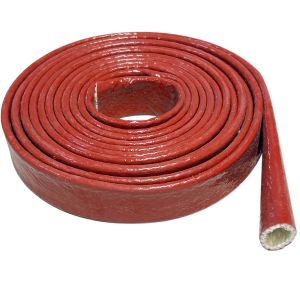 Silicone Rubber Coated SleevingAs low as £6.00 £5.00 Regular Price £18.00 £15.00
Vitcas Silicone Glass Fibre Rubber Coated Sleeving offers excellent protection against corrosive substances and irritant fibres. It is a highly effective thermal insulator with high-temperature resistance, suitable for industrial furnaces, cables, and hoses.
Read more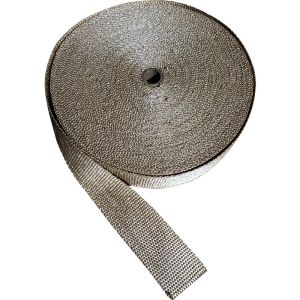 Titanium Basalt Fiber TapeSpecial Price £2.28 £1.90 Regular Price £3.60 £3.00
Vitcas Texturised Basalt Fibre Tapes, also known as Webbing Tapes, are high-performance exhaust insulation wraps. They are resistant to temperatures up to 700°C (1290°F) and provide protection against radiation and chemicals, making them ideal for insulating pipes in high-temperature industrial environments.
Read more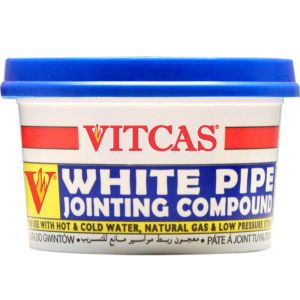 White Pipe Jointing CompoundSpecial Price £2.99 £2.49 Regular Price £5.99 £4.99
VITCAS® White Pipe Jointing Compound 400g is a non-hardening material for creating an airtight seal in pipe threads in plumbing. Prevents water leaks in natural gas and water systems. Conforms to BS EN 751-2:1997 and to BS6956 Part 5: 1992.
Read more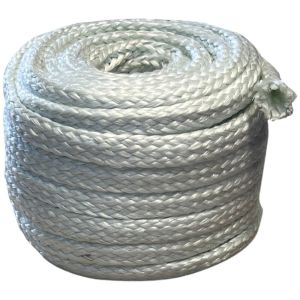 E-Glass Braided Sleeving – Cable & Hose ProtectionAs low as £1.80 £1.50 Regular Price £3.00 £2.50
Hose and Cable Fibreglass Braided Sleeving is made from durable fibreglass, designed to insulate and protect wires, cables, hoses, and pipes from extreme temperatures, aggressive fluids, and gases. Resistant to wear and corrosion, it ensures reliable and long-lasting performance in demanding industrial and commercial applications.
Read more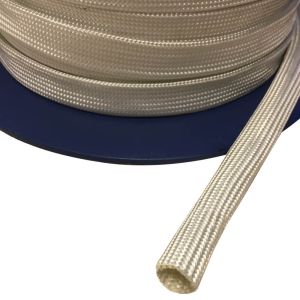 Fibreglass SleevingAs low as £1.80 £1.50 Regular Price £3.00 £2.50
VITCAS Fibreglass Sleeving protects vessels, pipes, and hoses from high temperatures and abrasion, with resistance up to 550°C (1022°F). It helps reduce heat loss, enhancing efficiency. Available in white, it's easy to cut and apply, making it ideal for both industrial and domestic use.
Read more Heat Resistant SILICONE 315°CSpecial Price £5.99 £4.99 Regular Price £11.99 £9.99
VITCAS High Temperature Silicone is a flexible sealant designed to withstand high temperatures up to 315ºC. It is perfect for joints in contact with high temperatures, such as flues, ovens, gaskets, stoves, boilers, and more. Heat Resistant silicone sealant provides excellent adhesion to most building materials, ensuring a strong and durable bond.
Read more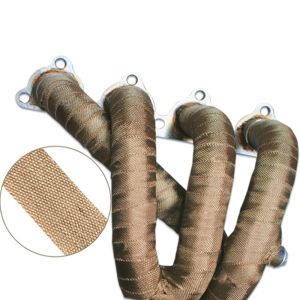 Heat Treated Exhaust Tape 50mm x 2mmSpecial Price £1.86 £1.55 Regular Price £3.60 £3.00
Heat Treated Thermal Exhaust Tape is made from 'E' type glass fibre, ideal for wrapping cables, wiring, and exhausts. It provides insulation, reduces fire risks, and minimises condensation in pipework, making it perfect for high-temperature industrial and automotive applications.
Read more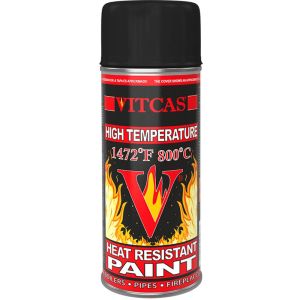 Heat Resistant Spray Paint - Black 800°CSpecial Price £8.39 £6.99 Regular Price £15.59 £12.99
Vitcas Heat Resistant Paint – High Temperature Spray 400ml – Black is designed to withstand extreme temperatures up to 800°C (1472°F). Ideal for painting furnaces, heaters, barbecues, boilers, pipes, and other equipment exposed to high heat in both domestic and industrial environments.
Read more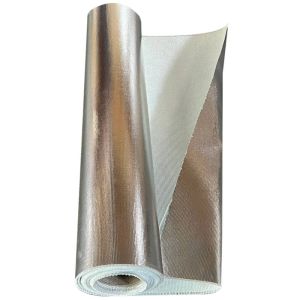 Aluminium Foil E-Glass Fiberglass ClothAs low as £8.40 £7.00 Regular Price £12.00 £10.00
Aluminium Foiled Glass Fibre Cloth, single-sided laminated with aluminium foil. The aluminium layer reduces heat loss and minimises fabric fraying. Designed for thermal insulation of machines, installations, and industrial equipment. Also used in the production of protective clothing, including gloves, for high-temperature environments.
Read more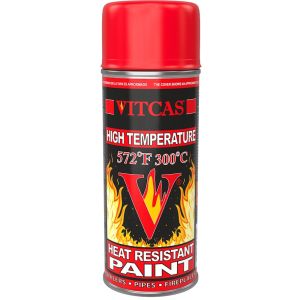 Heat Resistant Spray Paint – Red 300°CSpecial Price £8.39 £6.99 Regular Price £15.59 £12.99
Vitcas Heat Resistant Paint – High Temperature Spray 400ml – Red is designed to withstand temperatures up to 300°C (572°F). It is ideal for painting brake callipers on cars and motorbikes, as well as furnaces, heaters, barbecues, boilers, pipes, and other metal surfaces exposed to high heat.
Read more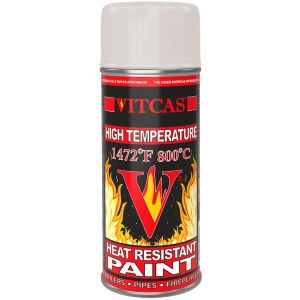 Heat Resistant Spray Paint - Cream/Beige 800°CSpecial Price £8.39 £6.99 Regular Price £15.59 £12.99
Vitcas Heat Resistant Paint - High Temperature Spray 400ml - Cream/Beige is resistant to 800°C (1472°F). This high-temperature spray paint is ideal for painting furnaces, heaters, barbecues, boilers, pipes, and other equipment exposed to extreme heat.
Read more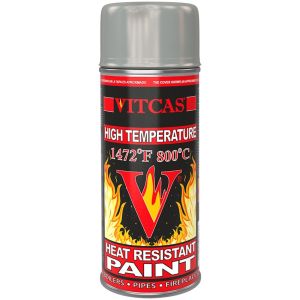 Heat Resistant Spray Paint - Silver 800°CSpecial Price £8.39 £6.99 Regular Price £15.59 £12.99
Vitcas Heat Resistant Paint – High Temperature Spray 400ml – Silver is designed to withstand temperatures up to 800°C (1472°F). It is ideal for painting furnaces, heaters, barbecues, boilers, pipes, and other equipment exposed to high heat.
Read more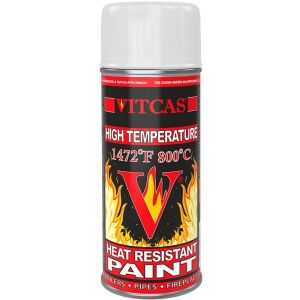 Heat Resistant Spray Paint - White 800°CSpecial Price £8.39 £6.99 Regular Price £15.59 £12.99
Vitcas Heat Resistant Paint – High Temperature Spray 400ml – White is a heat-resistant spray paint designed to withstand temperatures up to 800°C (1472°F). It is ideal for painting stoves, radiators, furnaces, heaters, barbecues, boilers, pipes, and other equipment exposed to high temperatures in both domestic and industrial settings.
Read more
Automotive Heat Protection Starts with the Complete System
Vehicle heat moves by conduction through metal, convection from hot surfaces and gases, and radiation across engine-bay or underbody clearances. An insulation wrap changes this balance: it can reduce heat emitted from the covered surface while increasing the temperature retained within the exhaust wall. A reflective cloth performs differently, because its low-emissivity face is intended to reduce radiant exchange rather than absorb direct exhaust duty.
Define the heat source and the component that requires protection before selecting a material. Record surface temperature at steady load and after heat soak, credible transient peaks, distance and orientation, airflow, vibration, movement, water and salt exposure, oil or fuel contamination, and the consequence of failure. Exhaust-gas temperature must not be used as though it were the external surface temperature. Equally, an air-temperature reading away from the component may miss a local radiant or conductive hot spot.
Select Materials by Thermal Duty
| Thermal-management task | Potential material approach | Checks before specification |
|---|---|---|
| Contain heat at a compatible exhaust section | Basalt or heat-treated glass fibre webbing tape | Pipe surface temperature, exhaust construction, welds, corrosion, overlap, retention and manufacturer approval |
| Reduce radiant exposure across a clearance | Aluminium-foiled glass fibre cloth with the reflective face towards the heat source | Air gap, foil temperature, edge finish, cleanliness, attachment and airflow |
| Form a flexible environmental or thermal joint | High-temperature silicone where temperature and media are compatible | Joint movement, bond surfaces, cure, pressure, fluid contact and service access |
| Seal a compatible threaded service connection | Non-hardening pipe jointing compound | Thread form, fluid or gas, material, temperature, pressure, approval and assembly procedure |
| Finish a heat-exposed metal surface | Silicone-resin heat-resistant spray paint | Actual substrate temperature, colour-specific limit, preparation, curing, chemicals and abrasion |
Exhaust Wraps for Cars, Motorcycles and Competition Vehicles
| Product | Published information | Potential automotive duty |
|---|---|---|
| Titanium Basalt Fibre Tape | 50mm x 2mm; resistance up to 700°C | Wrapping a compatible exhaust or pipe section where the measured surface duty remains within the confirmed limit |
| Heat-Treated Exhaust Tape | 50mm x 2mm E-glass tape; temperature rating up to 550°C | Lower-temperature exhaust wrapping and thermal protection for compatible pipework, hoses or cables |
Choose between the tapes from verified exposure, not colour or appearance. Basalt provides the higher stated temperature in this category. The heat-treated glass tape is intended to reduce initial smoke or fumes compared with untreated material, but commissioning still requires ventilation and observation. Neither tape repairs a leaking, cracked, excessively thinned or poorly supported exhaust.
Confirm that wrapping is permitted by the exhaust, turbocharger, catalyst and vehicle manufacturers. Retained heat may change pipe-wall, flange, weld, sensor, catalyst and underfloor temperatures. Do not cover flexible joints, oxygen-sensor bodies, electrical connectors, identification marks, drain features or service fasteners unless the approved design expressly requires it. Use a secure retention method suited to vibration and thermal cycling, and inspect the wrap after the first heat cycles and at normal service intervals.
Reflective Cloth for Radiant-Heat Control
| Product | Published information | Potential automotive duty |
|---|---|---|
| Aluminium-Foiled E-Glass Fibre Cloth | 1000mm wide glass fibre cloth with one foil face; temperature rating up to 550°C | Fabricated shields or covers intended to reduce radiant exposure around suitable engine-bay, transmission-tunnel or underbody zones |
The foil face should normally view the radiant source across a suitable clearance. If it is pressed directly against a hot pipe, the assembly behaves mainly as a conductive layer and the reflective benefit is reduced. Oil, mud, oxidation and physical damage can also increase surface emissivity. Design the air gap, supports and edge treatment so the cloth cannot flap, fray, enter rotating parts or contact sharp edges.
The published 550°C value should not be assumed to apply identically to the glass substrate, aluminium surface and laminating system under direct contact. Confirm the permissible temperature at the foil and bond line, as well as resistance to water, road salt, fuels, oils and cleaning agents. This cloth is not a structural panel, an acoustic barrier or a certified replacement for an original vehicle heat shield.
Flexible and Threaded Sealing Products
| Product | Published information | Potential automotive duty |
|---|---|---|
| Heat-Resistant Silicone | 315°C; 310ml cartridge; curing rate stated as 3mm per 24 hours | Flexible sealing or bonding on compatible, clean components outside direct exhaust-gas and safety-critical fluid service |
| White Pipe Jointing Compound | Resistant up to 200°C and 7 bar for specified threaded services | Compatible threaded connections only, after confirming the conveyed medium, materials, pressure and applicable vehicle requirements |
High-temperature silicone is a flexible sealant, not a universal formed-in-place exhaust gasket. Keep it away from direct exhaust-gas paths unless documented for that joint. Do not use it on fuel, brake, hydraulic, coolant, refrigerant or lubrication systems without explicit chemical, pressure and approval data for the exact service. Prepare clean, dry and grease-free surfaces and allow the specified cure before heat exposure.
Pipe jointing compound is limited to correctly formed threaded fittings and compatible media. Its temperature and pressure values must both be respected. It must not compensate for damaged threads, an incorrect fitting, a cracked pipe or an unsuitable connection standard. Gas, LPG and other safety-critical work must follow current regulations, the vehicle or equipment manufacturer's instructions and any competence requirements.
Heat-Resistant Paints for Prepared Vehicle Components
| Product | Catalogue temperature | Potential automotive duty |
|---|---|---|
| Black Heat-Resistant Spray Paint | 800°C | Satin-matt finish for compatible bare-metal exhaust or other heat-exposed components |
| Red Heat-Resistant Spray Paint | 300°C | Red satin finish for prepared components, including suitable brake-calliper exteriors within the verified surface limit |
| Cream Heat-Resistant Spray Paint | 800°C | Cream or beige satin-matt finish for compatible heat-exposed bare metal |
| Silver Heat-Resistant Spray Paint | 800°C | Silver satin-matt finish for prepared metal exhausts and other suitable hot components |
| White Heat-Resistant Spray Paint | 800°C | White satin-matt finish for compatible heat-exposed surfaces confirmed by the product instructions |
Temperature resistance describes the coating's heat duty; paint does not insulate the substrate or raise the component's permissible temperature. The red product has a substantially lower limit than the other colours. Measure the intended surface rather than assuming that every calliper, manifold or tailpipe remains within a generic rating.
Remove loose corrosion and contamination, confirm substrate compatibility and follow the current application instructions. The pages specify multiple thin coats, application at 15°C to 25°C and no primer. They also state that full curing is achieved by heating to 160°C for one hour, although some Q&A copy says room-temperature drying may be acceptable. Treat drying and full thermal cure as different stages and obtain clarification where the component cannot follow the stated curing cycle. Never coat friction faces, brake discs, pads, seals, bleed screws, sensors, electrical contacts, identification labels or mating surfaces.
Vehicle Zones and Engineering Checks
| Vehicle zone | Typical heat concern | Specification focus |
|---|---|---|
| Manifold, header and downpipe | High radiation and repeated thermal cycling | Alloy, wall thickness, welds, measured surface peaks, oxygen sensors, movement and wrap approval |
| Turbocharger and after-treatment | Concentrated heat near catalyst, DPF, wiring and fluid lines | OEM temperature limits, regeneration duty, sensor access, approved shields and fire-critical clearances |
| Engine bay | Radiant exposure of hoses, reservoirs, looms and electronic modules | View factor, air gap, airflow, maximum component temperature and resistance to fluids |
| Floor, bulkhead and transmission tunnel | Heat transfer towards cabin, trim or controls | Original shields, fire separation, attachment, abrasion, drainage and occupant-side temperature |
| Brake assembly | High local temperature, dust, water, salt and mechanical hazards | Measured calliper temperature, coating only permitted areas, chemical resistance and inspection access |
| Commercial and heavy vehicles | Long duty cycles, after-treatment regeneration and limited service access | Fleet duty profile, hot parking, nearby tanks or lines, inspection interval and manufacturer requirements |
Installation, Inspection and Commissioning
- Establish a baseline: inspect the exhaust, shields, supports, wiring, hoses, fuel system and nearby polymers before adding insulation. Record temperatures under the intended load.
- Resolve defects first: repair leaks, corrosion, broken mountings, damaged cables and missing original shields rather than concealing them.
- Protect serviceability: retain access to sensors, fasteners, joints, inspection points and identification marks.
- Control movement: prevent tapes and cloth from loosening, fretting, absorbing leaking fluids or reaching steering, belts, fans, driveshafts and road surfaces.
- Commission safely: complete the required drying or curing, operate in a ventilated area, watch for smoke, odour, discolouration and abnormal temperatures, and stop if a fuel or electrical risk develops.
- Verify the result: repeat measurements after steady operation and heat soak. Check both the protected component and the hotter insulated source.
- Maintain records: note material, batch, location, measured duty and inspection interval for workshop, fleet and competition-vehicle traceability.
Do not run an engine in an enclosed workshop to cure a coating or test insulation without effective exhaust extraction. Catalytic converters do not make indoor exhaust exposure safe. Aerosol application also requires ventilation, control of ignition sources, suitable personal protective equipment and compliance with the current safety data sheet.
On electric and hybrid vehicles, locate and isolate high-voltage systems in accordance with vehicle-specific instructions before work. The products in this category are not presented as battery thermal-runaway barriers, high-voltage insulation systems or crash-certified enclosures. Motorsport installations must also comply with the relevant championship regulations, scrutineering requirements and homologated component conditions.
Frequently Asked Questions
Does exhaust wrap reduce under-bonnet temperature?
It can reduce heat radiated and convected from the wrapped surface, but the result depends on coverage, exhaust load, airflow and surrounding geometry. The wrap also retains more heat in the exhaust wall, so measure temperatures on both sides of the intervention.
Will wrapping an exhaust increase horsepower?
No specific increase can be guaranteed from material selection alone. Engine output depends on the complete intake, combustion, turbocharging, exhaust, calibration and test conditions. Treat the tape as a thermal-management product unless vehicle-specific dynamometer evidence demonstrates otherwise.
Should I choose basalt or heat-treated glass fibre tape?
The basalt tape states a 700°C limit in its body copy, while the heat-treated E-glass tape is catalogued at 550°C. Confirm the measured pipe temperature, exhaust construction, exposure duration and installation approval; do not select only from appearance.
Can exhaust wrap be fitted over rust or a leak?
No. Wrapping can hide deterioration and absorb leaking fluids. Repair or replace damaged sections, check wall thickness and correct support faults before considering insulation.
Can I wrap a turbocharger, catalytic converter or DPF?
Only with approval for that exact component and duty. Retained heat can affect housings, bearings, sensors, substrates and regeneration temperatures. Use the vehicle, turbocharger and after-treatment manufacturers' limits.
Is exhaust-gas temperature the correct value for selecting tape?
No. Tape is exposed mainly to the external pipe surface and its local environment. Gas, inner-wall, outer-wall and nearby-air temperatures differ and change with load, material, thickness, airflow and insulation.
How should aluminium-foiled cloth face the heat source?
For radiant shielding, the clean foil face should normally face the source across a suitable air gap. Confirm attachment and maximum foil or bond-line temperature. Direct contact changes the heat-transfer mechanism and can reduce the reflective benefit.
Can the foiled cloth replace a missing original heat shield?
Not automatically. An original shield may provide defined geometry, structural retention, fire protection and crash or roadworthiness functions. Repair or replace it with an approved solution where required.
Can the 315°C silicone seal an exhaust flange?
Do not assume so. Flanges can exceed its rating and are exposed to exhaust gas, pressure, movement and joint loading. Use a gasket or sealant explicitly approved for that flange and vehicle.
Is the silicone suitable for fuel, brake fluid, coolant or oil?
Only if current technical data explicitly confirms compatibility with the exact fluid, temperature, pressure and joint design. The temperature rating alone does not establish chemical or safety-critical vehicle approval.
Where can the white pipe jointing compound be used on a vehicle?
Only on compatible threaded connections within its documented media, material, temperature and pressure limits. It is not an exhaust repair paste or a substitute for the specified seal on brake, fuel, hydraulic or refrigerant systems.
Why is the red paint rated lower than the other colours?
The red version is catalogued at 300°C, whereas black, cream, silver and white are listed at 800°C. Pigment and formulation can change temperature capability, so apply the limit of the selected colour rather than a range-wide value.
Can red heat-resistant paint be applied to brake callipers?
It is listed for suitable calliper exteriors, but verify that the measured surface remains below 300°C. Mask discs, pads, seals, pistons, bleed screws, sliding faces, threads and labels, and preserve inspection access.
Can the 800°C paints be used on an exhaust?
Potentially, on a compatible prepared surface within the stated temperature. Confirm the substrate, corrosion condition, chemical exposure and curing cycle. Paint is a finish and does not reduce the metal temperature.
Must heat-resistant paint be cured at 160°C?
The product instructions distinguish touch drying from full curing and state one hour at 160°C for full hardening. Because some Q&A text permits room-temperature drying, obtain current written guidance if the part cannot follow the specified thermal cure.
Are these products approved for road or competition vehicles?
A catalogue listing does not establish OEM approval, road legality, homologation or compliance with championship rules. Confirm vehicle warranty, insurance, emissions, inspection and motorsport requirements before modification.
Are these materials suitable for EV battery fire protection?
No such claim is established by this category. Battery enclosures and high-voltage systems require vehicle-specific electrical, fire, crash and thermal-runaway engineering. Follow the manufacturer and use competent high-voltage personnel.
What information is needed to specify an automotive heat-protection material?
Provide vehicle and component details, road or competition use, heat source, measured surface and transient temperatures, distance, airflow, duty cycle, existing shields, substrate, fluids, vibration, weather exposure, available space, target component temperature and approval constraints.