
High-Temperature Materials for Welding & Industrial Heat Protection
Technical Fabrics for Welding Barriers, Heat Shields and Thermal Covers
High-temperature fabrics and sewing threads support engineered barriers, blankets, curtains, quilts, insulation covers and shields used around welding, cutting, furnaces and hot process equipment. The VITCAS range includes loomstate and coated glass fibre cloth, silica and biosoluble ceramic fibre fabrics, plus para-aramid, wire-reinforced glass and silica sewing threads. Performance varies by fibre, coating, reinforcement, weave and exposure mode, with different limits for continuous and short-term service. Specify against radiant heat, sparks, molten splash, flame contact, abrasion, weather and chemicals. Raw textiles are components, not automatically certified welding curtains, blankets or personal protective equipment.
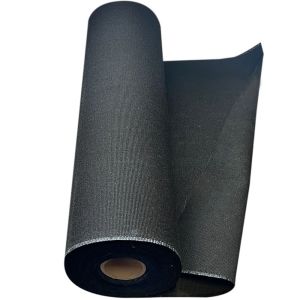 Graphite Coated Fiberglass Cloth 1000°CSpecial Price £24.00 £20.00 Regular Price £36.00 £30.00
Graphite Coated Fiberglass Cloth enhances heat resistance, withstanding 1000°C (1830°F) for short exposure and 800°C (1470°F) for continuous use. It also offers excellent abrasion resistance, making it ideal for heat-proof quilts and welding defenders.
Read more Kevlar Sewing ThreadSpecial Price £35.99 £29.99 Regular Price £96.00 £80.00
Kevlar / Para-Aramid Sewing Thread provides exceptional high-temperature resistance and strength. Its high durability and resistance to corrosive chemicals and abrasion make it ideal for tough, high-temperature applications.
Read more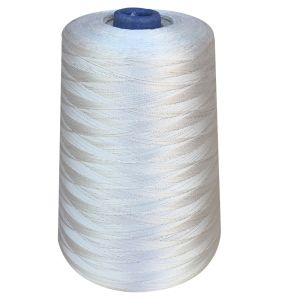 Fiberglass Sewing Thread With WireSpecial Price £96.00 £80.00 Regular Price £144.00 £120.00
Vitcas Fibreglass Sewing Thread Reinforced with Wire is high strength and resistant to corrosive, harmful acids and alkalis. It is also highly heat resistant at 600°C. The glass fibre sewing thread with wire can be used for machine stitiching of e.g. fire protective clothing etc.
Read more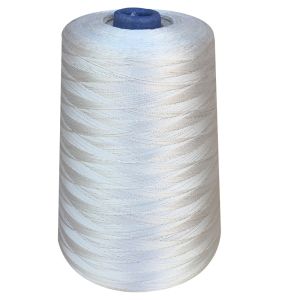 Silica Fibre Sewing ThreadSpecial Price £96.00 £80.00 Regular Price £144.00 £120.00
Vitcas Silica Fibre Sewing Thread can be used in high temperature industrial applications due to its very high heat resistance at 1400°C / 2552°F. The silica fibre thread has high tensile strength making it very suitable for sewing fire blankets, welding and fireproof garments, as well as insulating products.
Read more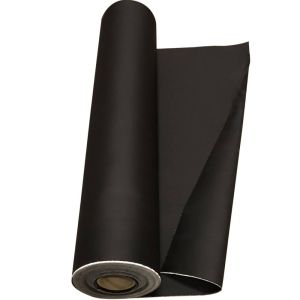 Neoprene Coated Fiberglass ClothSpecial Price £10.80 £9.00 Regular Price £21.60 £18.00
Neoprene Coated Glass Fibre Cloth is highly durable and resistant to oil spills, corrosion, and weather. It withstands short-term temperatures up to 180°C (360°F). Ideal for outdoor applications like pipe binding, fire screens, and protective covers in industrial environments.
Read more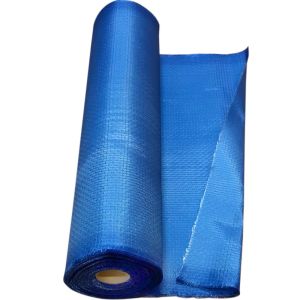 Acrylic Double-Sided Fiberglass Cloth - BlueSpecial Price £9.60 £8.00 Regular Price £12.00 £10.00
Acrylic Coated Fibreglass Cloth is double-sided with a blue acrylic coating, enhancing abrasion resistance. Its rigid structure and excellent insulation properties make it perfect for use in insulation jackets, expansion joints, and seals, providing durability and protection in high-temperature environments.
Read more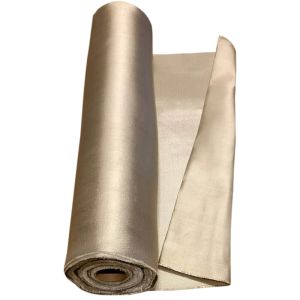 Heat Treated Wire-Reinforced Fiberglass Cloth£24.00 £20.00 Regular Price £32.40 £27.00
Heat-Treated Wire-Reinforced Glass Fibre Cloth can withstand temperatures up to 600°C (1110°F). It offers excellent resistance to abrasion, chemicals, and oil spills. Additionally, it is water-repellent and weatherproof, making it highly suitable for various industrial applications.
Read more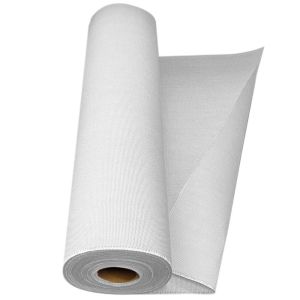 E-Glass Fiberglass Cloth Loomstate£12.00 £10.00 Regular Price £24.00 £20.00
Glass Fibre Loomstate Cloth offers flexibility with continuous resistance up to 550°C (1020°F) and short-term resistance up to 600°C (1110°F). Ideal for curtains, drapes, and blankets. Non-combustible with high mechanical strength for high-temperature applications.
Read more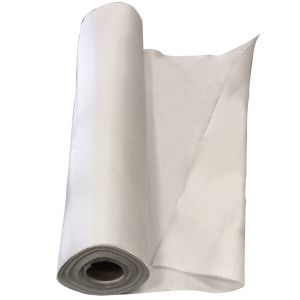 Acrylic Coated Glass Fibre FabricSpecial Price £8.40 £7.00 Regular Price £12.00 £10.00
Acrylic Coated Glass Fibre Cloth is enhanced with an acrylic coating, providing increased rigidity and heat resistance - up to 550°C (1022°F) for continuous use and 600°C (1112°F) for short-term exposure. It also offers excellent abrasion resistance.
Read more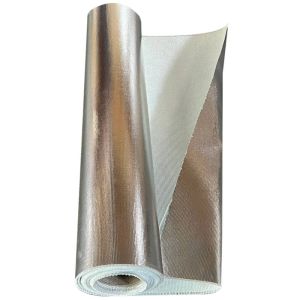 Aluminium Foil E-Glass Fiberglass ClothAs low as £8.40 £7.00 Regular Price £12.00 £10.00
Aluminium Foiled Glass Fibre Cloth, single-sided laminated with aluminium foil. The aluminium layer reduces heat loss and minimises fabric fraying. Designed for thermal insulation of machines, installations, and industrial equipment. Also used in the production of protective clothing, including gloves, for high-temperature environments.
Read more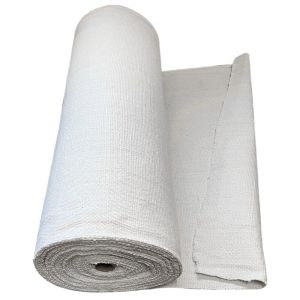 Ceramic Fibre Cloth Biosoluble 1100°CSpecial Price £15.59 £12.99 Regular Price £23.99 £19.99
Vitcas Ceramic Fibre Cloth can withstand high temperatures up to 1100°C (2010°F), making it ideal for use in splash protection in the metallurgical industry, for the collection of high-temperature debris, and as heatproof curtains for furnace doors. It is also resistant to chemicals and bio soluble.
Read more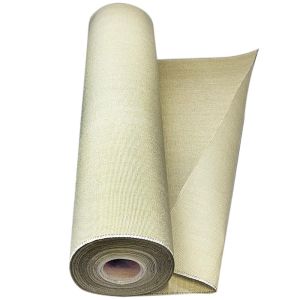 Vermiculite Coated Fiberglass Cloth 1000°CSpecial Price £24.00 £20.00 Regular Price £36.00 £30.00
Vermiculite Coated Fibreglass Cloth improves temperature resistance up to 1000°C (1830°F) by adding vermiculite to glass fibres. It is highly flame-resistant, making it ideal for use in furnace door curtains and other applications requiring direct flame protection.
Read more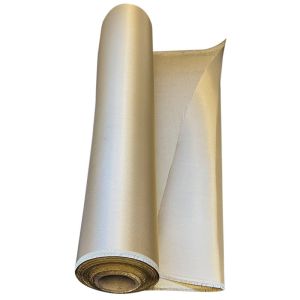 Vermiculite Coated Silica Fibre Cloth 1100°CSpecial Price £17.99 £14.99 Regular Price £30.00 £25.00
Vitcas Silica Fibre Cloth is manufactured from vermiculite-coated silica fibres with a satin weave. It is resistant to 1100°C (2010°F) for continuous use, making it ideal for firefighting equipment. It also excels in the filtration of molten metals and high-temperature dust and offers great abrasion resistance for demanding industrial applications.
Read more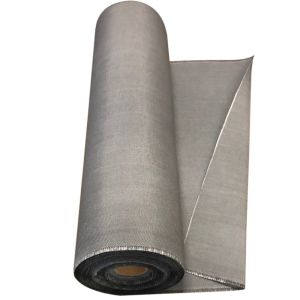 Calcium Silicate Coated Glass ClothSpecial Price £18.00 £15.00 Regular Price £24.00 £20.00
Vitcas Calcium Silicate Coated Glass Cloth is resistant to temperatures up to 750°C / 1382°F. It also offers resistance to abrasion, chemicals, oil spills, and is water repellent and weatherproof, making it ideal for applications like flexible expansion joints.
Read more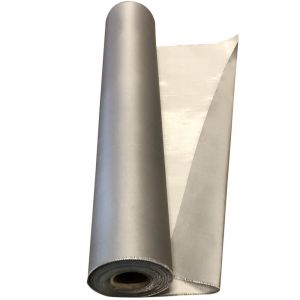 Polyurethane PU Coated Fiberglass ClothSpecial Price £8.40 £7.00 Regular Price £12.00 £10.00
Polyurethane (PU) Coated Glass Fibre Cloth is a halogen-free, gas-impermeable, Fire & Smoke fabric. It withstands short-term temperatures up to 600°C (1110°F) and offers high durability and thermal stability, making it ideal for applications requiring reliable heat and flame resistance.
Read more Silicone Coated Glass Fibre ClothAs low as £14.40 £12.00 Regular Price £24.00 £20.00
Silicone Coating Glass Fibre Cloth is coated with silicone on both sides. This gives it high water repellence, abrasion and chemical resistance, which makes it suitable for applications in fire protection systems and insulation jackets. Resistant to high temperatures.
Read more
Industrial Heat Protection for Welding and Hot Work
Welding, flame cutting, brazing, grinding and related hot work can expose people, equipment and adjacent surfaces to several different hazards. These include ultraviolet and infrared radiation from the arc, radiant and convective heat, sparks, hot slag, molten-metal droplets, direct flame, hot debris and ignition of nearby combustibles. No single temperature figure describes all of these exposures.
VITCAS high-temperature fabrics can be fabricated into application-specific thermal barriers, curtains, blankets, removable covers and protective shields. Selection must be based on the complete duty, installation geometry and finished assembly. A suitable textile barrier complements risk assessment, process controls, ventilation, housekeeping and personal protective equipment; it does not replace them.
Published Temperature Ratings and Material Selection
Continuous temperature is the level at which a material is intended to remain in service under the stated conditions. A short-term or maximum rating applies only to limited exposure and must not be treated as a continuous design temperature. Actual fabric temperature depends on distance from the source, heat flux, orientation, ventilation, contact, duration and whether hot particles remain on the surface.
| Material | Continuous rating | Short-term or stated maximum | Typical selection consideration |
|---|---|---|---|
| E-Glass Loomstate Cloth | 550°C | 600°C short term | Flexible cloth for drapes, blankets and opaque barriers where easy forming is required |
| Acrylic Coated Glass Fibre Cloth | 550°C | 600°C short term | Stiffer, abrasion-resistant outer layer for covers and insulation jackets |
| Double-Sided Acrylic Glass Fibre Cloth | 550°C | 600°C | Rigid, weather- and abrasion-resistant cover fabric; confirm exposure duration |
| Graphite Coated Glass Fibre Cloth | 800°C | 1000°C short term | Abrasion-resistant heat shields, welding blankets and foundry splash barriers |
| Vermiculite Coated Glass Fibre Cloth | 800°C | 1000°C short term | Direct-flame and molten-splash duties, subject to process-specific verification |
| Vermiculite Coated Silica Fibre Cloth | 800°C | 1100°C short term | High-temperature blankets, shields and stress-relieving insulation where silica construction is required |
| Biosoluble Ceramic Fibre Cloth | 1000°C | 1100°C short term | Furnace curtains, hot-debris collection and selected molten-splash barriers |
| Aluminium Foil E-Glass Cloth | 550°C | 550°C | Low-emissivity reflective face for radiant-heat control; protect the laminated face from unsuitable direct exposure |
| Calcium Silicate Coated Glass Cloth | 700°C | 750°C short term | Abrasion-, weather- and water-resistant industrial covers and flexible connections |
| Heat-Treated Wire-Reinforced Glass Cloth | 550°C | 600°C | Dimensionally stable, reinforced fabric for vertical or mechanically demanding installations |
| PU Coated Glass Fibre Cloth | 550°C | 600°C short term | Gas-impermeable, reflective fire-and-smoke fabric; the page separately limits the PU coating to 180°C, so confirm the exposed-face duty |
| Silicone Coated Glass Fibre Cloth | 260°C coating; 550°C glass core | 310°C coating | Water-, chemical- and abrasion-resistant outer covers; the coating governs an intact coated surface |
| Neoprene Coated Glass Fibre Cloth | 120°C | 180°C short term | Weather-, oil- and corrosion-resistant covers away from the highest heat zones |
The figures above are product-specific published limits, not guarantees of protection against a defined welding process or molten metal. Fabric weight, thickness, weave, coating condition, inclination and the energy and duration of exposure all affect performance. Confirm the current technical data and any application-specific test evidence before selecting a safety-critical barrier.
Choosing Fabric for the Exposure
Sparks, Spatter and Hot Slag
For an opaque drape or general welding blanket, flexible loomstate glass fibre can provide a practical base fabric. More severe spatter, abrasion or localised heat may require graphite- or vermiculite-coated cloth. The barrier should be inclined or arranged so hot particles shed rather than collect in folds, pockets or horizontal areas. A short-term temperature rating does not define resistance to repeated droplets or a pool of molten material.
Molten-Metal Splash
Product information identifies graphite-coated glass fibre, vermiculite-coated glass fibre and biosoluble ceramic fibre cloth for selected splash-protection duties. Suitability remains dependent on the molten metal or alloy, temperature, droplet mass, splash rate, angle of impact and fabric condition. Performance against one molten metal must not be assumed for another. Obtain relevant test data for personnel protection or critical plant shielding.
Radiant Heat and Hot Equipment
Aluminium-foil cloth provides a low-emissivity face that can reduce radiant heat transfer when the reflective surface is clean, correctly oriented and separated from the source. Coated glass fabrics are also useful as durable outer layers for removable insulation covers and machinery jackets. The cold-face temperature must be calculated from the complete assembly, including insulation thickness, seams, fasteners and air gaps; it cannot be predicted from the outer cloth rating alone.
Direct Flame and Furnace Openings
Vermiculite-coated glass, vermiculite-coated silica and ceramic fibre cloth are the higher-temperature options within this application range. Even where direct-flame use is stated, exposure duration, flame velocity, atmosphere and mechanical loading must be established. Curtains at furnace doors also require appropriate overlaps, edge restraint and clearance from moving equipment.
Weather, Oil and Chemical Exposure
Neoprene, silicone, acrylic and calcium-silicate coatings improve selected environmental or mechanical properties, but each coating changes the usable temperature and surface behaviour. Neoprene is a lower-temperature option for outdoor and oil-exposed covers. Silicone provides water and chemical resistance to 260°C continuously at the coating. Calcium-silicate cloth combines a higher continuous rating of 700°C with weather and abrasion resistance. Check the actual chemical rather than relying on a general resistance statement.
Sewing Threads and Fabricated Assemblies
A heat barrier is limited by its weakest component. Select high-temperature sewing thread, hems, fasteners, eyelets, wire, hooks and insulation to match the assembly duty. Position seams away from the most intense exposure where possible and use overlaps to avoid direct paths for sparks and radiation.
| Thread | Published temperature | Selection note |
|---|---|---|
| Para-Aramid Sewing Thread | Up to 400°C; begins to decompose at approximately 500°C | High tensile and abrasion resistance where mechanical strength is a priority |
| Wire-Reinforced Glass Fibre Thread | Up to 600°C | Reinforced stitching for glass-fibre covers, garments and industrial insulation assemblies |
| Silica Fibre Sewing Thread | 1000°C continuous; 1400°C short term | High-temperature stitching for compatible silica fabrics, blankets and insulation products |
Welding Screens, PPE and Workplace Controls
An opaque thermal fabric is not automatically a compliant welding screen. In Great Britain, HSE advises that welding curtains and screens used to protect nearby workers from arc light should conform to BS EN ISO 25980 or provide at least the same level of protection. Confirm conformity for the finished curtain or screen; a fabric temperature rating does not demonstrate control of ultraviolet, visible or infrared radiation.
Raw cloth and thread are also not automatically certified welding blankets, protective clothing or other personal protective equipment. Finished products require appropriate design, fabrication, testing, conformity assessment, instructions and marking for their intended use. They do not replace suitable welding helmets, eye protection, gloves, clothing or respiratory protection.
Textile screens do not control welding fume. Indoor welding normally requires effective local exhaust ventilation at source, with suitable respiratory protective equipment where engineering control does not adequately control exposure. Position barriers so they do not obstruct the designed airflow or create a confined accumulation of fume or shielding gas.
Installation, Inspection and Hot-Work Safety
- Assess the process: record the welding or cutting method, current, consumable, metal, duration, source-to-barrier distance and expected sparks, slag or splash.
- Remove combustibles: do not use a textile barrier as justification for leaving combustible material within the hot-work zone.
- Control gaps: overlap panels and protect the floor, rear and sides where sparks or radiation can pass around an incomplete screen.
- Avoid particle traps: tension or incline blankets so sparks and molten droplets do not accumulate in folds.
- Protect edges and seams: keep vulnerable hems, coatings and attachment points away from the highest heat flux.
- Maintain safe clearances: prevent curtains from contacting the arc, electrode, torch, hot workpiece or moving machinery unless designed for that contact.
- Inspect before reuse: replace material showing holes, embrittlement, glazing, delamination, contamination, damaged coatings, open seams or weakened fixings.
- Operate a safe system of work: use the required risk assessment and hot-work permit. HSE guidance calls for a fire watch during and after hot work where combustible material cannot be removed, normally for at least 30 minutes and potentially 60 minutes where ignition may be difficult to detect.
Frequently Asked Questions
What is the difference between a welding curtain and a welding blanket?
A curtain or screen is normally suspended to separate the work area and protect people or equipment around it. A blanket is draped over or positioned near an object or surface. The required performance differs because orientation affects radiant heat, spark shedding and the possibility of molten material collecting on the fabric.
Can any heat-resistant fabric be used as a welding screen?
No. A screen protecting nearby people from welding arc radiation should conform to BS EN ISO 25980 or provide equivalent protection, as advised by HSE. Temperature resistance alone does not establish optical protection.
How should I interpret continuous and short-term temperature ratings?
The continuous rating applies to sustained service under the stated product conditions. The short-term figure applies only to limited excursions. It must not be used as the normal operating temperature, and neither figure replaces assessment of heat flux, duration, contact and repeated spatter.
Which fabric is suitable for welding sparks and spatter?
Loomstate glass fibre is a flexible option for general opaque barriers and blankets. Graphite- or vermiculite-coated fabrics may be appropriate for more demanding heat, abrasion and spatter. Final selection depends on process severity, distance, orientation, fabric weight and whether particles can remain on the surface.
Which fabrics can be considered for molten-metal splash?
The product information identifies graphite-coated glass fibre, vermiculite-coated glass fibre and biosoluble ceramic fibre cloth for selected splash duties. Confirm performance for the particular molten metal or alloy, temperature, droplet size and splash rate before use.
Is aluminium-foil glass cloth suitable for direct welding spatter?
Its principal advantage is a reflective, low-emissivity surface for radiant-heat control. Do not assume that the laminated foil face will tolerate direct flame or repeated molten spatter unless the complete material has suitable test evidence for that exposure.
Does a 550°C glass core make silicone-coated cloth suitable for 550°C service?
Not while the silicone coating must remain functional. The product information states 260°C continuous and 310°C short term for the coating, although the glass core is rated to 550°C. The exposed coating and required surface properties govern the intact composite.
Which thread should be used for a high-temperature blanket?
Match the thread to the fabric, continuous temperature, short excursions and mechanical load. Para-aramid prioritises strength up to 400°C, wire-reinforced glass fibre is rated to 600°C, and silica thread is rated to 1000°C continuously and 1400°C short term.
Are these fabrics certified personal protective equipment?
Raw fabric and thread are components, not automatically certified PPE. A finished glove, garment or other protective item requires suitable design, testing and conformity assessment for its declared use.
Will a welding curtain control welding fume?
No. Curtains can contain sparks and screen radiation, but they do not remove fume. Use effective local exhaust ventilation and any required respiratory protection, and ensure the curtain arrangement does not impair extraction airflow.
Is heat-resistant fabric fireproof?
A fabric may be non-combustible or flame resistant yet still transmit heat, lose strength, develop holes or allow hot particles to pass at seams and edges. Use the precise published property and avoid treating “fireproof” as an unlimited performance claim.
How should a welding blanket be positioned?
Where practical, incline and tension it so sparks and hot droplets fall away instead of collecting. Provide sufficient coverage and overlaps, keep seams away from peak exposure and prevent the blanket from contacting the arc, torch or hot workpiece unless that contact is within the designed duty.
When should a thermal fabric barrier be replaced?
Remove it from service if inspection finds holes, brittle or glazed areas, delamination, coating loss, embedded metal, chemical contamination, damaged seams or weakened fixings. Reassess the specification if damage recurs under normal use.