
Packing Ropes
Square & Rectangular Packing Ropes for High-Temperature Sealing
VITCAS high-temperature packing ropes provide compressible sealing and gasketing for boilers, furnaces, industrial ovens, kilns and other thermal-processing equipment. Unlike round stove fire rope, these products use square or rectangular cross-sections designed to match corresponding grooves, channels and static joints.
The range includes E-glass fibre square packing rated up to 550°C and stainless-steel-wire-reinforced ceramic fibre packing rated up to 1260°C continuous service for more severe thermal duties. Square and rectangular profiles provide different combinations of compressibility, profile stability and temperature capability for industrial sealing applications.
Select the packing according to groove dimensions, required compression, fibre construction, service temperature, movement, abrasion and process atmosphere. Temperature capability alone does not establish pressure-tight sealing performance, so the packing should be specified as part of the complete joint or equipment sealing design.
 Square Glass Fibre Packing RopeAs low as £2.40 £2.00 Regular Price £3.60 £3.00
VITCAS Square Glass Fibre Thermal Rope is designed for high-temperature applications, providing exceptional thermal insulation. It is widely used in boilers, ovens, and furnaces for sealing door seals, gaskets, and other industrial uses. This rope ensures reliable heat resistance, durability, and enhanced sealing in extreme environments.
Read more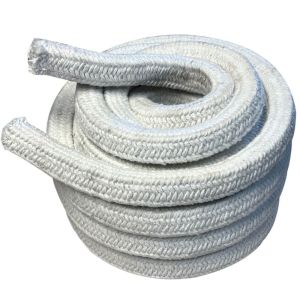 Ceramic Fiber Square Packing 30x30mmSpecial Price £10.79 £8.99 Regular Price £18.00 £15.00
Vitcas Ceramic Fibre Square Packing Ropes are resistant to temperatures up to 1260°C (2300°F). Ideal for high-temperature industrial applications like power stations, petrochemical plants, and kilns, and also suitable for sealing oven doors and other high-heat environments.
Read more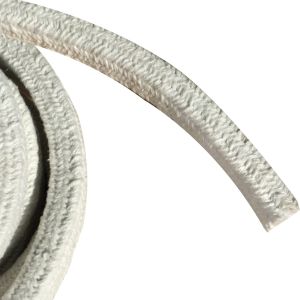 Ceramic Fibre Rectangular Packing 40mmX20mmSpecial Price £10.79 £8.99 Regular Price £18.00 £15.00
Ceramic Fibre Rectangular Packing Ropes are manufactured from finest quality refractory materials. They are resistant to 1260°C / 2300°F. The packing ropes can be used to seal doors in ovens, boilers and furnaces, as well as be used in ceramic kilns in foundries, in shipyards and in petrochemical plants.
Read more
High-Temperature Packing Ropes for Industrial Sealing
VITCAS square and rectangular packing ropes are designed for compressible sealing and gasketing in boilers, industrial ovens, furnaces, kilns and other heat-processing equipment. The products differ in fibre construction, cross-section, compressibility and temperature capability, allowing the packing profile to be matched to the groove geometry and operating conditions.
Key Features of High-Temperature Packing Ropes
- Temperature capability matched to material: E-glass fibre square packing is rated up to 550°C, while stainless-steel-wire-reinforced ceramic fibre packing extends continuous service capability up to 1260°C.
- Square and rectangular profiles: shaped cross-sections are designed for corresponding grooves, channels and static joints where round fire rope would not provide the required geometry.
- Compressible sealing: textile construction allows the packing to compress within a correctly sized groove and maintain contact across compatible high-temperature joints.
- Mechanical stability: ceramic fibre packing incorporates stainless-steel wire reinforcement to improve strength and profile stability in demanding industrial applications.
- Resistance to industrial exposure: selected grades provide resistance to abrasion, oils, chemicals and process contamination, subject to compatibility with the actual medium, concentration and operating temperature.
- Multiple temperature classes: glass fibre and ceramic fibre constructions allow the packing material to be selected according to the thermal duty rather than using a higher-temperature grade where it is not required.
E-Glass vs Ceramic Fibre Packing
| Packing Type | Construction | Temperature Capability | Typical Selection Basis |
|---|---|---|---|
| E-Glass Square Packing | Square glass fibre packing | Up to 550°C | Boiler, oven, furnace and kiln doors, shaped grooves and general high-temperature static sealing |
| Ceramic Fibre Square Packing | Wire-reinforced ceramic fibre, 30 × 30 mm | Up to 1260°C continuous | Higher-temperature industrial doors, substantial square grooves and demanding process-equipment joints |
| Ceramic Fibre Rectangular Packing | Wire-reinforced ceramic fibre, 40 × 20 mm | Up to 1260°C continuous | Higher-temperature rectangular channels, furnace and kiln joints and industrial sealing duties |
Applications of Packing Ropes
- Boiler Doors & Access Points: provides compressible sealing around compatible boiler doors, inspection openings and thermal-equipment joints where the packing profile matches the groove.
- Industrial Ovens: square packing can be used around doors, access panels and static joints exposed to elevated temperatures.
- Furnaces & Kilns: glass fibre grades suit applications within the 550°C range, while ceramic fibre packing provides higher-temperature sealing capability up to 1260°C continuous service.
- Static Grooves & Equipment Joints: square and rectangular profiles are suited to corresponding channels where controlled compression and profile stability are required.
- Power & Process Equipment: wire-reinforced ceramic fibre packing can be used in compatible high-temperature equipment in power generation, petrochemical and other thermal-processing environments.
- Foundries & Metal Processing: suitable packing grades can provide sealing around heat-exposed industrial doors and equipment joints where temperature, abrasion and process conditions are within the material limits.
Profile, Compression & Joint Design
Correct sealing depends on more than temperature capability. The square or rectangular packing should match the groove dimensions and provide the compression required by the equipment design. Undersized packing may not maintain sufficient contact, while oversized packing can be difficult to install correctly or place excessive load on surrounding components.
Temperature capability does not by itself establish pressure-tight sealing performance. Where pressure, aggressive process media, significant movement or safety-critical containment is involved, the packing should be selected as part of a joint design validated for those operating conditions.
Frequently Asked Questions
What are high-temperature packing ropes used for?
High-temperature packing ropes provide compressible gasketing and thermal insulation at suitable equipment joints. Typical applications include doors, inspection openings and sealing channels in boilers, industrial ovens, furnaces and kilns. The packing material and cross-section should match the joint design and operating conditions.
What is the difference between glass fibre and ceramic fibre packing?
VITCAS glass fibre square packing is manufactured from E-glass and rated to 550°C. The ceramic fibre packing products in this category are reinforced with stainless steel wire and rated to 1260°C. Select the material according to the temperature at the seal, required profile, compression and process environment.
Which packing rope profiles and sizes are available?
The range includes glass fibre square packing in a choice of sizes, ceramic fibre square packing measuring 30 × 30 mm and ceramic fibre rectangular packing measuring 40 × 20 mm. These dimensions describe the cross-section. The required length is specified separately when ordering.
How do I choose the correct packing size?
Check the equipment specification and measure the width and depth of the packing channel. Select a cross-section that provides the required compression when the joint closes. Oversized packing can interfere with closure, while undersized packing may leave insufficient contact. Use the specified dimensions and compression requirements for the assembly.
Why is ceramic fibre packing reinforced with stainless steel wire?
The stainless steel wire reinforces the ceramic fibre yarns, improving their tensile strength and resistance to mechanical wear. This supports the packing construction during handling, installation and service in suitable industrial sealing applications.
Can square or rectangular packing replace round stove fire rope?
Packing should be used where the appliance design specifies the corresponding square or rectangular gasket profile. For a stove designed around a round rope seal, select the appropriate thermal fire rope. Match the original profile, dimensions and compression requirements before replacing an existing gasket.
Are these packing ropes suitable for pressure sealing or gland packing?
Suitability must be confirmed for the selected product and sealing arrangement. For pumps, valves or other pressurised equipment, provide the operating pressure, process medium, temperature and any shaft or stem movement. A temperature rating alone does not establish a pressure limit, permissible leakage rate or suitability for dynamic sealing.
Are packing ropes resistant to chemicals and oils?
Chemical compatibility depends on the selected fibre, reinforcement and operating conditions. Identify the substances involved, their concentration and the temperature at the seal. Ask VITCAS to confirm suitability for the intended exposure when chemical resistance is part of the specification.
What is the difference between packing rope and lagging rope?
Packing rope is selected to form a compressible gasket in a defined joint or channel. Lagging rope is primarily used for thermal insulation and suitable gap-filling applications. Choose the product according to whether the installation requires joint sealing, insulation or a combination of functions.
What information should I provide when specifying industrial packing?
Provide the equipment type, packing cross-section, groove dimensions, required length and temperature at the seal. Include details of compression, pressure, movement, abrasion and contact with process materials where relevant. Information about the existing packing and joint arrangement helps VITCAS assess a suitable product for the application.