
Stove & Chimney Cleaners
Stove Glass Cleaner and Chimney & Flue Cleaner
Stove glass and chimney maintenance require different cleaning methods for different deposits and locations. VITCAS Stove Glass Cleaner is a ready-to-use liquid for removing soot, tar, grease and burnt-on deposits from cold stove, fireplace, oven and barbecue glass, helping restore a clear viewing surface.
CFC Chimney & Flue Cleaner is a ready-to-use powder applied to a low-burning solid-fuel fire to help reduce and dislodge soot, tar and creosote deposits within compatible chimneys and flue liners, including suitable stainless-steel flexible liners.
The two products perform different functions: Stove Glass Cleaner is a surface-cleaning liquid, while CFC is a flue-maintenance treatment used during firing. Chemical treatment supports routine chimney maintenance but does not remove physical obstructions or repair damaged flue components. Follow the product label, appliance instructions and applicable safety information before use.
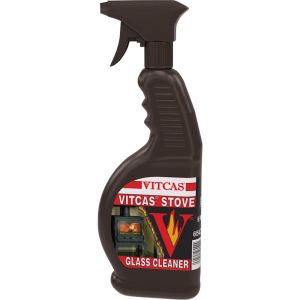 Stove Glass Cleaner - Fireplace & BBQSpecial Price £5.99 £4.99 Regular Price £9.59 £7.99
VITCAS Stove Glass Cleaner quickly and efficiently removes soot, grease, tar and burnt-on marks from the glass and metal surfaces of stoves, ovens, fireplaces, pizza ovens and BBQ grills, leaving a brilliant, long-lasting shine and sparkling clean glass surfaces.
Read more CFC - Chimney & Flue CleanerSpecial Price £9.59 £7.99 Regular Price £15.59 £12.99
Vitcas CFC Chimney and Flue Cleaner is a high-performance cleaning agent designed to eliminate creosote, soot, and tar deposits from chimneys and flue linings, including stainless steel flexible liners. Regular use not only ensures internal cleanliness but also helps to prevent chimney fires. For optimal effectiveness, apply 2–4 scoops of the cleaner twice weekly.
Read more
Choose the Correct Cleaner for Stove Glass, Chimneys & Flues
Stove glass and chimney deposits can both result from combustion, but they occur in different parts of the heating system and require different cleaning methods. VITCAS Stove Glass Cleaner works directly on accessible cold surfaces, while CFC Chimney & Flue Cleaner is used during firing to treat deposits within compatible solid-fuel chimneys and flue liners.
The products should not be treated as interchangeable. A surface cleaner cannot treat deposits inside a flue, while chimney-cleaning powder is not intended for wiping glass or other appliance surfaces.
| Product | Form | Primary use | Important distinction |
|---|---|---|---|
| Stove Glass Cleaner | Ready-to-use liquid, 650ml | Removing soot, tar, grease and burnt-on deposits from compatible cold stove, fireplace, oven and barbecue glass | Surface cleaner; not a chimney or flue treatment |
| CFC Chimney & Flue Cleaner | Ready-to-use powder, 750g | Routine treatment of soot, tar and creosote in compatible chimneys and flues serving solid-fuel appliances | Supports flue maintenance; does not replace sweeping, inspection or blockage removal |
Cleaning Stove & Fireplace Glass
VITCAS Stove Glass Cleaner is designed to loosen soot, tar, grease and burnt-on marks that reduce visibility through stove and fireplace glass.
The cleaner is supplied ready to use and should be applied only when the appliance and glass are completely cold. It can also be used on compatible oven and barbecue glass and selected high-temperature surfaces where the equipment finish permits this type of cleaner.
How to Use Stove Glass Cleaner
- Allow the appliance and glass to cool completely.
- Remove loose ash or dust around the area to be cleaned.
- Apply a small quantity of cleaner to the cold surface.
- Leave it for a few minutes to loosen persistent deposits.
- Wipe the surface with a damp cloth or kitchen roll.
- Repeat where necessary rather than using excessive abrasive force.
- Remove loosened contamination and cleaner residue before returning the appliance to service.
Where the appliance glass has a specialist coating, printed border or other surface treatment, follow the appliance manufacturer's cleaning requirements. Cleaning should also be avoided on cracked, loose or otherwise damaged glass until the component has been assessed or replaced.
Why Does Stove Glass Turn Black?
Cleaning removes the visible deposit, but repeated rapid blackening can indicate conditions elsewhere in the combustion system.
Possible causes include:
- wet or unsuitable fuel;
- prolonged low-temperature burning;
- restricted combustion air;
- an ineffective air-wash system;
- worn or poorly sealing door components;
- incorrect appliance operation;
- flue or draught problems.
If clean glass becomes heavily sooted again unusually quickly, treating the deposit repeatedly is less useful than identifying why incomplete or poor combustion is occurring.
Using CFC Chimney & Flue Cleaner
VITCAS CFC Chimney & Flue Cleaner is a ready-to-use powder for routine treatment of soot, tar and creosote deposits in chimneys and flues connected to compatible solid-fuel appliances.
Typical applications include wood-burning and multi-fuel stoves, solid-fuel boilers and cookers. The product is also suitable for compatible stainless-steel flexible flue liners.
CFC is applied to a low-burning fire. The treatment then acts through the hot flue system to help loosen and reduce deposits that have accumulated on internal surfaces.
How to Apply CFC
- Remove excessive ash and cinders from the appliance.
- Establish a low-burning solid-fuel fire.
- Apply the measured quantity of CFC powder according to the pack directions.
- Keep the fire at the appropriate low level while the treatment acts through the flue.
- Allow approximately one hour for the cleaning treatment to work through the system.
The product directions specify 2–4 scoops twice per week for routine use, with increased treatment where deposit levels or system size require it. Excessive fire temperature can reduce cleaning effectiveness, so CFC should not be applied to an intensely burning fire.
CFC Supports Chimney Maintenance — It Does Not Replace Sweeping
Chemical flue treatment can help reduce and loosen soot, tar and creosote, but it cannot confirm that the chimney is clear, mechanically sound or safe to operate.
CFC does not:
- remove bird nests or foreign objects;
- clear collapsed masonry or physical obstructions;
- repair cracked or damaged flue liners;
- replace access-point or debris-chamber cleaning;
- replace chimney inspection;
- replace mechanical sweeping where deposits require physical removal;
- provide a treatment for an active chimney fire.
Loosened material can remain within the chimney or collect in access areas, so appropriate inspection and physical cleaning remain part of normal flue maintenance.
Soot, Tar & Creosote in Chimneys and Flues
Different deposits can indicate different levels of contamination and maintenance requirement.
| Deposit or observation | What it can indicate | Typical response |
|---|---|---|
| Loose soot | Normal combustion deposit that can progressively accumulate in the flue | Routine chimney maintenance and sweeping at an appropriate interval |
| Tar or flaky creosote | More persistent combustible deposits associated with solid-fuel combustion | Use suitable maintenance treatment and arrange physical removal where required |
| Thick, glossy or glazed creosote | Severe deposit that can be difficult to remove and may restrict the flue | Professional assessment and appropriate mechanical or specialist cleaning |
| Rapidly blackening stove glass | Possible combustion, fuel, air-supply or draught issue | Clean the cold glass, then investigate the cause if staining quickly returns |
Cleaning products deal with deposits that have already formed. They do not correct unsuitable fuel, restricted airflow, poor appliance operation or an underlying flue problem.
When Chimney Deposits Need More Than Chemical Cleaning
CFC is most useful as part of routine maintenance before deposits become severe. Thick glazed creosote, sudden changes in chimney draught, persistent smoke leakage or suspected obstruction require a different response.
Do not continue operating an appliance where a chimney or flue may be blocked or damaged. Physical obstruction, substantial deposit build-up or liner deterioration should be investigated and corrected before the appliance returns to normal service.
Stove Glass Cleaning and Flue Maintenance Work Together
The condition of the stove glass can provide a useful visual indication of combustion behaviour, while the chimney and flue carry combustion products away from the appliance. Keeping both areas maintained supports cleaner operation and makes developing problems easier to identify.
Stove Glass Cleaner restores visibility through accessible glass. CFC helps control deposits inside compatible solid-fuel chimneys and liners. Neither product replaces correct fuel selection, appliance operation, scheduled maintenance or appropriate chimney sweeping.
Safe Handling & Storage
Use both products according to the product label and safety data. Provide suitable ventilation, avoid contact with eyes and skin, do not mix either cleaner with other chemical products and keep the original containers securely closed when not in use.
Stove Glass Cleaner should only be used on cold compatible surfaces. CFC should be kept dry and used only by the specified solid-fuel firing method.
Frequently Asked Questions
Which cleaner should I use for stove or fireplace glass?
Use VITCAS Stove Glass Cleaner. It is a ready-to-use liquid designed to remove soot, tar, grease and burnt-on deposits from compatible cold stove, fireplace, oven and barbecue glass.
Can Stove Glass Cleaner be used while the stove is hot?
No. Allow the appliance and glass to cool completely before applying the cleaner.
Does Stove Glass Cleaner need to be diluted?
No. It is supplied ready to use. Apply a small quantity directly to the compatible cold surface and wipe away the loosened contamination.
Why does my stove glass become black again quickly?
Repeated rapid staining can be associated with wet fuel, restricted airflow, low-temperature burning, air-wash performance, door sealing or flue conditions. Cleaning removes the deposit but does not correct the cause.
What is CFC Chimney & Flue Cleaner?
CFC is a ready-to-use powder applied to a low-burning solid-fuel fire to help loosen and reduce soot, tar and creosote within a compatible chimney or flue.
How should CFC Chimney & Flue Cleaner be used?
Apply the measured powder to a low-burning fire according to the pack directions. The routine directions specify 2–4 scoops twice per week and approximately one hour for the treatment to act through the flue system. Do not apply it to an excessively hot fire.
Can CFC be used with stainless-steel flexible flue liners?
Yes. CFC is listed for suitable stainless-steel flexible liners as well as compatible conventional chimney and flue systems serving solid-fuel appliances.
Does CFC replace chimney sweeping?
No. CFC supports routine control of soot, tar and creosote but does not replace inspection, mechanical sweeping or physical removal of deposits and debris where required.
Can CFC clear a blocked chimney?
No. A physical obstruction must be located and removed before the appliance is used. Chimney-cleaning powder should not be relied upon to clear nests, collapsed material, foreign objects or a damaged liner.
When does creosote need professional attention?
Thick, glossy or glazed deposits, restricted draught, persistent smoke leakage or rapidly recurring heavy creosote should be professionally assessed. Severe deposits can require specialist mechanical removal rather than routine chemical treatment.
Can both cleaners be used as part of the same maintenance programme?
Yes, but for different tasks. Stove Glass Cleaner is used on compatible cold glass, while CFC treats deposits inside suitable solid-fuel chimneys and flues. Together they can support appliance and chimney maintenance, but neither replaces servicing or appropriate chimney sweeping.