





Fireplace & Stove Construction Materials
Heat-Resistant Materials for Fireplace & Stove Construction
VITCAS manufactures and supplies specialist heat-resistant materials for the construction, finishing, sealing, repair and heat management of fireplaces, wood-burning stoves, cassette fires and inset appliances. Solutions include fireplace construction boards, primers, heat-resistant adhesives, plasters, fillers, jointing tapes, fire cements, sealing products and heat-accumulation materials.
Each material performs a specific function within the fireplace or stove system, from forming and fixing the surround to reinforcing joints, preparing surfaces, sealing components and managing heat. Select products according to the appliance type, substrate, installation position and expected thermal exposure, and use each material within its specified application and temperature range.
Choosing Fireplace & Stove Materials by Function
VITCAS manufactures specialist heat-resistant materials for constructing, finishing, sealing, repairing and managing heat around fireplaces, wood-burning stoves, cassette fires, inset appliances and other compatible heating installations.
Different materials perform different functions within the same system. Construction boards provide structure and insulation, accumulation materials store and release heat, adhesives bond specific substrates, plasters and fillers prepare visible surfaces, while fire cements, sealants and rope systems provide different types of rigid or flexible sealing.
Selection should therefore begin with the required function and installation position rather than maximum temperature alone. Consider the appliance design, substrate, expected surface temperature, required thermal behaviour, joint movement and compatibility between adjoining materials.
Fireplace & Stove Materials at a Glance
| Material family | Primary function | Typical applications | Key selection factor |
|---|---|---|---|
| Fireplace Construction Board | Rigid construction and thermal insulation | Fireplace surrounds, false chimney breasts, stove recesses, inset and cassette enclosures | Appliance geometry, board position, insulation requirement and installation system |
| Heat-resistant adhesives | Bonding boards, tiles, firebricks and specialist stove components | Board construction, tiled surrounds, refractory fixing and heat-accumulation systems | Substrates, required bed thickness, working time and temperature |
| Heat-resistant plaster & render | Base preparation and smooth heat-resistant finishing | Fireplace surrounds, inset and cassette stove installations | Substrate, layer sequence and expected surface temperature |
| Fillers, primers & reinforcement | Surface preparation and joint reinforcement | Board joints, corners, small cracks and preparation before finishing | Compatibility with the selected board, adhesive or plaster system |
| Fire Cement | Rigid high-temperature sealing and minor repair | Fireplaces, stoves, internal flue joints, firebacks and firebrick repairs | Rigid joint design, indoor exposure and substrate condition |
| Stove, fireplace & flue sealants | Specialist sealing, jointing and repair | Flues, stove components, fireplace joints and heat-exposed interfaces | Rigid or flexible behaviour, substrate and service temperature |
| Heat-resistant tile adhesive & grout | Fixing and jointing decorative tiles | Fireplace surrounds, stove surrounds, cookers and other heat-exposed tiled surfaces | Tile type, substrate, bed thickness and surface temperature |
| Heat accumulation materials | Absorbing, storing and gradually releasing heat | Heat-storage fireplaces, tiled stoves and thermal-mass heating systems | Required heat-storage capacity, installation position and construction method |
Fireplace Construction Boards for Surrounds and Enclosures
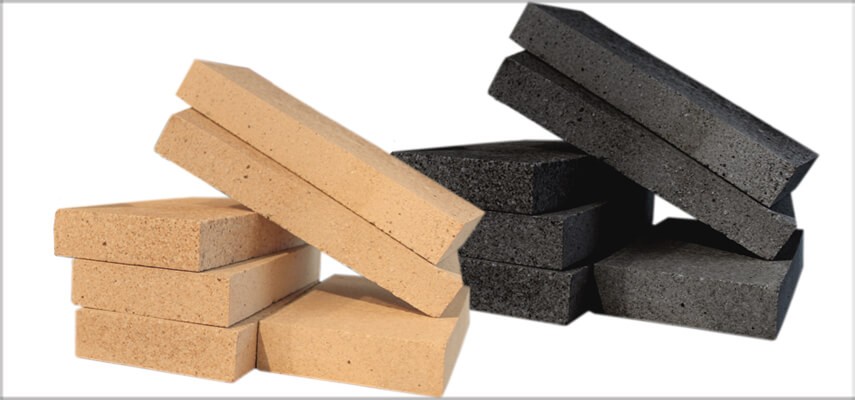
VITCAS Fireplace Construction Board is a rigid calcium silicate insulation board designed for fireplace surrounds, false chimney breasts, stove recesses and structures around compatible inset and cassette appliances.
The board combines heat resistance, insulation and mechanical stability in a format that can be cut and assembled into purpose-built structures. It is particularly useful where a fireplace or stove enclosure is being created without relying entirely on an existing masonry chimney breast.
The board should be used as part of the specified construction system. Board edges, faces, joints and finishing layers can require different primers, adhesives, reinforcement and surface preparation, so the instructions for the selected VITCAS system should be followed rather than treating all preparation products as interchangeable.
Primers, Board Adhesives and Construction Bonding
Fireplace and stove construction can involve several different bonding systems depending on the materials, surface condition and required adhesive thickness.
VITCAS Board Primer is designed specifically for preparing and strengthening the edges of Fireplace Construction Board before the specified board-jointing process.
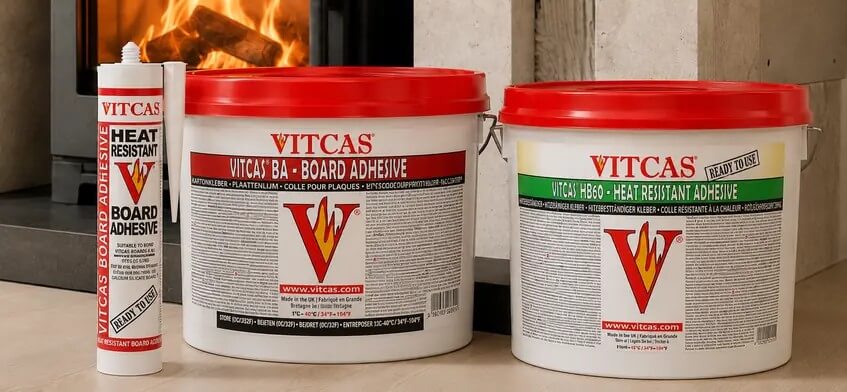
Heat Resistant Board Adhesive is a ready-mixed high-temperature adhesive for compatible construction boards, insulation boards, vermiculite boards and high-temperature plasterboards. It can also be used for fixing suitable boards to flat brickwork or blockwork where the permitted adhesive geometry is maintained.
HB60 Hydraulic Bonded Adhesive provides a longer working time and is suitable for compatible fireplace, stove, firebrick, tile and board applications where its hydraulic setting characteristics and thicker application capability are required.
Preparation can differ between these systems. Board Primer, PVA preparation and individual adhesive instructions each have specific roles, so use the preparation method stated for the exact board and adhesive combination rather than applying one primer sequence universally.
Heat-Resistant Plaster, Render, Fillers and Joint Reinforcement
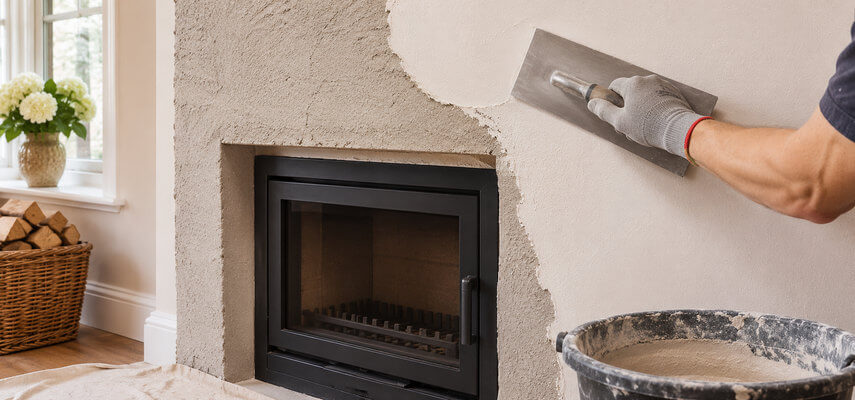
VITCAS heat-resistant plaster and render systems provide suitable base and finishing layers around fireplaces and stoves where ordinary gypsum-based finishing products may be exposed to excessive heat.
FR Fireplace Render is used as a heat-resistant base coat on compatible masonry substrates, while HRP Heat Resistant Plaster provides a smooth finishing layer rated to 650°C when installed as part of the appropriate system. The temperature capability of a base layer does not increase the service limit of a lower-rated finishing layer applied over it.
Heat Resistant Filler and high-temperature fibreglass mesh scrim tape perform preparation and reinforcement functions around compatible board joints, corners and surface imperfections. They should not be used in place of the adhesive required to assemble the underlying structure.
Heat-Resistant Adhesives for Tiles and Refractory Components
Different adhesives are required for construction boards, tiles, firebricks and specialist refractory components. Selection should be based on the materials being bonded, surface preparation, required adhesive thickness, working time and local temperature.
VITCAS Heat Resistant Tile Adhesive and Grout provide a compatible system for decorative tiled surfaces around fireplaces, stoves, range cookers, boilers and other suitable heat-exposed installations.
The ready-mixed tile adhesive is rated to 1000°C and is intended for a controlled thin finished bed. Ceramic, porcelain, terracotta, quarry and mosaic tiles can be used where the substrate and installation conditions are compatible with the system.
Hydraulic adhesives such as HB60 perform a different function and can be selected for compatible firebricks, tiles, boards or thicker construction applications where their working and setting characteristics are advantageous.
Fire Cement for Rigid Joints and Minor Repairs
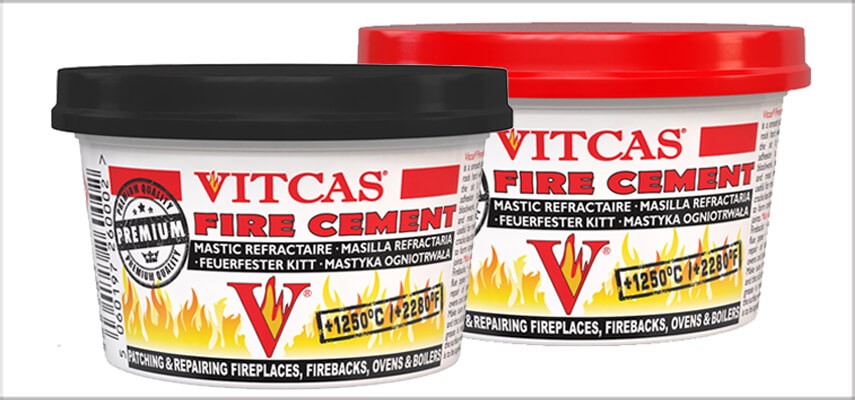
VITCAS Fire Cement is a ready-mixed refractory compound for fine rigid joints and minor repairs in compatible indoor fireplaces, stoves and heating appliances.
Buff and black formulations are rated to 1250°C and can be used for suitable applications including internal flue-pipe joints, firebacks and small localised repairs to firebricks, ranges, ovens and boilers.
Fire Cement cures hard and performs a different function from flexible sealants, rope seals and general-purpose refractory bricklaying mortars. The joint design and required movement should therefore be established before selecting it.
Stove, Fireplace and Flue Sealing Materials
VITCAS stove, fireplace and flue sealing materials cover different installation and maintenance requirements around heating appliances and flue systems.
The correct material depends on the joint:
- Fire Cement provides a rigid high-temperature seal for compatible joints and minor repairs.
- Flue Cement is formulated specifically for compatible clay and concrete flue-liner installation and jointing.
- Heat Resistant Sealant provides high-temperature caulking and sealing for compatible ceramics, metals, silica-based materials and glass.
- Heat Resistant Filler fills suitable small cracks, joints and surface imperfections in heat-exposed construction materials.
- Flexible heat-resistant sealants and thermal rope systems are used where the joint design requires movement or compression rather than a permanently rigid cement joint.
These materials should not be selected solely by choosing the highest temperature rating. Joint movement, substrate, component design and exposure conditions are equally important.
Heat Accumulation Materials for Thermal Mass
VITCAS heat accumulation materials are designed to absorb heat generated by a fireplace or stove, store it within a high-density refractory structure and release it gradually after the fire output falls.
Solutions include high-density accumulation fireboards, ceramic accumulation rings, compatible adhesives, heatproof screed and preparation materials for constructing or maintaining thermal-mass heating systems.
Heat accumulation performs the opposite thermal function to insulation. An insulating material is selected to restrict heat flow, while an accumulation material is deliberately designed to accept and store useful heat. The two technologies can therefore occupy different positions within the same fireplace or stove installation.
Typical Fireplace & Stove Construction Sequence
The exact construction method depends on the appliance and selected materials, but a typical surround, stove recess or enclosure can involve several functional stages:
- Form or insulate the structure using the specified fireplace construction or insulation board.
- Prepare and bond the materials using the primer, PVA or adhesive system specified for the selected boards and substrates.
- Reinforce and prepare joints using compatible scrim tape, filler or system-specific preparation layers.
- Apply the required heat-resistant finish using the correct render, plaster or tiled surface system.
- Install refractory or decorative components using an adhesive suitable for the material, substrate and temperature.
- Seal joints according to their required behaviour using rigid cement, flexible sealant, thermal rope or another specified sealing product.
This sequence is a functional guide rather than a universal installation specification. The appliance instructions and individual VITCAS product systems determine the correct layer build-up, clearances, preparation and installation method.
Choosing Fireplace & Stove Materials by Function
| Requirement | Typical material type | Selection consideration |
|---|---|---|
| Build a fireplace surround or stove enclosure | Fireplace Construction Board with its compatible preparation and bonding system | Appliance position, geometry, insulation requirement and construction method |
| Reduce heat transfer | Suitable insulation board or other thermal insulation | Required thermal resistance, maximum temperature and position in the system |
| Store and gradually release heat | Heat accumulation fireboards, rings or other thermal-mass materials | Required heat storage, available space and heating-system design |
| Create a smooth heat-resistant finish | Compatible fireplace render and Heat Resistant Plaster system | Substrate, layer sequence and expected surface temperature |
| Fix construction boards | Board Adhesive, HB60 or another compatible high-temperature adhesive | Board type, surface flatness, preparation and required adhesive thickness |
| Fix decorative tiles | Heat Resistant Tile Adhesive and compatible grout | Tile type, substrate, adhesive bed and local surface temperature |
| Seal a fine rigid high-temperature joint | Fire Cement or another specified rigid sealing compound | Joint geometry, temperature, indoor exposure and absence of significant movement |
| Joint clay or concrete flue liners | Purpose-designed Flue Cement | Flue material, joint design and flue-system specification |
| Seal a joint that must accommodate movement | Compatible flexible heat-resistant sealant, rope or gasket system | Movement, compression, substrate and temperature |
| Fill small cracks or surface imperfections | Heat Resistant Filler or another application-specific repair product | Substrate, defect size and whether structural repair is required |
Temperature, Substrate and Appliance Position
Temperatures can vary substantially across the same fireplace or stove installation. The combustion area, appliance casing, recess walls, outer surround and decorative finish can each experience very different thermal conditions.
A material suitable for an external surround should not automatically be used closer to the appliance, while a product with a very high temperature rating may still be inappropriate if its bonding method, flexibility, moisture resistance or substrate compatibility does not suit the location.
For each layer or component, confirm:
- the expected local operating temperature;
- the material being bonded, sealed or finished;
- whether insulation or heat accumulation is required;
- whether the joint must remain rigid or accommodate movement;
- the required preparation, adhesive or primer system;
- the appliance manufacturer's installation and clearance requirements;
- the compatibility of adjoining materials within the complete construction.
Engineering & Application Considerations
- Heat resistance does not make all fireplace materials interchangeable. Boards, adhesives, plasters, fillers, cements and sealants perform different functions.
- Insulation and heat accumulation are different thermal strategies. One limits heat flow while the other deliberately stores useful heat.
- Each layer has its own temperature capability. A higher-rated board or render does not increase the service limit of a lower-rated plaster, adhesive or sealant.
- Rigid and flexible joints require different materials. Fire Cement should not replace a seal designed to accommodate compression or thermal movement.
- Preparation systems are product-specific. Board Primer, PVA and other preparation products should be used only where required by the selected construction system.
- Substrate compatibility matters as much as temperature. Brickwork, boards, tiles, metals, glass and flue materials can require different bonding or sealing technologies.
- The appliance installation requirements remain part of the complete design. Heat-resistant construction materials do not authorise reductions in specified appliance clearances.
Why Choose VITCAS Fireplace & Stove Materials?
- Specialist manufacturer of heat-resistant materials for fireplace, stove and high-temperature construction.
- Integrated construction systems covering boards, preparation products, adhesives, reinforcement and finishing materials.
- Heat-resistant plaster and render technologies for suitable masonry and board-built surrounds.
- Rigid and flexible sealing solutions for fireplaces, stoves and compatible flue applications.
- Dedicated Fire Cement and refractory repair products for high-temperature maintenance and refurbishment.
- Heat-resistant tile fixing systems for decorative fireplace and stove surfaces.
- Heat accumulation technologies for thermal-mass fireplaces and stove systems designed to store and gradually release warmth.
- Application-specific adhesives for boards, tiles, firebricks and specialist stove components.
By selecting each material according to its function, substrate, installation position and thermal duty, VITCAS fireplace and stove products can be combined into coordinated systems for construction, insulation, heat storage, finishing, sealing and long-term maintenance.
Frequently Asked Questions
What materials are used around fireplaces and stoves?
Depending on the construction, materials can include heat-resistant construction and insulation boards, primers, adhesives, render, plaster, fillers, reinforcement tape, Fire Cement, flue and stove sealants, thermal rope systems, tile adhesive and heat accumulation materials. Each product should be selected for its specific function and installation position.
Which board can be used to build a fireplace surround or stove enclosure?
VITCAS Fireplace Construction Board is a rigid calcium silicate insulation board designed for compatible fireplace surrounds, false chimney breasts, stove recesses and inset or cassette enclosures. It should be installed using the preparation, bonding and finishing system specified for the board.
What is the difference between insulation and heat accumulation?
Insulation is designed to reduce heat transfer through the construction. Heat accumulation materials are high-density products designed to absorb, store and gradually release heat. They perform different functions and can be used in different positions within the same heating system.
What is Fire Cement used for?
VITCAS Fire Cement is a ready-mixed rigid refractory compound used for compatible fine joints and minor repairs around indoor fireplaces, stoves, internal flue connections, firebacks and firebricks. It cures hard and should not replace a flexible seal or general firebrick mortar.
When should a flexible sealant be used around a stove or fireplace?
A flexible sealant, thermal rope or gasket system is required where the joint is designed to accommodate movement or compression. Rigid Fire Cement, fillers and construction adhesives should not automatically be substituted for a flexible sealing system.
What materials can be used around cassette and inset stoves?
Compatible installations may use Fireplace Construction Board, appropriate board adhesives and primers, reinforcement materials, heat-resistant render or plaster, tiles and sealing products. The exact construction depends on the appliance design, clearances, substrate and expected temperature at each surface.
Can ordinary plaster be used around a fireplace or wood-burning stove?
Conventional plaster should not be assumed suitable where surfaces are exposed to elevated temperatures. VITCAS Heat Resistant Plaster and Fireplace Render systems are designed for appropriate heat-exposed surrounds when installed on the specified substrates and in the correct layer sequence.
What is the difference between Board Adhesive and HB60?
Heat Resistant Board Adhesive is designed primarily for fixing and jointing compatible high-temperature boards and for bonding them to suitable flat masonry surfaces. HB60 is a hydraulically setting adhesive with a longer working time and can be used in compatible board, tile, firebrick and fireplace-construction applications where its application characteristics are required.
Which adhesive should be used for tiles around a fireplace or stove?
Use a heat-resistant tile adhesive designed for the tile, substrate and expected surface temperature. VITCAS Heat Resistant Tile Adhesive is rated to 1000°C and forms part of a compatible tile fixing and grouting system for suitable heat-exposed indoor surfaces.
Do fireplace construction board joints require reinforcement?
Compatible board systems can require high-temperature fibreglass mesh scrim tape or another specified reinforcement at joints and internal corners before finishing. Follow the installation sequence for the selected board and plaster system.
Can all heat-resistant fireplace materials be used directly next to the fire?
No. Products have different intended locations, temperature limits and substrate requirements. A material described as heat resistant is not automatically suitable for direct flame exposure, the combustion chamber or every position immediately adjacent to an appliance.
How should fireplace and stove materials be selected?
Start with the function required at each position: construction, insulation, heat accumulation, bonding, finishing, rigid repair or flexible sealing. Then check the substrate, local temperature, joint geometry and appliance installation requirements before selecting the individual product.