


Thermal Ropes & Seals
High-Temperature Rope Seals for Stoves, Furnaces and Industrial Equipment
VITCAS thermal ropes and high-temperature seals provide flexible sealing, gasketing and insulation for domestic heating appliances and industrial thermal equipment. The range includes soft and firm glass fibre fire rope for stove doors and flue joints, square and rectangular packing for ovens, boilers, furnaces and kilns, and lagging rope for hot pipework, expansion gaps and other heat-exposed assemblies.
Products differ in fibre type, construction, cross-section, compressibility, dimensions and service temperature. Glass fibre rope and packing products are typically rated up to 550°C, while higher-temperature ceramic fibre constructions extend the available duty up to 1260°C.
Select the rope or packing according to the equipment specification, joint geometry, required compression, fibre construction and expected operating conditions. Round, square, rectangular, soft and firm profiles perform different sealing functions, so the correct size and compressibility are as important as the headline temperature rating.
 Square Glass Fibre Packing RopeAs low as £2.40 £2.00 Regular Price £3.60 £3.00
VITCAS Square Glass Fibre Thermal Rope is designed for high-temperature applications, providing exceptional thermal insulation. It is widely used in boilers, ovens, and furnaces for sealing door seals, gaskets, and other industrial uses. This rope ensures reliable heat resistance, durability, and enhanced sealing in extreme environments.
Read more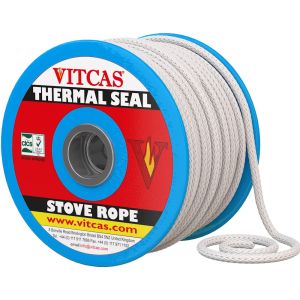 Fire Rope White SoftAs low as £0.84 £0.70 Regular Price £1.20 £1.00
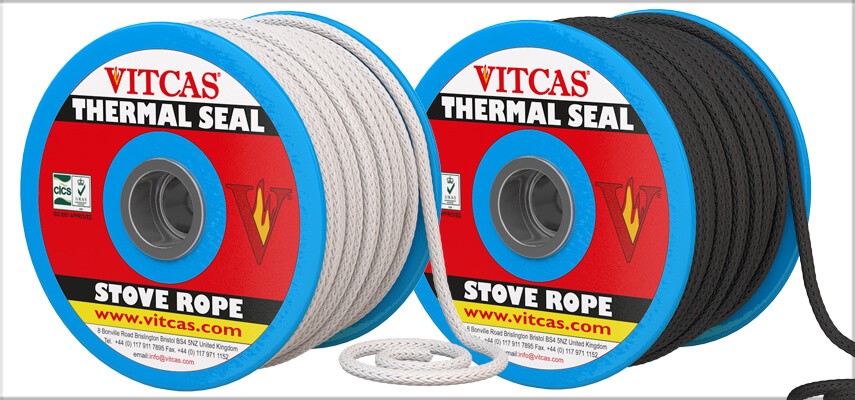
Stove Fire Rope – White, Soft – A range of soft, knitted glass fibre rope seals available in diameters from 6mm to 25mm, with a maximum service temperature of 550°C / 1020°F. Ideal for sealing and jointing in stove flue systems, around stove doors and glass, and between stove panels.
Read more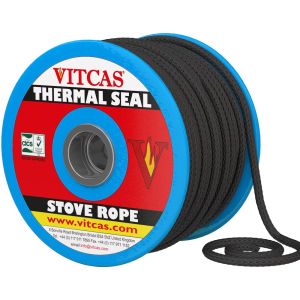 Fire Rope Black SoftAs low as £0.90 £0.75 Regular Price £1.80 £1.50
Stove Fire Rope comes in diameters from 6mm to 12mm and withstands temperatures up to 550°C (1020°F). Made from soft, knitted fibres, it offers flexibility for a precise fit. The black finish makes it ideal for airtight seals in stove flue systems, stove doors, and around glass, ensuring efficient and safe operation.
Read more Glass Fibre Lagging RopeAs low as £3.00 £2.50 Regular Price £6.00 £5.00
Fibreglass Lagging Fire Rope – Stove Fire Rope Seal, available in diameters from 20mm to 50mm, is rated up to 550°C (1020°F). It offers excellent thermal insulation and resistance to chemicals, oils, and solvents, making it perfect for wrapping around flue pipes and hot pipes in high-temperature environments.
Read more Fire Rope White FirmAs low as £0.60 £0.50 Regular Price £1.20 £1.00
Stove Fire Rope – White and Firm is made from braided glass fibres and is available in diameters from 3mm to 20mm. Resistant to 550°C (1020°F), it is ideal for high-temperature sealing, jointing, and gasketing, including flue system connections to appliances.
Read more Fire Rope Black FirmAs low as £1.20 £1.00 Regular Price £2.40 £2.00
Stove Fire Rope - Black is a firm, braided fire rope available in diameters from 6mm to 12mm, with heat resistance up to 550°C (1020°F). It is ideal for high-temperature sealing, jointing, and gasketing applications, such as sealing flue systems to stoves and other heating appliances.
Read more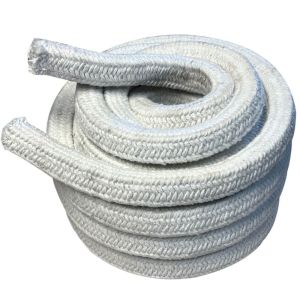 Ceramic Fiber Square Packing 30x30mmSpecial Price £10.79 £8.99 Regular Price £18.00 £15.00
Vitcas Ceramic Fibre Square Packing Ropes are resistant to temperatures up to 1260°C (2300°F). Ideal for high-temperature industrial applications like power stations, petrochemical plants, and kilns, and also suitable for sealing oven doors and other high-heat environments.
Read more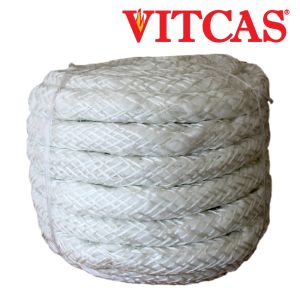 Ceramic Fiber Rope LaggingAs low as £3.59 £2.99 Regular Price £4.20 £3.50
Vitcas Ceramic Fibre Rope Lagging is ideal for high-temperature industrial applications, such as insulating pipes, sealing kiln and furnace doors, flues, heat exchangers, and filling expansion joints in boilers and turbines. Rated up to 1100°C (2012°F), it offers superior thermal insulation and low thermal conductivity in demanding environments.
Read more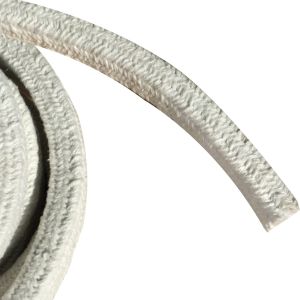 Ceramic Fibre Rectangular Packing 40mmX20mmSpecial Price £10.79 £8.99 Regular Price £18.00 £15.00
Ceramic Fibre Rectangular Packing Ropes are manufactured from finest quality refractory materials. They are resistant to 1260°C / 2300°F. The packing ropes can be used to seal doors in ovens, boilers and furnaces, as well as be used in ceramic kilns in foundries, in shipyards and in petrochemical plants.
Read more
High-temperature ropes for sealing, gasketing and insulation
Thermal rope is a compressible textile used to seal, pack or insulate gaps in heat-exposed assemblies. This range serves domestic stove owners and installers as well as boiler engineers, kiln operators, refractory contractors and industrial maintenance teams. It includes round fire rope, square or rectangular packing and larger-diameter lagging rope. These products are not interchangeable: begin selection with the function and geometry of the joint, then confirm material and temperature capability.
Thermal fire rope for stoves and flue joints
Glass fibre fire rope is intended for sealing around stove doors, glass and panels, and for jointing an appliance to its flue system. Products in this category have a maximum service temperature of 550°C and come in white or black. Construction determines their behaviour under compression:
-
Soft knitted rope is flexible and readily conforms to curves or less uniform sealing grooves. White soft rope is available in diameters from 6mm to 25mm, while black soft rope is offered from 6mm to 12mm.
-
Firm braided rope has a denser, more rigid construction for grooves that require a more stable gasket profile. White firm rope is available from 3mm to 20mm, while black firm rope is offered from 6mm to 12mm.
Match the diameter and density to the appliance manufacturer’s specification. An undersized rope may not compress sufficiently; an oversized or excessively firm rope may prevent correct closure or load the door, hinges, latch or glass.
Packing rope for industrial doors, joints and flanges
Packing rope has a square or rectangular cross-section for matching grooves, door channels and static joints in boilers, industrial ovens, furnaces and kilns. Square E-glass fibre packing is rated to 550°C and is available in sizes from 6mm to 25mm. For more severe thermal duties, the range includes stainless-steel-wire-reinforced ceramic fibre packing: 30mm × 30mm square and 40mm × 20mm rectangular profiles rated for continuous temperatures up to 1260°C. Industrial selection must also account for compression, movement, abrasion, process atmosphere and groove dimensions.
Lagging rope for pipes, flues and expansion gaps
Lagging rope has a soft, pliable profile for wrapping, gap filling and flexible insulation, rather than for direct substitution as a compact stove-door gasket. Glass fibre lagging rope is available from 20mm to 50mm and is rated to 550°C. Ceramic fibre lagging rope is designed for higher-temperature duties around pipework, flues, heat exchangers, kiln cars and oven doors; it is rated to 1000°C continuously and 1100°C for short-term exposure.
How to choose the correct thermal rope or seal
Before ordering, compare these requirements with the individual product data:
-
Function: compressed gasket, shaped packing, gap filler, expansion-joint packing or flexible insulation.
-
Material: use glass fibre for applications within the stated 550°C limit; consider the relevant ceramic fibre option where the verified operating temperature exceeds this value.
-
Continuous and peak temperature: use the temperature at the seal, including start-up and short-term conditions.
-
Cross-section: choose round rope for a round or radiused channel, square or rectangular packing for a matching groove, and lagging rope for larger gaps or wrapping duties.
-
Dimensions: follow the manufacturer’s stated gasket size; an old seal may be permanently compressed.
-
Compressibility: soft knitted rope conforms readily; firm braided rope retains a more stable profile.
-
Service environment: consider abrasion, movement, pressure, chemical exposure and thermal cycling.
-
Installation: confirm whether compatible adhesive, mechanical retention or another fixing method is specified.
Installation and maintenance considerations
For stove maintenance, let the appliance cool completely and follow the manufacturer’s instructions. Remove the old gasket and adhesive, clean the groove and dry-fit the replacement. Install the rope without stretching, twisting or bunching it, then observe the adhesive manufacturer’s curing instructions. Confirm that the door closes correctly and compression is reasonably even. Worn hinges, poor latch adjustment or distortion can also cause leakage, so a new rope will not correct every fault.
Industrial seals must be fitted to the equipment designer’s specified dimensions and compression under the site’s safe system of work. Obtain technical confirmation where pressure, aggressive media, direct flame impingement or safety-critical containment is involved.
Product selection at a glance
| Product type | Material and construction | Available profile or size | Temperature rating | Typical selection basis |
|---|---|---|---|---|
| Soft thermal fire rope | Knitted glass fibre | Round; 6–25mm white or 6–12mm black | Up to 550°C | Flexible stove-door, glass, panel and flue-joint sealing |
| Firm thermal fire rope | Braided glass fibre | Round; 3–20mm white or 6–12mm black | Up to 550°C | More stable gasket profile for appliance and flue joints |
| Square glass fibre packing | E-glass fibre | Square; 6–25mm options | Up to 550°C | Shaped grooves, doors and static joints in thermal equipment |
| Glass fibre lagging rope | Glass fibre core with braided cover | Round; 20–50mm | Up to 550°C | Wrapping, insulation and larger gap-filling duties |
| Ceramic fibre lagging rope | Ceramic fibre | Large round profile | 1000°C continuous; 1100°C short-term | Higher-temperature pipe, flue, kiln, oven and gap insulation |
| Ceramic fibre square packing | Wire-reinforced ceramic fibre | 30mm × 30mm | Up to 1260°C continuous | Substantial square grooves and industrial door or joint seals |
| Ceramic fibre rectangular packing | Wire-reinforced ceramic fibre | 40mm × 20mm | Up to 1260°C continuous | Substantial rectangular grooves and industrial door or joint seals |
Temperature capability alone does not establish suitability. Check the individual product data and confirm compatibility with the equipment, joint design and complete service environment before purchase.
Frequently asked questions
What is high-temperature thermal rope used for?
High-temperature thermal rope is used to seal, gasket, pack or insulate joints exposed to heat. Common applications include stove doors, appliance-to-flue connections, oven and furnace doors, boiler access points, kiln joints, hot pipes and expansion gaps. The correct product depends on the joint shape, required compression, temperature and operating environment.
What is the difference between soft and firm stove rope?
Soft stove rope has a knitted construction that compresses and conforms readily, making it useful for curved or less uniform gasket grooves. Firm stove rope is braided and retains a more stable profile. Use the construction specified by the appliance manufacturer, because changing from soft to firm rope can alter door closure and gasket compression even when the diameter is unchanged.
How do I choose the correct stove rope diameter?
Use the diameter stated in the appliance manual or by the stove manufacturer. If that information is unavailable, measure the cleaned gasket groove and compare it with the available sizes; do not rely solely on the old rope because it may be permanently compressed. The installed rope should allow the door to close and latch correctly while maintaining even contact around the seal.
What is the difference between fire rope, packing rope and lagging rope?
Fire rope is generally a compact round gasket for stove doors and flue joints. Packing rope has a square or rectangular section for corresponding channels, doors and industrial joints. Lagging rope has a larger, softer profile suited to wrapping hot pipework, filling gaps and providing flexible insulation. Match the product profile to the geometry and function of the application.
What temperature can VITCAS thermal ropes withstand?
The rating depends on the product. The glass fibre fire ropes, square packing and lagging rope in this category are rated up to 550°C. Ceramic fibre lagging rope is rated to 1000°C continuously and 1100°C for short-term exposure. The wire-reinforced ceramic fibre square and rectangular packing products are rated for continuous temperatures up to 1260°C.
Should I choose glass fibre or ceramic fibre rope?
Choose by verified service conditions rather than material name alone. Glass fibre products in this category cover applications up to 550°C and include stove gaskets, packing and lagging. Ceramic fibre options serve higher-temperature industrial insulation and packing duties, with product-specific ratings up to 1100°C or 1260°C. Also check profile, compression, mechanical exposure and equipment compatibility.
Can any rope in this category be used as a stove-door seal?
No. For a domestic stove door, select the diameter and soft or firm construction specified by the appliance manufacturer. The larger lagging ropes and substantial square or rectangular industrial packing products are designed for different groove geometries and duties. A higher temperature rating does not make an industrial packing rope an appropriate replacement for the original stove-door gasket.
Do I need adhesive to install a thermal rope seal?
Many stove-door and flue-joint rope installations use a compatible heat-resistant rope adhesive to retain the gasket in its groove. The required fixing method depends on the appliance and joint design. Follow the equipment and adhesive manufacturers’ instructions, prepare the surface thoroughly and observe the stated curing time. Do not use adhesive to make up for an undersized or unsuitable rope.
When should a stove rope seal be replaced?
Inspect the seal if the door no longer closes consistently or if the rope is loose, frayed, brittle, damaged or permanently flattened. Uneven contact can also result from worn hinges, latch adjustment or door distortion. Allow the appliance to cool before inspection and follow the manufacturer’s maintenance guidance when replacing the gasket or correcting mechanical issues.