
Fireplace & Stove Adhesives
Heat Resistant Adhesives for Fireplaces & Stoves
Fireplace and stove construction involves different bonding requirements, from fixing high-temperature boards and refractory components to assembling tiled or heat-accumulation structures and securing stove-door rope seals. VITCAS heat resistant adhesives provide application-specific solutions for these different joints rather than relying on one general-purpose adhesive throughout the installation.
Solutions include ready-mixed heat resistant board adhesives for compatible construction and insulation boards, rapid-setting HB10 hydraulic adhesive for fast assembly and heat-accumulation applications, longer-working HB60 hydraulic adhesive for compatible boards, tiles and fire bricks, and specialist stove rope adhesives for securing thermal rope, tape and ceramic fibre seals.
Select the adhesive according to the materials being bonded, joint or gap geometry, required working and setting time, substrate preparation and expected temperature at the installation position. A higher temperature rating does not automatically make an adhesive suitable for every fireplace or stove application, so the intended bonding function and substrate compatibility should be established first.
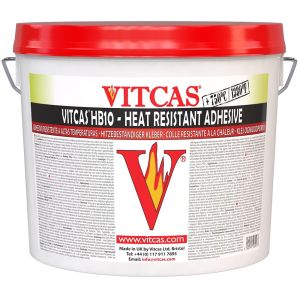 HB10-Rapid Setting Adhesive 750°CAs low as £23.99 £19.99 Regular Price £35.99 £29.99
VITCAS HB10 Rapid Setting Heat Resistant Adhesive for building fireplaces, stoves, tiled stoves and especially with heat accumulation boards. The short working time and setting time facilitates continuous construction without waiting for the material to set.
Read more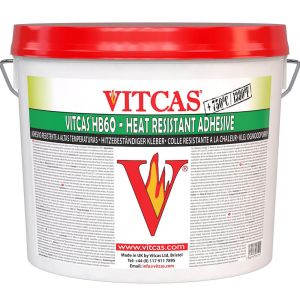 HB60-Hydraulic Bonded AdhesiveAs low as £23.99 £19.99 Regular Price £35.99 £29.99
Vitcas HB60 is a hydraulically setting, heat-resistant adhesive formulated for fixing tiles, fire bricks, and for use in the construction of stoves, wood-fired pizza ovens, tiled stoves, barbecue grills, and fireplaces. It is also suitable for gap filling and offers an extended working time, allowing for accurate positioning and adjustment during installation.
Read more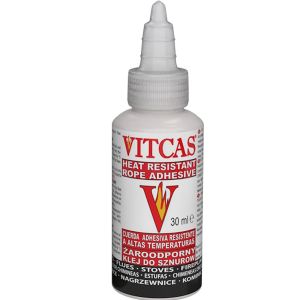 RA -Heat Resistant Rope Seal Adhesive -WhiteAs low as £3.00 £2.50 Regular Price £7.19 £5.99
Vitcas Rope High Temperature Adhesive- Stove Rope Seal Glue. High temperature adhesive that withstands very high temperatures is used to secure thermal rope/tape and ceramic fibre seal. Especially designed for range cookers, boilers, wood-burning or multi-fuel stoves.
Read more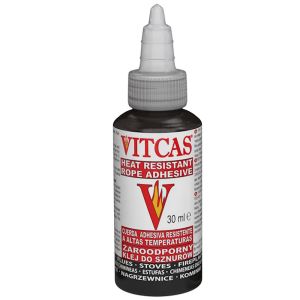 RA-Heat Resistant Rope Seal Adhesive-BlackAs low as £3.00 £2.50 Regular Price £7.19 £5.99
Vitcas Stove Rope Seal Glue - High Temperature Rope Adhesive is a specialised high-temperature adhesive designed to withstand extreme heat. It is ideal for securing thermal rope, tape, and ceramic fibre seals. This adhesive is perfect for use with wood-fired or multi-fuel stoves, boilers, and range cookers, providing a strong and reliable seal under intense heat conditions.
Read more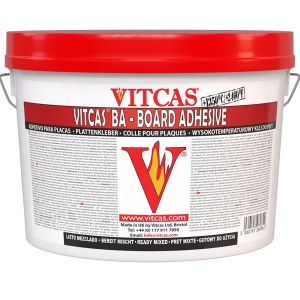 BA - Heat Resistant Board Adhesive 1300°CSpecial Price £23.99 £19.99 Regular Price £35.99 £29.99
Vitcas Board Adhesive - a specially formulated, heat resistant adhesive ideal for securing and sealing joints across a wide range of boards. This includes Vermiculite Board, High Temperature Plasterboard, Fireplace Construction Board, among other insulation and fireproof boards. Uniquely designed to handle extreme conditions, Vitcas Board Adhesive can resist temperatures up to an impressive 1350°C.
Read more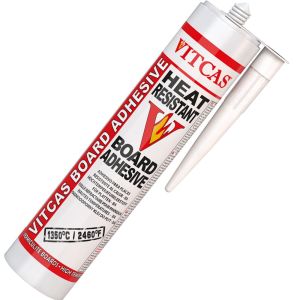 BA - Heat Resistant Board AdhesiveSpecial Price £11.99 £9.99 Regular Price £23.99 £19.99
Vitcas Heat Resistant Board Adhesive (310ml) is capable of withstanding temperatures up to 1350°C. It is ideal for jointing and adhering high-temperature plasterboards, vermiculite boards, insulation boards, and construction boards to brickwork or blockwork. Perfect for use in high-temperature applications.
Read more
Choosing Adhesives for Fireplace & Stove Installation
Fireplace and stove construction can involve several different types of bond. High-temperature boards may need to be joined or fixed to masonry, tiles and fire bricks may form part of a stove or heat-accumulation structure, and stove doors may require replacement thermal rope seals. These applications require adhesives selected for their specific bonding function rather than one general-purpose product.
The correct adhesive depends on the materials being joined, substrate condition, joint or gap geometry, required working time and temperature at the installation position. Ready-mixed board adhesives, rapid-setting and extended-working hydraulic adhesives, and specialist rope-seal adhesives each perform different roles within fireplace and stove construction and maintenance.
Fireplace & Stove Adhesives at a Glance
| Adhesive | Type | Typical applications | Key selection feature |
|---|---|---|---|
| Heat Resistant Board Adhesive | Ready-mixed high-temperature adhesive | Construction boards, insulation boards, vermiculite boards and high-temperature plasterboards | Board fixing and jointing; suitable for fixing compatible boards to flat masonry where gaps do not exceed 5mm |
| HB10 Rapid Setting Adhesive | Hydraulically bonded powder adhesive | Fireplaces, tiled stoves, heat-accumulation structures, prefabricated elements and compatible tiles | 750°C; approximately 10-minute working time for rapid assembly |
| HB60 Hydraulic Bonded Adhesive | Hydraulically bonded powder adhesive | Boards, fire bricks, tiles, fireplaces, tiled stoves, pizza ovens and heat-accumulation construction | 750°C; approximately 60-minute working time and suitability for thicker bonding applications |
| Rope Seal Adhesive | Ready-to-use specialist seal adhesive | Thermal rope, tape, glass-fibre and compatible ceramic-fibre seals | 800°C; designed specifically for stove, oven, range-cooker and boiler door seals |
Heat Resistant Board Adhesive for Construction and Insulation Boards
VITCAS Heat Resistant Board Adhesive is a ready-mixed adhesive formulated for joining and fixing compatible high-temperature boards, including Fireplace Construction Board, insulation boards, vermiculite boards and high-temperature plasterboards.
It can also be used to bond suitable boards to flat brickwork or blockwork where the gap between the board and substrate does not exceed 5mm. Larger gaps and uneven surfaces require a bonding material capable of accommodating a thicker application, such as HB60 where appropriate.
Board faces and bonding surfaces should be clean, dry and free from dust. Where specified for the selected board system, prepare porous surfaces with VITCAS PVA Adhesive Sealer before applying the adhesive.
A 6mm notched comb can be used to distribute the adhesive and form a controlled bonding layer. Board Adhesive should not be used as a substitute for a hydraulic construction adhesive where substantial levelling, thick gap filling or extended positioning time is required.
HB10 Rapid Setting Adhesive for Fast Construction
HB10 Rapid Setting Adhesive is a hydraulically bonded heat-resistant adhesive designed for fireplace, stove, tiled-stove and heat-accumulation construction. It is rated to 750°C and provides an approximate 10-minute working time.
The short working and setting period is useful where successive stages of construction need to progress without extended waiting between bonded components. Typical applications include joining compatible prefabricated elements, tiles and heat-accumulation components.
Because positioning time is limited, components should be measured, prepared and dry-fitted before the adhesive is mixed. HB10 is supplied as a powder and mixed with clean cold water at approximately 200ml per kilogram.
Mix only the amount that can be used within the available working period and do not retemper material that has started to stiffen.
HB60 for Longer Working Time and Thicker Applications
HB60 Hydraulic Bonded Adhesive is also rated to 750°C but provides an approximate 60-minute working time, allowing significantly more time for application, alignment and positioning.
HB60 is suitable for compatible tiles, fire bricks, high-temperature plasterboards, vermiculite boards and Fireplace Construction Boards. It is also used in the construction of fireplaces, tiled stoves, wood-fired pizza ovens and other compatible high-temperature structures.
Its thicker application capability makes HB60 particularly useful where a board cannot be bonded with a thin, close-fitting adhesive layer or where the background requires greater accommodation than Board Adhesive permits.
HB60 can also form part of suitable board finishing systems where a hydraulically bonded layer is required over reinforcement before subsequent finishing materials are applied.
HB10 or HB60?
| Selection factor | HB10 | HB60 |
|---|---|---|
| Temperature rating | 750°C | 750°C |
| Approximate working time | 10 minutes | 60 minutes |
| Setting characteristic | Rapid setting | Extended working time |
| Heat accumulation | Yes | Yes |
| Tiles | Suitable for compatible applications | Suitable for compatible applications |
| Fire bricks | Suitable where specified for the construction | Suitable for compatible firebrick fixing |
| Boards | Selected construction applications | Suitable for compatible construction, insulation and plaster boards |
| Best suited to | Fast assembly where components can be positioned quickly | Installations requiring more positioning time or a thicker bonding layer |
The choice between HB10 and HB60 should be based primarily on construction method, required working time, materials and joint geometry rather than temperature rating, because both adhesives have the same published maximum temperature.
Rope Seal Adhesive for Stove and Appliance Seals
Rope Seal Adhesive performs a different function from board and hydraulic construction adhesives. It is designed specifically for securing thermal rope, tape and compatible glass-fibre or ceramic-fibre sealing materials to suitable metal channels and appliance doors.
Black Rope Seal Adhesive and White Rope Seal Adhesive are rated to 800°C and are used with compatible seals on wood-burning and multi-fuel stoves, range cookers, boilers and ovens.
Before installation, remove the old rope and adhesive residue and clean the metal channel so it is free from dust, grease and loose contamination. Apply the adhesive into the prepared channel and press the correctly sized rope firmly into position.
The adhesive secures the sealing material but does not compensate for an incorrectly sized rope, damaged door, distorted channel or unsuitable gasket design. Rope diameter and profile should therefore be selected according to the appliance and original seal arrangement.
Which Fireplace or Stove Adhesive Should I Use?
| Application | Typical adhesive choice | Selection consideration |
|---|---|---|
| Jointing compatible high-temperature boards | Heat Resistant Board Adhesive | Board type, joint geometry and preparation requirements |
| Fixing boards to flat brickwork or blockwork | Heat Resistant Board Adhesive | Suitable where the gap does not exceed 5mm |
| Fixing boards to less even surfaces | HB60 | Useful where a thicker bonding application is required |
| Rapid fireplace or heat-accumulation assembly | HB10 | Approximately 10-minute working time |
| Heat-accumulation construction requiring more positioning time | HB60 | Approximately 60-minute working time |
| Compatible fire bricks | HB60 or another application-specific refractory bonding material | Confirm brick, substrate, joint thickness and service conditions |
| Compatible tiles in construction applications | HB10 or HB60 depending on the required build and working time | Distinguish construction bonding from thin-bed decorative tile fixing |
| Stove-door rope seal | Rope Seal Adhesive | Use a dedicated adhesive for thermal rope and sealing materials |
Surface Preparation and Joint Geometry
Adhesive performance depends on the condition of both bonding surfaces. Remove dust, soot, grease, loose coatings and other contamination before application. Components should be dry, stable and capable of supporting the required load at operating temperature.
Porous boards and other absorbent surfaces may require preparation with PVA Adhesive Sealer according to the selected adhesive and board system.
Joint thickness is an important selection criterion. A ready-mixed Board Adhesive intended for close-fitting surfaces should not be used to compensate for major background irregularities. Conversely, a thicker hydraulic adhesive should not be selected where the installation specifically requires a controlled thin bonding layer.
Working Time and Installation Planning
Working time can be as important as temperature resistance. HB10 provides rapid setting for prepared components that can be positioned quickly, while HB60 provides substantially more time for adjustment and alignment.
Before mixing a hydraulic adhesive:
- measure and dry-fit the components;
- prepare the substrate and bonding faces;
- confirm the required joint thickness;
- have all tools and supports ready;
- mix only the amount that can be installed within the available working time.
Do not add fresh water to adhesive that has started to stiffen and do not combine partially hardened material with a newly mixed batch.
Curing Before Heat Exposure
Allow each adhesive to set and cure according to its product instructions before the fireplace, stove or other appliance is brought to operating temperature.
Rapid exposure to heat can interfere with water loss and bond development in hydraulic or ready-mixed products. The installation should remain mechanically stable throughout curing, with heavy or unsupported components physically retained where necessary.
Heating should not be used as a substitute for the required setting or drying stage unless the individual adhesive specifically uses appliance heat as part of its curing process.
Temperature Rating and Application Position
Maximum temperature is only one factor in adhesive selection. The adhesive must also match the substrate, component type, joint geometry, working method and thermal conditions of the installation.
A higher-rated board adhesive is not automatically a better choice than HB10, HB60 or Rope Seal Adhesive. Each product is formulated for a different bonding task.
Temperature ratings also apply to the individual adhesive rather than automatically to the complete assembly. Boards, bricks, tiles, rope seals, substrates and other components may have different service limits.
Direct flame, combustion chambers and refractory hot-face construction can impose flame impingement, combustion gases, abrasion and severe thermal cycling. Adhesives used in those locations should be specifically suitable for the required refractory duty.
Engineering & Application Considerations
- Select by bonding function first. Board fixing, construction bonding and rope-seal installation require different adhesive technologies.
- Joint geometry matters. Board Adhesive is intended for relatively close-fitting surfaces, while HB60 can accommodate thicker applications.
- Working time affects installation. HB10 is rapid setting, while HB60 provides substantially more positioning time.
- Prepare porous substrates where required. PVA preparation can be part of compatible board and adhesive systems.
- Do not use Rope Seal Adhesive as a construction adhesive. It is formulated specifically for thermal rope, tape and sealing materials.
- Do not select by temperature rating alone. Substrate compatibility and joint design remain essential.
- Allow adequate curing before heating. Premature temperature exposure can reduce bond quality or damage surrounding materials.
- Confirm the limits of every component. Adhesive temperature capability does not establish the service temperature of the complete fireplace or stove assembly.
Why Choose VITCAS Fireplace & Stove Adhesives?
- Application-specific bonding technologies for boards, refractory components, tiled structures, heat-accumulation systems and stove seals.
- Ready-mixed Board Adhesive for compatible high-temperature construction and insulation boards.
- HB10 rapid-setting hydraulic adhesive for efficient fireplace, tiled-stove and heat-accumulation assembly.
- HB60 extended-working hydraulic adhesive for installations requiring additional positioning time or thicker bonding layers.
- Dedicated black and white Rope Seal Adhesives rated to 800°C for thermal rope and compatible appliance seals.
- Complementary preparation products for compatible porous boards and substrates.
Matching the adhesive to the material, joint, working time and installation position provides a more reliable result than selecting on temperature resistance alone. VITCAS fireplace and stove adhesives allow different stages of construction, assembly and maintenance to use bonding materials formulated for their specific function.
Frequently Asked Questions
What adhesive should I use for Fireplace Construction Board?
VITCAS Heat Resistant Board Adhesive is designed for fixing and jointing compatible high-temperature boards including Fireplace Construction Board, vermiculite board, insulation board and high-temperature plasterboard. Where the board is being fixed to a less even background or a thicker bonding layer is required, HB60 may be more appropriate.
What is the difference between HB10 and HB60?
Both are hydraulically bonded adhesives rated to 750°C. HB10 has an approximate working time of 10 minutes and is designed for rapid assembly, while HB60 provides approximately 60 minutes of working time for applications requiring more positioning and adjustment.
What is the difference between Board Adhesive and HB60?
Board Adhesive is a ready-mixed product designed primarily for jointing high-temperature boards and fixing them to suitable close-fitting surfaces. HB60 is a powder-based hydraulic adhesive suitable for thicker applications and a wider range of compatible boards, tiles, fire bricks and construction tasks.
How large a gap can Board Adhesive accommodate?
When fixing compatible boards to flat brickwork or blockwork, the gap should not exceed 5mm. Where larger gaps or more uneven surfaces need to be accommodated, HB60 is generally the more suitable bonding option.
Can fireplace adhesive be used for fire bricks?
Some adhesives can be used for compatible firebrick applications, but not every product in this category is designed for that purpose. HB60 can be used with suitable fire bricks, while Board Adhesive is primarily intended for high-temperature boards. Select the bonding material according to the refractory component, substrate and joint design.
Which adhesive is best for a tiled or heat-accumulation stove?
HB10 is useful where rapid setting and continuous construction are priorities, while HB60 provides more time for positioning. Both are suitable for compatible heat-accumulation applications, so the choice depends on the construction method, materials and required working time.
What adhesive should I use for stove rope?
Use a dedicated VITCAS Rope Seal Adhesive for securing compatible thermal rope, tape and fibre seals. Black and white versions are available and both are rated to 800°C.
Can Rope Seal Adhesive be used for boards or fire bricks?
No. Rope Seal Adhesive is formulated specifically for thermal rope and sealing materials. Use Board Adhesive, HB10, HB60 or another suitable refractory bonding product for construction applications.
Do porous boards need preparation before adhesive is applied?
Compatible porous boards may require VITCAS PVA Adhesive Sealer before bonding. Surface preparation should match the selected board and adhesive system.
Do fireplace and stove adhesives need to cure before heating?
Yes. Construction and board adhesives should be allowed to set and cure before significant heat exposure. Follow the drying and curing procedure for the selected adhesive and keep components properly supported during this period.
Is a higher temperature rating always better?
No. Temperature resistance is only one selection criterion. The adhesive must also suit the materials, joint thickness, working method and installation position. A product with a higher temperature rating can still be the wrong adhesive for the required bond.
Can heat-resistant adhesive be exposed directly to flame?
Direct flame suitability should not be inferred from temperature rating alone. Combustion areas and refractory hot-face applications require materials specifically suited to flame exposure, combustion gases, thermal cycling and the mechanical conditions present in that location.