
High-Temperature Tapes & Heat Wraps
Heat-Resistant Tapes and Wraps for Stoves, Exhausts and Industrial Equipment
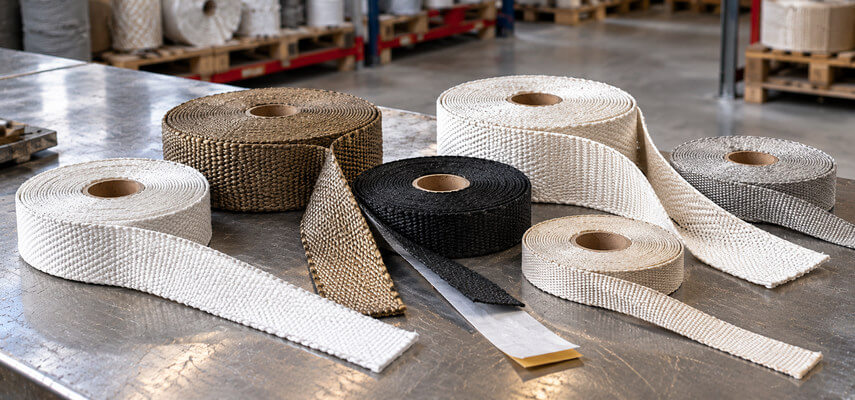
VITCAS high-temperature tapes and heat wraps provide flexible thermal insulation, sealing, gasketing and heat management for domestic appliances, vehicles and industrial plant. The range includes self-adhesive glass fibre tape and ladder tape for stove glass, E-glass and basalt exhaust wraps, tapes for selected electrical-insulation duties, and silica or wire-reinforced ceramic fibre webbing for boilers, furnaces and kilns. Products differ in fibre composition, construction, dimensions, fixing method and service temperature, with selected options rated up to 1260°C. Choose according to the temperature at the installation point, the required function and the equipment manufacturer's specification.
-
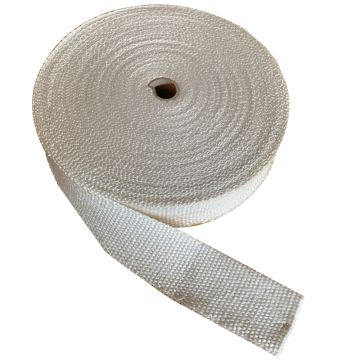 Special Price £3.00 £2.50 Regular Price £4.80 £4.00
Vitcas High Silica Webbing Tape is perfect for seals in kiln cars, furnaces and boilers due to its thermal insulation properties. It is also excellent for insulation in linings, exhausts and welding curtains.
Read more
High-Temperature Tapes for Insulation, Sealing and Heat Management
High-temperature tape is a flat, flexible textile product used where standard adhesive tapes or conventional polymer-based products would be unsuitable for the required thermal duty. Depending on its construction, it can form a narrow gasket, cushion stove glass, wrap an exhaust component, secure the ends of heat-resistant rope or provide thermal and electrical insulation. These products are not interchangeable: the fibre, weave, reinforcement and fixing system determine where each tape can be used.
Stove Glass and Appliance Sealing Tapes
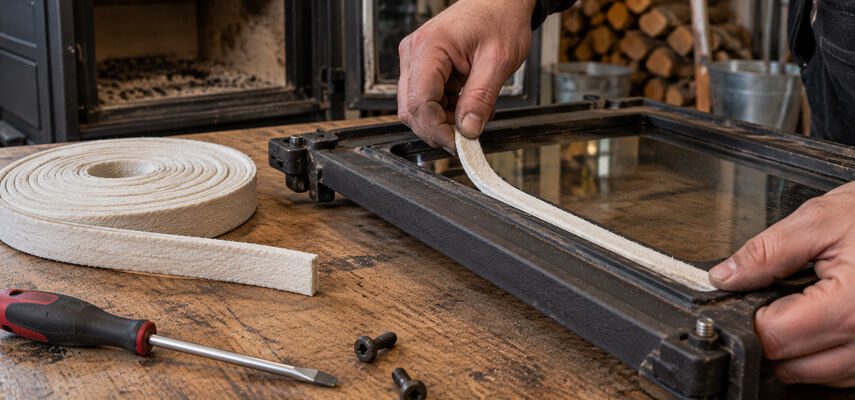
Flat glass fibre tape is suitable for sealing and cushioning heat-resistant glass in stove and fireplace doors, as well as for selected boiler, oven and furnace joints. White and black self-adhesive versions are rated for continuous exposure up to 550°C, with short-term exposure up to 600°C. The adhesive backing is an installation aid rated to 180°C; it holds the tape during assembly but does not replace a compatible rope adhesive or mechanical retention where a permanent fixing is required.
Stove glass ladder tape has gaps in the warp threads to accommodate fixing screws and the edges of stove glass. The 25mm x 2mm glass fibre tape is rated to 550°C and is intended for glass retained between the stove door and back plate. Always match the tape thickness and compression to the appliance manufacturer's requirements to avoid an ineffective seal or excessive stress on the glass.
Exhaust Insulation and Heat Wraps
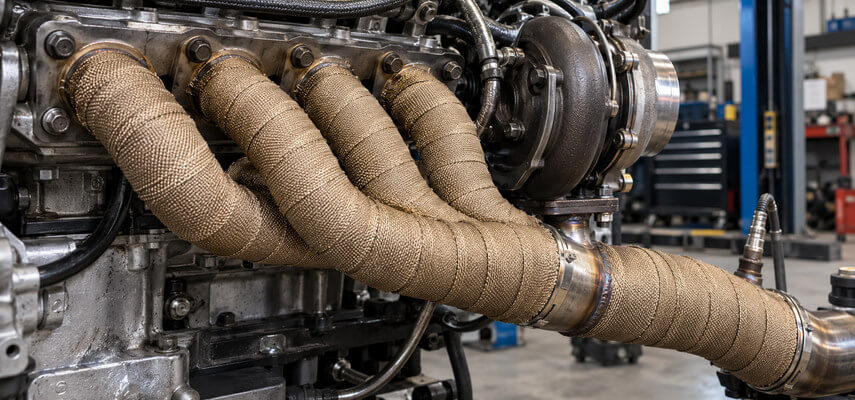
Exhaust insulation and heat wrap is used to manage radiant heat around exhaust pipework and other high-temperature components. Heat-treated E-glass tape is available in a 50mm x 2mm format and is rated to 550°C. Its pre-use heat treatment reduces the likelihood of smoke and fumes during the first heating cycle. Basalt fibre webbing in the same 50mm x 2mm format is rated up to 700°C for more demanding temperature conditions.
Select an exhaust wrap from the measured or calculated surface temperature rather than the exhaust gas temperature. Check the condition and material of the component, the required overlap, the fixing method and any equipment or vehicle manufacturer's restrictions before installation. A heat wrap should not be used to conceal corrosion, cracking or another existing defect.
Electrical Insulation Tapes
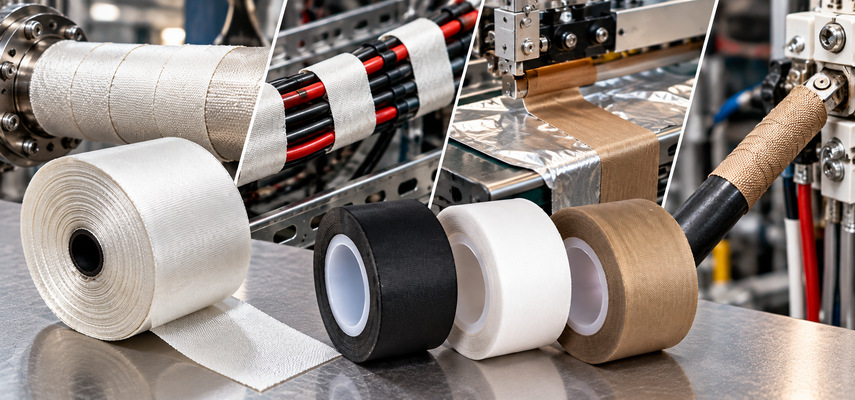
Glass fibre electrical tapes are intended for selected high-temperature insulation duties around heating wires, electrical components and low-voltage machinery. The E-glass insulation tape has a published continuous working temperature of 550°C. Other electro tapes are available in 25mm and 50mm widths for thermal and electrical-insulation applications.
Temperature resistance alone does not establish electrical suitability. Before specifying any tape around an energised component, confirm the required dielectric strength, voltage class, insulation system, thickness, creepage and clearance requirements, and compliance with the equipment standard. Where the required dielectric or voltage performance is not documented for the product, do not infer electrical suitability from its temperature rating alone.
Industrial Glass, Basalt, Silica and Ceramic Fibre Webbings
Woven high-temperature tapes and webbings provide flexible insulation and gasketing around hot equipment, pipework and fabricated assemblies. Material selection becomes increasingly important as temperature and process severity rise. Silica fibre webbing in a 50mm x 2mm format is rated to 1000°C and is used for applications such as furnace and boiler seals, kiln-car insulation, exhausts and welding curtains. Stainless-steel-wire-reinforced ceramic fibre tape is rated for continuous exposure up to 1260°C and is intended for extreme-temperature sealing, gasketing and insulation in furnaces, kilns, industrial ovens, pipework and related plant.
Do not select ceramic or silica tape solely on the basis of its higher temperature capability. Flexibility, abrasion, chemical exposure, thermal cycling, reinforcement, dimensional stability and the design of the joint may make another construction more appropriate.
High-Temperature Tape Selection Guide
| Product type | Temperature rating | Typical uses | Important selection point |
|---|---|---|---|
| Self-adhesive glass fibre stove tape | 550°C continuous; 600°C short term | Stove glass, window frames, selected appliance seals | The adhesive backing is rated to 180°C and is primarily a positioning aid. |
| Glass fibre ladder tape | 550°C | Stove glass retained with screws or between metal plates | Check that the 25mm x 2mm profile matches the glass-retention system. |
| Heat-treated E-glass exhaust tape | 550°C | Exhausts and other hot components | 50mm x 2mm; supplied by length, so allow for the specified overlap. |
| Basalt fibre webbing tape | Up to 700°C | Higher-temperature exhaust and industrial wrapping | 50mm x 2mm; verify the actual component surface temperature. |
| E-glass electrical insulation tape | 550°C continuous | Heating wires and selected low-voltage equipment | Confirm electrical ratings and the equipment standard, not temperature alone. |
| Silica fibre webbing tape | 1000°C | Boilers, furnaces, kiln cars, exhausts and welding curtains | 50mm x 2mm; assess mechanical and process exposure. |
| Wire-reinforced ceramic fibre tape | 1260°C continuous | Furnaces, kilns, industrial ovens, pipes and extreme-temperature seals | Check reinforcement, joint design and handling requirements. |
How to Choose the Correct Tape or Heat Wrap
- Define the function: decide whether the product must seal, cushion, wrap, retain, electrically insulate or reduce heat transfer.
- Establish the service temperature: use the temperature at the tape location and consider continuous operation, short peaks, hot spots and thermal cycling.
- Match the material: compare glass, basalt, silica and ceramic fibre against the temperature, atmosphere, chemicals, moisture, abrasion and movement in the application.
- Check dimensions: width, thickness and total length affect fit, compression, coverage and the amount of material required.
- Specify the fixing method: determine whether adhesive is used only for positioning and whether rope adhesive, screws, clips, clamps or another mechanical system is required.
- Verify electrical data: for electrical duties, confirm dielectric and voltage requirements as part of the complete insulation system.
- Follow the equipment specification: the appliance, vehicle or plant manufacturer's requirements take priority over a general category description.
Installation and Inspection
Install tape only when the equipment is shut down, isolated and cool. Remove failed material and contamination, then ensure the contact surface is clean, dry and free from loose corrosion. Apply the tape evenly without twisting, excessive stretching or local bunching. Use only the overlap, compression and retention method specified for the selected product and equipment. Wear suitable personal protective equipment when cutting and handling fibre textiles, and follow the product instructions and safety documentation.
After installation, check that glass, fasteners, guards and adjacent components have been refitted correctly. Inspect the tape after the initial heating cycle and during routine maintenance. Replace it if it becomes loose, heavily abraded, contaminated, brittle or unable to maintain the required seal or insulation.
Frequently Asked Questions
What is high-temperature tape used for?
High-temperature tape is used for flat sealing, gasketing, thermal insulation, glass cushioning, exhaust wrapping and selected electrical-insulation duties. The correct application depends on the tape's fibre, weave, reinforcement, dimensions and service rating.
What is the difference between high-temperature tape and thermal rope?
Tape is a flat woven product suited to surfaces, edges, flanges and wrapped components. Thermal rope and high-temperature seals have round, square or rectangular compressible profiles for deeper channels, door seals and expansion joints. The groove or joint geometry normally determines which form is appropriate.
Which tape should I use around stove glass?
Use a glass fibre tape whose width and thickness match the stove manufacturer's specification. Self-adhesive flat tape helps position the gasket during assembly, while ladder tape is designed for glass-retention arrangements that include screws or plate edges. Do not overtighten the glass fixings.
Is self-adhesive high-temperature tape permanently bonded?
Not necessarily. On the VITCAS glass fibre stove tapes, the backing adhesive is rated to 180°C and mainly holds the tape in place during assembly. The glass fibre tape itself has a higher temperature rating. Use the specified rope adhesive or mechanical retention where the installation requires a permanent fixing.
Which heat wrap should I use on an exhaust?
Choose from the actual surface temperature, component material, condition, geometry and the manufacturer's installation requirements. Heat-treated E-glass exhaust tape is rated to 550°C, while the basalt fibre option is rated up to 700°C. Confirm the required length, overlap and retention method before ordering.
What temperature ranges are available for high-temperature tapes?
Glass fibre products cover duties around 550°C, basalt webbing extends to 700°C, silica webbing to 1000°C and selected wire-reinforced ceramic fibre tape to 1260°C continuous service. The correct material should be selected by function and operating conditions rather than temperature rating alone.
Can high-temperature tape be used for electrical insulation?
A high service-temperature rating does not confirm dielectric strength, voltage class or compliance with an equipment standard. Use the tape for electrical duty only where the required dielectric, voltage and insulation-system performance is documented for that application.
Can ceramic fibre tape replace glass or basalt tape?
Not automatically. Ceramic fibre tape offers a higher temperature capability, but the correct choice also depends on thickness, flexibility, abrasion, chemical exposure, thermal cycling, reinforcement and joint design. Select against the full application rather than temperature alone.
How much exhaust tape or heat wrap do I need?
The required length depends on the component diameter, wrapped length and specified overlap. Measure the complete route, calculate the coverage using the installed width after overlap, and include an allowance for bends, terminations and cutting. Check the product's sale unit before ordering.
How should high-temperature tape be cut and secured?
Cut it with a suitable sharp tool while wearing appropriate personal protective equipment. Secure it using the method stated for the product and equipment, which may include a compatible high-temperature adhesive, screws, clips, clamps or other mechanical retention. Do not assume that a pressure-sensitive backing alone forms the permanent fixing.