
Vermiculite Boards
Vermiculite Fireboards for High-Temperature Insulation
VITCAS vermiculite fireboards are lightweight, rigid insulation panels for fireplaces, wood-burning and multi-fuel stoves, range cookers, boilers, heat shields, register plates and suitable hobby-kiln applications. Manufactured from naturally occurring vermiculite, the boards provide low thermal conductivity and high-temperature resistance up to 1100°C.
Vermiculite boards are easy to cut, drill and shape using suitable woodworking tools, making them practical for both new installations and replacement linings. Plain boards can be used as compatible replacement stove panels or firebrick alternatives, while reeded and brick-effect versions combine thermal insulation with a decorative surface for visible fireplace and stove interiors.
The boards are intended primarily for indoor or adequately protected installations. Select the appropriate board according to the appliance or equipment design, required dimensions and thickness, temperature exposure, fixing method and whether the surface will remain visible or receive a compatible heat-resistant finish.
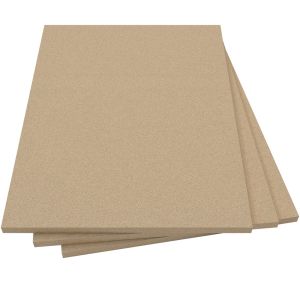 Vermiculite Fire Board Fire-proof InsulationAs low as £35.99 £29.99 Regular Price £71.98 £59.98
Vermiculite Fire Resistant Board – VITCAS Fireproof Insulation, refractory up to 1100ºC / 2010ºF, designed for use as a heat shield, register plate, or replacement for fire bricks in wood-burning and multi-fuel stoves. This versatile board provides excellent thermal insulation and fire resistance.
Read more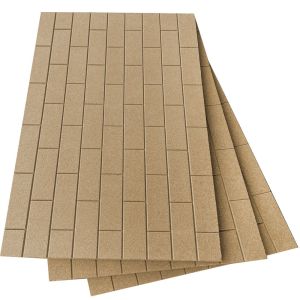 Vermiculite Fire-proof Insulation -Brick EffectAs low as £35.99 £29.99 Regular Price £71.99 £59.99
VITCAS Vermiculite Fire Resistant Insulation Board with a Brick Pattern is resistant to 1100ºC /2010ºF. Vermiculite Fire Resistant Insulation Board is used as a head shield, register plate or as replacement fire bricks for wood burning or multi fuel stoves, fireplaces, and hobby kilns.
Read more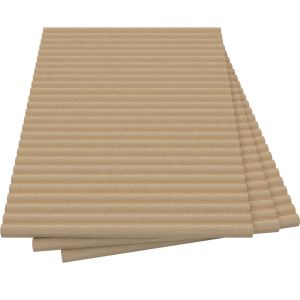 Vermiculite Fire Board-Reeded-Fire-proof InsulationAs low as £35.99 £29.99 Regular Price £71.99 £59.99
VITCAS Reeded Fire Resistant Insulation Board is resistant to 1100ºC (2010ºF). Vermiculite Board with fire-proof insulation is used as a head shield, a register plate or as replacement fire bricks for wood burning or multi fuel stoves, range cookers.
Read more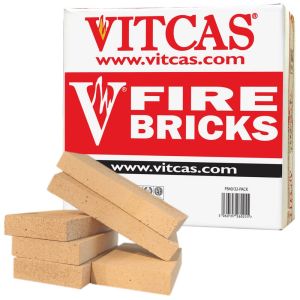 Vermiculite Fire BricksSpecial Price £14.40 £12.00 Regular Price £30.00 £25.00
Vermiculite Fire Bricks are a set of 6 fire-resistant bricks made from natural minerals. Measuring 200 x 90 x 25mm (7.8" x 3.5" x 1") each, these bricks have low thermal conductivity for greater energy efficiency and can be sawn, drilled, and sanded to fit any fireplace or wood-burning stove. Perfect for creating a heat-resistant barrier that contains heat and prevents damage to the surrounding area.
Read more
Choosing Vermiculite Fireboards for Stoves, Fireplaces & High-Temperature Insulation
Vermiculite fireboards combine lightweight construction, low thermal conductivity and high-temperature resistance in a rigid panel that can be cut and shaped for individual installations. VITCAS vermiculite boards are rated up to 1100°C and are used in fireplaces, wood-burning and multi-fuel stoves, range cookers, boilers, heat shields, register plates and suitable hobby-kiln applications.
Unlike dense refractory bricks, vermiculite boards have relatively low mass and are easy to machine using suitable woodworking tools. This makes them particularly useful for replacement stove linings, shaped heat shields and installations where an accurately fitted insulating panel is required.
VITCAS supplies plain, reeded and brick-effect vermiculite fireboards together with pre-cut vermiculite fire bricks. The correct format depends on whether the board will be hidden within the construction, used as a functional lining or remain visible as part of the finished stove or fireplace interior.
Plain, Reeded or Brick-Effect Vermiculite Board?
| Product format | Temperature capability | Best suited to | Key characteristic |
|---|---|---|---|
| Plain Vermiculite Fireboard | Up to 1100°C | Stove linings, heat shields, register plates, replacement panels, range cookers and suitable hobby kilns | Plain surface that can be cut and shaped for project-specific installation |
| Reeded Vermiculite Fireboard | Up to 1100°C | Visible stove and fireplace linings, heat shields and register plates | Decorative grooved surface for exposed internal applications |
| Brick-Effect Vermiculite Fireboard | Up to 1100°C | Decorative stove and fireplace interiors, heat shields and suitable replacement panels | Brick-pattern surface combining insulation with a traditional refractory appearance |
| Vermiculite Fire Bricks | High-temperature stove and fireplace applications | Replacement lining pieces and smaller shaped areas | Pre-cut 200 × 90 × 25 mm vermiculite bricks supplied in sets of six |
Why Vermiculite Is Used for Stove & Fireplace Insulation
Vermiculite is a naturally occurring mineral used to manufacture lightweight refractory insulation products. In board form it provides a combination of low thermal conductivity, low weight and sufficient rigidity to maintain a defined lining or heat-shield profile.
These properties are particularly useful in domestic heating appliances, where insulation often needs to be fitted into relatively confined spaces without adding the mass associated with dense refractory brickwork.
- Temperature resistance up to 1100°C: suitable for many stove, fireplace and protected high-temperature insulation duties.
- Low thermal conductivity: reduces unwanted heat transfer through the board.
- Lightweight construction: easier to handle and fit than many dense refractory materials.
- Easy machining: boards can be sawn, drilled and sanded using suitable woodworking tools.
- Rigid panel format: useful where a defined lining, shield or register plate must retain its shape.
- Decorative options: reeded and brick-effect boards can remain visible where their surface appearance suits the installation.
Replacement Stove Linings & Firebrick Panels
One of the most common uses for vermiculite board is the replacement of damaged internal panels in wood-burning and multi-fuel stoves. Plain board can be cut to reproduce the required panel shape where vermiculite is compatible with the appliance design.
Selection should be based on the material type, thickness, dimensions and position of the original lining. A board should not be selected simply because it can physically be cut to fit the opening.
Where the appliance manufacturer specifies a particular refractory material, density, profile or proprietary component, that requirement should take priority. Vermiculite board should therefore be treated as a compatible replacement material only where its properties suit the original design.
Vermiculite Heat Shields
Vermiculite boards are also used as rigid heat shields around compatible fireplaces, stoves, heaters and other high-temperature equipment. Their low thermal conductivity helps reduce heat transfer through the board, while the rigid format allows shields to be shaped around the installation.
A heat-resistant board does not automatically establish a safe clearance to combustible materials. Board thickness, air gaps, ventilation, fixing arrangements, appliance output and the temperature reached on the cold face all influence the completed installation.
Required appliance clearances should not be reduced solely because a vermiculite panel has been installed.
Register Plates for Wood-Burning Stoves
Plain or decorative vermiculite fireboard can be used to form suitable register plates above freestanding stove installations. The board is comparatively easy to cut around a flue pipe and can be mechanically supported or fixed as required by the fireplace construction.
Measure the chimney opening and flue position accurately before cutting. The register plate should be properly supported and any penetration around the flue must use a sealing detail appropriate to the temperature and movement expected at that position.
Range Cookers, Boilers & Heating Equipment
Vermiculite boards can provide lightweight insulation and heat shielding around compatible range cookers, boilers, night-storage heaters and other heating equipment. They can also be used in selected vessel and tank applications where the board temperature, mechanical exposure and environment are suitable.
These applications should be assessed according to the conditions at the actual board position. A nominal equipment temperature does not necessarily represent the temperature experienced by every insulation layer.
Vermiculite Board for Hobby Kilns
VITCAS vermiculite fireboards can be used in suitable hobby kiln and small-scale high-temperature installations where their 1100°C rating and physical properties meet the duty.
For larger industrial furnaces, higher-temperature ceramic kilns or applications exposed to high gas velocity, severe abrasion or process chemistry, other insulation technologies may be more appropriate. Ceramic fibre insulation and specialist refractory linings provide different combinations of temperature capability, density and mechanical performance.
Vermiculite Board vs Dense Firebrick
Vermiculite board and dense refractory firebrick are both used around high-temperature equipment, but they perform different thermal and mechanical roles.
| Property | Vermiculite Fireboard | Dense Refractory Firebrick |
|---|---|---|
| Weight | Lightweight | Significantly heavier |
| Thermal conductivity | Low; selected primarily for insulation | Higher; selected more for refractory durability and heat-facing duty |
| Thermal mass | Relatively low | Higher heat-storage capacity |
| Machining | Easy to saw, drill and sand | Usually requires masonry or diamond cutting tools |
| Mechanical resistance | Suitable for lightweight linings and shields; requires protection from excessive impact or abrasion | Better suited to more demanding mechanical exposure where the brick grade is appropriate |
| Typical use | Stove panels, register plates, heat shields and lightweight insulation | Fire chambers, refractory structures and more mechanically demanding hot-face applications |
The two materials should not be treated as universally interchangeable. A lightweight vermiculite lining can be advantageous where insulation and ease of shaping are priorities, while dense refractory brickwork may be preferable where mechanical durability, thermal mass or structural refractory construction is required.
Cutting & Shaping Vermiculite Fireboard
One of the practical advantages of vermiculite board is its ease of fabrication. The boards can be sawn, drilled and sanded using suitable conventional woodworking tools, allowing openings, curves and replacement panels to be produced accurately on site.
Measure the installation carefully before cutting, particularly when reproducing an existing stove panel or forming an opening around a flue. Avoid unnecessarily tight fits in locations where thermal movement or appliance tolerances require clearance.
Cutting and sanding generate dust, so use suitable dust control, ventilation and protective equipment in accordance with the product safety information.
Fixing Vermiculite Boards
The fixing method depends on whether the board is being installed as an appliance lining, register plate, wall-mounted heat shield or part of another thermal construction.
For compatible building applications, vermiculite board can be drilled and mechanically fixed or bonded using VITCAS Heat Resistant Board Adhesive. The ready-mixed adhesive is formulated for joining high-temperature insulation boards and can also be used to bond suitable boards to flat brickwork or blockwork where the gap remains within the product specification.
Where a thicker levelling or bonding layer is required, a compatible hydraulic heat-resistant adhesive may be more appropriate than attempting to compensate with an excessively thick layer of Board Adhesive.
The supporting substrate must be stable, clean and suitable for the selected fixing method. Lightweight insulation board should not be expected to compensate for loose masonry or an inadequately supported structure.
Sealing Edges & Flue Penetrations
Jointing and sealing products should be selected independently from the board because their temperature limits can be very different.
For example, VITCAS Heat Resistant Silicone remains flexible and can be used for compatible lower-temperature sealing details, but its maximum listed temperature is 315°C. It should therefore only be used where the temperature at the actual joint or penetration remains within that limit.
Higher-temperature or rigid joints require a sealing material specified for their own temperature, substrate and movement conditions.
Decorative Reeded & Brick-Effect Fireboards
Where the board remains visible inside a stove or fireplace, decorative vermiculite provides an alternative to a plain buff panel.
Reeded Vermiculite Fireboard has a grooved face, while Brick-Effect Vermiculite Fireboard reproduces the appearance of traditional brickwork. Both retain the lightweight insulation characteristics of vermiculite while providing a finished visual surface.
The pattern is decorative rather than structural. Board temperature, support, dimensions and appliance compatibility still need to be checked in exactly the same way as for plain vermiculite board.
Painting or Tiling Vermiculite Board
Vermiculite board should not be treated as ordinary plasterboard. Where a different decorative finish is required, use materials specifically suited to the board and expected surface temperature.
Suitable VITCAS finishing routes include:
- heat-resistant spray paint on correctly prepared compatible exposed board surfaces;
- sealing the porous board with VITCAS PVA Adhesive Sealer before applying a compatible tiled finish;
- fixing suitable tiles with VITCAS Heat Resistant Tile Adhesive where the installation temperature and construction fall within the adhesive specification.
Do not assume that a finish is suitable simply because the vermiculite board can tolerate 1100°C. Paints, adhesives, sealants and decorative materials have their own temperature and installation limits.
Indoor, Covered & Moisture-Protected Installation
VITCAS vermiculite fireboards are intended primarily for indoor or adequately covered applications. Vermiculite board should not be left as an exposed exterior surface where it can absorb rainwater, persistent damp or condensation.
Where a board is used in a potentially damp location, the complete construction should provide appropriate protection from moisture. A high-temperature rating does not make the material weatherproof.
Temperature Rating & Complete-System Performance
The 1100°C rating describes the temperature capability of the vermiculite board itself. It does not establish the maximum temperature of the completed fireplace, stove, wall or insulation assembly.
Complete performance also depends on:
- board thickness and dimensions;
- temperature at the installed position;
- air gaps and ventilation;
- fixing and joint details;
- adjacent masonry or combustible materials;
- appliance clearances;
- surface finishes and adhesives;
- mechanical exposure and impact;
- moisture conditions.
Select the board as one component of the complete thermal system rather than by maximum temperature alone.
Frequently Asked Questions
What temperature can VITCAS Vermiculite Fireboard withstand?
Plain, reeded and brick-effect VITCAS vermiculite fireboards are rated up to 1100°C. The temperature rating applies to the board itself and does not determine the performance or safe clearances of the complete installation.
Can vermiculite board replace firebricks inside a stove?
Yes, where a lightweight vermiculite lining is compatible with the stove design. Match the required material, thickness, dimensions and panel position rather than replacing a dense refractory component solely because the new board can be cut to fit.
Can vermiculite board be cut to size?
Yes. It can be sawn, drilled and sanded using suitable woodworking tools, making it particularly convenient for replacement stove panels, register plates and shaped heat shields.
Can vermiculite board be used as a register plate?
Yes. Vermiculite fireboard is commonly used for suitable register plates above wood-burning and multi-fuel stoves. The board must be correctly supported and the flue penetration detailed with materials appropriate to the temperature at that location.
What is the difference between plain, reeded and brick-effect vermiculite board?
The principal difference is surface appearance. Plain board provides a simple functional surface, reeded board has a grooved finish and brick-effect board provides a decorative brick pattern. All should still be selected according to temperature, dimensions, fixing and appliance compatibility.
Can vermiculite fireboard be used outdoors?
Only when it is fully protected from rain, persistent damp and condensation. It is primarily intended for indoor or adequately covered installations and should not be left as an exposed external surface.
Can vermiculite board be painted?
Yes. Compatible VITCAS heat-resistant spray paint can be used on suitably prepared board surfaces where the paint's temperature rating matches the application.
Can tiles be fixed to vermiculite board?
Yes, where the complete finishing system is suitable. The porous board should be prepared with VITCAS PVA Adhesive Sealer and suitable tiles can then be fixed using VITCAS Heat Resistant Tile Adhesive within the adhesive's specified temperature and installation limits.
Is vermiculite board suitable for industrial furnaces?
Vermiculite board can be used in selected high-temperature equipment and suitable hobby kilns, but it should not be treated as a universal industrial furnace lining. Higher-temperature, high-gas-velocity, abrasive or chemically aggressive duties may require ceramic fibre boards, dense refractories or another specialist lining system.
Is vermiculite board better than firebrick?
They serve different purposes. Vermiculite is lightweight, insulating and easy to shape, while dense refractory firebrick generally provides greater thermal mass and mechanical durability. The correct choice depends on the function required in the appliance or refractory construction.