
Ceramic Fibre Insulation
Ceramic Fibre & Bio-Soluble Insulation for High-Temperature Applications
VITCAS manufactures high-temperature fibre insulation for kilns, furnaces, forges, boilers, glass-processing equipment and other industrial thermal systems. These low-density materials combine low thermal conductivity with low thermal mass, helping reduce heat transfer and stored heat while remaining flexible enough for layered linings, curved surfaces and confined installation spaces.
VITCAS fibre insulation solutions include bio-soluble fibre products rated up to 1200°C, ceramic fibre blankets rated to 1260°C and 1430°C, and ceramic fibre paper rated to 1260°C. Different formats provide different combinations of flexibility, thickness, thermal performance and installation function.
Bio-soluble fibre provides a low-biopersistence alternative for suitable high-temperature insulation duties, while ceramic fibre is selected where higher temperature capability is required. Choose the material according to the actual temperature at the insulation layer, required thickness, lining position, mechanical exposure and whether the product will be used as primary insulation, backup insulation, a sealing layer or another part of the complete refractory system.
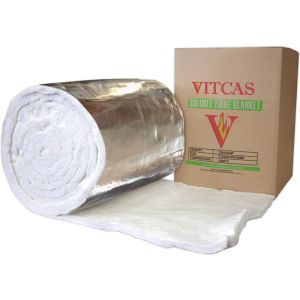 Bio Insulation Blanket with Aluminium Foil£94.80 £79.00 Regular Price £106.80 £89.00
Bio Insulation Blanket with Aluminium Foil is a high-performance thermal insulation solution resistant up to 1200°C (2190°F). Made from bio-soluble fibres, it offers excellent thermal resistance while being eco-friendly and safe. The aluminium foil layer boosts insulation by reflecting radiant heat, making it ideal for high-temperature applications and thermal processing equipment.
Read more Bio Soluble Insulation Fibre Blanket 1200°C£72.00 £60.00 Regular Price £118.80 £99.00
Vitcas Bio-soluble fibre insulation blanket offers exceptional thermal performance, withstanding temperatures up to 1200ºC (2192ºF). Its low bio-persistence and biodegradable fibres ensure safety and minimal environmental impact. With a density of 128 kg/m³, it provides reliable insulation for high-temperature applications..
Read more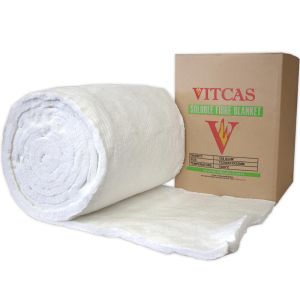 Bio-Soluble Insulation Blanket 1200°C - per Metre£14.39 £11.99 Regular Price £19.19 £15.99
VITCAS Bio soluble fibre insulation blanket is designed to withstand temperatures up to 1200°C (2192°F). This insulation blanket presents a very low health risk due to its low bio-persistence and is safe to handle, making it suitable for both industrial and environmental standards. The blanket is 25 mm thick, 610 mm wide, with a density of 128 kg/m³.
Read more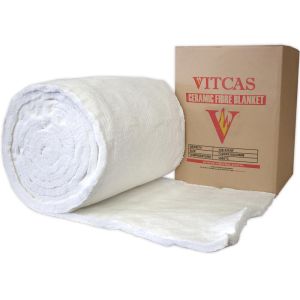 Ceramic Fibre Blanket 1260°C£66.00 £55.00 Regular Price £96.00 £80.00
VITCAS Ceramic Fibre Blanket is resistant to a maximum service temperature of 1260°C (2300°F), with a density of 128kg/m³. Available in thicknesses of 13mm, 25mm, and 50mm, it is widely used in industries like petrochemical, steel, and ceramics. Ideal for insulation and furnace lining applications.
Read more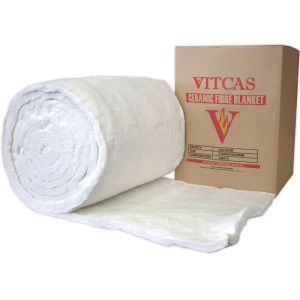 Ceramic Fibre Blanket 1430°C£90.00 £75.00 Regular Price £130.80 £109.00
VITCAS Ceramic Fibre Blanket. Resistant to 1430°C / 2600°F. Density of 128kg/m3. Available in thickness of 13mm, 25mm and 50mm. Can be used in ceramic kilns and in firing stoneware, in making of porcelain or bone china, and in stress relieving insulation, fire protection and power generation.
Read more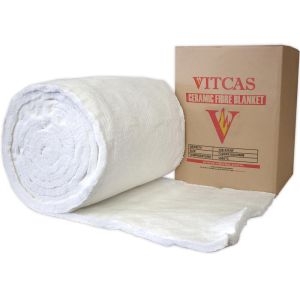 Ceramic Fibre Blanket 1260°C -per Metre£11.99 £9.99 Regular Price £19.19 £15.99
VITCAS Ceramic Fibre Insulation Blanket offers low thermal conductivity and high tensile strength, withstanding temperatures up to 1260ºC (2300ºF). Available by the metre, it comes in 13mm and 25mm thicknesses, 610mm wide, with a density of 128kg/m³, ideal for high-temperature insulation.
Read more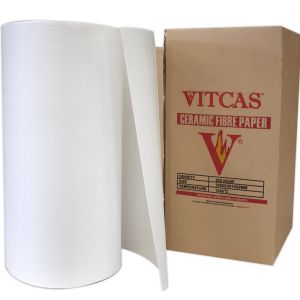 Ceramic Fibre Paper 1260°CAs low as £143.88 £119.90 Regular Price £180.00 £150.00
VITCAS Ceramic Fibre Paper is a high-performance thermal insulation material, available in 1mm, 2mm, 3mm, 5mm thicknesses and 610mm width. With resistance up to 1260°C (2300°F), it provides exceptional heat resistance and durability, making it ideal for demanding high-temperature applications such as kilns, furnaces, and investment casting.
Read more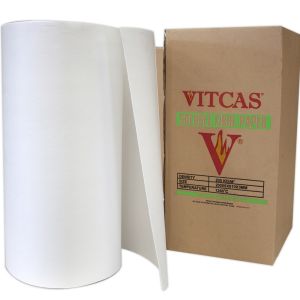 Bio Ceramic Fibre Paper 1200°C£118.80 £99.00 Regular Price £240.00 £200.00
VITCAS Bio Soluble Insulation Paper is a high-temperature thermal insulation material manufactured from advanced biosoluble fibres. Available in 3mm thicknesses with a 610mm width, it offers reliable insulation performance in demanding heat environments. With a maximum service temperature of up to 1200°C (2192°F), this lightweight and flexible insulation paper is suitable for applications such as kilns, furnaces, thermal seals, and investment casting processes where effective heat resistance and durability are required.
Read more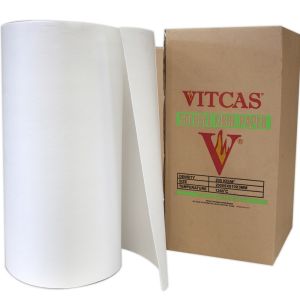 Ceramic Fibre Paper Bio 1200°C - per MetreAs low as £13.19 £10.99 Regular Price £15.59 £12.99
VITCAS Ceramic fibre paper per meter – bio soluble, heat resistant up to 1200°C / 2300°F. Lightweight insulation paper ideal for gaskets, seals and high temperature applications.
Read more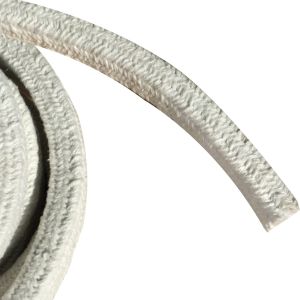 Ceramic Fibre Rectangular Packing 40mmX20mmSpecial Price £10.79 £8.99 Regular Price £18.00 £15.00
Ceramic Fibre Rectangular Packing Ropes are manufactured from finest quality refractory materials. They are resistant to 1260°C / 2300°F. The packing ropes can be used to seal doors in ovens, boilers and furnaces, as well as be used in ceramic kilns in foundries, in shipyards and in petrochemical plants.
Read more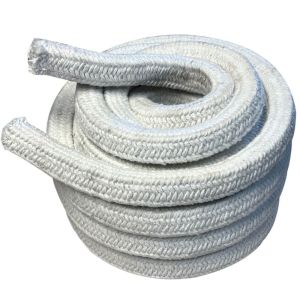 Ceramic Fiber Square Packing 30x30mmSpecial Price £10.79 £8.99 Regular Price £18.00 £15.00
Vitcas Ceramic Fibre Square Packing Ropes are resistant to temperatures up to 1260°C (2300°F). Ideal for high-temperature industrial applications like power stations, petrochemical plants, and kilns, and also suitable for sealing oven doors and other high-heat environments.
Read more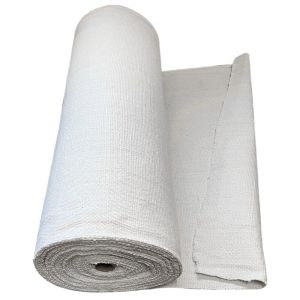 Ceramic Fibre Cloth Biosoluble 1100°CSpecial Price £15.59 £12.99 Regular Price £23.99 £19.99
Vitcas Ceramic Fibre Cloth can withstand high temperatures up to 1100°C (2010°F), making it ideal for use in splash protection in the metallurgical industry, for the collection of high-temperature debris, and as heatproof curtains for furnace doors. It is also resistant to chemicals and bio soluble.
Read more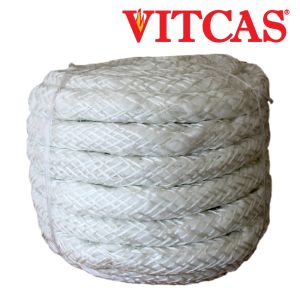 Ceramic Fiber Rope LaggingAs low as £3.59 £2.99 Regular Price £4.20 £3.50
Vitcas Ceramic Fibre Rope Lagging is ideal for high-temperature industrial applications, such as insulating pipes, sealing kiln and furnace doors, flues, heat exchangers, and filling expansion joints in boilers and turbines. Rated up to 1100°C (2012°F), it offers superior thermal insulation and low thermal conductivity in demanding environments.
Read more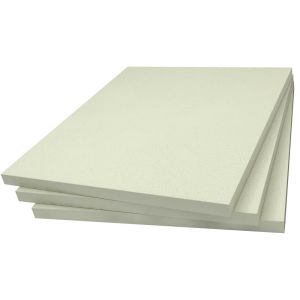 Ceramic Fibre Board 1260°C-VITCAS Insulating BoardAs low as £66.00 £55.00 Regular Price £95.99 £79.99
Vitcas Ceramic Fibre Insulating Board. Resistant to 1260°C/ 2300°F. Dimensions: 1200x1000x25mm and 1200x1000x50mm. Has a low heat conductivity at high temperatures and resists high gas velocity, which makes it ideal for boiler ducts, for kiln linings in glass and ceramics and for stack lining.
Read more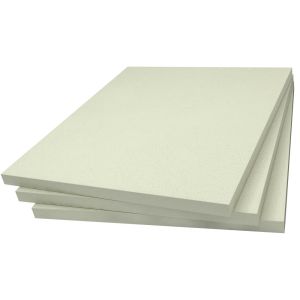 Ceramic Fibre Board 1430°C-VITCAS Insulating BoardAs low as £90.00 £75.00 Regular Price £115.19 £95.99
VITCAS Ceramic Fibre Insulating Fibre Board is resistant to 1430°C / 2600°F. Dimensions: 1200x1000x25mm and 1200x1000x50mm. Due to its high heat resistance and lower thermal mass, heating/ cooling takes quicker and makes it ideal for glass slumping and ceramic kilns.
Read more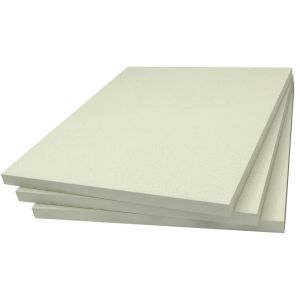 Bio-Soluble Fibre Board 1300°C-VITCAS Insulating BoardAs low as £90.00 £75.00 Regular Price £115.19 £95.99
VITCAS Bio-Soluble Fibre Board 1300°C is a rigid, high-performance thermal insulation board with a density of 300 kg/m³, designed for demanding high-temperature applications. Combining low thermal conductivity with low heat storage and excellent dimensional stability, it is ideal for furnace and kiln linings, heat-treatment equipment, boiler systems and refractory back-up insulation. The bio-soluble fibre composition provides a low-biopersistence alternative to traditional refractory ceramic fibre insulation.
Read more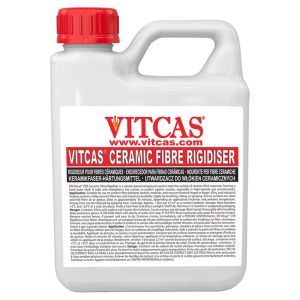 VITCAS Ceramic Fibre RigidiserSpecial Price £15.59 £12.99 Regular Price £47.99 £39.99
Vitcas Ceramic Fibre Rigidiser- a silicate compound. The rigidiser is used for coating the surfaces of ceramic fibre materials. These include the ones used in ceramic kilns, forges and those exposed to high velocity gases. The product acts as a hardener and sealant for these different ceramic fibre surfaces.
Read more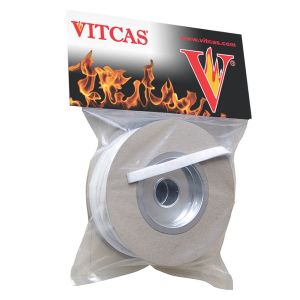 Ceramic Fibre Sealing StripAs low as £1.80 £1.50 Regular Price £3.12 £2.60
Vitcas Ceramic Fibre Sealing Strip. Available in white and in sizes 6x3mm or 10x4mm. Provides an airtight seal between the panels of the stoves, and between a stove door and the glass in a stove door. Also allows for expansion of the glass with the heat. Resistant up to 1260°C / 2300°F.
Read more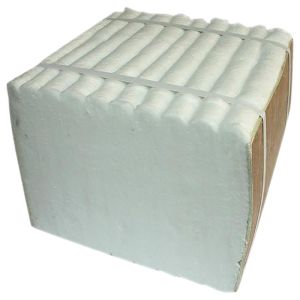 Ceramic Fibre Module -1260°C
Ceramic fiber modules are insulation products made from ceramic fibers that are formed into modules for use in high-temperature applications. They are commonly used in industrial furnaces, kilns, and boilers, as well as in power generation and chemical processing facilities.
Read moreEnquire about this product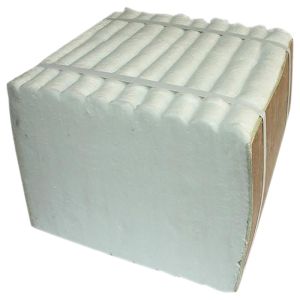 Ceramic Fibre Module -1430°C
Ceramic fiber modules typically consist of multiple layers of ceramic fiber blanket material that are stacked and compressed into a rigid, modular shape. The advantages of ceramic fiber modules include their high temperature resistance, low thermal conductivity, and excellent thermal shock resistance. They are also lightweight and easy to install, making them a popular choice for many high-temperature applications.
Read moreEnquire about this product
High-Temperature Ceramic Fibre & Bio-Soluble Insulation
VITCAS ceramic fibre and bio-soluble fibre insulation products provide low-density thermal insulation for kilns, furnaces, boilers, forges, glass-processing equipment and other high-temperature industrial systems. Their low thermal conductivity and low thermal mass help reduce heat transfer and stored heat, while flexible blanket and paper formats can conform to curved surfaces, joints and complex lining geometries.
The available fibre technologies cover different thermal duties: bio-soluble fibre products are rated up to 1200°C, standard ceramic fibre insulation up to 1260°C, and higher-temperature ceramic fibre blanket up to 1430°C. Selection should be based on the actual temperature at the insulation layer, thickness, mechanical exposure, gas velocity, process atmosphere and the role of the fibre within the complete refractory lining.
Key Technical Characteristics of Ceramic Fibre Insulation
- High-temperature capability: ceramic fibre products are available in grades rated to 1260°C and 1430°C, allowing insulation to be matched to different furnace, kiln and process-temperature requirements.
- Low thermal conductivity: the fibre structure limits heat transfer through the insulation layer, helping reduce thermal losses and control casing or external surface temperatures when correctly designed.
- Low thermal mass: compared with dense refractory linings, fibre insulation stores less heat and can support faster heating and cooling cycles in suitably designed equipment.
- Lightweight and flexible: blanket and paper products can be shaped around curved surfaces, doors, joints, penetrations and irregular equipment geometries where rigid insulation would be difficult to install.
- Multiple insulation formats: blankets provide flexible bulk insulation, while ceramic fibre paper provides thinner compressible layers for gaskets, separation, expansion and specialist thermal-barrier applications.
- Thermal-shock capability: low-mass fibre insulation can tolerate rapid temperature cycling more readily than many rigid or dense refractory systems, provided the material is correctly retained and protected.
- Industrial process compatibility: ceramic fibre has good stability in many high-temperature environments, but resistance to chemicals, molten materials, aggressive vapours and process atmospheres must be confirmed for the specific duty.
Bio-Soluble Fibre Insulation
VITCAS Bio-Soluble Fibre Insulation provides a low-biopersistence alternative for suitable applications up to 1200°C. The fibres are designed to dissolve more readily after biological exposure and the VITCAS product is classified as non-hazardous according to its applicable product information.
Bio-soluble blanket retains the practical benefits of lightweight flexible insulation, including low thermal conductivity, low heat storage and ease of fitting around curved or irregular surfaces. It is suitable for compatible furnace, kiln, boiler, forge and backup-insulation duties where its temperature and mechanical limits meet the design.
Low bio-persistence should not be interpreted as eliminating the need for appropriate handling controls. Cutting, fitting and removal of any fibrous insulation should follow the product safety information and use suitable dust-control and protective measures.
Ceramic Fibre Blanket 1260°C vs 1430°C
| Grade | Maximum listed temperature | Typical positioning |
|---|---|---|
| Bio-Soluble Fibre Blanket | 1200°C | Flexible low-mass insulation and backup layers where low-biopersistence fibre is preferred and the temperature duty is suitable |
| Ceramic Fibre Blanket 1260°C | 1260°C | Furnace and kiln insulation, boiler zones, forge linings, joints, doors and protected industrial thermal layers |
| Ceramic Fibre Blanket 1430°C | 1430°C | Higher-temperature kiln, furnace, firing chamber, petrochemical, power-generation and process applications |
| Ceramic Fibre Paper | 1260°C | Thin thermal barriers, gaskets, expansion layers, separators and investment-casting insulation |
The higher-temperature grade should not automatically be selected for every installation. Lining temperature, shrinkage, thickness, thermal conductivity, cost, mechanical retention and process atmosphere should determine the appropriate fibre grade.
Applications of Ceramic Fibre Insulation
Kilns & Ceramic Firing
Ceramic fibre blankets are widely used in ceramic kilns because they combine high-temperature capability with low heat storage. Applications include flexible chamber insulation, door linings, backup insulation and securely retained repair sections.
The 1260°C grade suits many ceramic-firing duties, while 1430°C ceramic fibre blanket provides additional temperature capability for higher-temperature stoneware, porcelain and other demanding kiln processes where the complete lining design supports its use.
Industrial Furnaces & Heat Treatment
Ceramic fibre insulation is used in heat-treatment furnaces, annealing equipment, industrial ovens and other thermal-processing systems. Its low thermal mass can reduce the amount of energy stored within the lining and allow equipment to respond more quickly during controlled heating and cooling cycles.
Flexible blankets must be properly retained and should be protected from excessive abrasion, direct tool contact, loose scale and damaging high-velocity burner gases. Where the lining requires greater rigidity or mechanical resistance, ceramic fibre board, modules or a dense refractory hot face may be more appropriate.
Forges & Metalworking
Ceramic and bio-soluble fibre blankets can provide lightweight insulation in suitable forge walls, roofs and backup zones. The flexible material conforms readily to curved forge shells and compact chamber geometries.
Fibre blanket should not be treated as a durable forge floor or unrestricted hot-face surface where it will be exposed to workpieces, solid fuel, flux, molten material or severe burner velocity. Such areas may require a suitable refractory coating, dense lining or other protective system.
Glass Manufacturing & Glassworking
High-temperature fibre insulation is used in glass kilns, furnaces and associated thermal-processing equipment where low heat storage and controlled thermal losses are important. Ceramic fibre blanket can form flexible chamber or backup insulation, while ceramic fibre paper provides thin separation, gasket and thermal-barrier layers.
Higher-temperature grades are particularly relevant to glass slumping, fusing and other processes where insulation may experience temperatures beyond the capability of standard glass-fibre or lower-grade insulation materials.
Boilers, Ducts & High-Temperature Process Equipment
Ceramic fibre blankets are used in compatible industrial boilers, ducts, stacks, covers and casing-insulation systems. Their flexibility allows them to fit around irregular surfaces and provide continuous insulation where rigid panels would require numerous joints.
The blanket must still be selected according to the actual insulation temperature, mechanical retention, gas-flow exposure and the design of the surrounding refractory or metal structure.
Petrochemical & Refining Applications
Higher-temperature ceramic fibre grades are used in suitable refining, petrochemical and burner-chamber applications where low thermal conductivity and reduced lining heat storage are required.
Process chemistry must be considered separately from temperature. Chemical vapours, reducing or oxidising atmospheres, hydrocarbons and other contaminants can influence the suitability of the fibre, binders, coatings and retention system.
Incinerators, Cremators & Afterburners
Ceramic fibre insulation can provide flexible low-mass insulation in compatible incinerator, cremator and afterburner systems. The 1430°C grade provides additional temperature capability for suitably designed high-temperature zones.
Fibre insulation should not be exposed to impact, abrasive waste streams or burner velocity beyond its verified duty. High-wear zones generally require a more mechanically durable refractory surface.
Power Generation
Ceramic fibre blankets are used in selected high-temperature power-generation equipment, ducts, boiler systems and associated thermal enclosures. Low conductivity and low stored heat can support effective insulation where the fibre is correctly fixed and protected.
Investment Casting
Ceramic Fibre Blanket and Ceramic Fibre Paper are also used in investment casting for controlled external mould insulation and thermal management. Fibre insulation can reduce local heat loss from ceramic shells and influence cooling and solidification behaviour during casting.
The fibre layer provides thermal insulation only; it does not restore structural strength to a cracked or damaged casting shell. Mould-insulation thickness and placement should therefore form part of the validated casting process rather than being added without consideration of solidification and feeding requirements.
Low Thermal Mass vs Dense Refractory Linings
Ceramic fibre and dense refractory materials serve different roles in high-temperature equipment.
| Property | Ceramic Fibre Insulation | Dense Refractory |
|---|---|---|
| Density | Low | High |
| Heat storage | Low | Higher |
| Thermal conductivity | Low | Generally higher |
| Heating/cooling response | Relatively fast | Slower due to greater thermal mass |
| Flexibility | Blankets and papers can conform to curved surfaces | Rigid or monolithic |
| Abrasion and impact resistance | Requires protection in demanding exposure | Generally better where the refractory grade is appropriate |
| Load-bearing capability | Not structural refractory masonry | Can provide mechanically robust refractory construction depending on material and design |
Many successful furnace and kiln linings combine the two material types: dense refractory or another protected hot face provides mechanical resistance, while ceramic fibre or bio-soluble insulation behind it reduces heat transfer and stored energy.
Specifying Ceramic Fibre Insulation
Temperature rating is only the starting point. For technical selection, consider:
- temperature at the insulation position, including local hot spots and transient conditions;
- thermal conductivity at the relevant mean temperature;
- required insulation thickness and cold-face temperature;
- density and heat-storage requirement;
- blanket, paper, board or module format;
- mechanical retention and anchor arrangement;
- gas velocity, vibration, abrasion and erosion;
- process chemistry and furnace atmosphere;
- surface protection or rigidisation requirements;
- joints, penetrations and thermal bridges within the lining.
A maximum classification or service temperature should not be used by itself to calculate heat loss, casing temperature or lining life. These depend on the complete insulation and refractory construction.
Frequently Asked Questions
How do I choose between ceramic fibre blanket, paper, board and modules?
Select the insulation format according to the geometry and mechanical requirements of the installation. Ceramic fibre blanket provides flexible insulation for linings and irregular surfaces, ceramic fibre paper provides a thin flexible layer for seals, gaskets and narrow insulation duties, ceramic fibre board provides a more rigid high-density lining, and ceramic fibre modules provide pre-formed insulation for compatible industrial furnaces, kilns and boilers.
When is ceramic fibre board preferable to blanket?
Ceramic fibre board is useful where the installation requires a rigid insulating surface, greater dimensional stability or improved resistance to high gas velocity. VITCAS 1260°C board has a density of approximately 300kg/m³, compared with 128kg/m³ for the 1260°C blanket, giving the two formats different mechanical characteristics despite their similar temperature capability.
What is ceramic fibre paper used for?
Ceramic fibre paper provides thin high-temperature insulation where a full blanket thickness would be impractical. Typical uses include thermal seals, gaskets, narrow expansion interfaces, kiln and furnace components and investment-casting applications. Product thickness should be selected according to the required insulation build and joint geometry.
How should I choose between 1200°C, 1260°C and 1430°C fibre insulation?
Choose the fibre grade according to the temperature at the insulation location, continuous operating conditions and any expected thermal peaks. Higher temperature capability can provide additional margin for hotter processes, but the insulation format, thickness, mechanical exposure and furnace or equipment design should be considered at the same time.
Does the ceramic fibre temperature rating apply to the complete furnace or kiln lining?
No. The stated temperature rating applies to the individual insulation material. The operating limit of a complete lining also depends on anchors, coatings, adhesives, refractory layers, metalwork, joints and other components exposed to the thermal environment.
Does increasing ceramic fibre blanket thickness improve insulation?
Increasing insulation thickness generally increases resistance to heat transfer, but the final thermal performance also depends on fibre grade, thermal conductivity, hot-face temperature, cold-face temperature, layer arrangement and surrounding construction. Thickness should therefore be selected from the required thermal performance rather than temperature rating alone.
What is the difference between biosoluble fibre and conventional ceramic fibre insulation?
VITCAS biosoluble fibre products use low-biopersistence fibres and are available in blanket and paper formats with temperature capability up to approximately 1200°C. Conventional ceramic fibre products in the range extend to higher temperature grades, including 1260°C and 1430°C. Selection should consider temperature, product format and the requirements of the specific installation.
What is ceramic fibre rigidiser used for?
Ceramic Fibre Rigidiser is a silicate-based surface treatment used to harden and seal exposed ceramic fibre surfaces. It can help protect blankets, boards, modules and formed fibre components against surface erosion and fibre movement, particularly where the insulation is exposed to higher gas velocities.
Does ceramic fibre rigidiser increase the temperature rating of the insulation?
No. Rigidiser is a surface treatment rather than a method of upgrading the fibre temperature grade. VITCAS Ceramic Fibre Rigidiser has its own published temperature capability of up to 1000°C, so both the insulation material and the surface treatment must be considered when specifying the complete system.
Why does gas velocity matter when selecting ceramic fibre insulation?
High-velocity gases can place greater mechanical stress on exposed fibrous insulation surfaces. In these conditions, a higher-density ceramic fibre board, modular lining or suitable rigidised surface may provide better dimensional and surface stability than an unprotected flexible blanket. Selection should reflect both the thermal duty and the mechanical environment inside the equipment.