
Pipe Jointing Compounds
Metal Pipe Thread Sealants for Water, Gas, Heating & Compressed Air
VITCAS supplies pipe thread sealants for compatible metal fittings used in water, gas, heating and compressed-air installations. The range includes a non-hardening pipe jointing compound and an anaerobic Liquid PTFE thread sealant, providing different sealing methods for threaded connections.
VITCAS Pipe Jointing Compound remains pliable after application and is specified for hot and cold water, natural gas, LPG vapour and low-pressure steam, with published limits of up to 7 bar and 200°C. VITCAS Liquid PTFE cures anaerobically when confined between compatible metal threads and is rated up to 150°C.
Select the sealant according to the service fluid or gas, operating pressure and temperature, thread type, metal compatibility and any approvals required for the installation.
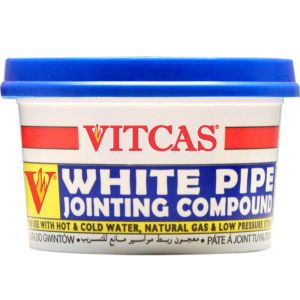 White Pipe Jointing CompoundSpecial Price £2.99 £2.49 Regular Price £5.99 £4.99
VITCAS® White Pipe Jointing Compound 400g is a non-hardening material for creating an airtight seal in pipe threads in plumbing. Prevents water leaks in natural gas and water systems. Conforms to BS EN 751-2:1997 and to BS6956 Part 5: 1992.
Read more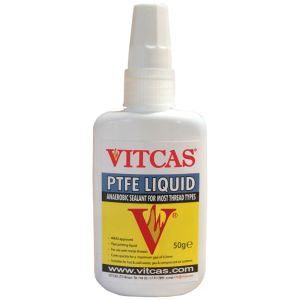 PTFE Liquid - Anaerobic Pipe Thread SealantSpecial Price £7.79 £6.49 Regular Price £10.79 £8.99
Vitcas® Liquid PTFE is an anaerobic single component product suitable to seal metal threaded joints. The product provides instant low-pressure sealing and cures spontaneously and rapidly when confined in absence of air between close metal surfaces.
Read more
Choosing a Pipe Jointing Compound for Metal Threaded Connections
Pipe thread sealants fill the microscopic clearances and spiral leakage path between compatible male and female metal threads. VITCAS provides two sealing technologies for plumbing, heating, gas and compressed-air installations: a non-hardening Pipe Jointing Compound and an anaerobic Liquid PTFE thread sealant.
The products use different sealing mechanisms and are selected according to the service medium, operating pressure and temperature, thread geometry, fitting material, joint clearance, curing requirements and applicable standards.
Pipe Thread Sealant Comparison
| Property | VITCAS Pipe Jointing Compound | Liquid PTFE Anaerobic Thread Sealant |
|---|---|---|
| Product format | 400g ready-to-use non-hardening paste | 50ml ready-to-use anaerobic gel |
| Sealing mechanism | Fills thread clearances and remains pliable | Cures when confined between close-fitting metal surfaces without air |
| Temperature rating | Up to 200°C | Up to 150°C |
| Pressure | Up to 7 bar | Provides an initial low-pressure seal before full anaerobic cure |
| Service media | Hot and cold water, natural gas, LPG vapour and low-pressure steam | Hot and cold water, gas and compressed air |
| Joint type | Compatible threaded metal pipe joints | Close-fitting threaded metal joints with gaps up to 0.3mm |
| Published standards / testing | BS EN 751-2:1997 and BS 6956-5:1992 | ISO 10964 testing referenced in the product documentation |
| Maintenance | Non-hardening character assists adjustment and later disassembly | Cured sealant permits dismantling with conventional hand tools |
Non-Hardening Pipe Jointing Compound
VITCAS Pipe Jointing Compound is a ready-to-use pliable sealing paste for compatible screwed metal pipework. It fills thread clearances while lubricating the connection during assembly, supporting smooth thread engagement and easier adjustment or dismantling during maintenance.
The compound is specified for hot and cold water, natural gas, LPG vapour and low-pressure steam, with published product limits of up to 7 bar and 200°C. Select the product within the pressure-temperature conditions specified for the intended service.
Anaerobic Liquid PTFE Thread Sealant
VITCAS Liquid PTFE is a methacrylate-based anaerobic thread sealant for compatible close-fitting metal connections. It remains fluid during application and polymerises after assembly when confined between mating metal threads without air.
Liquid PTFE is rated up to 150°C and is suitable for thread gaps up to 0.3mm. It provides an initial low-pressure seal before developing its cured sealing performance, making correct thread preparation, assembly and curing conditions important parts of installation.
Liquid PTFE provides a different sealing method from conventional PTFE tape. As an anaerobic resin, it fills the thread clearance before curing within the assembled metal joint.
Metal Thread & Material Compatibility
Both products are designed for threaded metal connections. Correctly matched male and female threads, suitable engagement and sound fitting condition provide the mechanical basis for an effective sealed joint.
VITCAS Pipe Jointing Compound is listed as non-corrosive to aluminium, brass, copper, low-carbon steel and zinc. Liquid PTFE is formulated for close-fitting metallic threads. Select the sealant according to the fitting material and thread design specified for the installation.
Water & Heating Systems
VITCAS Pipe Jointing Compound is specified for hot and cold water and references BS EN 751-2 and BS 6956-5. It provides a non-hardening sealing solution for compatible metallic threaded connections in plumbing and heating systems.
For heating circuits, consider the complete service environment, including operating temperature, pressure and any inhibitors, glycol antifreeze, cleaners or other water-treatment chemicals used in the system.
Natural Gas & LPG
VITCAS Pipe Jointing Compound lists natural gas and LPG vapour among its applications and states conformity with BS EN 751-2:1997. Product selection should follow the relevant gas type, thread dimensions, operating conditions and installation requirements.
VITCAS Liquid PTFE is also specified for gas applications. Gas installations should be completed and tested in accordance with the regulations, competence requirements and approved procedures applicable in the country of installation.
Steam & Compressed Air
Low-pressure steam is included within the applications of VITCAS Pipe Jointing Compound. Because steam temperature and pressure are related, select the compound according to the complete operating condition of the installation.
Compressed air is an application for VITCAS Liquid PTFE. Selection should consider operating pressure and temperature together with the compressor lubricant, condensate conditions and air-quality requirements of the system.
Standards & Product Documentation
VITCAS Pipe Jointing Compound states conformity with BS EN 751-2:1997 and BS 6956-5:1992. These standards provide defined requirements for specified threaded metallic joints and service conditions.
VITCAS Liquid PTFE conforms with ISO 10964. Standards, approvals and installation requirements should be considered together with the service medium, operating conditions and local regulations when specifying a thread sealant.
Preparing & Sealing Metal Threads
For effective sealing, use correctly matched metal threads that are clean and free from old sealing material, loose corrosion, grease and other contamination. Inspect the connection before assembly and replace fittings that are mechanically damaged or excessively worn.
Apply the selected sealant evenly to the clean male thread while controlling the quantity entering the pipe bore. Assemble the connection using the specified thread engagement and tightening method. Liquid PTFE should be allowed to develop the required cure before the system is placed under its specified service conditions.
Pressure Testing & Commissioning
Completed threaded connections should be tested using the leak or soundness procedure specified for the installation. Test pressure, medium, duration and acceptance criteria depend on whether the system carries water, gas, steam or compressed air.
Correct product selection, thread preparation, assembly and testing work together to produce a reliable threaded connection under the intended operating conditions.
Frequently Asked Questions
What is the difference between Pipe Jointing Compound and Liquid PTFE?
Pipe Jointing Compound is a non-hardening sealing paste that remains pliable after assembly. Liquid PTFE is an anaerobic methacrylate sealant that cures when confined between compatible close-fitting metal threads without air.
How do the operating limits of the two thread sealants differ?
VITCAS Pipe Jointing Compound is listed up to 200°C and 7 bar. Liquid PTFE is rated up to 150°C and develops its sealing performance through anaerobic curing. Select between them according to the service medium, operating conditions, thread design and installation requirements.
Which materials are these pipe thread sealants designed for?
Both products are intended primarily for metal threaded connections. VITCAS Pipe Jointing Compound is listed as non-corrosive to aluminium, brass, copper, low-carbon steel and zinc, while Liquid PTFE is formulated for compatible close-fitting metal threads.
Can VITCAS Pipe Jointing Compound be used for natural gas and LPG?
Yes. Natural gas and LPG vapour are listed applications for VITCAS Pipe Jointing Compound, which also states conformity with BS EN 751-2:1997. Installation should follow the applicable gas regulations and product operating conditions.
Can VITCAS Pipe Jointing Compound be used for water and heating systems?
Yes. The product is specified for hot and cold water and can be used on compatible threaded metal connections in suitable plumbing and heating applications. System pressure, temperature and water-treatment chemistry should be considered during selection.
Is Liquid PTFE the same as conventional PTFE tape?
No. Liquid PTFE is an anaerobic resin applied as a gel and cured within the assembled metal thread. Conventional PTFE tape is a non-curing strip wrapped around the thread before assembly. The two products use different sealing mechanisms.
How large a thread gap can Liquid PTFE seal?
VITCAS Liquid PTFE is specified for close-fitting metal threads with gaps up to 0.3mm. Correct thread engagement and fitting condition remain important for achieving the intended seal.
Can pipe thread sealants be used on an existing leaking joint?
For a proper repair, isolate and depressurise the installation, dismantle the threaded connection and inspect the fitting. Clean the threads, apply fresh compatible sealant and reassemble the joint before carrying out the required leak or soundness test.
When can a Liquid PTFE joint be pressure tested?
Liquid PTFE develops its final sealing characteristics through anaerobic curing after the metal threads are assembled. Follow the product curing and pressure-testing requirements for the fitting material, joint clearance and installation temperature before commissioning.