

High-Temperature Insulation
High-Temperature Thermal Insulation Materials
VITCAS manufactures and supplies high-temperature insulation materials for controlling heat transfer in fireplaces, stoves, kilns, furnaces, boilers and industrial thermal equipment. These materials help protect adjacent construction, reduce unwanted heat loss and maintain more stable thermal conditions within high-temperature systems.
Solutions include rigid insulation and construction boards, vermiculite boards and insulation, ceramic and biosoluble fibre products, together with flexible blankets, fibre boards, papers, ropes and other specialist insulation formats. Different materials provide different combinations of temperature capability, thermal conductivity, density, flexibility and mechanical resistance.
Select the insulation according to its required thermal function, installation position and physical format, then confirm that its temperature class, thickness and material properties suit the operating conditions. A rigid fireplace board, lightweight vermiculite panel and flexible high-temperature fibre blanket perform different roles and should be specified according to the complete insulation system rather than temperature rating alone.
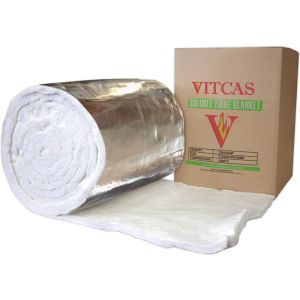 Bio Insulation Blanket with Aluminium Foil£94.80 £79.00 Regular Price £106.80 £89.00
Bio Insulation Blanket with Aluminium Foil is a high-performance thermal insulation solution resistant up to 1200°C (2190°F). Made from bio-soluble fibres, it offers excellent thermal resistance while being eco-friendly and safe. The aluminium foil layer boosts insulation by reflecting radiant heat, making it ideal for high-temperature applications and thermal processing equipment.
Read more Bio Soluble Insulation Fibre Blanket 1200°C£72.00 £60.00 Regular Price £72.00 £60.00
Vitcas Bio-soluble fibre insulation blanket offers exceptional thermal performance, withstanding temperatures up to 1200ºC (2192ºF). Its low bio-persistence and biodegradable fibres ensure safety and minimal environmental impact. With a density of 128 kg/m³, it provides reliable insulation for high-temperature applications..
Read more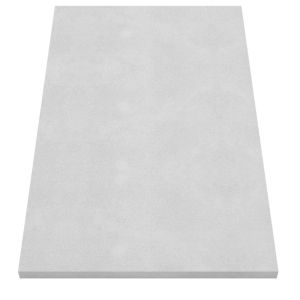 VITCAS Fireplace Construction BoardAs low as £29.99 £24.99 Regular Price £35.99 £29.99
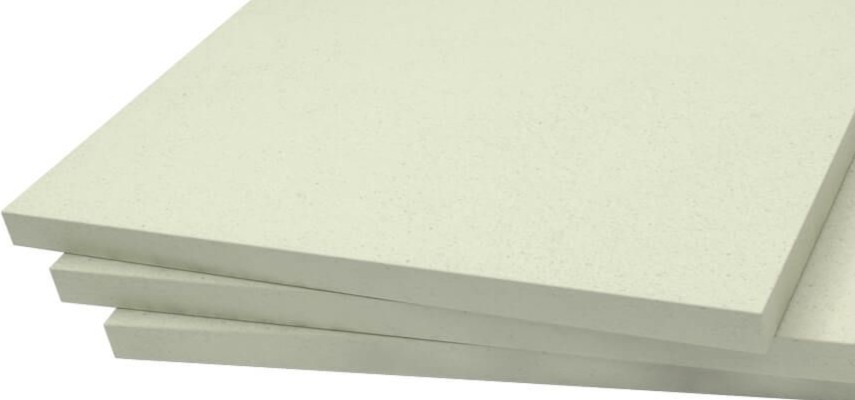
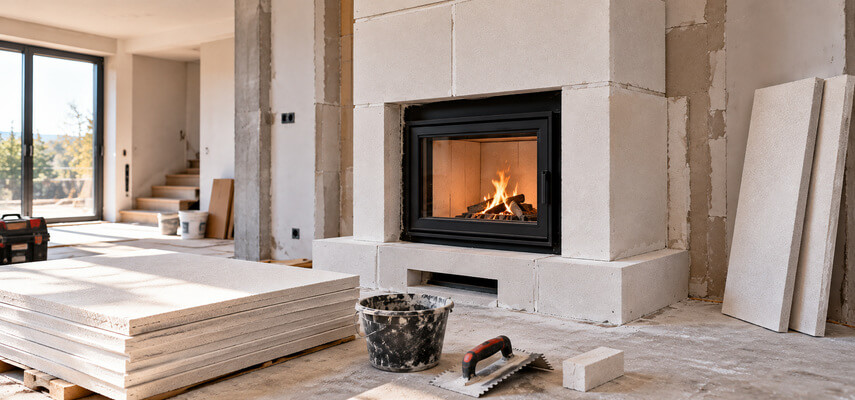
VITCAS CS Fireplace Construction Board is an insulation board resistant to 1000°C / 1830°F. Perfect for use in fireplaces, tiled stoves and corner firesides. Suitable where there is no pre-existing chimney breast or in the centre of a wall or the corner of a room. Simpler and quicker to install than ever before!
Read more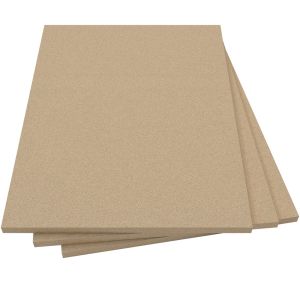 Vermiculite Fire Board Fire-proof InsulationAs low as £35.99 £29.99 Regular Price £71.98 £59.98
Vermiculite Fire Resistant Board – VITCAS Fireproof Insulation, refractory up to 1100ºC / 2010ºF, designed for use as a heat shield, register plate, or replacement for fire bricks in wood-burning and multi-fuel stoves. This versatile board provides excellent thermal insulation and fire resistance.
Read more Ceramic Fiber Rope LaggingAs low as £3.59 £2.99 Regular Price £4.20 £3.50
Vitcas Ceramic Fibre Rope Lagging is ideal for high-temperature industrial applications, such as insulating pipes, sealing kiln and furnace doors, flues, heat exchangers, and filling expansion joints in boilers and turbines. Rated up to 1100°C (2012°F), it offers superior thermal insulation and low thermal conductivity in demanding environments.
Read more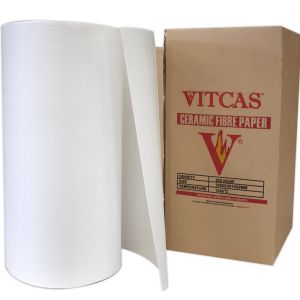 Ceramic Fibre Paper 1260°CAs low as £143.88 £119.90 Regular Price £180.00 £150.00
VITCAS Ceramic Fibre Paper is a high-performance thermal insulation material, available in 1mm, 2mm, 3mm, 5mm thicknesses and 610mm width. With resistance up to 1260°C (2300°F), it provides exceptional heat resistance and durability, making it ideal for demanding high-temperature applications such as kilns, furnaces, and investment casting.
Read more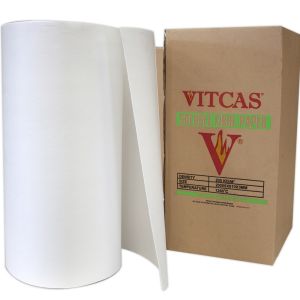 Bio Ceramic Fibre Paper 1200°C£118.80 £99.00 Regular Price £240.00 £200.00
VITCAS Bio Soluble Insulation Paper is a high-temperature thermal insulation material manufactured from advanced biosoluble fibres. Available in 3mm thicknesses with a 610mm width, it offers reliable insulation performance in demanding heat environments. With a maximum service temperature of up to 1200°C (2192°F), this lightweight and flexible insulation paper is suitable for applications such as kilns, furnaces, thermal seals, and investment casting processes where effective heat resistance and durability are required.
Read more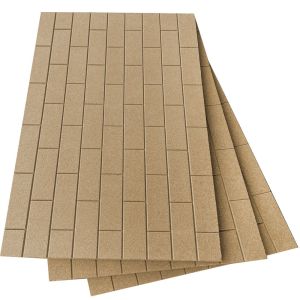 Vermiculite Fire-proof Insulation -Brick EffectAs low as £35.99 £29.99 Regular Price £71.99 £59.99
VITCAS Vermiculite Fire Resistant Insulation Board with a Brick Pattern is resistant to 1100ºC /2010ºF. Vermiculite Fire Resistant Insulation Board is used as a head shield, register plate or as replacement fire bricks for wood burning or multi fuel stoves, fireplaces, and hobby kilns.
Read more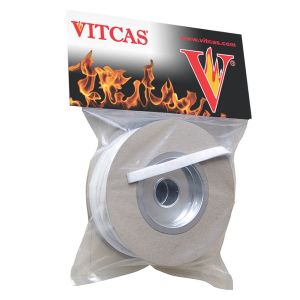 Ceramic Fibre Sealing StripAs low as £1.80 £1.50 Regular Price £3.12 £2.60
Vitcas Ceramic Fibre Sealing Strip. Available in white and in sizes 6x3mm or 10x4mm. Provides an airtight seal between the panels of the stoves, and between a stove door and the glass in a stove door. Also allows for expansion of the glass with the heat. Resistant up to 1260°C / 2300°F.
Read more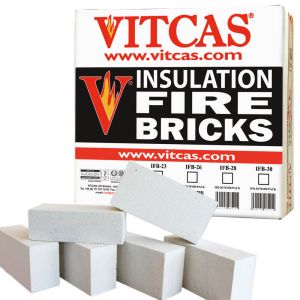 Insulating Fire Bricks-VITCAS Grade 26 -2600°F/ 1430°CSpecial Price £3.35 £2.79 Regular Price £8.39 £6.99
Vitcas Insulation Fire Bricks- Grade 26. Resistant to 1430°C (2600°F). Dimensions: 230x114x76mm. The insulating firebricks can be used in a variety of high temperature industrial applications, such as in insulating refractories- gas producers, kilns, furnaces and stress relieving furnaces.
Read more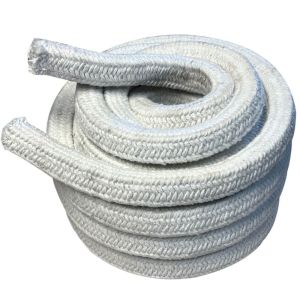 Ceramic Fiber Square Packing 30x30mmSpecial Price £10.79 £8.99 Regular Price £18.00 £15.00
Vitcas Ceramic Fibre Square Packing Ropes are resistant to temperatures up to 1260°C (2300°F). Ideal for high-temperature industrial applications like power stations, petrochemical plants, and kilns, and also suitable for sealing oven doors and other high-heat environments.
Read more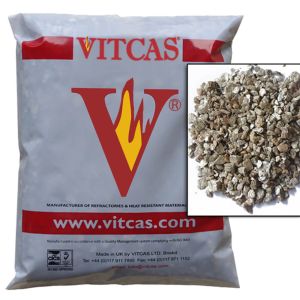 Vermiculite Loose Fill InsulationSpecial Price £35.99 £29.99 Regular Price £47.99 £39.99
Loose Fill Vermiculite in a 100-litre bag is a thermal insulation material that can withstand high temperatures up to 1100°C. It is lightweight and fire-resistant, making it suitable for pipe insulation and various other applications.
Read more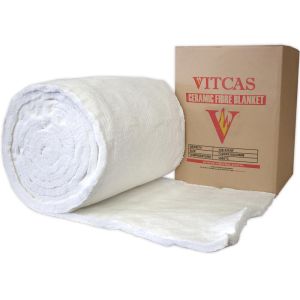 Ceramic Fibre Blanket 1260°C£66.00 £55.00 Regular Price £96.00 £80.00
VITCAS Ceramic Fibre Blanket is resistant to a maximum service temperature of 1260°C (2300°F), with a density of 128kg/m³. Available in thicknesses of 13mm, 25mm, and 50mm, it is widely used in industries like petrochemical, steel, and ceramics. Ideal for insulation and furnace lining applications.
Read more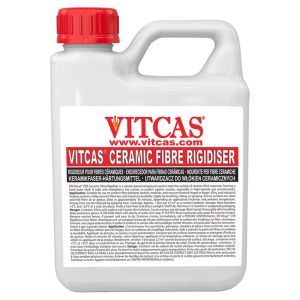 VITCAS Ceramic Fibre RigidiserSpecial Price £15.59 £12.99 Regular Price £47.99 £39.99
Vitcas Ceramic Fibre Rigidiser- a silicate compound. The rigidiser is used for coating the surfaces of ceramic fibre materials. These include the ones used in ceramic kilns, forges and those exposed to high velocity gases. The product acts as a hardener and sealant for these different ceramic fibre surfaces.
Read more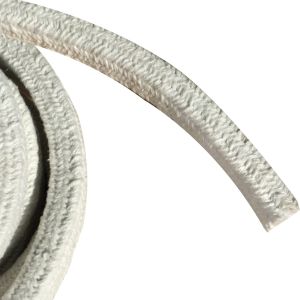 Ceramic Fibre Rectangular Packing 40mmX20mmSpecial Price £10.79 £8.99 Regular Price £18.00 £15.00
Ceramic Fibre Rectangular Packing Ropes are manufactured from finest quality refractory materials. They are resistant to 1260°C / 2300°F. The packing ropes can be used to seal doors in ovens, boilers and furnaces, as well as be used in ceramic kilns in foundries, in shipyards and in petrochemical plants.
Read more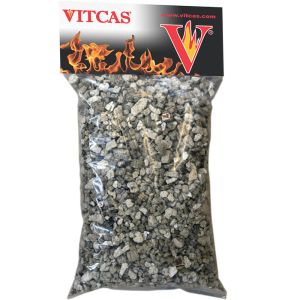 Gas Fire Ember PackSpecial Price £6.00 £5.00 Regular Price £12.00 £10.00
Vitcas Vermiculite Gas Fire Ember Pack is a pack of small crushed vermiculite granules. The vermiculite can withstand temperatures reaching 1100°C. Due to its properties such as low thermal conductivity, heat resistance and moisture storage, it is ideal for being the base in gas fire burners.
Read more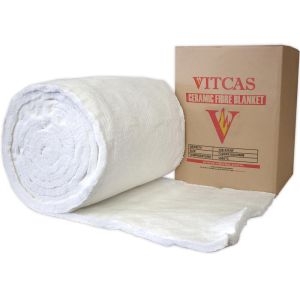 Ceramic Fibre Blanket 1260°C -per Metre£11.99 £9.99 Regular Price £19.19 £15.99
VITCAS Ceramic Fibre Insulation Blanket offers low thermal conductivity and high tensile strength, withstanding temperatures up to 1260ºC (2300ºF). Available by the metre, it comes in 13mm and 25mm thicknesses, 610mm wide, with a density of 128kg/m³, ideal for high-temperature insulation.
Read more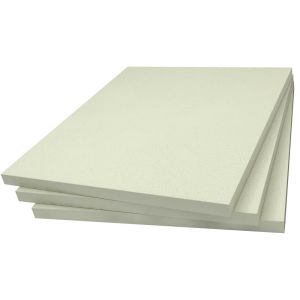 Ceramic Fibre Board 1260°C-VITCAS Insulating BoardAs low as £66.00 £55.00 Regular Price £95.99 £79.99
Vitcas Ceramic Fibre Insulating Board. Resistant to 1260°C/ 2300°F. Dimensions: 1200x1000x25mm and 1200x1000x50mm. Has a low heat conductivity at high temperatures and resists high gas velocity, which makes it ideal for boiler ducts, for kiln linings in glass and ceramics and for stack lining.
Read more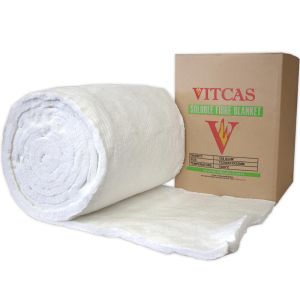 Bio-Soluble Insulation Blanket 1200°C - per Metre£14.39 £11.99 Regular Price £21.59 £17.99
VITCAS Bio soluble fibre insulation blanket is designed to withstand temperatures up to 1200°C (2192°F). This insulation blanket presents a very low health risk due to its low bio-persistence and is safe to handle, making it suitable for both industrial and environmental standards. The blanket is 25 mm thick, 610 mm wide, with a density of 128 kg/m³.
Read more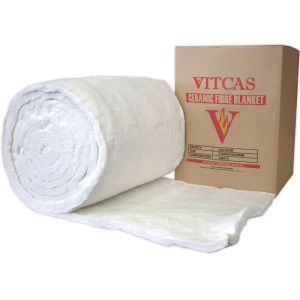 Ceramic Fibre Blanket 1430°C£90.00 £75.00 Regular Price £130.80 £109.00
VITCAS Ceramic Fibre Blanket. Resistant to 1430°C / 2600°F. Density of 128kg/m3. Available in thickness of 13mm, 25mm and 50mm. Can be used in ceramic kilns and in firing stoneware, in making of porcelain or bone china, and in stress relieving insulation, fire protection and power generation.
Read more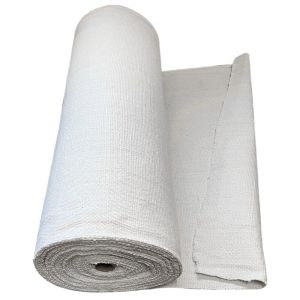 Ceramic Fibre Cloth Biosoluble 1100°CSpecial Price £15.59 £12.99 Regular Price £23.99 £19.99
Vitcas Ceramic Fibre Cloth can withstand high temperatures up to 1100°C (2010°F), making it ideal for use in splash protection in the metallurgical industry, for the collection of high-temperature debris, and as heatproof curtains for furnace doors. It is also resistant to chemicals and bio soluble.
Read more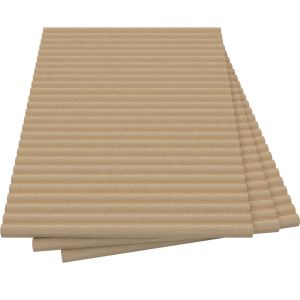 Vermiculite Fire Board-Reeded-Fire-proof InsulationAs low as £35.99 £29.99 Regular Price £71.99 £59.99
VITCAS Reeded Fire Resistant Insulation Board is resistant to 1100ºC (2010ºF). Vermiculite Board with fire-proof insulation is used as a head shield, a register plate or as replacement fire bricks for wood burning or multi fuel stoves, range cookers.
Read more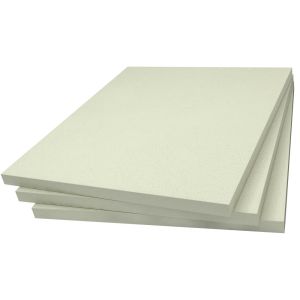 Ceramic Fibre Board 1430°C-VITCAS Insulating BoardAs low as £90.00 £75.00 Regular Price £115.19 £95.99
VITCAS Ceramic Fibre Insulating Fibre Board is resistant to 1430°C / 2600°F. Dimensions: 1200x1000x25mm and 1200x1000x50mm. Due to its high heat resistance and lower thermal mass, heating/ cooling takes quicker and makes it ideal for glass slumping and ceramic kilns.
Read more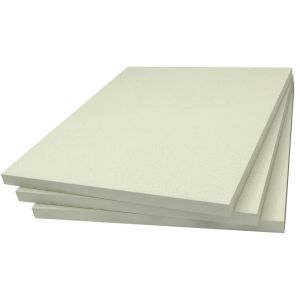 Bio-Soluble Fibre Board 1300°C-VITCAS Insulating BoardAs low as £90.00 £75.00 Regular Price £115.19 £95.99
VITCAS Bio-Soluble Fibre Board 1300°C is a rigid, high-performance thermal insulation board with a density of 300 kg/m³, designed for demanding high-temperature applications. Combining low thermal conductivity with low heat storage and excellent dimensional stability, it is ideal for furnace and kiln linings, heat-treatment equipment, boiler systems and refractory back-up insulation. The bio-soluble fibre composition provides a low-biopersistence alternative to traditional refractory ceramic fibre insulation.
Read more
Choosing High-Temperature Insulation by Material, Form & Duty
High-temperature insulation materials differ not only in maximum temperature capability, but also in thermal conductivity, density, rigidity, flexibility, thickness and resistance to mechanical exposure. A board used to construct a fireplace enclosure performs a different function from a fibre blanket lining a furnace, a vermiculite heat shield or a flexible insulation layer wrapped around pipework.
Select the material according to the thermal function required at its installed position, then confirm that its temperature class, physical format and installation method are appropriate for the complete system.
High-Temperature Insulation Families
| Insulation type | Form | Key characteristics | Typical applications |
|---|---|---|---|
| Insulation Construction Boards | Rigid boards | Low thermal conductivity, accurate panel construction and heat-resistant enclosure capability | Fireplace chambers, stove surrounds, false chimney breasts, heat shields, kilns and compatible thermal equipment |
| Vermiculite Boards | Lightweight rigid panels | Low thermal conductivity, easy cutting and shaping, grades rated up to 1100°C | Stove linings, register plates, heat shields, fireplace chambers, range cookers and suitable hobby kilns |
| Loose-Fill Vermiculite | Lightweight granular insulation | Fills enclosed voids and irregular spaces without forming a rigid structural layer | Behind firebacks, around suitable pipework and within compatible insulated cavities |
| Glass Fibre Insulation | Flexible felt, wrap and textile formats | Flexible thermal insulation for moderate-temperature duties; product temperature limits vary by construction and coating | Flues, pipes, ducts, removable insulation, thermal barriers and protective wraps |
| Biosoluble Fibre Insulation | Blankets, boards and papers | Low-mass high-temperature insulation with low thermal conductivity and low-biopersistence fibre technology | Kilns, furnaces, boilers, thermal processing equipment, backup insulation and sealing layers |
| Ceramic Fibre Insulation | Blankets, boards, papers, ropes and specialist fibre forms | Low thermal mass and high-temperature capability, including VITCAS grades rated to 1260°C and 1430°C | Kilns, furnaces, forges, boiler ducts, stacks, heat-treatment equipment and industrial thermal linings |
Rigid Insulation Boards or Flexible Fibre Insulation?
The required installation geometry is one of the first factors to consider when choosing insulation.
Rigid boards are suited to applications where a defined flat surface, controlled thickness or accurately formed panel is required. Depending on the product, they can be used to create fireplace enclosures, heat shields, stove linings, baffles and rigid insulation layers.
Flexible blankets, papers, felts and wraps are better suited to curved equipment, irregular surfaces, joints, layered furnace constructions, pipework and confined spaces where rigid panels would be difficult to fit.
Rigid and flexible insulation can also be combined within the same thermal system, provided each layer is suitable for the temperature and conditions at its installed position.
Temperature Rating Is Only Part of Insulation Selection
The insulation material must tolerate the temperature it will experience, but maximum temperature alone does not determine thermal performance.
Important selection factors include:
- service temperature at the actual insulation position;
- thermal conductivity at the relevant mean temperature;
- required insulation thickness and available installation space;
- density and heat-storage capacity;
- rigid or flexible format;
- mechanical loading, vibration or gas velocity;
- direct flame or hot-face exposure where applicable;
- chemical and process atmosphere;
- fixing, encapsulation or surface-protection requirements.
A higher temperature classification can provide useful thermal margin, but it does not automatically make one insulation product better suited to every installation.
Insulation Thickness & Thermal Conductivity
Increasing insulation thickness generally reduces heat transfer, but thickness should be considered together with the thermal conductivity of the material at operating temperature.
Thermal conductivity is not necessarily constant as temperature rises. Two products of equal thickness can therefore produce different thermal results, particularly in furnaces, kilns and other equipment operating at elevated process temperatures.
Where an installation has a defined maximum external or casing temperature, insulation thickness should be determined from the complete construction rather than selected from temperature rating alone.
Fireplace, Stove & Flue Insulation
Domestic and commercial heating installations can require several different insulation functions within the same system.
- Construction boards can form compatible fireplace chambers, stove enclosures and false chimney-breast structures.
- Vermiculite boards can provide lightweight stove linings, heat shields and register plates.
- Loose vermiculite can insulate enclosed spaces such as specified voids behind fireplace components.
- Flexible fibre materials can provide insulation around suitable flues, pipework and other heat-exposed components.
The material used directly beside a hot appliance may have different requirements from insulation positioned behind a lining or around a flue. Check the temperature and construction at each interface rather than treating the complete fireplace or stove installation as one insulation zone.
Kilns, Furnaces & Industrial Thermal Equipment
Industrial insulation systems frequently combine several refractory and insulation layers. Dense refractory materials can provide the hot-face strength and wear resistance, while low-density boards or fibre insulation behind them reduce heat transfer and heat storage.
Ceramic fibre blankets and boards are particularly useful where low thermal mass and high-temperature capability are required. VITCAS ceramic fibre grades include products rated to 1260°C and 1430°C, while biosoluble fibre products provide an alternative fibre technology for suitable duties, with temperature capability dependent on the individual board, blanket or paper.
Typical applications include ceramic and glass kilns, heat-treatment furnaces, forges, foundry equipment, boilers, ducts, stacks and process-heating systems.
Vermiculite Insulation for Lightweight Thermal Protection
Vermiculite provides lightweight insulation with low thermal conductivity and is available in both rigid board and loose-fill formats.
VITCAS Vermiculite Boards are rated up to 1100°C and can be cut and shaped for applications such as stove linings, heat shields, register plates and suitable replacement panels.
Loose-fill vermiculite performs a different role. It is intended to fill compatible enclosed spaces and irregular voids rather than provide a rigid or load-bearing construction layer.
Glass Fibre, Biosoluble Fibre & Ceramic Fibre
Fibre composition has a major influence on the temperature range and intended duty of flexible insulation.
| Fibre family | General positioning | Common formats |
|---|---|---|
| Glass fibre | Flexible insulation for moderate-temperature applications where the individual product specification is suitable | Felt, wrap, cloth, rope and textile products |
| Biosoluble fibre | Low-mass high-temperature insulation offering a low-biopersistence fibre option for compatible systems | Blankets, boards and papers |
| Ceramic fibre | Higher-temperature insulation for demanding industrial thermal duties | Blankets, rigid boards, papers, ropes and specialist formed products |
The temperature capability of the complete product should always be checked. Coatings, foil facings, adhesives, binders or other components can have different operating limits from the underlying fibre.
Protecting Insulation in Service
Low-density insulation materials are selected primarily for thermal performance rather than abrasion resistance or structural loading. In many installations they require suitable support, fixing, encapsulation or protection from direct mechanical damage.
Fibre blankets should not be assumed to replace dense refractory linings in areas exposed to significant abrasion, impact or process wear. Likewise, lightweight insulation boards should not be treated as general load-bearing construction materials unless the individual product specification expressly provides that function.
High-Temperature Insulation Applications
VITCAS insulation technologies can be selected for a broad range of domestic, commercial and industrial thermal systems, including:
- fireplaces and stoves – chambers, surrounds, heat shields, register plates and flue insulation;
- ceramic and glass kilns – lining, backup insulation, doors and low-mass thermal barriers;
- industrial furnaces and forges – lining systems, baffles, casing insulation and heat containment;
- boilers, ducts and stacks – thermal barriers and insulation around hot process components;
- foundry and heat-treatment equipment – furnace insulation, maintenance layers and thermal containment;
- pipes and exhaust systems – flexible insulation and wrapping where the selected material suits the surface temperature.
For further background, read about thermal protection and insulation of exhaust pipes and the principles of thermal insulation and how it works.
Frequently Asked Questions
What are high-temperature insulation materials used for?
They reduce unwanted heat transfer and help protect surrounding construction or equipment in high-temperature systems. Applications include fireplaces, stoves, flues, boilers, kilns, furnaces, forges, ducts, process equipment and exhaust systems. The correct material depends on temperature, insulation duty, available space and installation conditions.
Should I use an insulation board or a flexible blanket?
Rigid boards are useful where a defined panel, flat insulation layer, enclosure, heat shield or controlled thickness is required. Flexible blankets are better suited to curved or irregular surfaces, layered furnace systems, pipework and confined spaces. Temperature capability, thermal conductivity and mechanical exposure must also be considered.
What is the difference between ceramic fibre, biosoluble fibre, vermiculite and glass fibre insulation?
Ceramic fibre is suited to demanding high-temperature duties and is available in grades including 1260°C and 1430°C. Biosoluble fibre provides low-mass high-temperature insulation using low-biopersistence fibre technology. Vermiculite provides lightweight rigid-board or loose-fill insulation, while glass fibre is typically used for lower-temperature flexible insulation, wrapping and textile applications. Individual product specifications should determine the final selection.
Can high-temperature insulation materials be cut to size?
Many boards, blankets and papers can be cut or shaped during installation. The correct method depends on the material: soft fibre products can often be trimmed with suitable cutting tools, while rigid boards may require different hand tools or saws. Follow the handling and cutting instructions for the individual product.
Does thicker high-temperature insulation perform better?
Increasing thickness generally reduces heat transfer, but the result also depends on thermal conductivity at the relevant temperature, material density, installation quality and the complete lining construction. Thickness should therefore be selected as part of the thermal design rather than in isolation.
Is the insulation with the highest temperature rating always the best choice?
No. The temperature rating must be sufficient for the intended duty, but material form, conductivity, density, thickness, mechanical conditions and installation method can be equally important. A 1430°C flexible blanket, an 1100°C vermiculite board and a rigid fireplace construction board solve different insulation problems.
Can lightweight insulation replace dense refractory material?
Not automatically. Lightweight insulation is primarily selected to control heat transfer and heat storage, while dense refractory materials can be required for hot-face strength, abrasion resistance, load support or contact with aggressive process conditions. Many industrial lining systems use both materials in separate layers.