Ceramic Kilns & Firing
Refractory and Insulation Materials for Ceramic Kilns and Firing
Ceramic firing performance depends on more than peak temperature. The kiln lining must support repeatable heatwork, temperature uniformity and atmosphere control while limiting heat loss, contamination and unwanted thermal mass. The VITCAS range includes insulating fire bricks for lightweight kiln chambers; ceramic and biosoluble fibre blankets, boards and papers for insulation, expansion gaps, seals and selected electrical or thermal separation duties; refractory castable for compatible dense repairs and formed sections; mortars and fibre adhesive for specified joints; and rigidiser or zircon coating for defined surface treatments. These materials may support pottery, sanitaryware, tile, refractory, technical-ceramic and laboratory firing installations. Select each product from the firing range, rate of temperature change, oxidising or reducing conditions, glaze and body vapours, element or burner arrangement, ware loading, kiln furniture and casing-temperature target. A catalogue temperature is not a firing recipe, a pyrometric-cone value or proof of compatibility with every ceramic process.
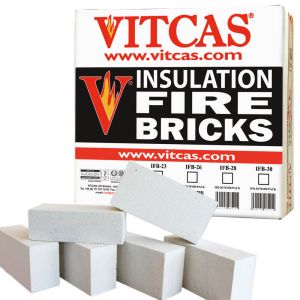 Insulating Fire Bricks-VITCAS Grade 26 -2600°F/ 1430°CSpecial Price £3.35 £2.79 Regular Price £8.39 £6.99
Vitcas Insulation Fire Bricks- Grade 26. Resistant to 1430°C (2600°F). Dimensions: 230x114x76mm. The insulating firebricks can be used in a variety of high temperature industrial applications, such as in insulating refractories- gas producers, kilns, furnaces and stress relieving furnaces.
Read more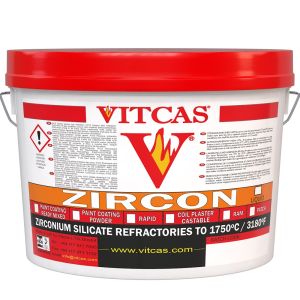 VITCAS Zircon Paint Coating 1750°CSpecial Price £47.99 £39.99 Regular Price £83.99 £69.99
VITCAS Zircon Refractory Paint Coating. It has a creamy consistency and can be applied directly. For spray application, it has to be thinned with water. Its maximum service temperature is of 1750°C / 3180°F. For use on furnaces, ladles, ceramic fibre linings and refractories in contact with molten alloys and glass.
Read more Bio Soluble Insulation Fibre Blanket 1200°C£72.00 £60.00 Regular Price £72.00 £60.00
Vitcas Bio-soluble fibre insulation blanket offers exceptional thermal performance, withstanding temperatures up to 1200ºC (2192ºF). Its low bio-persistence and biodegradable fibres ensure safety and minimal environmental impact. With a density of 128 kg/m³, it provides reliable insulation for high-temperature applications..
Read more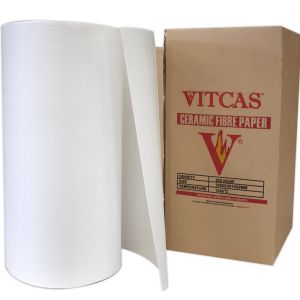 Ceramic Fibre Paper 1260°CAs low as £143.88 £119.90 Regular Price £180.00 £150.00
VITCAS Ceramic Fibre Paper is a high-performance thermal insulation material, available in 1mm, 2mm, 3mm, 5mm thicknesses and 610mm width. With resistance up to 1260°C (2300°F), it provides exceptional heat resistance and durability, making it ideal for demanding high-temperature applications such as kilns, furnaces, and investment casting.
Read more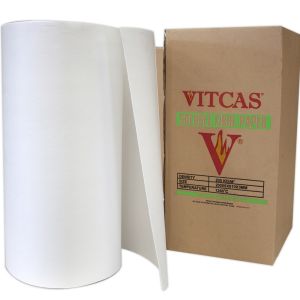 Bio Ceramic Fibre Paper 1200°C£118.80 £99.00 Regular Price £240.00 £200.00
VITCAS Bio Soluble Insulation Paper is a high-temperature thermal insulation material manufactured from advanced biosoluble fibres. Available in 3mm thicknesses with a 610mm width, it offers reliable insulation performance in demanding heat environments. With a maximum service temperature of up to 1200°C (2192°F), this lightweight and flexible insulation paper is suitable for applications such as kilns, furnaces, thermal seals, and investment casting processes where effective heat resistance and durability are required.
Read more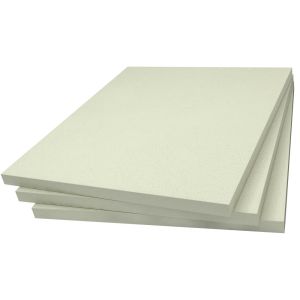 Ceramic Fibre Board 1430°C-VITCAS Insulating BoardAs low as £90.00 £75.00 Regular Price £115.19 £95.99
VITCAS Ceramic Fibre Insulating Fibre Board is resistant to 1430°C / 2600°F. Dimensions: 1200x1000x25mm and 1200x1000x50mm. Due to its high heat resistance and lower thermal mass, heating/ cooling takes quicker and makes it ideal for glass slumping and ceramic kilns.
Read more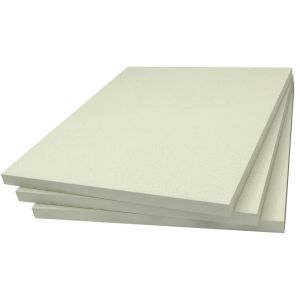 Bio-Soluble Fibre Board 1300°C-VITCAS Insulating BoardAs low as £90.00 £75.00 Regular Price £115.19 £95.99
VITCAS Bio-Soluble Fibre Board 1300°C is a rigid, high-performance thermal insulation board with a density of 300 kg/m³, designed for demanding high-temperature applications. Combining low thermal conductivity with low heat storage and excellent dimensional stability, it is ideal for furnace and kiln linings, heat-treatment equipment, boiler systems and refractory back-up insulation. The bio-soluble fibre composition provides a low-biopersistence alternative to traditional refractory ceramic fibre insulation.
Read more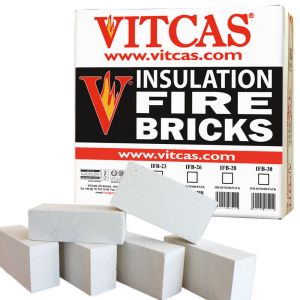 Insulating Fire Bricks-VITCAS Grade 23 - 2300°F/ 1260°CSpecial Price £2.76 £2.30 Regular Price £7.19 £5.99
Vitcas Insulation Firebricks- Grade 23. Resistant to a high temperature of 1260°C / 2300°F. Dimensions: 230x114x76mm. Ideal for situations where heat storage properties are not desired, and for insulating in different refractories- ceramic kilns, furnaces, flues and other high temperature industrial equipment.
Read more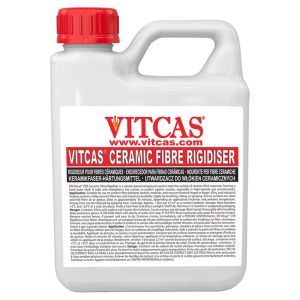 VITCAS Ceramic Fibre RigidiserSpecial Price £15.59 £12.99 Regular Price £47.99 £39.99
Vitcas Ceramic Fibre Rigidiser- a silicate compound. The rigidiser is used for coating the surfaces of ceramic fibre materials. These include the ones used in ceramic kilns, forges and those exposed to high velocity gases. The product acts as a hardener and sealant for these different ceramic fibre surfaces.
Read more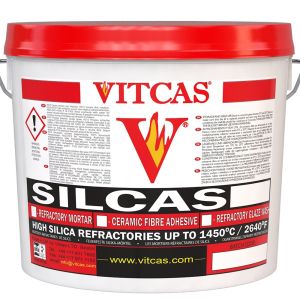 Silcas M-White Refractory Mortar 1430°CAs low as £15.59 £12.99 Regular Price £23.99 £19.99
VITCAS Silcas M - Air Setting Ready Mixed Refractory Mortar for lightweight firebricks and insulation materials up to 1430°C / 2600°F. It is a white refractory mortar so may be used where white mortar is needed for visual and aesthetic purposes. Used for setting and jointing of bricks and other products.
Read more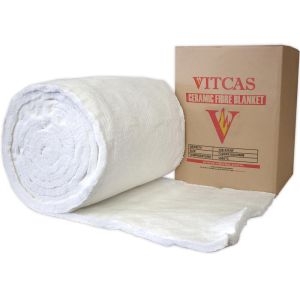 Ceramic Fibre Blanket 1260°C -per Metre£11.99 £9.99 Regular Price £19.19 £15.99
VITCAS Ceramic Fibre Insulation Blanket offers low thermal conductivity and high tensile strength, withstanding temperatures up to 1260ºC (2300ºF). Available by the metre, it comes in 13mm and 25mm thicknesses, 610mm wide, with a density of 128kg/m³, ideal for high-temperature insulation.
Read more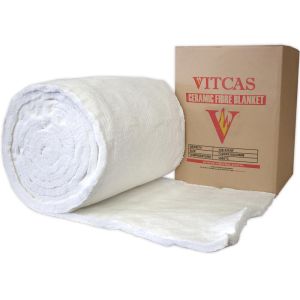 Ceramic Fibre Blanket 1260°C£66.00 £55.00 Regular Price £96.00 £80.00
VITCAS Ceramic Fibre Blanket is resistant to a maximum service temperature of 1260°C (2300°F), with a density of 128kg/m³. Available in thicknesses of 13mm, 25mm, and 50mm, it is widely used in industries like petrochemical, steel, and ceramics. Ideal for insulation and furnace lining applications.
Read more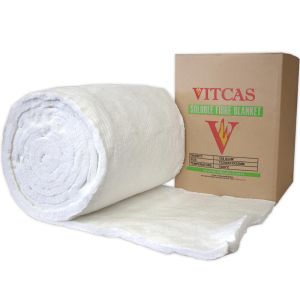 Bio-Soluble Insulation Blanket 1200°C - per Metre£14.39 £11.99 Regular Price £19.19 £15.99
VITCAS Bio soluble fibre insulation blanket is designed to withstand temperatures up to 1200°C (2192°F). This insulation blanket presents a very low health risk due to its low bio-persistence and is safe to handle, making it suitable for both industrial and environmental standards. The blanket is 25 mm thick, 610 mm wide, with a density of 128 kg/m³.
Read more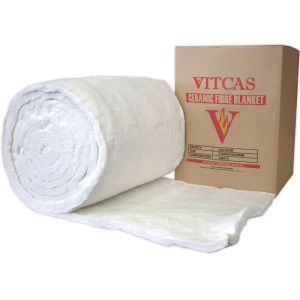 Ceramic Fibre Blanket 1430°C£90.00 £75.00 Regular Price £130.80 £109.00
VITCAS Ceramic Fibre Blanket. Resistant to 1430°C / 2600°F. Density of 128kg/m3. Available in thickness of 13mm, 25mm and 50mm. Can be used in ceramic kilns and in firing stoneware, in making of porcelain or bone china, and in stress relieving insulation, fire protection and power generation.
Read more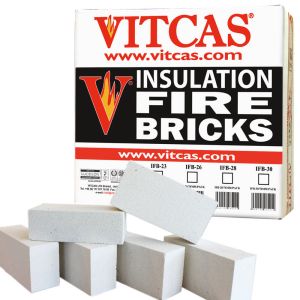 Insulating Fire Bricks-VITCAS Grade 28 -2800°F/ 1530°CSpecial Price £4.56 £3.80 Regular Price £9.59 £7.99
Vitcas Insulation Firebricks- Grade 28. Dimensions: 230x114x76mm. Resistant to 1530°C / 2800°F. The lightweight insulating fire bricks can be used in different industrial applications such as in lining ceramic kilns and furnaces, in areas that are not in contact with molten materials, etc.
Read more Vitcas Refractory Castable Grade 1600°C-Refractory ConcreteSpecial Price £47.99 £39.99 Regular Price £53.99 £44.99
Castable Refractory (Refractory Concrete) is used for repairs to boiler linings, boiler doors and incinerator linings. For use where localised temperatures are higher; for example in gas or oil burner blocks and where forced air is being used.
Read more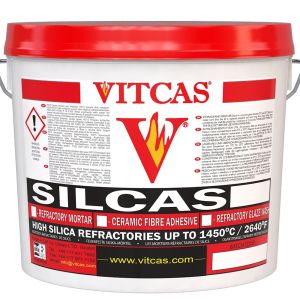 Silcas A-Refractory Mortar 1400°CSpecial Price £35.99 £29.99 Regular Price £47.99 £39.99
VITCAS Silcas A is a ready-mixed, air-setting refractory mortar that offers high-temperature resistance up to 1400°C / 2550°F. It is specifically designed for jointing and setting fire bricks, making it ideal for use in high-heat applications such as kilns, furnaces, and other industrial heating equipment.
Read more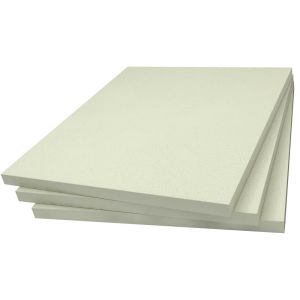 Ceramic Fibre Board 1260°C-VITCAS Insulating BoardAs low as £66.00 £55.00 Regular Price £95.99 £79.99
Vitcas Ceramic Fibre Insulating Board. Resistant to 1260°C/ 2300°F. Dimensions: 1200x1000x25mm and 1200x1000x50mm. Has a low heat conductivity at high temperatures and resists high gas velocity, which makes it ideal for boiler ducts, for kiln linings in glass and ceramics and for stack lining.
Read more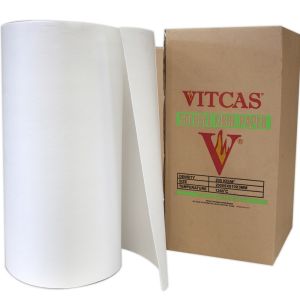 Ceramic Fibre Paper Bio 1200°C - per MetreAs low as £13.19 £10.99 Regular Price £15.59 £12.99
VITCAS Ceramic fibre paper per meter – bio soluble, heat resistant up to 1200°C / 2300°F. Lightweight insulation paper ideal for gaskets, seals and high temperature applications.
Read more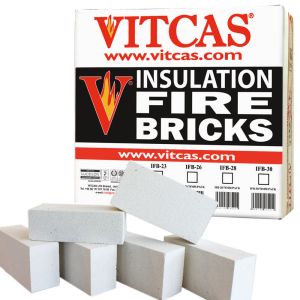 Insulating Fire Bricks-VITCAS Grade 30 -3000°F/ 1650°CSpecial Price £5.88 £4.90 Regular Price £11.94 £9.95
Vitcas Insulation Firebricks- Grade 30. Dimensions: 230x114x76mm. Rates at 1650°C / 3000°F. The lightweight insulation fire bricks can be used for industrial applications such as in hot blast stoves, as primary hot face linings, for back up insulation for kilns and furnaces and for flue insulation.
Read more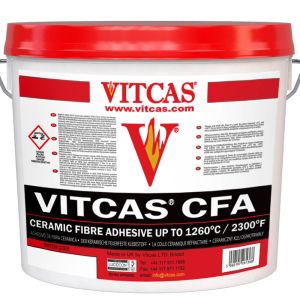 CFA - Ceramic Fibre Adhesive-VitcasAs low as £11.99 £9.99 Regular Price £23.99 £19.99
CFA - Ceramic Fibre Adhesive is a high-temperature, air-setting cement that is specifically designed for use as an adhesive for sticking ceramic fibre materials to brickwork, pizza ovens, or metal. This silica-based adhesive is ideal for use in a wide range of applications where high temperatures are involved, and a strong, durable bond is required.
Read more
Ceramic Firing Defines the Material Duty
A ceramic kiln transfers heat to ware by radiation, convection and conduction. The balance changes through the firing, and the load can shield parts of the chamber from elements or burners. Lining design therefore affects warm-up time, temperature distribution, cooling, element or fuel demand and the repeatability of the fired product.
Specify the body, glaze, decoration and required firing result before choosing refractory materials. Record the firing curve, soak and controlled-cooling stages, atmosphere, maximum credible lining temperature, cycle frequency and permissible shell temperature. Pyrometric cones or other process-temperature indicators measure the combined effect of time and temperature on ceramic material. They complement a controller and thermocouple; they are not interchangeable with a simple temperature reading.
Material Functions in a Ceramic Kiln
| Requirement | Material approach | Important checks |
|---|---|---|
| Low-mass chamber lining | Insulating fire brick or protected fibre construction | Continuous-use limit, shrinkage, strength, atmosphere and contamination |
| Thermal backup | Blanket, board or additional insulating brick | Conductivity over temperature, thickness, seams and casing target |
| Thin heat break or seal | Fibre paper | Thickness, compression, binder behaviour, electrical duty and maximum exposure |
| Brick construction | Matched refractory mortar | Brick chemistry, joint thickness, setting, movement and colour contamination |
| Local dense section | Refractory castable | Wear, support, mixing water, curing, dry-out and thermal bridge |
| Surface finishing | Compatible rigidising treatment or refractory coating | Surface temperature, ware and vapour compatibility, thickness and first firing |
Insulating Fire Bricks and Dense Repairs
| Product | Catalogue value | Potential ceramic-kiln use |
|---|---|---|
| Grade 23 Insulating Fire Bricks | 1260°C | Lightweight chamber or backup course for lower-temperature ceramic firing within the verified service limit |
| Grade 26 Insulating Fire Bricks | 1430°C | Low-thermal-mass lining for pottery and production kilns requiring a higher temperature grade |
| Grade 28 Insulating Fire Bricks | 1530°C | Elevated-temperature lightweight lining where low iron content and process compatibility are relevant |
| Grade 30 Insulating Fire Bricks | 1650°C | Specialised lightweight chamber construction at the upper end of this range, subject to verified duty data |
| Refractory Castable Grade 1600 | 1600°C | Dense formed section or local repair where strength is required and added thermal mass is acceptable |
Insulating fire bricks combine a porous structure with relatively low stored heat, making them useful in kilns that cycle regularly. Select the grade from actual hot-face exposure, recommended continuous-use data and permanent linear change rather than the nominal cone or controller setpoint. High-temperature capability alone does not establish resistance to glaze vapours, alkalis, reducing conditions or mechanical damage from kiln furniture.
Dense castable serves a different purpose. It may be appropriate at a burner block, threshold, plinth or local wear area, but it creates a thermal bridge if inserted through an insulating wall without analysis. Confirm minimum thickness, support or anchors, movement allowance and interface geometry. Castable must never cover failed elements, corroded casing or unstable brickwork.
Blankets and Boards for Low-Mass Insulation
| Product | Catalogue value | Potential ceramic-kiln use |
|---|---|---|
| Biosoluble Fibre Blanket | 1200°C | Flexible backup layer supplied as a complete roll, or protected low-mass chamber insulation below its confirmed duty limit |
| Biosoluble Insulation Blanket per Metre | 1200°C | Material supplied by length at 25mm thickness for smaller kilns, door repairs and maintenance quantities |
| Ceramic Fibre Blanket 1260 per Metre | 1260°C | Flexible material supplied by length for insulation, expansion packing or securely retained repairs |
| Ceramic Fibre Blanket 1260 | 1260°C | Layered low-mass construction, door insulation and suitably protected backup zones using complete-roll quantities |
| Ceramic Fibre Blanket 1430 | 1430°C | Flexible higher-duty grade where continuous exposure and shrinkage data support the design |
| Ceramic Fibre Board 1260 | 1260°C | Rigid low-mass insulation, baffle or backup component for a supported and compatible installation |
| Ceramic Fibre Board 1430 | 1430°C | Higher-temperature vacuum-formed board for chamber, door or baffle details requiring rigidity |
Plan every seam, cut edge, penetration and transition. Blanket should not sag into the chamber, contact electrical elements or be exposed where shelves and ware can abrade it. Board requires support and allowance for dimensional change. A door lining must remain aligned after repeated operation and compress only as intended; adding loose fibre is not a reliable repair for a distorted door or failed hinge.
The thermal calculation should use conductivity at the relevant mean temperature, not only a room-temperature value. Verify the result by mapping exterior temperatures during a representative firing. An unexpected hot area may indicate an open joint, compressed insulation, failed attachment, element or burner impingement, or a direct metal thermal bridge.
Fibre Papers for Joints, Seals and Separation
| Product | Published limit | Potential ceramic-kiln use |
|---|---|---|
| Ceramic Fibre Paper | 1260°C | Thin alumina-silica insulation, gasket, separator or electrical heat-break layer after verification |
| Biosoluble Insulation Paper | 1200°C | Flexible thin barrier, expansion layer or gasket where biosoluble chemistry and temperature are suitable |
| Biosoluble Ceramic Fibre Paper per Metre | 1200°C | Cut-length 610mm-wide paper for small joints, seals, backup and thermal or electrical separation |
Paper is a thin functional component, not a replacement for the main wall insulation. Specify thickness, width, compression, resilience, binder content, dielectric data and shrinkage. Confirm whether organic binder burnout could release fumes or temporarily alter flexibility during the first firing. Keep paper clear of exposed elements unless its electrical and temperature properties are documented for the exact arrangement.
Do not place paper under pottery or glaze as a generic shelf release merely because one product page mentions glass kiln shelves. Suitability for contact with ceramic ware requires separate evidence for sticking, contamination, dust transfer and the firing atmosphere.
Mortars, Adhesive and Surface Treatments
| Product | Published limit | Potential ceramic-kiln use |
|---|---|---|
| Silcas A Refractory Mortar | 1400°C | Ready-mixed joints in compatible dense fire-brick walls, arches, kiln-car sections and local repairs |
| Silcas M White Refractory Mortar | 1430°C | Off-white jointing for compatible lightweight bricks, including Grade 23, and selected fibre-bonding duties |
| CFA Ceramic Fibre Adhesive | 1260°C | Bonding suitable fibre products to prepared refractory or metal, using the lower value until clarified |
| Ceramic Fibre Rigidiser | 1000°C | Shallow surface hardening for securely installed fibre in zones below the rigidiser limit |
| Zircon Refractory Coating | 1750°C | Thin treatment on compatible refractory where ceramic-process chemistry and contamination limits permit it |
Use mortar as a controlled thin joint, not as bulk filler or an expansion seal. Match it to the brick type, atmosphere and movement. Allow air-setting material to dry before firing. CFA is an attachment aid rather than automatic permission to omit mechanical support, especially on roofs, doors or repeatedly cycled surfaces.
Rigidiser does not convert fibre into brick and cannot be used at a 1200°C or 1300°C face merely because the fibre beneath has that rating. Zircon coating cannot restore missing lining thickness or raise the permissible temperature of its substrate. Before using any coating near ceramic ware, confirm that it will not release particles or vapours that alter body colour, glaze, surface finish, element life or kiln atmosphere.
Firing Cycle, Atmosphere and Uniformity
- Drying and early heating: remove residual water from ware without trapping vapour. A refractory repair and a green ceramic load have separate moisture-control requirements.
- Bisque firing: provide sufficient ventilation for water vapour and decomposition products, then follow the body manufacturer's heating rate and heatwork.
- Glaze firing: match atmosphere, heatwork and cooling to the glaze-body system. Vapours and accidental glaze runs can attack or contaminate porous lining materials.
- Reduction firing: consider how altered atmosphere affects brick, fibre, metal anchors, elements, cones, glazes and combustion safety.
- Controlled cooling: the lining's stored heat and insulation influence cooling rate, but the firing schedule must protect the ware and kiln components.
- Load arrangement: preserve circulation and radiant view while maintaining the kiln manufacturer's clearances from elements, burners, thermocouples and walls.
Installation, Operation and Maintenance
Isolate and prove electrical or fuel supplies safe before lining work. Inspect elements, grooves, terminals, thermocouples, burner blocks, flame paths, ventilation, door hardware, interlocks, casing and kiln furniture. Older insulation may contain asbestos; stop work and obtain specialist assessment before disturbing unidentified material.
After brick, castable, mortar, adhesive or coating work, follow the relevant curing and drying instructions. Castable can retain moisture below a dry-looking surface. A premature full firing can generate steam pressure and damage both the repair and adjacent lining. Do not combine a refractory dry-out with valuable ware unless the documented procedure permits it.
During commissioning, place suitable process-temperature indicators at representative levels and positions, not only beside the controller thermocouple. Record programme, loading pattern, cone response, energy input, soak, cooling, atmosphere and visible results. Consistent records help distinguish lining deterioration from changes in thermocouple, elements, burner tuning, load density or firing practice.
Provide adequate room ventilation and extraction of kiln fumes in accordance with the kiln manufacturer's instructions and workplace assessment. Keep combustible materials away from hot surfaces and flues. Restrict access to exposed hot casing, maintain safety devices and display operating and emergency procedures. Loading and unloading can disturb silica-bearing dust from ware and kiln furniture; use appropriate COSHH controls and cleaning methods.
Frequently Asked Questions
How is this category different from the general Kiln Linings category?
This page focuses on ceramic firing outcomes, including heatwork, atmosphere, ware contamination, elements, kiln furniture and loading. The general category addresses a wider range of lining architectures and industrial kiln duties.
Is a pyrometric cone number the same as a temperature?
No. Cone deformation represents heatwork: the combined effect of time and temperature under defined conditions. Heating rate, hold time and atmosphere influence the equivalent temperature, so use the correct cone chart and firing practice.
Why can two areas at similar thermocouple temperature fire differently?
Thermocouples measure locally, while ware receives heat by radiation, convection and conduction over time. Load shielding, element or burner position, air movement and lining condition can produce different heatwork elsewhere in the chamber.
Which insulating fire-brick grade is suitable for a pottery kiln?
The catalogue lists Grades 23, 26, 28 and 30 at 1260°C, 1430°C, 1530°C and 1650°C. Select from actual lining exposure, continuous-use data, shrinkage, strength, atmosphere and required service life, not the highest intended firing alone.
Can insulating fire brick be used for the kiln floor?
Only if its load, abrasion and chemical resistance meet the design. Floors and thresholds may need a denser or sacrificial surface where kiln furniture, ware or glaze runs could damage porous insulating brick.
When is dense castable useful in a ceramic kiln?
It can form a compatible burner block, threshold, plinth or local wear-resistant repair. Its mass and conductivity differ from insulating brick, so the interface and effect on shell temperature and firing response must be assessed.
Can ceramic fibre blanket be left exposed beside the ware?
Only where retention, shrinkage, gas velocity and contamination have been evaluated. Protect it from shelves and handling, control loose fibres and consult the current safety data sheet for installation and removal.
What is ceramic fibre paper used for in a kiln?
It provides a thin gasket, separator, expansion layer or thermal and electrical heat break. It does not replace the main blanket, board or brick insulation, and its thickness, binder, compression and dielectric properties must suit the detail.
Are all three fibre papers rated to 1260°C?
No. The alumina-silica Ceramic Fibre Paper states 1260°C in its title and description. Both biosoluble paper pages state 1200°C even though their URLs include 1260. Specify from current technical data, not the URL.
Can fibre paper be used as kiln-shelf paper for pottery?
Do not assume so. The page reference to glass shelves does not establish compatibility with ceramic bodies or glazes. Verify sticking, contamination, dust and firing-atmosphere performance for the intended ware.
Should Silcas A or Silcas M be used for kiln brickwork?
Silcas A is positioned for compatible dense fire brick and precast sections. Silcas M is aligned with lightweight white insulating bricks, particularly Grade 23. Confirm joint thickness, temperature and brick chemistry before use.
Can CFA adhesive hold a fibre roof without anchors?
Not without an engineered and tested attachment design. Adhesive strength changes with substrate preparation, bond thickness and repeated firing. Use suitable mechanical support wherever the construction requires it.
Can rigidiser be used on a cone 6 kiln hot face?
Not on the basis of the fibre rating. The current rigidiser copy states a 1000°C limit, which may be below the surface temperature reached in that firing. Verify actual exposure and use a compatible protection system.
Will zircon coating prevent all glaze or vapour attack?
No. Its catalogue claims do not cover every glaze, salt, alkali, pigment or firing atmosphere. Confirm compatibility and contamination limits on the exact refractory and ceramic process before coating a chamber.
Why do kiln bricks or fibre joints open after firing?
Possible causes include permanent shrinkage, thermal movement, insufficient compression, restraint, poor bond or mechanical disturbance. Identify the mechanism and repair the joint design rather than filling every gap with rigid mortar.
Does better insulation always improve a ceramic firing?
It reduces heat flow but also changes warm-up, cooling and controller response. Extra insulation can raise element, terminal, anchor or casing-interface temperatures. Recalculate the system and validate a modified kiln before production use.
How should a repaired kiln be returned to service?
Complete the specified cure and dry-out, then commission without valuable ware unless approved otherwise. Monitor lining and shell temperatures, elements or burners, atmosphere, cone response and new cracks before resuming routine firing.
What information is required to specify ceramic-kiln materials?
Provide kiln model and geometry, electric or fuel-fired heat source, body and glaze, target cone or heatwork, firing curve, atmosphere, load pattern, maximum lining temperature, existing construction, failure map, available thickness, shell-temperature target and contamination constraints.