

Technical Textiles & Insulation
Technical Textiles and Flexible High-Temperature Insulation
VITCAS technical textiles and flexible insulation materials support heat retention, textile fabrication and component protection in domestic heating, commercial plant and industrial thermal systems. The product range includes para-aramid, glass fibre and silica sewing threads; glass and biosoluble fibre insulation; aluminium-faced flue wraps; needled felt; foil tape; and braided or silicone-coated sleeving for hoses, pipes, wires and cables.
Select each material by its function and by the conditions at its exact installed position. Ratings include 400°C for para-aramid thread, 550°C for several E-glass felts, wraps and sleeves, 600°C for glass fibre sewing threads, 1000°C continuous and 1400°C short-term for silica thread, and 1200°C for the biosoluble insulation blanket. These figures are not interchangeable. Aluminium foil, silicone rubber, PTFE and pressure-sensitive adhesive layers can have different limits from the underlying fibre, while a high-temperature thread or facing does not determine the performance of the complete fabricated assembly.
 Kevlar Sewing ThreadSpecial Price £35.99 £29.99 Regular Price £96.00 £80.00
Kevlar / Para-Aramid Sewing Thread provides exceptional high-temperature resistance and strength. Its high durability and resistance to corrosive chemicals and abrasion make it ideal for tough, high-temperature applications.
Read more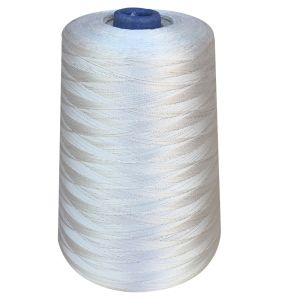 Fiberglass Sewing Thread With WireSpecial Price £96.00 £80.00 Regular Price £144.00 £120.00
Vitcas Fibreglass Sewing Thread Reinforced with Wire is high strength and resistant to corrosive, harmful acids and alkalis. It is also highly heat resistant at 600°C. The glass fibre sewing thread with wire can be used for machine stitiching of e.g. fire protective clothing etc.
Read more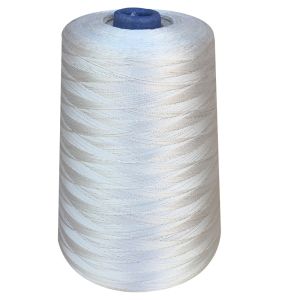 Silica Fibre Sewing ThreadSpecial Price £96.00 £80.00 Regular Price £144.00 £120.00
Vitcas Silica Fibre Sewing Thread can be used in high temperature industrial applications due to its very high heat resistance at 1400°C / 2552°F. The silica fibre thread has high tensile strength making it very suitable for sewing fire blankets, welding and fireproof garments, as well as insulating products.
Read more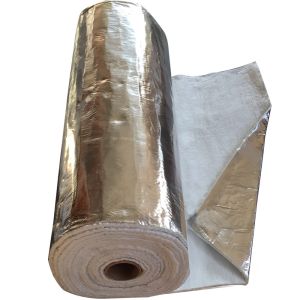 Aluminium Coated Insulation - Flue Wrap 12mm x 1mSpecial Price £166.80 £139.00 Regular Price £300.00 £250.00
Vitcas Aluminium Coated Insulation Flue Wrap provides high-performance thermal insulation for flues and liners in stove chimneys, enhancing efficiency and safety by minimising heat loss, condensation, and the risk of chimney fires.
Read more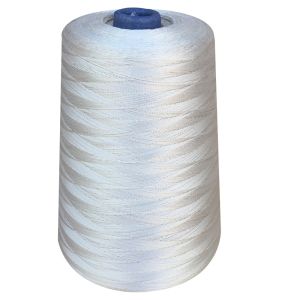 Fiberglass Sewing ThreadSpecial Price £72.00 £60.00 Regular Price £120.00 £100.00
Glass Fibre Sewing Thread with PTFE Coating is resistant to 600°C / 1110°F. The PTFE coating adds flexibility to the fibreglass sewing thread which makes it suitable for sewing heat resistant fabrics and protective clothing to wear in high temperature industrial settings.
Read moreEnquire about this product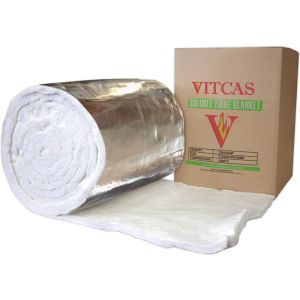 Bio Insulation Blanket with Aluminium Foil£94.80 £79.00 Regular Price £106.80 £89.00
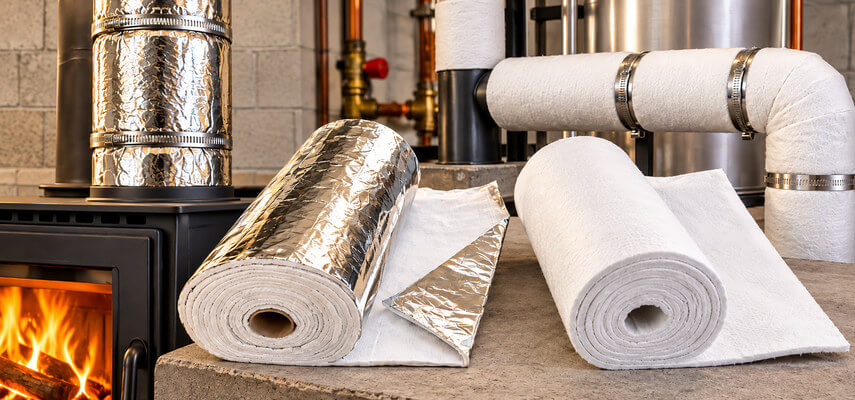
Bio Insulation Blanket with Aluminium Foil is a high-performance thermal insulation solution resistant up to 1200°C (2190°F). Made from bio-soluble fibres, it offers excellent thermal resistance while being eco-friendly and safe. The aluminium foil layer boosts insulation by reflecting radiant heat, making it ideal for high-temperature applications and thermal processing equipment.
Read more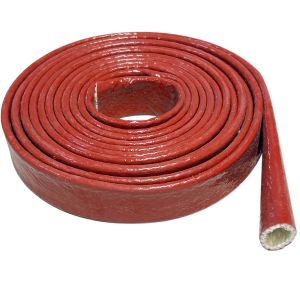 Silicone Rubber Coated SleevingAs low as £6.00 £5.00 Regular Price £18.00 £15.00
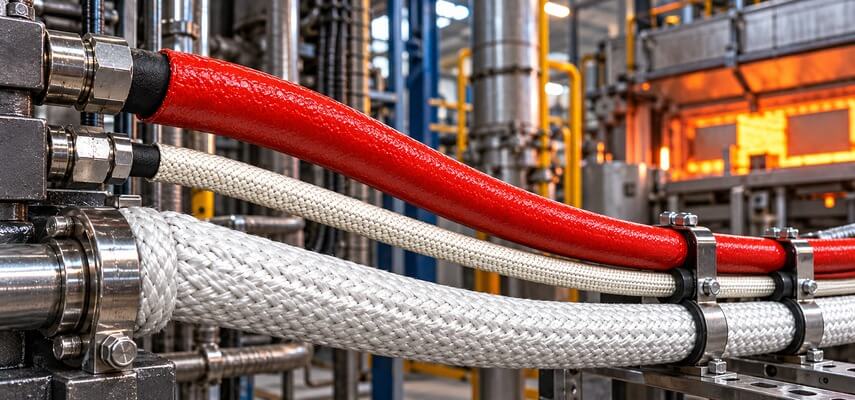
Vitcas Silicone Glass Fibre Rubber Coated Sleeving offers excellent protection against corrosive substances and irritant fibres. It is a highly effective thermal insulator with high-temperature resistance, suitable for industrial furnaces, cables, and hoses.
Read more Flue Insulation WrapSpecial Price £59.99 £49.99 Regular Price £96.00 £80.00
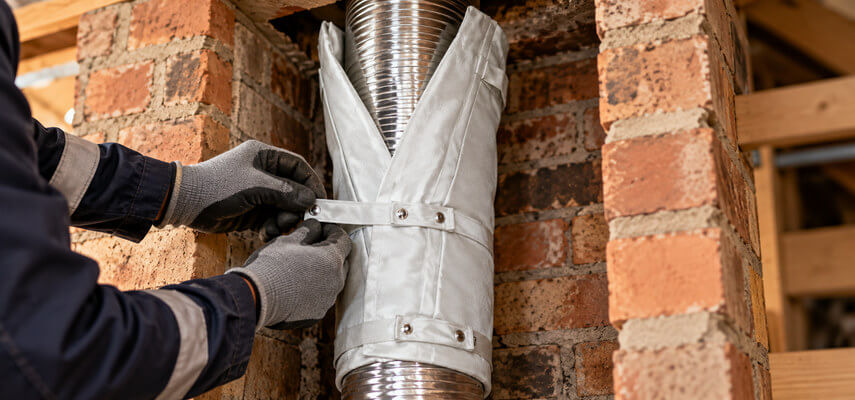
Vitcas Flue Insulation Wrap Jacket is made from e-glass which is safe for the environment. The insulation wrap can withstand temperatures reaching 550°C /1020°F and has a very low thermal conductivity. The wrap is used inside chimney flues for insulation and to prevent chimney fires and reduce tar, etc.
Read more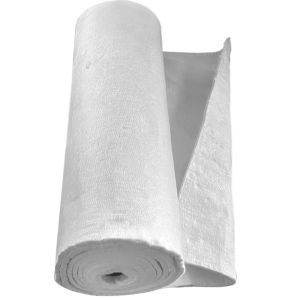 Glass Needled Felt Insulation - Fiberglass Mat -per MetreSpecial Price £14.40 £12.00 Regular Price £24.00 £20.00
Glass Fibre Needled Felt is a flexible insulation blanket, resistant to 600°C (1110°F) for short-term and 550°C (1020°F) for continuous working temperatures. Fibreglass mat is lightweight, easy to handle, and ideal for industrial applications. Non-toxic, ensuring safe use by workers and around chemicals.
Read more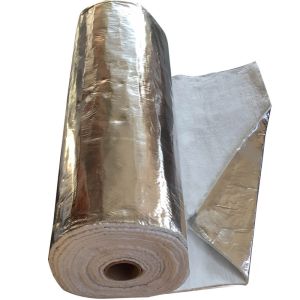 Aluminium Coated Insulation - Flue Wrap 12mm x 1m -per MetreSpecial Price £24.00 £20.00 Regular Price £30.00 £25.00
Flue Chimney Wrap Insulation Blanket suitable for insulating flues and flue liners inside the chimney. Aluminium Coated Glass Fibre Insulating Mat will reduce risk of condensation, tar formation, as well as chimney fires and hence elongate the life of your flue liner and maximise its performance.
Read more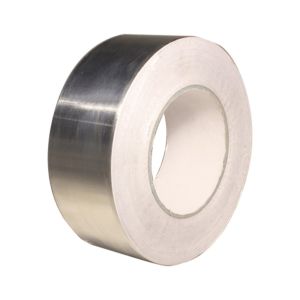 Aluminium Foil TapeSpecial Price £5.99 £4.99 Regular Price £7.19 £5.99
Aluminium Foil Tape with self-adhesive backing is perfect for applications which require thermal and electrical conductivity such as in pipe lagging, central heating systems and ventilation.
Read more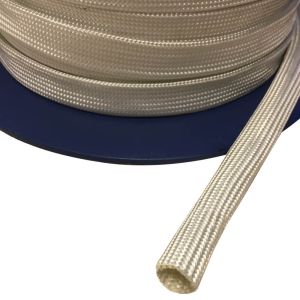 Fibreglass SleevingAs low as £1.80 £1.50 Regular Price £3.00 £2.50
VITCAS Fibreglass Sleeving protects vessels, pipes, and hoses from high temperatures and abrasion, with resistance up to 550°C (1022°F). It helps reduce heat loss, enhancing efficiency. Available in white, it's easy to cut and apply, making it ideal for both industrial and domestic use.
Read more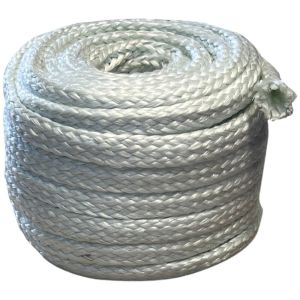 E-Glass Braided Sleeving – Cable & Hose ProtectionAs low as £1.80 £1.50 Regular Price £3.00 £2.50
Hose and Cable Fibreglass Braided Sleeving is made from durable fibreglass, designed to insulate and protect wires, cables, hoses, and pipes from extreme temperatures, aggressive fluids, and gases. Resistant to wear and corrosion, it ensures reliable and long-lasting performance in demanding industrial and commercial applications.
Read more
Technical Textiles and Insulation Product Groups
| Product Group | Primary Function | Key Selection Factors |
|---|---|---|
| High-Temperature Sewing Threads | Stitching and repairing insulation covers, textile seals, blankets, curtains and other fabricated thermal components | Continuous and peak seam temperature, tensile load, thread diameter, needle and machine compatibility, abrasion, flexing and chemical exposure |
| Insulation Jackets and Flue Wraps | Reducing heat loss from flues, liners, pipes and equipment, with flexible formats that can be cut, wrapped or removed | Hot-face temperature, insulation thickness, thermal conductivity, foil orientation, dimensions, fastening method, moisture and inspection access |
| Needled Felt Mats | Flexible thermal and acoustic insulation for pipework, machinery, ducting, vehicle components and irregular surfaces | Continuous temperature, thickness, compression, density, available space, vibration, acoustic duty and the need for an outer facing or mechanical support |
| Hose and Cable Sleeving | Local thermal, abrasion and environmental protection for hoses, cables, wires, pipes and flexible services | Internal diameter, expansion range, bend radius, installation access, surface temperature, fluid or chemical contact, abrasion and electrical requirements |
Comparison of VITCAS Products
| Product | Temperature Rating | Typical Duty and Important Selection Point |
|---|---|---|
| Kevlar / Para-Aramid Sewing Thread | Up to 400°C; begins to decompose at approximately 500°C rather than melting | High-strength stitching for technical textiles, covers and protective equipment. Verify ultraviolet exposure, seam design and any certification required for the finished product. |
| Glass Fibre Sewing Thread with Wire Reinforcement | Resistance up to 600°C | Wire-reinforced thread for mechanically demanding seams in covers, insulation products and industrial textiles. The seam remains limited by the fabric, thread, stitch pattern and fabrication quality. |
| PTFE-Coated Glass Fibre Sewing Thread | Resistance up to 600°C | Flexible glass fibre thread for machine or hand stitching where abrasion and chemical resistance are relevant. Confirm whether the PTFE finish must remain fully functional at the design temperature. |
| Silica Fibre Sewing Thread | 1000°C continuous; 1400°C short-term exposure | High-temperature stitching for compatible silica fabrics, blankets and insulation components. The 1400°C value is a temporary peak and must not be treated as the normal seam operating temperature. |
| Aluminium-Coated Insulation Flue Wrap, 12 mm, Full Roll | Glass fibre layer up to 550°C; aluminium face stated as best suited to temperatures up to 300°C | Flexible insulation and reflective facing for flues, liners and suitable ducts. Above the foil limit, orientate the aluminium face away from the heat source and verify the complete installation. |
| Biosoluble Insulation Blanket with Aluminium Foil | Resistance up to 1200°C | High-temperature insulation for thermal-processing equipment, turbines, pipework and exhaust systems. Confirm the separate capability and orientation of the aluminium facing, as well as compression and mechanical retention. |
| Glass Fibre Needled Felt Insulation | 550°C continuous; 600°C short term | Flexible 10 mm-thick thermal and acoustic insulation for pipes, valves, manifolds, silencers and machinery. Avoid excessive compression and provide a suitable facing or fixing arrangement where required. |
| Flue Insulation Wrap Jacket | Up to 550°C continuous | A 1 metre-long, 12 mm-thick E-glass wrap for flexible flue liners, primarily in the 125–200 mm diameter range. Measure the liner, overlap adjoining sections and secure them with suitable metal fasteners. |
| Silicone Rubber-Coated Glass Fibre Sleeving | Up to 550°C | Coated protection for cables, hoses and pipes where handling, abrasion and environmental resistance are required. Obtain confirmation for the actual continuous and peak temperature rather than using an uncoated glass fibre rating. |
| Aluminium Foil Tape, 50 mm × 45 m | Operating range from −35°C to +120°C | Self-adhesive accessory for securing compatible flue wrap, pipe lagging and duct joints. The adhesive controls service performance, so the tape is not a substitute for a mechanical fixing where one is required. |
| Fibreglass Sleeving | Up to 550°C | Uncoated sleeve for insulating and protecting flues, hoses, pipes and other cylindrical components. Select the correct bore and allow for bends, fittings, movement and abrasion. |
| E-Glass Braided Sleeving | Operating range from −60°C to +550°C | Flexible braided protection for cables, wires, hydraulic hoses and pipes. A thermal rating does not establish dielectric strength, circuit integrity or compatibility with every process fluid. |
Industries Using Technical Textiles and Flexible Insulation
Technical textiles perform different functions across industrial and domestic systems. One installation may require an insulating layer, another a durable outer facing, and another a thread or sleeve that protects a local seam, cable or hose. The following sectors represent common duties rather than universal product approvals.
- Power generation and boiler plant: insulation covers and facings for turbines, valves, flanges, steam pipework and boiler auxiliaries; protective sleeves for nearby services; and threads for fabricated removable covers.
- Oil, gas and petrochemical processing: flexible insulation around hot process equipment, pipes and ducting, together with abrasion-resistant protection for hoses and cables. Chemical compatibility, pressure, hazardous-area requirements and ignition controls must be assessed separately.
- Metallurgy, foundries and welding: stitching of compatible heat barriers and insulation covers, thermal protection around machinery, and sleeving for services exposed to radiant heat, sparks or abrasion. Molten-metal performance must be verified for the specific alloy and exposure.
- Marine, shipbuilding and offshore engineering: insulation around exhausts, engines, boilers and pipework, plus protection for hoses and cabling in machinery spaces. Consider vibration, oil, moisture, salt-laden air, flame and smoke requirements, and any applicable marine approval.
- Automotive, motorsport and aerospace: turbocharger, manifold, exhaust, silencer and test-cell insulation; acoustic damping; and protection of wiring looms and fluid hoses. Use the relevant OEM or programme specification for safety-critical components.
- Glass, ceramics, furnaces and heat treatment: flexible insulation, stitched covers, equipment shielding and protected services around kilns, furnaces and thermal-processing machinery. Assess direct flame, radiant heat, hot gases, cycling and mechanical support.
- Manufacturing, HVAC and building services: insulation of machinery, ventilation ducting, pipework and plant components, with foil tape used as a compatible jointing accessory where its adhesive temperature permits.
- Domestic and commercial heating: flue-liner insulation for stoves, fireplaces and solid-fuel appliances, helping retain flue-gas temperature and reduce conditions associated with condensation and tar formation.
- Fire protection and protective-equipment fabrication: threads and insulation materials may form part of blankets, curtains, covers or garments. Raw materials do not by themselves create certified PPE, a tested fire curtain or a fire-resisting system.
How to Select the Correct Technical Textile
- Define the function. Decide whether the product must provide bulk thermal insulation, form a stitched seam, protect a hose or cable, reflect radiant heat, reduce noise or secure a facing.
- Record the real temperature exposure. Distinguish continuous temperature from a short peak and identify whether heat reaches the material by contact, convection, radiation or direct flame.
- Check every layer. Fibre, coating, foil, adhesive, sewing thread and fixing can have different service limits. The lowest relevant limit may govern the assembly.
- Calculate the required insulation performance. A maximum-temperature rating indicates material tolerance, not the resulting cold-face or touch temperature. Determine thickness and heat loss using the actual thermal conditions.
- Confirm dimensions and fit. Check blanket thickness and width, sleeve bore and expansion, thread diameter and length, flue diameter, overlap, bend radius and allowances for cutting waste.
- Assess mechanical exposure. Include vibration, flexing, abrasion, pressure, airflow, handling, maintenance cycles and the load transferred through seams or fasteners.
- Review the environment. Consider oil, water, steam, fuels, acids, alkalis, ultraviolet exposure, salt, dust and process gases at the operating temperature.
- Verify regulated performance. Electrical insulation, fire resistance, PPE, marine use and flue installations may require product-specific or complete-system evidence. Do not infer certification from fibre type or temperature resistance.
Important Installation Considerations
- Do not cover damaged, leaking or incorrectly installed equipment with insulation; correct the underlying defect first.
- Keep insulation clear of access points, identification plates, moving components and ventilation openings unless the equipment design permits coverage.
- Avoid compressing fibrous insulation beyond the intended installed density, as this can alter thermal performance.
- Protect cut edges and loose fibres using a compatible facing, stitching or mechanical closure where the application requires containment.
- Use metal fasteners where the temperature or safety duty exceeds the confirmed capability of pressure-sensitive tape.
- Inspect insulation, seams and sleeving periodically for gaps, contamination, coating damage, fraying, compression, loose fasteners and local overheating.
Frequently Asked Questions
What products are included in Technical Textiles and Insulation?
The current category contains 13 products covering high-temperature sewing threads, flue wraps and flexible insulation, glass fibre needled felt, aluminium foil tape, and protective sleeving for hoses, pipes, wires and cables.
Which product has the highest temperature rating?
Silica fibre sewing thread is resistant up to 1000°C continuous service and 1400°C short-term exposure. The biosoluble insulation blanket is rated up to 1200°C. These products perform different functions, so the higher figure does not make sewing thread a substitute for bulk insulation or make the blanket suitable for stitching.
Is a maximum temperature the same as an insulation rating?
No. Maximum temperature describes the material's ability to tolerate heat under stated conditions. Insulation performance depends on thermal conductivity, thickness, compression, surface area, temperature difference, airflow and installation quality.
Can high-temperature thread increase the rating of a fabric?
No. The seam and finished component are limited by the fabric, thread, coating, stitch construction and mechanical loading. Selecting a higher-rated thread does not increase the temperature capability of a lower-rated cloth or coating.
What is the difference between needled felt and a flue wrap jacket?
Needled felt is a flexible sheet material that can be cut and fabricated for thermal or acoustic insulation. A flue wrap jacket is supplied in a format intended to fit around a flue liner. Choose according to the equipment geometry, required thickness, fastening method and installation instructions.
Can flue insulation reduce condensation and tar formation?
Flue insulation helps retain flue-gas temperature, which can reduce cooling and the conditions that promote condensation and tar or creosote deposits. It does not replace correct appliance operation, suitable fuel, chimney design, sweeping, inspection or compliance with the flue manufacturer's instructions.
Should the aluminium foil face point towards the heat source?
Only when the foil and complete laminate are suitable for that exposure. For the aluminium-coated glass fibre flue wrap, the glass fibre layer is rated higher than the foil face, which is stated as best suited to temperatures up to 300°C. At higher exposure, the foil should face away from the heat source.
Is aluminium foil tape suitable as the only flue-wrap fixing?
Not automatically. Its pressure-sensitive adhesive governs performance, and the current product page does not publish a numerical maximum service temperature. Use suitable mechanical fasteners where required by the temperature, geometry, flue instructions or risk assessment.
How do I select hose or cable sleeving?
Match the internal diameter to the component, allowing for fittings, bends and movement. Then check continuous and peak temperature, abrasion, fluids, chemicals, vibration and installation access. Where electrical insulation or circuit integrity is required, verify the relevant tested electrical and fire performance separately.
Can these materials be used to manufacture PPE or fire barriers?
They may be used as components in properly designed products, but raw thread, felt, blanket or sleeving is not automatically certified PPE or a tested fire barrier. The complete garment, curtain, blanket or protection system must meet the applicable performance and conformity requirements.
How much insulation material should be ordered?
Measure the complete surface or flue length and add allowances for overlaps, joints, bends, closures and cutting waste. For sleeves, confirm the required bore and length around fittings. For fabricated covers, include material for seams, fastening zones and maintenance access.