
Glass Furnaces & Glassworking
Refractory Materials and Thermal Insulation for Glass Furnaces and Glassworking
Glass-melting furnaces, pot furnaces, glory holes, annealing kilns and glass-fusing equipment impose different thermal, chemical and mechanical demands on their linings. The VITCAS range includes zircon coatings and repair compounds, dense refractory castable, insulating fire bricks, refractory mortar, ceramic fibre and biosoluble fibre papers, blankets, boards and modules. Products support selected hot-face protection, local repair, element bedding, expansion allowance and thermal insulation in industrial and studio glass equipment. Specify each material for the actual glass composition, contact zone, furnace atmosphere, operating cycle, gas velocity, structural duty and risk of glass contamination. A published temperature rating alone does not establish suitability for contact with molten glass or for a complete glass-furnace lining.
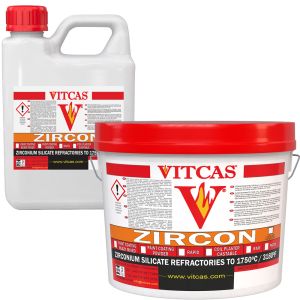 Zircon Rapid + Liquid 1750°CSpecial Price £59.99 £49.99 Regular Price £95.99 £79.99
Vitcas Zircon Rapid Setting Cement is resistant to high temperatures reaching 1750°C / 3180°F. It is a high quality refractory, zircon-based material which is of a semi-liquid, putty like texture and consistency. This makes it safe and easy to apply when repairing investment shells or element bedding.
Read more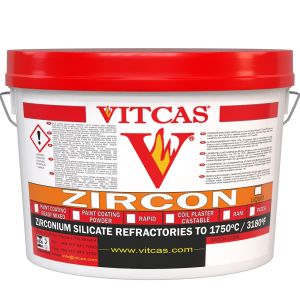 Zircon Paint Coating-Dry Powder 1750°CSpecial Price £59.99 £49.99 Regular Price £84.00 £70.00
Vitcas Zircon Refractory Paint Coating is supplied as a dry powder that is mixed with water. This zircon-based coating is resistant to temperatures up to 1750°C / 3182°F and is suitable for various industrial applications, including use in the aluminium industry and on alumina-silicate monolithic linings.
Read more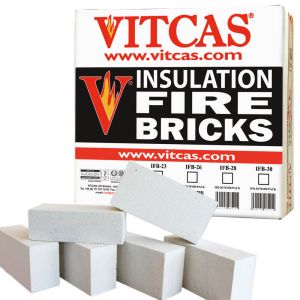 Insulating Fire Bricks-VITCAS Grade 26 -2600°F/ 1430°CSpecial Price £3.35 £2.79 Regular Price £8.39 £6.99
Vitcas Insulation Fire Bricks- Grade 26. Resistant to 1430°C (2600°F). Dimensions: 230x114x76mm. The insulating firebricks can be used in a variety of high temperature industrial applications, such as in insulating refractories- gas producers, kilns, furnaces and stress relieving furnaces.
Read more Vitcas Refractory Castable Grade 1600°C-Refractory ConcreteSpecial Price £47.99 £39.99 Regular Price £53.99 £44.99
Castable Refractory (Refractory Concrete) is used for repairs to boiler linings, boiler doors and incinerator linings. For use where localised temperatures are higher; for example in gas or oil burner blocks and where forced air is being used.
Read more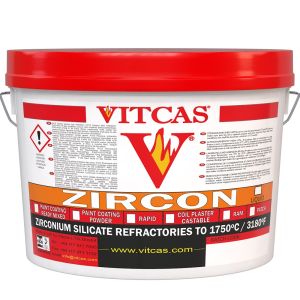 VITCAS Zircon Paint Coating 1750°CSpecial Price £47.99 £39.99 Regular Price £83.99 £69.99
VITCAS Zircon Refractory Paint Coating. It has a creamy consistency and can be applied directly. For spray application, it has to be thinned with water. Its maximum service temperature is of 1750°C / 3180°F. For use on furnaces, ladles, ceramic fibre linings and refractories in contact with molten alloys and glass.
Read more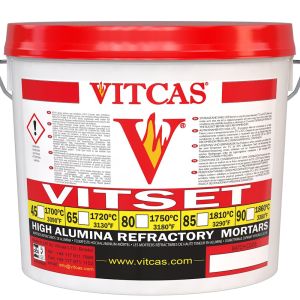 Vitset 45-Refractory Mortar Ready Mixed 1700°CAs low as £17.99 £14.99 Regular Price £35.99 £29.99
Vitset 45 is a versatile, ready-mixed refractory mortar designed to withstand temperatures as high as 1700°C /3100°F. Ideal for trowelling, patching and setting various high-grade refractory and insulation fire bricks rated above 1400°C. Suitable for use with ceramic fibre boards and blankets, making it a practical solution for both repairs and new installations in high-temperature environments.
Read more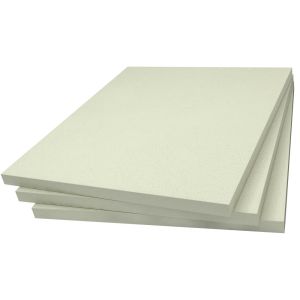 Ceramic Fibre Board 1430°C-VITCAS Insulating BoardAs low as £90.00 £75.00 Regular Price £115.19 £95.99
VITCAS Ceramic Fibre Insulating Fibre Board is resistant to 1430°C / 2600°F. Dimensions: 1200x1000x25mm and 1200x1000x50mm. Due to its high heat resistance and lower thermal mass, heating/ cooling takes quicker and makes it ideal for glass slumping and ceramic kilns.
Read more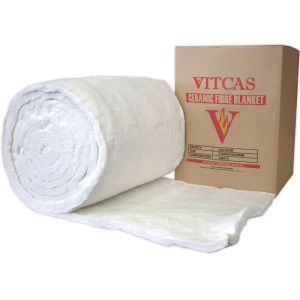 Ceramic Fibre Blanket 1430°C£90.00 £75.00 Regular Price £130.80 £109.00
VITCAS Ceramic Fibre Blanket. Resistant to 1430°C / 2600°F. Density of 128kg/m3. Available in thickness of 13mm, 25mm and 50mm. Can be used in ceramic kilns and in firing stoneware, in making of porcelain or bone china, and in stress relieving insulation, fire protection and power generation.
Read more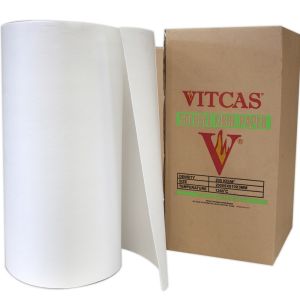 Ceramic Fibre Paper Bio 1200°C - per MetreAs low as £13.19 £10.99 Regular Price £15.59 £12.99
VITCAS Ceramic fibre paper per meter – bio soluble, heat resistant up to 1200°C / 2300°F. Lightweight insulation paper ideal for gaskets, seals and high temperature applications.
Read more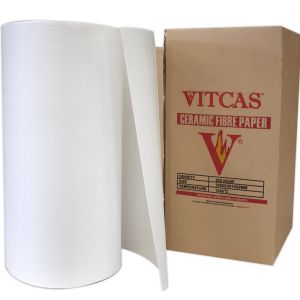 Ceramic Fibre Paper 1260°CAs low as £143.88 £119.90 Regular Price £180.00 £150.00
VITCAS Ceramic Fibre Paper is a high-performance thermal insulation material, available in 1mm, 2mm, 3mm, 5mm thicknesses and 610mm width. With resistance up to 1260°C (2300°F), it provides exceptional heat resistance and durability, making it ideal for demanding high-temperature applications such as kilns, furnaces, and investment casting.
Read more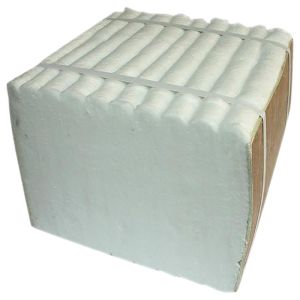 Ceramic Fibre Module -1260°C
Ceramic fiber modules are insulation products made from ceramic fibers that are formed into modules for use in high-temperature applications. They are commonly used in industrial furnaces, kilns, and boilers, as well as in power generation and chemical processing facilities.
Read moreEnquire about this product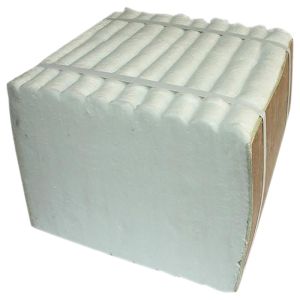 Ceramic Fibre Module -1430°C
Ceramic fiber modules typically consist of multiple layers of ceramic fiber blanket material that are stacked and compressed into a rigid, modular shape. The advantages of ceramic fiber modules include their high temperature resistance, low thermal conductivity, and excellent thermal shock resistance. They are also lightweight and easy to install, making them a popular choice for many high-temperature applications.
Read moreEnquire about this product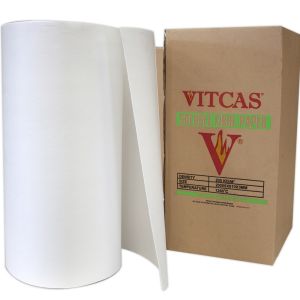 Bio Ceramic Fibre Paper 1200°C£118.80 £99.00 Regular Price £240.00 £200.00
VITCAS Bio Soluble Insulation Paper is a high-temperature thermal insulation material manufactured from advanced biosoluble fibres. Available in 3mm thicknesses with a 610mm width, it offers reliable insulation performance in demanding heat environments. With a maximum service temperature of up to 1200°C (2192°F), this lightweight and flexible insulation paper is suitable for applications such as kilns, furnaces, thermal seals, and investment casting processes where effective heat resistance and durability are required.
Read more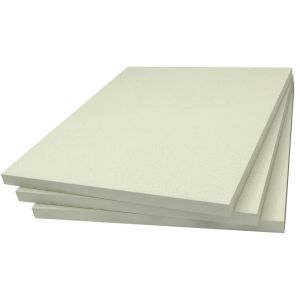 Bio-Soluble Fibre Board 1300°C-VITCAS Insulating BoardAs low as £90.00 £75.00 Regular Price £115.19 £95.99
VITCAS Bio-Soluble Fibre Board 1300°C is a rigid, high-performance thermal insulation board with a density of 300 kg/m³, designed for demanding high-temperature applications. Combining low thermal conductivity with low heat storage and excellent dimensional stability, it is ideal for furnace and kiln linings, heat-treatment equipment, boiler systems and refractory back-up insulation. The bio-soluble fibre composition provides a low-biopersistence alternative to traditional refractory ceramic fibre insulation.
Read more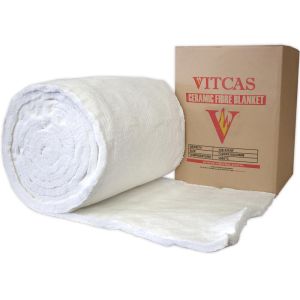 Ceramic Fibre Blanket 1260°C£66.00 £55.00 Regular Price £96.00 £80.00
VITCAS Ceramic Fibre Blanket is resistant to a maximum service temperature of 1260°C (2300°F), with a density of 128kg/m³. Available in thicknesses of 13mm, 25mm, and 50mm, it is widely used in industries like petrochemical, steel, and ceramics. Ideal for insulation and furnace lining applications.
Read more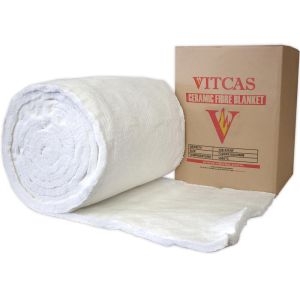 Ceramic Fibre Blanket 1260°C -per Metre£11.99 £9.99 Regular Price £19.19 £15.99
VITCAS Ceramic Fibre Insulation Blanket offers low thermal conductivity and high tensile strength, withstanding temperatures up to 1260ºC (2300ºF). Available by the metre, it comes in 13mm and 25mm thicknesses, 610mm wide, with a density of 128kg/m³, ideal for high-temperature insulation.
Read more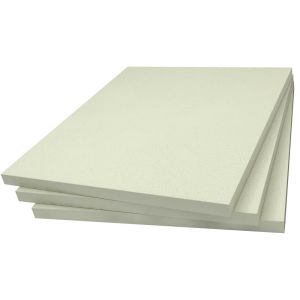 Ceramic Fibre Board 1260°C-VITCAS Insulating BoardAs low as £66.00 £55.00 Regular Price £95.99 £79.99
Vitcas Ceramic Fibre Insulating Board. Resistant to 1260°C/ 2300°F. Dimensions: 1200x1000x25mm and 1200x1000x50mm. Has a low heat conductivity at high temperatures and resists high gas velocity, which makes it ideal for boiler ducts, for kiln linings in glass and ceramics and for stack lining.
Read more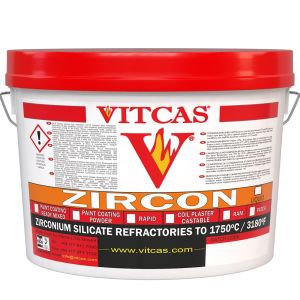 Zircon Coil Plaster Castable 1750°CSpecial Price £78.00 £65.00 Regular Price £82.80 £69.00
VITCAS Zircon Coil Plaster is a fine-grained, zircon-based refractory castable with excellent resistance to molten metal and glass. With a service temperature up to 1750°C / 3180°F, it is ideal for precision applications where standard castables are too coarse. Mixed with water to form a trowellable plaster, it is used in induction furnaces, petrochemical plants, glassworks, and high-temperature research environments.
Read more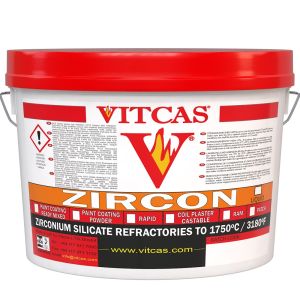 Zircon Ram - Chemically Bonded Refractory Ramming Mix£118.80 £99.00
Vitcas Zircon Ram is a zircon-based, chemically bound, refractory ramming mix. It is found in a semi-dry consistency with a 5% moisture content. The high strength zircon ram can be used in applications such as in the glass industry, specifically for lining glass tanks and furnaces.
Read moreEnquire about this product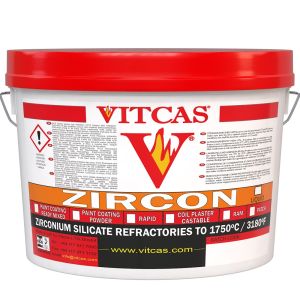 Zircon Patch - Chemically Bonded Refractory Patching Mix£118.80 £99.00
Vitcas Zircon Patch is a high strength, chemically bonded material which resists high temperatures reaching 1750°C. It is a refractory patching mix that can be used for hot and cold repairs due to its high moisture content. The zircon-based patch can be used for repairing silica, zircon, alumina refractories.
Read moreEnquire about this product
Materials for Industrial and Studio Glass Equipment
Glassworking covers equipment ranging from small electrically heated fusing kilns to continuously fired melting furnaces. A studio furnace may use an insulated chamber, crucible or pot and reheating glory hole, while an industrial installation can include a melting tank, working end, forehearth, burner ports, crown, regenerators or recuperators and an annealing lehr. These systems cannot be specified from chamber temperature alone.
The lining normally combines chemically and mechanically appropriate hot-face materials with lower-density insulation. Contact with molten glass, batch carryover and condensates can be substantially more severe than exposure to hot combustion gases. The complete design must also control heat loss, shell temperature, expansion, gas flow, electrical clearances and contamination of the finished glass.
Functions Within a Glass Furnace Lining
| Material type | Primary function | Critical specification factors |
|---|---|---|
| Zircon refractory coating | Forms a thin protective surface on a compatible refractory substrate | Glass chemistry, substrate, coating thickness, preparation, adhesion, firing and contamination risk |
| Zircon patching, ramming or plaster material | Repairs or forms selected dense refractory details | Contact duty, repair depth, retained lining, compaction, bond, expansion and return-to-service procedure |
| Dense refractory castable | Forms burner blocks, shaped sections and selected monolithic repairs | Iron and impurity content, glass contact, anchors, mixing, curing, dry-out and thermal cycling |
| Insulating fire brick | Provides a rigid, low-density lining or backup insulation | Load, abrasion, glass or batch contact, temperature, jointing and thermal conductivity |
| Fibre paper, blanket, board or module | Provides low-mass insulation, separation or expansion allowance | Classification, shrinkage, fixings, gas velocity, abrasion, binder removal and fibre controls |
| Refractory mortar | Sets compatible refractory bricks in controlled joints | Brick chemistry, joint thickness, atmosphere, drying and exposure to molten glass |
Zircon Refractories for Surface Protection and Repair
Zirconium-silicate-based materials are used where a compatible refractory surface requires improved resistance to selected glass, alkali or molten-material exposures. The form of the product is important: a coating is not a structural lining, a patch is not a general casting mix and a ramming material requires adequate confinement and compaction. Confirm suitability for the specific glass formulation and furnace zone before use.
| Product | Temperature | Intended role within this application |
|---|---|---|
| VITCAS Zircon Paint Coating | 1750°C | Ready-mixed thin coating for compatible brick or aluminosilicate monolithic surfaces |
| Zircon Paint Coating Dry Powder | 1750°C | Water-mixed coating for prepared refractory surfaces, applied by brush or suitable spray equipment |
| Zircon Patch | 1750°C | Semi-dry chemically bonded material for selected repairs to compatible crowns and superstructures |
| Zircon Ram | 1750°C | Semi-dry ramming mix for compacted backing and repair duties, including behind approved glass-contact blocks |
| Zircon Coil Plaster | 1750°C | Fine-grained, water-mixed refractory plaster for precision lining details and compatible local repairs |
| Zircon Rapid | 1750°C | Rapid-setting two-part material for element bedding and small defined details rather than general furnace relining |
Explore the broader zircon refractory, refractory coating and refractory repair compound ranges when comparing product form and installation method. Claims such as non-wetting behaviour or resistance to molten glass must be verified for the actual glass chemistry, temperature, exposure time and substrate.
Dense and Insulating Refractory Construction Materials
| Product | Temperature | Typical role |
|---|---|---|
| Refractory Castable Grade 1600 | 1600°C | Dense low-iron castable for selected burner blocks, shaped sections and repairs where glass compatibility is established |
| Grade 26 Insulating Fire Bricks | 1430°C | Rigid low-density lining or backup insulation protected from unsuitable glass contact, impact and abrasion |
| Vitset 45 Refractory Mortar | 1700°C | Ready-mixed air-setting mortar for compatible dense or insulating refractory brickwork |
Dense castable and insulating fire brick perform different functions. Castable Grade 1600 can form mechanically robust monolithic details but requires controlled mixing, placement, curing and dry-out. Grade 26 brick has lower density and thermal conductivity but must not be assumed suitable for direct molten-glass contact or high mechanical wear. Mortar should be selected as part of the brick system and kept within the specified joint geometry.
Low-Mass Fibre Insulation and Separation Materials
Fibre products reduce heat storage and can accommodate shapes that are difficult to insulate with brick. Paper is thin and compressible, blanket is flexible, board is rigid and modules form a compressed lining system. These formats are not interchangeable, and none should be treated as load-bearing refractory masonry.
| Product | Temperature | Typical role |
|---|---|---|
| Biosoluble Fibre Paper per Metre | 1200°C | Thin flexible insulation, separation layer, gasket or expansion allowance |
| Biosoluble Fibre Paper | 1200°C | Sheet-form thermal barrier, separator or backing insulation in approved dry applications |
| Ceramic Fibre Paper | 1260°C | Thin aluminosilicate fibre insulation and separation material |
| Ceramic Fibre Blanket 1260 | 1260°C | Flexible chamber, backup and expansion-joint insulation protected from unsuitable wear |
| Ceramic Fibre Blanket 1430 | 1430°C | Higher-temperature flexible insulation in an engineered and adequately secured lining |
| Ceramic Fibre Board 1260 | 1260°C | Rigid insulation for controlled shapes, baffles and protected furnace or kiln areas |
| Ceramic Fibre Board 1430 | 1430°C | Higher-temperature rigid insulation where support, shrinkage and gas velocity are addressed |
| Ceramic Fibre Modules 1260 | 1260°C | Compressed modular insulation installed to a project-specific pattern and fixing design |
| Ceramic Fibre Modules 1430 | 1430°C | Higher-temperature modular insulation requiring verified anchors, compression and joint arrangement |
Calculate insulation thickness from the complete construction using thermal-conductivity data at the relevant mean temperatures. Include hot-face thickness, joints, anchors, element penetrations, shell, ambient conditions and the allowable external surface temperature. The maximum classification temperature of a fibre product does not predict furnace heat loss or cold-face temperature.
Selecting Materials by Glassworking Zone
Melting Tank, Pot or Crucible Zone
Refractories exposed to molten glass require the most stringent compatibility assessment. Corrosion can dissolve lining constituents into the melt, while erosion, joint washout or spalling can introduce solid defects. Specify against the exact soda-lime, borosilicate, lead, alkali-free, coloured, frit or other glass formulation, together with temperature, convection, residence time and acceptable contamination level.
The products on this page do not constitute a complete industrial glass-tank refractory package. Use a zircon coating, plaster or ramming material in a glass-contact zone only where current technical data, representative corrosion testing and the furnace designer approve the complete substrate and installation. Do not use fibre insulation, insulating fire brick or general mortar as an unverified substitute for specialist tank blocks or pots.
Crown and Superstructure
Crowns and superstructures are exposed primarily to flame, hot gases, batch carryover and volatile condensates rather than continuous liquid-glass contact. Temperature gradients, alkali vapour, silica or borate species, structural load and expansion all influence the choice of dense refractory and repair material. Zircon Patch is listed for selected crown and superstructure repairs, but the repair must remain compatible with the retained silica, alumina or zircon refractory and its movement.
Burner Ports, Glory Holes and Working Openings
Ports and openings experience high gas velocity, local flame impingement, repeated door movement and rapid thermal cycling. A dense castable or fine-grained zircon material may be appropriate for a defined block or repair, with insulation behind it. Preserve burner geometry, combustion air paths and clearances. Fibre blanket or board exposed directly to unsuitable flame velocity or mechanical contact can erode and release debris.
Annealing Kilns and Lehrs
Annealing equipment requires uniform and controllable cooling through the specified annealing range. Low-mass board, blanket, modules or insulating fire brick can reduce stored heat, but lining joints, door seals, element layout, air circulation and control-zone uniformity remain critical. An insulation upgrade can change heat-up, cooling and controller response, so the firing or annealing schedule may require recommissioning.
Fusing, Slumping and Enamelling Kilns
Studio and production kilns used for fusing, casting, slumping or enamelling need clean, stable interiors and controlled thermal gradients. Select paper, board or brick according to support, exposure and firing temperature. Where fibre paper is proposed as a shelf separator, verify that the specific product, glass and firing schedule are compatible and that loose fibre or binder residue cannot mark the work. Do not assume that every insulation paper is a reusable kiln-wash replacement.
Electric Elements and Penetrations
Element grooves, terminal penetrations and thermocouple openings require electrical clearance as well as thermal resistance. Zircon Rapid is presented for bedding heating elements into ceramic blocks, but the equipment manufacturer must approve the material, depth and effect on element temperature. Avoid rigidly locking elements where thermal expansion requires movement, and keep conductive contamination away from terminals.
Backup Insulation and Steel Casing
Blanket, board, modules and insulating fire brick can reduce casing temperature when protected by a suitable hot face. Design joints and penetrations to prevent direct heat paths. Fibre shrinkage, compressed joints, misplaced layers or failed anchors can create local hot spots even when the nominal insulation thickness is unchanged.
Glass Chemistry, Refractory Corrosion and Product Quality
Glass is not one chemical duty. Soda and other alkalis, boron compounds, lead oxides, colouring agents, fining agents, recycled cullet and contaminants can change refractory corrosion, wetting and volatilisation. The furnace atmosphere and redox condition can also affect both the melt and the lining. A material performing well with one glass composition may contaminate or corrode rapidly with another.
Refractory wear can contribute stones, cords, blisters, colour changes or other defects in finished glass. When quality is critical, compare chemical analysis, mineralogy, apparent porosity, bulk density, corrosion test results and impurity limits, including iron and other colouring species. Assess joints, coatings and repair binders as well as the main refractory body.
Temperature Ratings and Service Conditions
A product labelled 1200°C, 1260°C, 1430°C, 1600°C or 1750°C is not automatically suitable for continuous operation at that temperature. The published value must be interpreted with the current technical data, permanent linear change or shrinkage, load, atmosphere, exposure time and installation method. Hot-face temperatures can differ substantially from thermocouple readings, particularly near burners or electric elements.
For fibre systems, distinguish classification temperature from recommended continuous use temperature. For dense refractories, consider refractoriness under load, creep, corrosion and thermal cycling. For coatings and repairs, the substrate and bond can fail below the nominal temperature of the zircon aggregate.
Installation, Curing and Controlled Heat-Up
Record the original lining layers, dimensions, element positions, burner openings, expansion joints and control-sensor locations before demolition. Remove loose or contaminated material to a sound boundary and investigate corrosion, glass penetration or failed anchors before applying a local repair.
Prepare each substrate exactly as required. Coatings need a clean, compatible surface and controlled wet-film thickness; ramming mixes require confinement and compaction; castables require accurate water addition, placement and vibration; brickwork requires controlled joints. Mixing products, adding excess water or applying a thin coating over moving cracks can shorten service life.
Water-containing castables, mortars and repair materials require curing and a controlled dry-out or firing schedule. Heating too quickly can generate steam pressure and disruptive spalling. Fibre products may contain organic binders that evolve fumes during first heat-up, especially papers and boards. Provide ventilation and follow the current product and equipment instructions rather than treating a room-temperature set time as permission for full-temperature operation.
Inspection and Maintenance
- Inspect glass-contact areas: look for washout, pitting, drilling, open joints, glass penetration and changing melt colour or defect rates.
- Examine crowns and ports: identify spalling, displaced units, deposit attack, flame cutting and movement around expansion joints.
- Trend shell temperature: compare measurements under equivalent operating conditions and investigate new or expanding hot spots.
- Check coatings: record peeling, thinning, cracking, blistering and loss at joints or high-flow areas.
- Assess fibre linings: identify shrinkage gaps, erosion, loose fixings, damaged boards and exposed steelwork.
- Review elements and controls: inspect element support, terminal condition, thermocouple position and changes in heating balance.
- Record every repair: retain product batch, location, preparation, thickness, curing, heat-up and subsequent inspection data.
A local patch is appropriate only where the retained lining is sound and the cause of damage is understood. Repeated failure, deep glass penetration, widespread corrosion, structural movement or altered process quality may require engineered sectional replacement or a complete furnace rebuild.
Safe Work Around Glass Furnaces and Fibre Linings
Isolate fuel, electrical, pneumatic, hydraulic and mechanical energy before furnace maintenance. Allow adequate cooling and assess confined spaces, oxygen deficiency, residual glass, unstable refractory and stored thermal energy. Hot glass and apparently cold refractory can retain dangerous heat for prolonged periods.
Assess exposure to batch dust, respirable crystalline silica, refractory dust, fibres, binders and any lead, boron, arsenic, selenium, metal oxide or other hazardous constituent used in the process. Review current safety data sheets and apply the relevant COSHH or substance-specific controls. Use suitable extraction, controlled cutting and cleaning methods, and task-selected respiratory, eye and skin protection. Do not dry sweep fibre or silica-containing debris where a lower-dust method is practicable.
Frequently Asked Questions
Can the same refractory be used for glass furnaces and ceramic kilns?
Sometimes, but glass contact introduces a distinct corrosion and contamination duty. A product suitable for the hot gases in a ceramic kiln may dissolve into molten glass, create defects or lose joints in a glass furnace. Verify the glass composition and exact zone.
What is the best refractory for a glass furnace?
There is no universal best material. The tank, crown, ports, working end, forehearth and backup layers have different duties. Select the complete system for glass chemistry, temperature, corrosion, load, gas flow, expansion and acceptable product contamination.
Why are zircon refractories used in glassworking?
Zircon-based materials can provide useful resistance to selected molten-glass and alkali exposures. Performance still depends on zircon content, binder, porosity, substrate, temperature and glass composition, so the generic term does not establish suitability.
Can zircon paint be used directly against molten glass?
The product range includes coatings presented for molten-glass exposure, but approval should be based on current technical data and representative compatibility testing. A thin coating cannot compensate for an unsuitable, cracked or moving substrate.
What is the difference between Zircon Paint, Patch, Ram and Coil Plaster?
Paint is a thin surface coating. Patch is a semi-dry local repair material. Ram is installed and compacted as a ramming mix. Coil Plaster is a fine-grained, water-mixed refractory for precision details. Choose by geometry, thickness, support and installation method.
Is Zircon Rapid suitable for general glass-furnace repair?
It is a rapid-setting two-part product listed for investment-shell repair and element bedding. Use it in glass equipment only for a defined, manufacturer-approved detail; it should not be treated as a general tank, crown or large-area repair material.
Does a 1750°C rating mean the furnace can operate at 1750°C?
No. The rating is a material limit under stated conditions, not an operating approval. Glass corrosion, load, substrate movement, local heat flux and thermal cycling may control the safe service condition at a much lower temperature.
Can insulating fire brick contact molten glass?
Do not assume so. Its controlled porosity provides insulation but can also allow penetration and rapid attack. Use it as a glass-contact hot face only where the manufacturer and furnace designer provide specific compatibility data.
Can Refractory Castable Grade 1600 be used in a glass-melting tank?
Its temperature rating and low-iron description do not establish long-term tank compatibility. Obtain composition, porosity and corrosion data for the glass concerned. It may be more appropriate for selected burner blocks, shapes or non-contact repairs.
Can ceramic fibre blanket be left exposed inside a glory hole?
Only if the grade, fixing system, surface treatment and design are verified for flame impingement, gas velocity, temperature and mechanical contact. Otherwise use a suitable protective hot face or rigidised system.
Should I choose 1260°C or 1430°C fibre insulation?
Use calculated interface temperatures and the manufacturer's recommended continuous-use data, allowing for shrinkage, hot spots, atmosphere and ageing. Choosing the higher classification temperature alone does not resolve fixing or erosion limits.
What is fibre paper used for in a glass kiln?
It can provide thin thermal separation, a gasket, expansion allowance or approved shelf separator. Confirm whether the product is biosoluble or conventional ceramic fibre, its thickness, binder behaviour and whether it can contact the glass without marking it.
Can fibre insulation improve annealing-kiln efficiency?
It can reduce heat storage and transmission when correctly designed. It can also change heating and cooling response, so temperature uniformity, controller tuning and the established annealing schedule should be checked after a lining change.
Which mortar should be used with Grade 26 insulating fire bricks?
Vitset 45 is listed as a compatible high-temperature mortar, but confirm the specified joint thickness, exposure and glass-contact conditions. Mortar joints should not be used to correct poor brick fit or excessive movement.
Why is controlled dry-out necessary?
Castables, mortars and wet repair materials contain water. Rapid heating can turn it into pressurised steam within the lining, causing cracking or explosive spalling. Use a product- and thickness-specific curing and heat-up schedule.
Can a glass furnace be repaired while hot?
Only under a competent, engineered hot-repair procedure using a material approved for the temperature, access and zone. Product wording about hot repair does not replace isolation planning, heat protection, structural assessment and site safety controls.
How can refractory wear affect glass quality?
Dissolved refractory can change colour or chemistry, while fragments and reaction products can form stones, cords, blisters or inclusions. Track lining condition alongside defect location, frequency, glass composition and operating changes.
When should a glass furnace lining be rebuilt rather than patched?
Consider sectional or complete rebuilding when corrosion is widespread, glass penetration is deep, structural geometry has changed, crowns or anchors are unsafe, hot spots are increasing or repeated repairs no longer provide stable service or product quality.