
High-Temperature Tapes & Webbings
High-Temperature Webbing Tapes for Insulation, Sealing & Wrapping
VITCAS thermal webbing tapes provide flexible high-temperature solutions for insulation, sealing, gasketing and wrapping around exhaust systems, boilers, furnaces, kilns, pipework and other thermal-processing equipment. Different fibre constructions offer different combinations of temperature capability, flexibility, abrasion resistance and mechanical stability.
The range includes E-glass tapes rated up to 550°C, basalt fibre webbing up to 700°C, silica fibre webbing up to 1000°C and stainless-steel-wire-reinforced ceramic fibre tape rated up to 1260°C continuous service. These materials cover duties from exhaust wrapping and flexible thermal barriers to furnace, kiln and industrial sealing applications.
Select the tape according to the actual temperature at the installation point, required width and thickness, joint geometry, abrasion, movement, process atmosphere and fixing method. A higher temperature rating does not automatically make a tape more suitable, so fibre type and construction should be matched to the complete operating conditions.
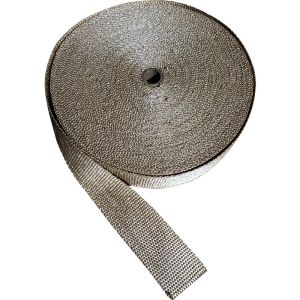 Titanium Basalt Fiber TapeSpecial Price £2.28 £1.90 Regular Price £3.60 £3.00
Vitcas Texturised Basalt Fibre Tapes, also known as Webbing Tapes, are high-performance exhaust insulation wraps. They are resistant to temperatures up to 700°C (1290°F) and provide protection against radiation and chemicals, making them ideal for insulating pipes in high-temperature industrial environments.
Read more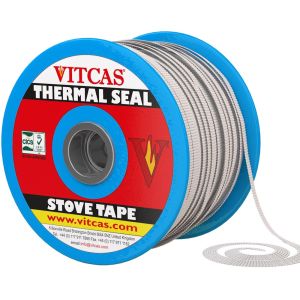 Thermal Tape Self Adhesive - WhiteAs low as £1.44 £1.20 Regular Price £2.40 £2.00
Fibreglass Self-Adhesive Stove Thermal Tape (white) with self-adhesive backing is ideal for sealing and insulating stove glass, furnaces, boilers, metalwork, and pipework. It is also used in seals around window frames in wood and coal stoves, as well as in fireplaces.
Read more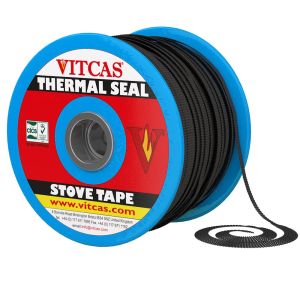 Black Stove Thermal Tape -Self-AdhesiveAs low as £1.86 £1.55 Regular Price £3.60 £3.00
Stove Glass Fibre Thermal Tape (Black) with a self-adhesive backing is ideal for sealing and insulating high-temperature areas. Commonly used for stove glass, pipe coating, metalwork, and window frames in wood and coal stoves, as well as fireplaces, providing effective thermal insulation.
Read more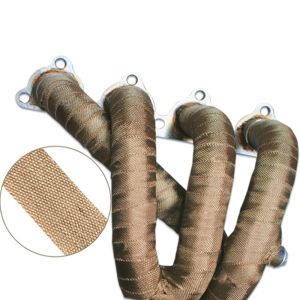 Heat Treated Exhaust Tape 50mm x 2mmSpecial Price £1.86 £1.55 Regular Price £3.60 £3.00
Heat Treated Thermal Exhaust Tape is made from 'E' type glass fibre, ideal for wrapping cables, wiring, and exhausts. It provides insulation, reduces fire risks, and minimises condensation in pipework, making it perfect for high-temperature industrial and automotive applications.
Read more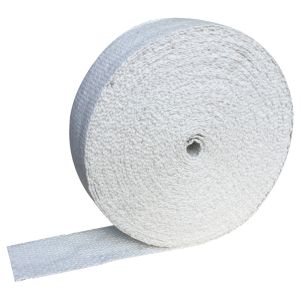 Ceramic Fibre Insulation Tape 1260°CAs low as £5.40 £4.50 Regular Price £11.40 £9.50
Ceramic Fibre Tape is designed for high-temperature insulation applications, including insulating wires, exhaust systems, and pipes. It is also used for sealing and gasketing in furnaces, kilns, and other high-heat equipment. Resistant up to 1260°C (2300°F).
Read more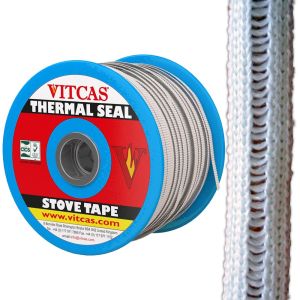 Stove Glass Ladder Tape 25mm x 2mmSpecial Price £1.86 £1.55 Regular Price £3.60 £3.00
Stove Thermal Ladder Tape is designed to secure and seal around stove glass, typically required on both sides of the glass to ensure an airtight seal. It is ideal for high-temperature applications, including stove glass, furnaces, and metal panels, providing reliable heat resistance and smoke prevention in these environments.
Read more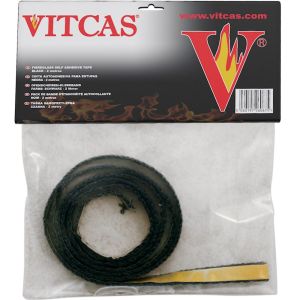 Black Glass Tape-Adhesive Backed-PackAs low as £3.72 £3.10 Regular Price £9.60 £8.00
Vitcas Black Glass Tape Pack features 2 metres of fibreglass tape with a self-adhesive backing, designed for quick and easy installation. It offers heat resistance up to 600°C / 1112°F, making it ideal for stoves, boilers, metalwork, and pipe systems. For enhanced durability, it can be used with Vitcas Rope Adhesive for a permanent seal.
Read more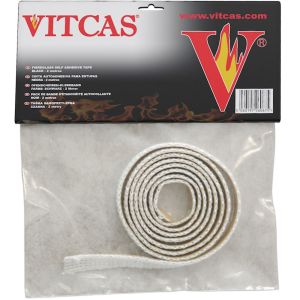 White Glass Tape-Adhesive Backed -2m PackAs low as £2.88 £2.40 Regular Price £4.80 £4.00
Glass Fibre Tape features a self-adhesive backing that allows for quick and easy application. It can withstand temperatures up to 600°C / 1110°F, making it ideal for high-heat applications, including the sealing and gasketing of glass windows in heating appliances like ovens and stoves.
Read more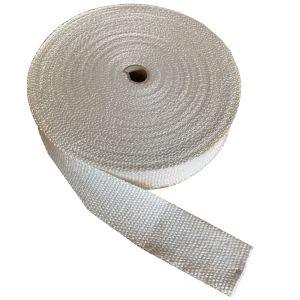 Silica Fiber Webbing TapeSpecial Price £3.00 £2.50 Regular Price £4.80 £4.00
Vitcas High Silica Webbing Tape is perfect for seals in kiln cars, furnaces and boilers due to its thermal insulation properties. It is also excellent for insulation in linings, exhausts and welding curtains.
Read moreEnquire about this product
Thermal Webbing Tapes for High-Temperature Insulation, Sealing & Wrapping
VITCAS thermal webbing tapes provide flat, flexible high-temperature materials for wrapping, sealing, gasketing and local insulation around exhaust systems, boilers, furnaces, kilns, pipework and other thermal-processing equipment. Different fibre families offer different combinations of temperature capability, flexibility, abrasion resistance and mechanical stability.
Key Characteristics of Thermal Webbing Tapes
- Material-specific temperature capability: E-glass tapes are rated up to 550°C, basalt fibre webbing up to 700°C, silica fibre webbing up to 1000°C, and stainless-steel-wire-reinforced ceramic fibre tape up to 1260°C continuous service.
- Flat woven construction: webbing tapes are suited to wrapping, narrow insulation, sealing and gasketing where a flat textile format is more appropriate than round rope or rigid insulation.
- Different fibre families for different duties: glass fibre covers many general high-temperature applications, basalt extends the available temperature range for hotter wrapping duties, silica provides higher-temperature performance, and ceramic fibre serves more severe industrial environments.
- Flexible installation: woven tapes can conform around compatible pipes, exhaust components, joints and irregular equipment geometry, subject to the required overlap, compression and fixing method.
- Mechanical performance depends on construction: abrasion, movement, reinforcement and dimensional stability should be considered alongside temperature capability.
Glass, Basalt, Silica & Ceramic Fibre Webbing Compared
| Material | Temperature Rating | Typical Role | Selection Consideration |
|---|---|---|---|
| E-Glass Fibre Tape | Up to 550°C | General high-temperature wrapping, sealing and thermal protection | Suitable where the service temperature remains within the glass-fibre range and the required textile format is compatible with the installation |
| Basalt Fibre Webbing | Up to 700°C | Higher-temperature exhaust wrapping and industrial thermal protection | Useful where E-glass temperature capability is insufficient but silica or ceramic fibre is not required |
| Silica Fibre Webbing | Up to 1000°C | Boilers, furnaces, kiln cars, exhaust systems and welding-related barriers | Check abrasion, flexing, process atmosphere and fixing method |
| Wire-Reinforced Ceramic Fibre Tape | Up to 1260°C continuous | Severe high-temperature sealing, gasketing and insulation in furnaces, kilns, industrial ovens and pipework | Higher temperature capability does not remove the need to assess reinforcement, joint geometry and mechanical exposure |
Adhesive-Backed Glass Fibre Tapes
Selected glass fibre tapes are supplied with a pressure-sensitive adhesive backing to assist positioning during installation. The adhesive and the textile have different temperature capabilities.
For VITCAS self-adhesive glass fibre stove tape, the glass textile is rated to 550°C continuous service and 600°C short-term exposure, while the adhesive backing is rated to approximately 180°C. The backing should therefore be treated primarily as an installation aid rather than as a permanent fixing at the full temperature capability of the glass fibre.
Applications of Thermal Webbing Tapes
- Exhaust Systems: E-glass and basalt webbing can be wrapped around compatible exhaust components to manage radiant heat where the component surface temperature remains within the selected material rating.
- Furnaces, Kilns & Industrial Ovens: silica and ceramic fibre tapes provide higher-temperature sealing, gasketing and insulation for doors, joints, kiln cars and other compatible thermal equipment.
- Boilers & Process Equipment: selected webbing tapes can be used around boiler joints, hot pipework and process-equipment interfaces where the tape material and geometry suit the duty.
- Pipework & Hot Components: flexible woven tapes can provide local wrapping and thermal protection around suitable pipes and other heat-exposed components.
- Stoves & Heating Appliances: selected glass fibre tapes can be used for stove glass, appliance joints and compatible sealing duties where the width, thickness and fixing method match the appliance specification.
- Selected Electrical Insulation Duties: dedicated glass-fibre electrical tapes may be used where the required dielectric, voltage and insulation-system performance is documented for the application. Temperature rating alone does not establish electrical suitability.
Choosing Webbing by Temperature & Function
The highest temperature rating is not automatically the best choice. A basalt, silica or ceramic fibre tape may provide more temperature capability than required, while a lower-temperature material may offer more suitable flexibility, handling or mechanical characteristics for the actual duty.
When selecting a thermal webbing tape, consider:
- the temperature at the actual tape location;
- continuous operation and any temporary peaks;
- required width, thickness and overlap;
- whether the tape will wrap, seal, gasket or insulate;
- abrasion, vibration and repeated flexing;
- chemical or process-atmosphere exposure;
- joint geometry and compression;
- the required fixing or retention method.
For exhaust wrapping, use the measured or calculated component surface temperature rather than exhaust-gas temperature alone. For furnace, boiler or kiln sealing, the geometry and mechanical loading of the joint can be as important as the fibre's temperature classification.
Webbing Tape vs Thermal Rope
Thermal webbing tape has a flat woven profile suited to surfaces, wrapped components and shallow joints. Thermal rope uses round, square or rectangular compressible profiles for deeper channels, door seals, packing duties and larger gaps.
The two formats should not be treated as interchangeable. Select the textile form according to the joint geometry, required compression and installation method as well as temperature capability.
Frequently Asked Questions
How do I choose between glass, basalt, silica and ceramic fibre tape?
Select the thermal webbing tape according to the temperature at the tape location, the required wrapping or sealing function, mechanical exposure and installation geometry. E-glass suits many general high-temperature duties, basalt extends the temperature range for hotter wrapping applications, silica is used for higher-temperature thermal protection, and wire-reinforced ceramic fibre tape is intended for more severe furnace, kiln and industrial sealing conditions.
Which high-temperature tape is best for exhaust wrapping?
For exhaust wrapping, choose the tape from the actual surface temperature of the exhaust component rather than exhaust-gas temperature alone. E-glass is suitable within its 550°C range, while basalt webbing provides additional temperature capability up to 700°C for hotter exhaust and thermal-protection duties.
When should I use silica tape instead of basalt tape?
Silica fibre webbing is appropriate where the service temperature exceeds the working range of basalt or where a higher-temperature textile is required for furnace, kiln, boiler or welding-related applications. Selection should also account for abrasion, movement, fixing method and the process environment.
When is ceramic fibre webbing the better choice?
Wire-reinforced ceramic fibre tape is suited to severe high-temperature sealing, gasketing and insulation duties where service temperatures can reach up to 1260°C. Typical applications include compatible furnace doors, kiln joints, industrial ovens and hot process pipework where joint geometry and mechanical retention suit the tape construction.
Can thermal webbing tape be used as a gasket?
Yes. Flat woven thermal tapes can be used for selected high-temperature gasketing and sealing applications where the joint is designed for a flat textile gasket. Tape width, thickness, compression, fibre type and retention method should match the joint design.
What is the difference between thermal webbing tape and thermal rope?
Thermal webbing tape has a flat woven profile suited to wrapping surfaces, shallow joints and flat gasket arrangements. Thermal rope uses round, square or rectangular compressible profiles for deeper channels, door seals, packing duties and larger sealing gaps. The correct format depends on the geometry and required compression of the joint.
Can self-adhesive glass fibre tape be used at the full temperature rating of the glass?
The glass textile and adhesive backing have different temperature capabilities. On VITCAS self-adhesive glass fibre stove tape, the glass fibre is rated to 550°C continuously and 600°C short term, while the pressure-sensitive adhesive backing is rated to approximately 180°C. The adhesive is therefore primarily used to assist positioning during assembly.
How should thermal webbing tape be secured at high temperature?
The fixing method depends on the application. High-temperature tape may be retained by mechanical clamping, overlap, suitable fasteners, compression within a joint or another fixing system specified for the equipment. Adhesive-backed products can assist positioning, but permanent retention should reflect the operating temperature and mechanical demands of the installation.
How much overlap should be used when wrapping hot pipework or exhaust components?
The required overlap depends on the tape width, insulation objective, component geometry and installation design. Greater overlap increases the number of textile layers and local coverage, while also increasing material usage and finished thickness. Use the overlap specified for the intended thermal-protection system rather than applying one universal value.
Can thermal webbing tapes be used on boilers, furnaces and kilns?
Yes. Depending on fibre type, VITCAS thermal webbing tapes can be used for selected boiler, furnace, kiln and industrial oven applications including wrapping, joint sealing, gasketing and local thermal insulation. Select the tape according to service temperature, movement, abrasion, compression and retention requirements.
Can glass fibre webbing tape be used for electrical insulation?
Dedicated glass-fibre electrical tapes can be used for selected high-temperature electrical insulation applications where the required dielectric strength, working voltage and insulation-system performance are specified. Fibre temperature capability alone is not the selection criterion for an electrical insulation system.
How do vibration and abrasion affect high-temperature tape selection?
Repeated movement, vibration and surface abrasion can influence the service life of woven thermal tapes even when the operating temperature is within the fibre rating. Consider textile construction, reinforcement, fixing method and contact with adjacent metalwork when selecting tape for mechanically demanding equipment.
Does a higher temperature rating mean a better thermal tape?
Not necessarily. The best tape is the one that matches the actual duty. A lower-temperature material may offer the preferred flexibility, handling or mechanical characteristics where its service limit is sufficient, while higher-temperature silica or ceramic fibre tape is more appropriate when the thermal environment requires it.
What should I check before selecting a high-temperature webbing tape?
Check the actual service temperature, continuous and peak exposure, tape width and thickness, wrapping or sealing function, abrasion, vibration, process atmosphere, joint geometry, required compression and fixing method. These factors should be assessed together rather than selecting by temperature rating alone.