
Hose & Cable Sleeving
High-Temperature Sleeving for Hoses, Cables, Wires and Pipes
VITCAS hose and cable sleeving provides flexible thermal and mechanical protection for wiring, hydraulic hoses, pipes and process lines operating near high-temperature equipment. The range includes standard Fibreglass Sleeving, flexible E-Glass Braided Sleeving and Silicone Rubber Coated Sleeving for duties requiring a more enclosed and abrasion-resistant outer surface.
The uncoated glass fibre grades are rated up to 550°C. In the silicone-coated sleeve, the glass fibre base is also rated up to 550°C, while the silicone coating is limited to approximately 250°C where the protective properties of the coating need to be maintained.
Select the sleeve according to internal diameter, fibre construction, continuous operating temperature, transient heat exposure, abrasion, movement, fluid compatibility and the mechanical conditions around the protected hose, cable or pipe. Where electrical protection or industry-specific compliance is required, also confirm the relevant dielectric, fire, fluid-resistance or application standard rather than relying on temperature capability alone.
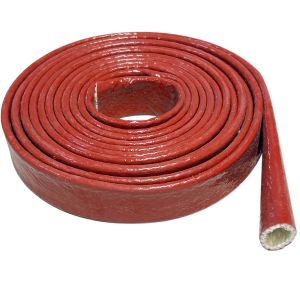 Silicone Rubber Coated SleevingAs low as £6.00 £5.00 Regular Price £18.00 £15.00
Vitcas Silicone Glass Fibre Rubber Coated Sleeving offers excellent protection against corrosive substances and irritant fibres. It is a highly effective thermal insulator with high-temperature resistance, suitable for industrial furnaces, cables, and hoses.
Read more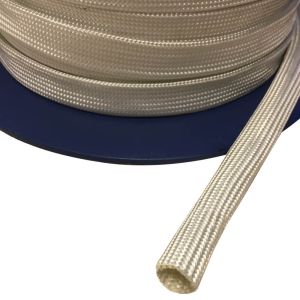 Fibreglass SleevingAs low as £1.80 £1.50 Regular Price £3.00 £2.50
VITCAS Fibreglass Sleeving protects vessels, pipes, and hoses from high temperatures and abrasion, with resistance up to 550°C (1022°F). It helps reduce heat loss, enhancing efficiency. Available in white, it's easy to cut and apply, making it ideal for both industrial and domestic use.
Read more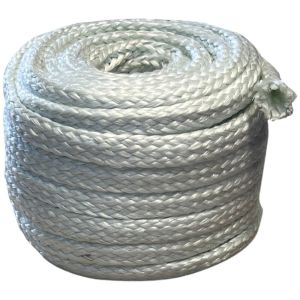 E-Glass Braided Sleeving – Cable & Hose ProtectionAs low as £1.80 £1.50 Regular Price £3.00 £2.50
Hose and Cable Fibreglass Braided Sleeving is made from durable fibreglass, designed to insulate and protect wires, cables, hoses, and pipes from extreme temperatures, aggressive fluids, and gases. Resistant to wear and corrosion, it ensures reliable and long-lasting performance in demanding industrial and commercial applications.
Read more
Types of High-Temperature Protective Sleeving
VITCAS high-temperature sleeving uses glass fibre as the principal heat-resistant reinforcement, but the construction and outer surface differ between products. Uncoated sleeving provides flexible thermal and mechanical protection, braided E-glass offers good conformity around curved routes, and silicone-coated sleeving adds a more enclosed, abrasion-resistant outer surface where exposed fibres, contamination or mechanical wear require additional control.
Silicone Rubber Coated Glass Fibre Sleeving
VITCAS Silicone Rubber Coated Sleeving combines a heat-resistant glass fibre base with a red silicone rubber outer coating. The glass fibre is rated up to 550°C, while the silicone coating is limited to approximately 250°C. Where the coating must remain intact and retain its protective properties, selection should therefore be based on the 250°C coating limit.
The sleeve has a nominal wall thickness of 2 mm and provides flexible thermal and mechanical protection for cables, hoses, pipes and process lines. The coated surface improves resistance to abrasion and external contamination while reducing direct contact with exposed glass fibres. Compatibility with oils, fuels, hydraulic fluids, chemicals and other process media must be confirmed for the actual operating conditions.
Fibreglass Sleeving
VITCAS Fibreglass Sleeving is a white, flexible glass fibre sleeve rated for service temperatures up to 550°C. It provides an additional heat-resistant and abrasion-protective layer around suitable flues, hoses, pipes and other components exposed to elevated surrounding temperatures.
The uncoated construction is easy to cut and form around compatible components, but it is not fluid-tight and should not be assumed resistant to every oil, fuel, chemical or corrosive atmosphere.
E-Glass Braided Sleeving
VITCAS E-Glass Braided Sleeving uses a flexible braided construction for routing around cables, wires, hoses, tubes and pipes. Its published operating temperature range extends from -60°C to +550°C.
The braided structure allows the sleeve to conform more readily to curved routes, bends and moving services than a rigid thermal protector. It is suitable for thermal and mechanical protection around electrical wiring, hydraulic systems and industrial pipework, subject to the temperature and process compatibility of the complete installation.
Hose & Cable Sleeving Selection Guide
| Product | Construction | Temperature Rating | Principal Characteristics | Typical Duties |
|---|---|---|---|---|
| Silicone Rubber Coated Sleeving | Glass fibre with red silicone rubber coating | Glass fibre up to 550°C; silicone coating up to approximately 250°C | More enclosed outer surface, 2 mm wall thickness, abrasion and contamination protection | Hoses, flexible cables, discharge pipes, process lines and suitable furnace-area services |
| Fibreglass Sleeving | Uncoated glass fibre sleeving | Up to 550°C | Flexible, cut-to-length thermal and abrasion protection | Flues, hoses, pipes and other heat-exposed components |
| E-Glass Braided Sleeving | Braided E-glass fibre | -60°C to +550°C | Flexible braided profile for curved routes and moving services | Electrical cables, wiring, hydraulic hoses, gas or water pipes and industrial tubing |
Sleeve Temperature vs Protected Component Temperature
The temperature capability of a protective sleeve does not increase the certified operating limit of the cable, hose or pipe underneath it. A sleeve rated to 550°C may tolerate a hotter surrounding environment than the protected component, but the conductor, hose body, fluid, insulation layer or pipe must remain within its own specified limits.
For example, hydraulic-hose selection must still account for working pressure, fluid temperature, impulse loading and chemical compatibility, while electrical cables must remain within their conductor-temperature, voltage and insulation-system limits.
Applications of High-Temperature Sleeving
Foundries, Furnaces & Heat Treatment
High-temperature sleeving can protect hydraulic hoses, control cables, instrumentation lines and service pipework routed near furnaces, kilns, ladles and other hot equipment. Selection should consider radiant heat, surrounding surface temperature, movement, abrasion and the possibility of incidental process exposure.
General heat resistance should not be interpreted as automatic protection against molten-metal splash or direct flame. Such duties require product-specific performance appropriate to the actual exposure.
Industrial Manufacturing
Protective sleeving is used around wiring, hoses and pipework associated with ovens, dryers, presses, robotic equipment and production machinery. Flexible construction allows the sleeve to follow equipment routes where rigid thermal shielding would be difficult to install.
Automotive, Motorsport & Heavy Transport
Glass fibre sleeving is suitable for compatible wiring looms, fluid hoses and control lines positioned near engines, turbochargers, exhaust systems and other hot vehicle components.
These applications can combine temperature with vibration, oil or fuel exposure, restricted clearances and repeated movement. The sleeve must therefore be selected for the complete mechanical and chemical environment rather than temperature alone.
Power, Boilers & Process Plant
High-temperature sleeving can provide secondary protection for suitable cables, instrument lines and hoses installed near boilers, turbines, ducts, process heaters and hot pipework.
Where oil, gas, chemical or hazardous-area conditions are present, the installation must also meet the relevant requirements for the protected service, process medium and operating environment.
Marine & Machinery-Space Applications
Protective sleeving may be used around suitable engine-room, boiler, exhaust-adjacent and machinery-space services where temperature, fluid exposure and mechanical conditions are compatible with the selected product. Any required marine or application-specific approval applies to the complete installation rather than to temperature capability alone.
Domestic & Commercial Heating
Glass fibre sleeving may also provide secondary thermal protection for suitable services positioned near boilers, stoves, fireplaces and flue systems, provided the underlying component remains within its own permitted operating conditions.
How to Select the Correct Protective Sleeve
- Identify the component: determine whether the sleeve will protect a cable, wiring loom, hydraulic hose, pneumatic tube, flue or process pipe.
- Select the correct diameter: measure the maximum outside diameter of the component and any connector over which the sleeve must pass. Avoid excessive stretching, crushing or uncontrolled movement.
- Define the thermal exposure: assess normal operating temperature, radiant heat, proximity to exhausts or furnaces and any credible transient exposure.
- Choose coated or uncoated construction: use silicone-coated sleeving where a more enclosed and abrasion-resistant outer surface is required and the coating remains within approximately 250°C. Use uncoated glass fibre where temperatures up to 550°C are required and an open textile surface is acceptable.
- Check electrical and process requirements: confirm voltage, dielectric requirements, pressure, fluid compatibility and any relevant fire or industry-specific standard independently of the sleeve temperature rating.
- Assess movement and mechanical exposure: allow for vibration, flexing, bend radius, abrasion and contact with neighbouring components or sharp edges.
- Specify suitable retention: use temperature-compatible clamps, ties, wire or other fixing methods that prevent the sleeve moving without damaging the protected service.
Thermal Sleeving Is Not Primary Electrical Insulation
Glass fibre sleeving can provide an additional heat-resistant layer around cables and wiring, but it should not be treated as primary or reinforced electrical insulation unless the required dielectric strength, working voltage and applicable test performance are documented for that product.
The electrical insulation system of the underlying conductor must remain suitable for its voltage, temperature and installation environment independently of the thermal sleeve.
Fluid & Chemical Compatibility
Silicone-coated sleeving provides a more enclosed surface than uncoated glass fibre and may offer improved protection against contamination and mechanical wear. This does not establish universal compatibility with every hydraulic oil, fuel, coolant, solvent, acid, alkali or process chemical.
Chemical resistance can change with temperature, concentration, pressure, exposure time and mechanical movement. Compatibility should therefore be assessed for the actual service conditions.
Installation & Maintenance
Before installation, isolate and cool the equipment. Electrical circuits should be safely de-energised, and hydraulic, pneumatic or process lines should be depressurised where the work requires disconnection or movement.
Measure the complete route and cut the sleeve using a suitable tool. Protect cut ends against fraying using a finishing method compatible with the sleeve construction and operating temperature. Install the sleeve without twisting, crushing or forcing it over connectors beyond its usable internal diameter.
Use temperature-compatible fasteners positioned clear of sharp edges and moving parts. Standard plastic cable ties and other low-temperature fixing components should not be used within a heat-exposed zone unless their temperature capability is appropriate for that position.
Inspect sleeving during planned maintenance. Replace it where the braid becomes heavily abraded, cut, flattened, contaminated or loose. Silicone-coated sleeving should also be replaced if the coating becomes cracked, burnt, swollen or separated from the glass fibre base. The protected cable, hose or pipe should always be inspected separately.
Important Performance Limits
- Silicone-coated sleeving: use the approximately 250°C coating limit where the silicone surface must remain functional, even though the glass fibre base is rated up to 550°C.
- Protected component: sleeving does not increase the approved conductor temperature, hose pressure rating, pipe pressure rating or fluid compatibility of the component underneath it.
- Electrical insulation: thermal sleeving should not be treated as primary electrical insulation without suitable dielectric data.
- Fluid containment: uncoated glass fibre sleeving is not a fluid-tight barrier, and silicone coating does not create universal chemical resistance.
- Fire and molten splash: temperature capability alone does not establish suitability for direct flame, molten-metal splash, fire-survival circuits or passive fire-protection systems.
- Pressure containment: protective sleeving is not a pressure-containment device and should not be relied upon to restrain a failed hydraulic or process hose.
Frequently Asked Questions
What is high-temperature hose and cable sleeving?
It is a flexible protective tube fitted around cables, wires, hoses or pipes to reduce thermal exposure and provide an additional barrier against abrasion and external mechanical damage.
What is the difference between Fibreglass and E-Glass Braided Sleeving?
Both use glass fibre, but the E-glass product has a defined braided construction that provides greater flexibility around curved routes and moving services. The correct product should still be selected according to diameter, construction, temperature and installation conditions.
Why choose Silicone Rubber Coated Sleeving?
The silicone coating encloses the glass fibre surface more fully and provides a more robust outer layer against abrasion and contamination. Where the silicone coating must remain functional, the operating temperature should remain within approximately 250°C.
What temperatures can VITCAS protective sleeves withstand?
Uncoated Fibreglass Sleeving is rated up to 550°C, while E-Glass Braided Sleeving has an operating range from -60°C to +550°C. Silicone Rubber Coated Sleeving uses a glass fibre base rated up to 550°C, but the silicone coating is limited to approximately 250°C.
How do I choose the correct sleeve diameter?
Measure the largest outside diameter of the component and any connector over which the sleeve must pass. Select a sleeve that can be installed without excessive stretching, compression or uncontrolled movement.
Can protective sleeving be used on hydraulic hoses?
Yes, where the sleeve diameter, temperature capability and fluid compatibility are suitable. The sleeving provides external thermal and mechanical protection but does not increase the hose's working-pressure rating or replace routine hose inspection.
Does cable sleeving provide electrical insulation?
It may provide an additional insulating layer, but it should not be used as the primary electrical insulation unless its dielectric performance, working voltage and relevant test requirements are documented for that duty.
Can this sleeving protect against molten-metal splash?
Only where the selected product has suitable performance for the specific molten material, temperature, splash severity and installation arrangement. General high-temperature resistance alone does not establish molten-metal splash protection.
Can fibreglass sleeving be cut to length?
Yes. Use suitable cutting equipment and protect cut ends against fraying with a finishing method compatible with the material and operating temperature.
Can sleeving be exposed to oils, fuels or chemicals?
Only where compatibility has been established for the selected sleeve and substance. Temperature, concentration, exposure time and mechanical movement can all influence chemical resistance.
When should protective sleeving be replaced?
Replace the sleeve when it becomes cut, severely abraded, flattened, contaminated or loose. Silicone-coated sleeving should also be replaced where the coating becomes cracked, burnt, swollen or separated from the glass fibre base.