High-Temperature Insulation Boards
Insulation Boards for Fireplaces, Kilns, Furnaces and Industrial Equipment
VITCAS high-temperature insulation boards provide rigid thermal insulation, heat shielding and board-based lining or construction solutions for domestic, commercial and industrial applications. Different board technologies are designed for different thermal duties, installation methods and levels of mechanical exposure.
VITCAS board technologies include calcium silicate fireplace construction boards, plain and decorative vermiculite fireboards, vacuum-formed ceramic fibre boards rated up to 1430°C, and non-combustible HT Fireboard for compatible heat-resistant finishing systems.
Applications extend from fireplaces, stoves and range cookers to kilns, furnaces, forges, boilers, ducts, stacks and process equipment. Select the board according to its function, service temperature, thickness, thermal performance, mechanical exposure, support requirements and installation environment.
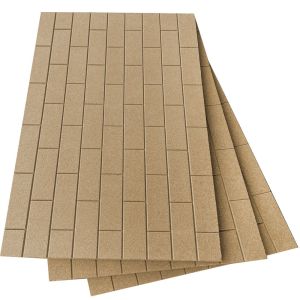 Vermiculite Fire-proof Insulation -Brick EffectAs low as £35.99 £29.99 Regular Price £71.99 £59.99
VITCAS Vermiculite Fire Resistant Insulation Board with a Brick Pattern is resistant to 1100ºC /2010ºF. Vermiculite Fire Resistant Insulation Board is used as a head shield, register plate or as replacement fire bricks for wood burning or multi fuel stoves, fireplaces, and hobby kilns.
Read more HT - High Temperature FireboardSpecial Price £35.99 £29.99 Regular Price £47.99 £39.99
VITCAS High Temperature Plasterboard is a non-combustible fireproof board which does not contain any gypsum. Can be used with Vitcas Heat Resistant Plaster in areas where Vitcas Fireplace Render cannot be applied. Non-flammable rating A1 in accordance with EN 13501-1:2019. Fire and water-resistant, mould and mildew resistant.
Read more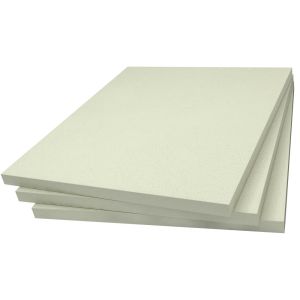 Ceramic Fibre Board 1430°C-VITCAS Insulating BoardAs low as £90.00 £75.00 Regular Price £115.19 £95.99
VITCAS Ceramic Fibre Insulating Fibre Board is resistant to 1430°C / 2600°F. Dimensions: 1200x1000x25mm and 1200x1000x50mm. Due to its high heat resistance and lower thermal mass, heating/ cooling takes quicker and makes it ideal for glass slumping and ceramic kilns.
Read more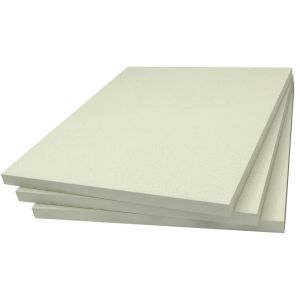 Bio-Soluble Fibre Board 1300°C-VITCAS Insulating BoardAs low as £90.00 £75.00 Regular Price £115.19 £95.99
VITCAS Bio-Soluble Fibre Board 1300°C is a rigid, high-performance thermal insulation board with a density of 300 kg/m³, designed for demanding high-temperature applications. Combining low thermal conductivity with low heat storage and excellent dimensional stability, it is ideal for furnace and kiln linings, heat-treatment equipment, boiler systems and refractory back-up insulation. The bio-soluble fibre composition provides a low-biopersistence alternative to traditional refractory ceramic fibre insulation.
Read more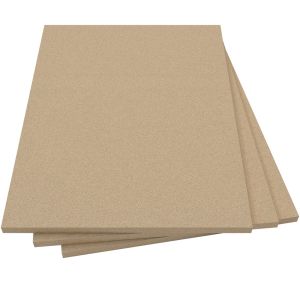 Vermiculite Fire Board Fire-proof InsulationAs low as £35.99 £29.99 Regular Price £71.98 £59.98
Vermiculite Fire Resistant Board – VITCAS Fireproof Insulation, refractory up to 1100ºC / 2010ºF, designed for use as a heat shield, register plate, or replacement for fire bricks in wood-burning and multi-fuel stoves. This versatile board provides excellent thermal insulation and fire resistance.
Read more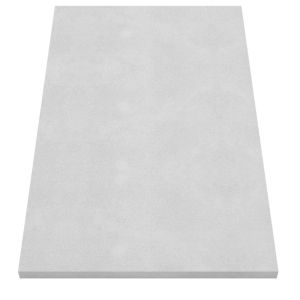 VITCAS Fireplace Construction BoardAs low as £29.99 £24.99 Regular Price £35.99 £29.99
VITCAS CS Fireplace Construction Board is an insulation board resistant to 1000°C / 1830°F. Perfect for use in fireplaces, tiled stoves and corner firesides. Suitable where there is no pre-existing chimney breast or in the centre of a wall or the corner of a room. Simpler and quicker to install than ever before!
Read more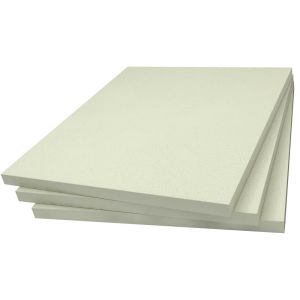 Ceramic Fibre Board 1260°C-VITCAS Insulating BoardAs low as £66.00 £55.00 Regular Price £95.99 £79.99
Vitcas Ceramic Fibre Insulating Board. Resistant to 1260°C/ 2300°F. Dimensions: 1200x1000x25mm and 1200x1000x50mm. Has a low heat conductivity at high temperatures and resists high gas velocity, which makes it ideal for boiler ducts, for kiln linings in glass and ceramics and for stack lining.
Read more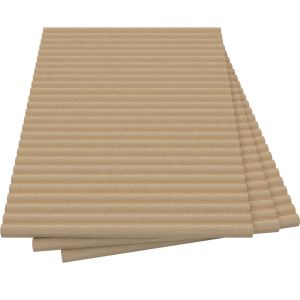 Vermiculite Fire Board-Reeded-Fire-proof InsulationAs low as £35.99 £29.99 Regular Price £71.99 £59.99
VITCAS Reeded Fire Resistant Insulation Board is resistant to 1100ºC (2010ºF). Vermiculite Board with fire-proof insulation is used as a head shield, a register plate or as replacement fire bricks for wood burning or multi fuel stoves, range cookers.
Read more
Understanding High-Temperature Insulation Board Types
High-temperature insulation boards differ substantially in material composition, density, thermal conductivity, rigidity, temperature capability and intended position within an installation. A board designed to construct a fireplace enclosure performs a different role from a vermiculite stove lining, a low-mass ceramic fibre furnace board or a fireboard intended to receive a heat-resistant decorative finish.
VITCAS manufactures and supplies several board technologies for domestic heating, specialist construction and industrial thermal processing. Correct selection starts with the function the board must perform, followed by temperature, insulation thickness, mechanical exposure, fixing method and the conditions on both the hot and cold sides of the installation.
Fireplace Construction Board
VITCAS Fireplace Construction Board is a rigid calcium silicate insulation board designed for constructing fireplace chambers, false chimney breasts, tiled stoves and enclosures around compatible inset and cassette appliances. Its rigid format allows accurately formed fireplace structures while providing thermal insulation around the heating installation.
The board is rated up to 1000°C and is offered in 1000 × 610 × 30 mm and 500 × 610 × 30 mm formats. It provides the mechanical stability required for its specified fireplace-construction system, but it should not be treated as a general load-bearing building board or structural masonry component.
Vermiculite Fireboards
VITCAS Vermiculite Fireboards are lightweight rigid insulation boards rated up to 1100°C. They can be cut and shaped for heat shields, register plates, stove chamber linings, range cookers and other compatible heating applications.
Plain vermiculite board can also be used as a replacement panel in suitable stoves where the appliance design, dimensions and board specification match the original component. Decorative reeded and brick-effect versions provide the same type of lightweight board format with a patterned visible surface for suitable fireplace and stove installations.
Vermiculite boards are primarily intended for indoor or adequately protected installations. Their ease of machining does not remove the need to verify board thickness, fixing arrangement, appliance compatibility and exposure conditions.
Ceramic Fibre Insulation Boards
VITCAS ceramic fibre boards are rigid, vacuum-formed insulation products with a density of 300 kg/m³. Compared with flexible ceramic fibre blanket, the rigid board form maintains a defined profile and provides greater resistance to gas flow while retaining low thermal mass and low thermal conductivity.
Ceramic Fibre Board 1260°C is suited to applications including ceramic and glass kilns, forge insulation, heat-treatment furnaces, boiler ducts, stacks and compatible industrial lining systems.
Ceramic Fibre Board 1430°C extends the temperature capability for more demanding applications such as higher-temperature ceramic kilns, glass slumping and fusing, furnaces, afterburners and process equipment.
Both grades are supplied as 1200 × 1000 mm boards with 25 mm and 50 mm thickness options. Selection between 1260°C and 1430°C grades should be based on the temperature and operating conditions at the board position rather than choosing the higher classification without reference to the complete lining design.
Bio-Soluble Fibre Board 1300°C
VITCAS Bio-Soluble Fibre Board 1300°C is a rigid high-temperature insulation board manufactured from low-biopersistence bio-soluble fibres. With a density of 300 kg/m³, it combines low thermal conductivity and low heat storage with the dimensional stability of a rigid board.
The 1300°C board provides an alternative fibre technology for suitable furnace and kiln linings, heat-treatment equipment, boiler systems, refractory backup insulation and refurbishment work. Its installation position, thickness, retention method and mechanical exposure should be assessed as part of the complete refractory or insulation system.
HT High-Temperature Fireboard
VITCAS HT High-Temperature Fireboard is a rigid, non-gypsum board rated up to 650°C. It measures 1200 × 800 × 12 mm and is classified A1 for reaction to fire in accordance with EN 13501-1:2019.
HT Fireboard is particularly suited to compatible heat-resistant finishing systems, including surfaces that will receive heat-resistant plaster, tiles or paint. Applications also include suitable boiler areas and specified wall, ceiling, door and barrier constructions.
Its role differs from Fireplace Construction Board and vermiculite stove-lining boards. HT Fireboard should not automatically be selected as a direct stove heat shield or supporting fireplace enclosure simply because it is non-combustible and temperature resistant.
High-Temperature Insulation Board Selection Guide
| Board type | Material | Maximum listed temperature | Format | Typical duties |
|---|---|---|---|---|
| Fireplace Construction Board | Calcium silicate | 1000°C | 1000 × 610 × 30 mm or 500 × 610 × 30 mm | Fireplace chambers, false chimney breasts, tiled stoves and suitable inset or cassette appliance enclosures |
| Vermiculite Fireboard | Vermiculite | 1100°C | Rigid boards in selected dimensions | Heat shields, register plates, stove linings, replacement panels and suitable hobby-kiln applications |
| Decorative Vermiculite Fireboards | Vermiculite | 1100°C | Reeded or brick-effect surfaces | Visible fireplace and stove linings, heat shields and suitable replacement panels |
| Ceramic Fibre Board 1260°C | Vacuum-formed ceramic fibre, 300 kg/m³ | 1260°C | 1200 × 1000 mm; 25 or 50 mm thick | Kilns, forges, heat-treatment furnaces, boiler ducts, stacks and industrial insulation |
| Bio-Soluble Fibre Board 1300°C | Bio-soluble fibre, 300 kg/m³ | 1300°C | 1200 × 1000 mm rigid board | Furnaces, kilns, heat-treatment equipment, boilers and refractory backup insulation |
| Ceramic Fibre Board 1430°C | Vacuum-formed ceramic fibre, 300 kg/m³ | 1430°C | 1200 × 1000 mm; 25 or 50 mm thick | Higher-temperature kilns, glass processing, furnaces, afterburners and process equipment |
| HT High-Temperature Fireboard | Rigid non-gypsum fireboard | 650°C | 1200 × 800 × 12 mm | Heat-resistant finishing, tile backing, boiler areas and specified wall or ceiling systems |
Maximum temperature is only one part of insulation-board selection. The required board type and thickness depend on the complete assembly, including hot-face temperature, thermal conductivity, cold-face requirements, joints, fixings, adjacent materials and environmental exposure.
Where High-Temperature Insulation Boards Are Used
Different VITCAS board technologies serve different parts of domestic, commercial and industrial thermal systems.
- Fireplaces, stoves and commercial heating: fireplace chambers, stove surrounds, false chimney breasts, register plates, range cookers, heat shields and suitable replacement panels.
- Ceramic and glass processing: kiln linings, kiln doors and baffles, glass slumping, fusing and other controlled high-temperature processes.
- Furnaces, forging and heat treatment: rigid lining zones, backup insulation, forge insulation and low-mass thermal barriers.
- Boilers, power and process equipment: ducts, stacks, boiler systems, furnaces and associated high-temperature insulation.
- Incineration and high-temperature exhaust systems: suitable insulation zones in incinerators, afterburners and related process equipment.
- Heat-resistant and fire-rated construction: specified finishing boards, wall, ceiling, door and barrier systems where the complete construction provides the required documented performance.
How to Select the Correct Insulation Board
- Define the board's function: establish whether it will form a fireplace enclosure, act as a heat shield, line thermal equipment, provide backup insulation, replace a compatible stove panel or receive a decorative finish.
- Determine the temperature at the board position: consider normal operation, local hot spots and the temperature reaching each layer rather than using appliance or furnace temperature alone.
- Compare thermal performance and thickness: assess thermal conductivity at the relevant mean temperature, available space, layer arrangement and required cold-face temperature.
- Assess mechanical exposure: consider gas velocity, vibration, abrasion, repeated handling and the need for the board to maintain a defined profile or support a finishing system.
- Check the environment: confirm suitability for direct flame, combustion gases, moisture, process atmosphere and any chemical or physical exposure relevant to the installation.
- Use the appropriate fixing or retention system: depending on the board, this may involve mechanical fixings, compatible board adhesives or an engineered industrial retention arrangement.
- Confirm the complete system: appliance clearances, adjacent combustible materials, joints, penetrations, finishes and any regulated fire-performance requirement must be considered together with the board itself.
Temperature Rating, Conductivity & Board Thickness
A board's maximum listed temperature indicates the thermal class or service capability specified for that product. It does not determine the insulation thickness required or predict the temperature on the opposite side of the assembly.
Thermal conductivity generally changes with temperature, so insulation calculations should use conductivity data appropriate to the relevant operating or mean temperature. Two boards with similar maximum temperature ratings may have different densities, conductivity values and thermal-storage characteristics.
Increasing the thickness of the same insulation material will normally reduce heat transfer, but joints, fixings, penetrations and thermal bridges can materially affect the performance of the completed construction.
Rigid Fibre Boards vs Dense Refractory Linings
Ceramic and bio-soluble fibre boards provide low-density, low-thermal-mass insulation. This can reduce stored heat and support faster heating and cooling compared with dense refractory constructions.
They should not, however, be assumed to replace dense refractory materials in every hot-face position. Areas exposed to significant abrasion, impact, molten materials, aggressive process chemistry or severe mechanical wear may require a different refractory material or a protected multi-layer lining.
Rigid fibre boards can also require suitable support or retention. Their rigidity helps maintain an insulation profile, but it does not make them equivalent to load-bearing refractory masonry.
Installation, Cutting & Handling
Measure and cut insulation boards accurately to minimise unnecessary gaps and thermal bridges. Cutting methods differ by material: rigid calcium silicate and vermiculite products can be worked with appropriate conventional tools, while ceramic fibre boards can be trimmed using suitable fibre-board cutting methods.
Follow the product safety data and use appropriate dust control, ventilation and protective equipment during cutting and handling.
Use the fixing or retention method specified for the selected board and installation. Fireplace boards may use compatible mechanical fixings and board-system adhesives, while industrial fibre boards can require different supporting or retention arrangements.
Store boards dry and protect edges and surfaces from unnecessary damage. Fibre boards in particular should be handled carefully to preserve their dimensions and minimise uncontrolled fibre release.
Fire Classification Is Different from Temperature Resistance
A maximum temperature rating and a reaction-to-fire classification describe different properties.
For example, HT High-Temperature Fireboard is rated to 650°C and has an A1 reaction-to-fire classification under EN 13501-1:2019. A1 indicates that the classified material is non-combustible within the scope of that classification; it does not by itself provide a stated period of fire resistance for a completed wall, ceiling, door or barrier.
Where a project requires a particular fire-resistance period or classification, the complete tested or documented assembly must be considered, including board layers, supporting construction, joints, fixings, penetrations and exposure direction.
Frequently Asked Questions
What are high-temperature insulation boards used for?
They provide rigid thermal insulation, heat shielding, board-based lining or heat-resistant construction in applications including fireplaces, stoves, kilns, furnaces, forges, boilers, ducts, stacks and industrial process equipment. The correct board depends on the particular thermal and mechanical duty.
Which board should I use to construct a fireplace enclosure?
VITCAS Fireplace Construction Board is specifically designed for constructing compatible fireplace chambers, false chimney breasts, tiled stoves and enclosures around suitable inset or cassette appliances. Appliance clearances and the complete board installation system must still be observed.
Which board can replace a panel inside a stove?
Vermiculite fireboard may be suitable where the appliance manufacturer permits replacement with this type of board and the material, thickness and dimensions match the required component. Ceramic fibre board should not automatically be substituted for a domestic stove panel simply because it has a higher temperature rating.
What is the difference between 1260°C and 1430°C ceramic fibre board?
Both are rigid vacuum-formed ceramic fibre insulation boards with a density of 300 kg/m³ and low thermal mass. The 1430°C grade provides a higher temperature capability for more demanding applications. Selection should be based on the actual lining temperature and process environment.
What is Bio-Soluble Fibre Board 1300°C?
It is a rigid high-temperature insulation board manufactured from low-biopersistence bio-soluble fibres. It provides low thermal conductivity and low heat storage for suitable furnaces, kilns, boiler systems, heat-treatment equipment and refractory backup insulation.
Does a thicker insulation board provide better thermal insulation?
Increasing the thickness of the same material generally reduces heat transfer. Actual performance also depends on conductivity at temperature, density, joints, fixings, thermal bridges and the other layers in the complete construction.
Can high-temperature insulation boards be cut to size?
Yes. The appropriate cutting method depends on the material. Calcium silicate and vermiculite boards can be worked using suitable tools, while ceramic and bio-soluble fibre boards require cutting methods appropriate to fibre insulation products. Use suitable dust control and protective equipment.
Can insulation boards be plastered, tiled or painted?
Selected boards can receive compatible finishes when correctly prepared. HT Fireboard and Fireplace Construction Board are used within specified finishing systems, while the preparation required for vermiculite or other boards depends on the individual product and installation.
Does an A1 board automatically provide a fire-resistance period?
No. A1 is a reaction-to-fire classification for the material. A fire-resistance period applies to a complete tested or otherwise documented construction incorporating the specified boards, supporting structure, layers, fixings and joints.
Can a temperature-rated insulation board be installed directly against combustible material?
Not on the basis of its temperature rating alone. The board's hot-face and cold-face temperatures, thickness, ventilation or air gap, appliance clearances and complete construction must all be verified before reducing separation from combustible materials.
Can ceramic fibre boards be exposed to high-velocity gases?
Rigid ceramic fibre boards provide greater resistance to gas flow than flexible ceramic fibre blanket, but suitability still depends on gas velocity, erosion risk, process atmosphere, board support and whether additional surface protection is required.