
Heat Resistant Paints
High-Temperature Spray Paints for Stoves, Flues & Heat-Exposed Metal
VITCAS manufactures silicone-resin high-temperature spray paints for stoves, flue pipes, heaters, boilers, barbecues and other compatible heat-exposed metal surfaces. The 400ml aerosols provide a durable satin-matt decorative finish and are available in black, silver, white, cream/beige and red.
Black, silver, white and cream/beige are rated to 800°C, while the red coating is rated to 300°C. Select the paint according to the measured surface temperature as well as the required colour, as the red finish should not be treated as an 800°C coating.
These paints are primarily intended for correctly prepared bare metal, with selected colours also suitable for specified heat-resistant boards. Heat-resistant spray paint provides a decorative high-temperature coating; it is not thermal insulation, passive fire protection or a food-contact finish.
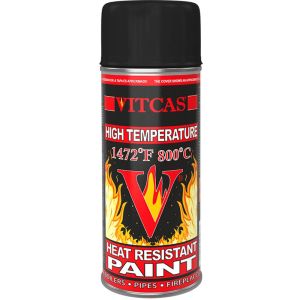 Heat Resistant Spray Paint - Black 800°CSpecial Price £8.39 £6.99 Regular Price £15.59 £12.99
Vitcas Heat Resistant Paint – High Temperature Spray 400ml – Black is designed to withstand extreme temperatures up to 800°C (1472°F). Ideal for painting furnaces, heaters, barbecues, boilers, pipes, and other equipment exposed to high heat in both domestic and industrial environments.
Read more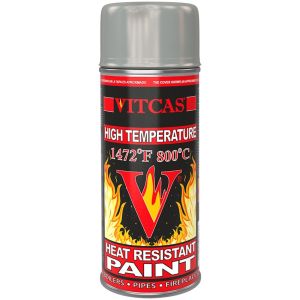 Heat Resistant Spray Paint - Silver 800°CSpecial Price £8.39 £6.99 Regular Price £15.59 £12.99
Vitcas Heat Resistant Paint – High Temperature Spray 400ml – Silver is designed to withstand temperatures up to 800°C (1472°F). It is ideal for painting furnaces, heaters, barbecues, boilers, pipes, and other equipment exposed to high heat.
Read more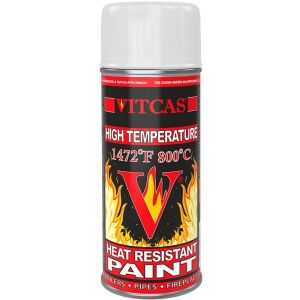 Heat Resistant Spray Paint - White 800°CSpecial Price £8.39 £6.99 Regular Price £15.59 £12.99
Vitcas Heat Resistant Paint – High Temperature Spray 400ml – White is a heat-resistant spray paint designed to withstand temperatures up to 800°C (1472°F). It is ideal for painting stoves, radiators, furnaces, heaters, barbecues, boilers, pipes, and other equipment exposed to high temperatures in both domestic and industrial settings.
Read more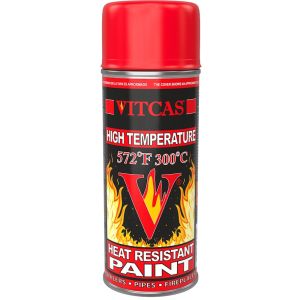 Heat Resistant Spray Paint – Red 300°CSpecial Price £8.39 £6.99 Regular Price £15.59 £12.99
Vitcas Heat Resistant Paint – High Temperature Spray 400ml – Red is designed to withstand temperatures up to 300°C (572°F). It is ideal for painting brake callipers on cars and motorbikes, as well as furnaces, heaters, barbecues, boilers, pipes, and other metal surfaces exposed to high heat.
Read more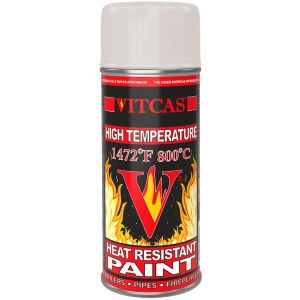 Heat Resistant Spray Paint - Cream/Beige 800°CSpecial Price £8.39 £6.99 Regular Price £15.59 £12.99
Vitcas Heat Resistant Paint - High Temperature Spray 400ml - Cream/Beige is resistant to 800°C (1472°F). This high-temperature spray paint is ideal for painting furnaces, heaters, barbecues, boilers, pipes, and other equipment exposed to extreme heat.
Read more
Choosing High-Temperature Spray Paint for Stoves, Flues & Metal Surfaces
VITCAS high-temperature spray paints provide a practical way to restore, recolour and finish compatible metal components exposed to elevated temperatures. Silicone-resin aerosol coatings are available for stoves, flue pipes, heaters, boilers, barbecues, furnace components and other heat-exposed equipment where an ordinary decorative paint would not withstand the operating conditions.
The key specification is not colour alone but the maximum surface temperature. Black, silver, white and cream/beige are rated to 800°C, while red has a lower maximum rating of 300°C. The coating should therefore be selected according to both the required appearance and the highest temperature the painted surface is expected to reach during normal operation.
High-Temperature Paint Colours & Temperature Ratings
| Colour | Maximum temperature | Finish | Pack size | Typical applications |
|---|---|---|---|---|
| Black | 800°C | Satin matt | 400ml aerosol | Stoves, flue pipes, heaters, boilers, suitable heat-resistant boards and compatible gas-fire coals |
| Silver | 800°C | Satin matt | 400ml aerosol | Heat-exposed metal including suitable steel, stainless-steel and aluminium components |
| White | 800°C | Satin matt | 400ml aerosol | Prepared metal and specified vermiculite, insulation or heat-resistant construction boards |
| Cream / Beige | 800°C | Satin matt | 400ml aerosol | Stoves, heaters, boilers, pipes and other compatible heat-exposed metal surfaces |
| Red | 300°C | Satin | 400ml aerosol | Suitable lower-temperature metal components, equipment casings and compatible automotive applications |
One 400ml aerosol provides published coverage of approximately 1.5m². Practical coverage varies with surface profile, overspray, colour change, application technique and the number of coats required.
Choose Paint by Surface Temperature, Not Colour Alone
Temperature can vary substantially across a stove, flue system, boiler, barbecue or other item of equipment. A stove body may operate at a very different temperature from its flue connection, door, handle area or surrounding trim.
Use the highest surface temperature expected during normal operation when selecting the coating. Black, silver, white and cream/beige provide temperature capability up to 800°C, whereas red should only be specified where the coated surface remains within its 300°C limit.
The temperature rating belongs to the paint film itself. It does not increase the temperature capability of the substrate, appliance component, seal, insulation or surrounding construction.
Where Can VITCAS Heat-Resistant Spray Paint Be Used?
Depending on colour and substrate compatibility, VITCAS high-temperature aerosols can be used to restore or finish:
- wood-burning and multi-fuel stove bodies;
- metal stove doors and compatible external trim;
- flue pipes and selected chimney components;
- boilers, heaters and radiator surfaces;
- compatible furnace and industrial equipment casings;
- external metal surfaces on barbecues and fire pits;
- suitable exhaust and automotive components;
- specified heat-resistant construction or insulation boards;
- compatible artificial gas-fire coals using the specified black coating.
These coatings should be applied only to surfaces for which the selected paint is suitable. Do not assume that every heat-resistant colour can be used on every metal, board or appliance component simply because the temperature rating is sufficient.
Which Surfaces Can Be Painted?
The principal substrate for VITCAS high-temperature spray paint is clean, sound and correctly prepared bare metal. Depending on the selected colour, compatible substrates can include carbon steel, stainless steel and aluminium.
Selected black and white products also list specific heat-resistant boards, including suitable vermiculite and insulation materials. This additional compatibility is product-specific and should not be assumed for every colour.
Ordinary plaster, render, stone, cement, marble, glass, ceramic surfaces and existing decorative coatings should not be treated as suitable substrates unless the selected product specifically permits the application.
Surface Preparation Is Critical to Coating Performance
A heat-resistant coating can only perform properly when it is bonded to a stable, compatible surface. Applying an 800°C paint over rust, grease or a lower-temperature coating does not create an 800°C coating system.
Before spraying:
- allow the appliance or component to cool completely;
- remove oil, grease, soot, dust and other contamination;
- remove loose rust, scale and deteriorated coatings;
- prepare corroded areas until clean, sound metal is exposed;
- remove abrasive dust and residues before painting;
- mask glass, labels, controls, openings, seals and surfaces that must remain uncoated.
VITCAS high-temperature sprays are generally designed for application directly to properly prepared metal without an ordinary primer. A conventional metal primer can have a much lower temperature capability than the topcoat and may become the point of failure when the component is heated.
How to Apply High-Temperature Spray Paint
Aerosol application makes it possible to produce a uniform decorative finish across suitable stove, flue and equipment surfaces, but several thin coats provide better control than one heavy application.
- Make sure the surface is cold, clean and dry.
- Use the aerosol in a well-ventilated area and away from ignition sources.
- Apply at an ambient temperature of approximately 15–25°C unless the individual product specifies otherwise.
- Shake the aerosol vigorously for approximately two minutes.
- Hold the can approximately 30cm from the surface.
- Apply several light, even coats rather than one thick layer.
- Keep the can moving to avoid runs and local heavy build-up.
- Allow the coating to dry and complete the required curing process before normal high-temperature service.
Heavy coats can trap solvent, run or cure unevenly. Controlled spray distance and steady movement help achieve a more consistent satin or satin-matt finish.
Drying & Heat Curing
VITCAS high-temperature spray paints typically become touch-dry in approximately 15 minutes, but touch-dry and fully cured are not the same condition.
The specified heat-curing procedure brings the painted surface to approximately 160°C for one hour. This develops the cured high-temperature coating and prepares it for normal thermal service.
The coating can air-dry before heating, but the specified fully cured condition is achieved through the heat cycle. Some smoke or odour may occur during the first curing cycle, so suitable ventilation should be provided.
The appliance should only be heated in a way permitted by its operating instructions. Rapid or uncontrolled heating should not be used simply to accelerate paint curing.
Stoves, Flue Pipes & Heating Equipment
Black, silver, white and cream/beige provide an 800°C coating option for many compatible stove, flue and heating-equipment surfaces. This allows the finish to be coordinated with both traditional black appliances and lighter or metallic interior schemes.
Preparation is particularly important when repainting an older stove. Existing paint that is loose, blistered or incompatible should not simply be hidden beneath another coat. Identify and remove unstable material before applying the new finish.
Painting also does not repair damaged metal. Cracks, severe corrosion, warped components, defective joints or damaged flue sections require appropriate repair or replacement before decorative coating.
Barbecues, Fire Pits & Food-Contact Areas
High-temperature spray paint can be used on compatible external metal areas of barbecues and fire pits where the selected colour has sufficient temperature resistance.
The coating should not be used on surfaces intended for direct food contact. Do not apply it to cooking grids, pans, food-preparation surfaces or other areas where food can touch the paint film.
Overspray should also be prevented from reaching burners, cooking surfaces and other functional components. Heat resistance does not automatically make a coating suitable for food-contact or combustion-zone applications.
Black High-Temperature Paint for Gas-Fire Coals
VITCAS Black Heat Resistant Spray Paint is also listed for refreshing suitable artificial gas-fire coals.
This is a specialist application rather than a general instruction to paint every gas-fire component. The appliance must permit the treatment, and the documented coal size, shape, quantity and arrangement should not be altered. Burner ports, jets and other combustion-control components must remain free from paint.
Indoor & Outdoor Applications
Selected VITCAS heat-resistant spray colours are suitable for compatible indoor and outdoor applications. Exterior surfaces are additionally exposed to moisture, corrosion, abrasion and weathering, so good metal preparation and complete coating coverage remain important.
A heat-resistant aerosol should not be treated as a substitute for a specialised heavy-duty corrosion-protection system where the equipment is exposed to aggressive industrial, marine or chemical environments.
Heat-Resistant Paint Is Not Thermal Insulation
A high-temperature coating protects its own decorative finish against elevated surface temperatures; it does not prevent the underlying surface from becoming hot.
Applying VITCAS heat-resistant paint does not:
- provide thermal insulation;
- reduce heat transfer through a metal component;
- reduce required appliance clearances from combustible materials;
- provide a structural fire-resistance period;
- convert ordinary construction materials into refractory materials;
- replace an intumescent passive-fire-protection coating.
Where insulation or passive fire protection is required, use a material designed and tested for that specific function.
Why High-Temperature Paint Can Peel or Blister
Premature coating failure is often associated with the complete application system rather than the nominal temperature rating alone.
Typical causes include:
- painting over grease, soot or surface contamination;
- remaining rust or unstable scale beneath the coating;
- application over incompatible existing paint or primer;
- excessive film thickness;
- insufficient drying or curing;
- service temperatures above the selected colour rating;
- moisture or corrosion developing beneath the paint film;
- painting a substrate that is not compatible with the selected coating.
If an existing finish has failed, establish the cause and remove unsound coating before repainting rather than repeatedly applying additional layers over the damaged surface.
Frequently Asked Questions
Which VITCAS spray paint colours are rated to 800°C?
Black, silver, white and cream/beige are rated to a maximum of 800°C. Red has a lower maximum temperature rating of 300°C.
Why is the red heat-resistant paint rated to 300°C?
Different colour formulations can have different thermal capabilities. Red should therefore be selected only for compatible surfaces whose maximum operating temperature remains within 300°C rather than assuming that every colour in the family has the same rating.
Can I paint directly over existing stove paint?
The VITCAS sprays are primarily intended for properly prepared compatible surfaces. Loose, blistered or incompatible existing coatings should be removed rather than simply overpainted. The new coating can only perform as well as the surface to which it is bonded.
Does high-temperature spray paint need a primer?
The products are generally designed for direct application to correctly prepared metal without an ordinary primer. A conventional primer may have insufficient temperature resistance and can cause the coating system to fail when heated.
Can VITCAS spray paint be applied over rust?
No. Loose corrosion, scale and unstable material should be removed and the metal prepared to a clean, sound condition before spraying. High-temperature paint does not stop or repair active corrosion beneath the coating.
How much area does one 400ml aerosol cover?
Published coverage is approximately 1.5m² per 400ml aerosol. Actual coverage depends on surface texture, overspray, colour contrast, number of coats and application technique.
How long does heat-resistant spray paint take to dry?
The coating is typically touch-dry in approximately 15 minutes. The specified fully cured condition is achieved by heating the coated surface to approximately 160°C for one hour.
Can high-temperature paint be used on a barbecue?
Yes, on compatible external metal surfaces where the selected paint has sufficient temperature capability. Do not use the coating on cooking grids, food-contact surfaces or other parts where paint could come into direct contact with food.
Can the spray paint be used on heat-resistant boards?
Selected black and white products list specific heat-resistant, vermiculite or insulation-board applications. Board compatibility varies by colour, so it should not be assumed across the entire spray-paint family.
Can black heat-resistant paint be used on gas-fire coals?
Black VITCAS Heat Resistant Spray Paint is listed for suitable artificial gas-fire coals. Use it only where the appliance permits repainting and maintain the specified coal arrangement. Do not coat burner ports, jets or other combustion components.
Is VITCAS heat-resistant paint fireproof or intumescent?
No. It is a decorative high-temperature coating designed to withstand elevated surface temperatures. It does not provide thermal insulation or a tested passive-fire-protection rating and should not be specified as an intumescent coating.
Can heat-resistant paint be used outdoors?
Selected colours are suitable for compatible exterior applications. Outdoor durability still depends on substrate preparation, coating condition, weather exposure and corrosion control, so exterior painted surfaces should be inspected periodically.