
Heat Resistant Plaster & Render System
Heat-Resistant Plaster and Fireplace Render for Stoves and Fireplaces
A heat-resistant fireplace finish depends on using the correct base and finishing layers for the temperature and substrate involved. FR Fireplace Render provides the refractory base coat, while HRP Heat Resistant Plaster creates a smooth finished surface for compatible fireplace, inset fire, cassette fire and stove surrounds.
FR Fireplace Render is rated to 1400°C and is used on suitable brick, stone and blockwork. HRP Heat Resistant Plaster is applied as the finishing layer at 3–6mm and is rated to 650°C.
HRP Heat Resistant Plaster should be applied only over a compatible prepared base such as FR Fireplace Render or an appropriate VITCAS high-temperature board system. The 1400°C rating of the base render does not increase the 650°C service limit of the finished HRP layer, so each component should be selected according to its position and expected heat exposure.
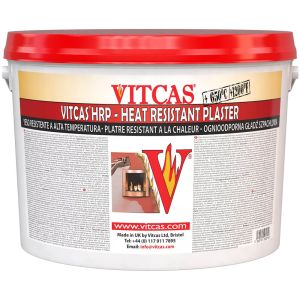 VITCAS Heat Resistant PLASTERAs low as £35.99 £29.99 Regular Price £47.99 £39.99
Heatproof Plaster is a smooth-finish plaster which provides robust protection against high temperatures up to 650°C / 1200°F. It is ideal for areas around cassette fireplace openings, often referred to as "hole in the wall" fires, inset stoves, and next to wood-burning stoves and range cookers, where walls experience intense heat exposure.
Read more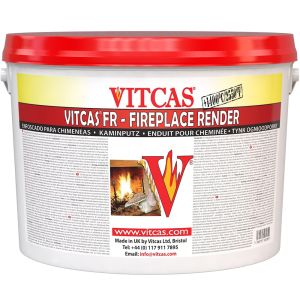 FR - Fireplace RenderAs low as £23.99 £19.99 Regular Price £35.99 £29.99
Fireproof Render is ideal for rendering brick, stone, concrete, and breeze block fireplaces and stoves. This base coat is designed to support the Vitcas Heat Resistant Plaster finish coat. It withstands temperatures up to 1400°C / 2550°F.
Read more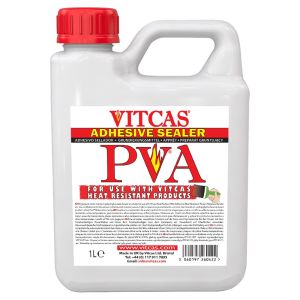 PVA - Adhesive SealerSpecial Price £9.59 £7.99 Regular Price £14.39 £11.99
VITCAS PVA Adhesive Sealer is a high-viscosity, water-resistant, rapid-drying emulsion primer designed for use in conjunction with VITCAS Heat Resistant Products. It is ideal for application on fireboards, tiles, and other porous surfaces.
Read more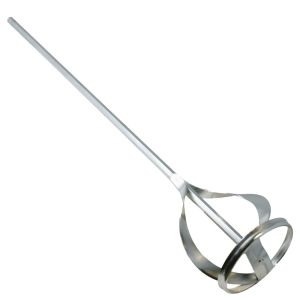 Plaster & Render Mixing PaddleSpecial Price £7.19 £5.99 Regular Price £10.79 £8.99
Plaster & Render Mixing Paddle is ideal for use with Vitcas Fireplace Render, Heatproof Screed, Heat Resistant Plaster, and other Vitcas dry powder products. Designed for electric drills, it efficiently mixes water with plasters and renders.
Read more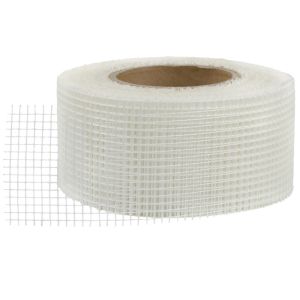 High-Temp Fibreglass Mesh Scrim TapeSpecial Price £8.39 £6.99 Regular Price £11.99 £9.99
Heat Resistant Glass Fibre Plasterboard Scrim Tape is for use in conjunction with Vitcas Heat Resistant Plaster. The fibreglass self-adhesive tape is for joints and internal corners between plasterboards. The joints have a tendency to crack so they need to be taped and plastered over to secure it.
Read more HT - High Temperature FireboardSpecial Price £35.99 £29.99 Regular Price £47.99 £39.99
VITCAS High Temperature Plasterboard is a non-combustible fireproof board which does not contain any gypsum. Can be used with Vitcas Heat Resistant Plaster in areas where Vitcas Fireplace Render cannot be applied. Non-flammable rating A1 in accordance with EN 13501-1:2018. Fire and water-resistant, mould and mildew resistant.
Read more
Understanding the Heat-Resistant Plaster and Render System
A durable fireplace or stove surround depends on using compatible base, preparation and finishing materials in the correct sequence. FR Fireplace Render provides the refractory base on suitable masonry, while HRP Heat Resistant Plaster creates a smooth finished surface over prepared FR render or a compatible high-temperature board system.
Each component has a different function and temperature capability. FR is rated to 1400°C, while HRP is rated to 650°C and is applied at 3–6mm. The temperature rating of the base layer does not increase the service limit of the finishing plaster or any other lower-rated component in the completed construction.
System Components and Their Functions
| Component | Primary function | Published specification | Application consideration |
|---|---|---|---|
| FR Fireplace Render | Heat-resistant refractory base coat for suitable masonry | Maximum temperature: 1400°C | Apply at the specified thickness and allow the render to dry and complete the required initial heating before the finishing system is applied |
| HRP Heat Resistant Plaster | Smooth heat-resistant finishing plaster | Maximum temperature: 650°C; application thickness: 3–6mm | Apply only over a compatible prepared base; HRP is finished by trowelling and cannot be dry-sanded after setting |
| PVA Adhesive Sealer | Preparation of compatible porous surfaces before HRP | Ready to use; approximate coverage: 3m² per litre | For HRP application, use undiluted and apply the plaster while the prepared surface remains tacky; follow the current instructions for the exact substrate and system |
| High-Temperature Fibreglass Mesh Scrim Tape | Reinforcement of compatible board joints and internal corners | 50mm-wide self-adhesive glass-fibre mesh | Reduces stress concentration at joints but does not replace correct board fixing or movement detailing |
| HT High Temperature Fireboard | Non-gypsum board for compatible high-temperature finishing applications | 1200 × 800 × 12mm; maximum temperature: 650°C; reaction to fire: A1 | Use the correct face for the intended finish and confirm that the board is suitable for its position within the appliance installation |
Choose the Correct Construction Route
| Substrate | Typical system sequence | Key considerations |
|---|---|---|
| Stable brick, stone or suitable blockwork | Prepared masonry → FR Fireplace Render → drying and specified initial heating → preparation for HRP → HRP at 3–6mm | Confirm the required FR thickness and substrate preparation. HRP should not be applied directly to untreated masonry. |
| Compatible HT High Temperature Fireboard or CS Insulation Board | Correctly installed board → joint treatment and scrim where required → preparation for HRP → HRP at 3–6mm | Confirm board suitability for the location, appliance clearance and expected surface temperature before installation. |
Preparation requirements can vary between substrates and individual products. Follow the current instructions for the selected FR, board, PVA and finishing system rather than assuming that one priming sequence applies universally to every construction.
Temperature Ratings and System Limits
FR Fireplace Render is rated to 1400°C, while HRP Heat Resistant Plaster and HT High Temperature Fireboard are rated to 650°C. These values describe individual materials rather than a single temperature rating for every assembly made from them.
Where HRP forms the exposed finish, the installation must respect its 650°C limit together with the limits of the substrate, board, fixings, joint treatment and any decorative coating.
A material temperature rating does not establish appliance clearance from combustible construction, certify a complete wall for a fire-resistance period or make a surrounding structure suitable for direct flame contact. The appliance and complete construction requirements should be assessed separately.
Preparing Masonry for Fireplace Render
The masonry background should be stable, clean and capable of supporting the refractory render. Remove loose plaster, paint, wallpaper, soot, dust, grease, friable mortar and other material that could impair adhesion.
Where required by the FR instructions, rake out shallow or weak joints and provide sufficient mechanical key on smooth masonry. Dry absorbent backgrounds may require controlled dampening or other preparation according to the current product instructions, but the substrate should not be saturated or covered with standing water.
Persistent damp, salts, cracking or structural movement should be investigated before rendering. A heat-resistant coating cannot stabilise defective masonry or correct uncontrolled movement.
Applying FR Fireplace Render
FR Fireplace Render is mixed with clean cold water at approximately 200ml per kilogram of dry material to produce a suitable trowelling consistency. Use clean tools and do not add ordinary cement, gypsum plaster, pigments or unapproved admixtures.
| Application | Typical FR thickness | Preparation for subsequent finish |
|---|---|---|
| Suitable recess walls around a freestanding stove | Minimum 12mm | Leave an appropriate key where HRP will be applied later |
| Open fire or log-basket area | 25mm | Apply according to the required refractory build-up and final surface |
| Chimney breast or cassette-fire surround receiving HRP | Minimum 12mm FR, followed by 3–6mm HRP | Prepare the FR surface to receive the finishing system |
| Suitable wall around a boiler or heating appliance | Minimum 12mm | Confirm appliance clearance and expected surface temperature |
Thicker build-ups should be formed according to the current FR application instructions rather than by applying an uncontrolled heavy coat. Where HRP will follow, the finished FR surface should provide a suitable mechanical key rather than being polished smooth.
Drying and Initial Heating of FR Fireplace Render
Allow FR Fireplace Render to dry fully before progressing to the finishing stage. Where HRP will be applied, current HRP guidance requires the FR base to dry for at least three days above approximately 20°C, with additional time where the render is thick, the masonry remains damp or conditions are cooler or more humid.
The FR base should also complete the specified controlled initial-heating procedure before HRP is applied. Heating damp refractory material too rapidly can generate steam, cracking or loss of adhesion.
Because drying and preparation instructions can depend on the installation and current product guidance, follow the latest directions supplied with the selected materials before applying the next layer.
Using HT High Temperature Fireboard as a Plaster Base
HT High Temperature Fireboard measures 1200 × 800 × 12mm and provides approximately 0.96m² of board area before cutting and waste.
For HRP or tiled finishes, use the rough reverse face as the working surface. Where the board itself is to be painted, the smooth face is used as the visible surface.
Before plastering, treat compatible board joints and internal corners with the specified filler and 50mm fibreglass scrim tape. Complete the required surface preparation before applying HRP.
The board's A1 reaction-to-fire classification applies to the board material and does not establish a fire-resistance period for a completed wall or remove appliance-clearance requirements. Current product guidance also does not recommend this particular HT Fireboard directly behind a wood-burning stove; use a construction or insulation solution specified for that location.
Priming Before HRP Heat Resistant Plaster
Before applying HRP, prepare the dry FR render or compatible board according to the current system instructions. VITCAS PVA Adhesive Sealer is used undiluted for the HRP preparation stage, with plaster applied while the prepared surface remains tacky.
PVA controls suction and promotes adhesion between compatible layers. It is a preparation material rather than a visible high-temperature finish, waterproofing membrane or method of increasing the temperature rating of the completed system.
Mixing and Applying HRP Heat Resistant Plaster
HRP Heat Resistant Plaster is the smooth finishing layer used over properly prepared FR render or a compatible high-temperature board system.
| HRP parameter | Published specification |
|---|---|
| Maximum temperature | 650°C |
| Application thickness | 3–6mm |
| Mixing water | Approximately 200ml per kilogram |
| Working time | Approximately 20 minutes |
| Typical drying period | At least 72 hours at approximately 20°C, extended where conditions are cooler or more humid |
| Finish | Trowel smooth while workable; do not rely on dry sanding after setting |
Use clean cold water and clean mixing equipment free from gypsum plaster, Portland cement and previously hardened material. Mix only the quantity that can be applied within the available working time and do not attempt to restore stiffening plaster by adding additional water.
- Confirm that the FR render has dried and completed the required initial heating, or that the compatible board system is ready for finishing.
- Complete the specified surface preparation and apply HRP while the prepared surface is in the required condition.
- Spread HRP evenly at 3–6mm without feathering the material to a zero-thickness edge.
- Trowel the plaster to the required smooth finish while it remains workable.
- Allow the completed surface to dry thoroughly before decoration or significant heat exposure.
Decoration and Returning the Appliance to Service
HRP should be completely dry before painting or heating. A compatible water-based emulsion can be used where permitted by the current product guidance, but the decorative coating does not increase the plaster's 650°C temperature capability.
Return the completed fireplace or stove surround to service gradually. Moisture can remain within thick masonry even when the visible surface appears dry, so premature full-temperature operation can contribute to cracking, staining, steam pressure or loss of adhesion.
Preventing and Repairing Cracks
Cracking can result from excessive layer thickness, insufficient surface key, rapid drying, premature heating, movement in the substrate or inadequately supported board joints.
Fibreglass scrim helps distribute stresses around compatible board joints but cannot compensate for loose boards, inadequate fixing or an active movement joint.
Small stable defects in HRP may be repaired with a suitable heat-resistant filler. Repeated, wide or hollow-sounding cracks should be investigated before cosmetic repair so that movement, poor adhesion or another underlying cause can be corrected.
Engineering & Application Considerations
- FR Fireplace Render and HRP Heat Resistant Plaster perform different functions. FR provides the refractory base while HRP provides the smooth finishing surface.
- The 1400°C FR rating does not make an HRP-finished system suitable for 1400°C service. HRP remains rated to 650°C.
- HRP requires a compatible prepared substrate and should not be applied directly to ordinary brickwork or conventional gypsum plaster.
- Preparation requirements are system-specific. Follow the current FR, PVA, board and HRP instructions for the exact construction rather than applying one universal priming sequence.
- HT High Temperature Fireboard is not recommended directly behind a wood-burning stove under the current product guidance.
- A1 reaction to fire is not the same as fire resistance of a completed wall assembly.
- Appliance clearances remain part of the installation design. Heat-resistant render, board or plaster does not authorise a reduction in the manufacturer's specified clearance.
- Direct flame, firebox and hearth applications require materials specifically approved for those positions.
Why Choose the VITCAS Heat-Resistant Plaster System?
- Purpose-designed refractory base and finishing materials for fireplace and stove surrounds.
- FR Fireplace Render rated to 1400°C for compatible heat-exposed masonry backgrounds.
- HRP Heat Resistant Plaster rated to 650°C for smooth finished surfaces around suitable heating installations.
- Masonry and compatible board construction routes for different fireplace and stove designs.
- Matched preparation and reinforcement materials, including PVA Adhesive Sealer and high-temperature fibreglass scrim.
- System-based approach allowing the substrate, refractory base and finished surface to be selected according to their individual functions and temperature exposure.
The performance of a heat-resistant fireplace finish depends on the complete layer build-up rather than one temperature rating. Correct substrate preparation, refractory base thickness, compatible joint treatment, controlled drying and the specified HRP finishing procedure work together to create a durable surround for suitable fireplace and stove installations.
Frequently Asked Questions
What is the difference between Fireplace Render and Heat Resistant Plaster?
FR Fireplace Render is a refractory base coat for suitable masonry and is rated to 1400°C. HRP Heat Resistant Plaster is the smooth finishing layer applied at 3–6mm over correctly prepared FR render or a compatible high-temperature board and is rated to 650°C.
Do FR Fireplace Render and HRP Heat Resistant Plaster need to be used together?
Use both where a smooth HRP finish is required over masonry. FR forms the refractory base and HRP provides the finished plaster surface. FR can also be used without HRP where its own rendered finish is appropriate to the application.
Is the complete plaster system rated to 1400°C?
No. The 1400°C rating applies to FR Fireplace Render. HRP is rated to 650°C, so a finished HRP surface must remain within the temperature capability of HRP and the other components in the construction.
Can HRP be applied directly to brick or blockwork?
No. Suitable masonry should first receive the specified FR Fireplace Render base. The render must then be correctly dried, prepared and commissioned before HRP is applied.
Can HRP be applied over ordinary gypsum plaster?
No. Conventional gypsum plaster is not the specified heat-resistant base for HRP. Use the compatible FR render or approved high-temperature board system required for the installation.
Which face of HT High Temperature Fireboard should face outwards?
For HRP or tiled finishes, use the rough reverse face as the exposed working surface. The smooth face is used where the board itself is intended to receive an appropriate painted finish.
Can HT High Temperature Fireboard be installed directly behind a wood-burning stove?
VITCAS product guidance does not recommend this particular board directly behind a wood-burning stove. Use VITCAS CS fireplace construction board or insulation board for that location and maintain the appliance manufacturer's required clearances.
How thick should FR Fireplace Render be?
VITCAS specifies a minimum of 12mm on suitable recess walls, chimney breasts and walls around heating appliances. Around an open fire or log basket, the specified thickness is 25mm.
How thick should HRP Heat Resistant Plaster be?
Apply HRP at a finished thickness of 3–6mm. It should not be feathered to zero thickness or used as a thick levelling layer for an unsuitable background.
Is PVA required before applying HRP?
Yes. VITCAS PVA Adhesive Sealer is used as part of the preparation for HRP on compatible dry FR render or board surfaces. Use it according to the current system instructions and apply HRP while the prepared surface is in the specified tacky condition.
How long should FR and HRP dry?
Where HRP will follow, allow FR to dry for at least three days above approximately 20°C and longer where moisture remains or conditions are less favourable. HRP should also dry for at least approximately 72 hours at around 20°C before decoration or significant heating. Follow the current product instructions for the complete installation.
Can HRP Heat Resistant Plaster be sanded or painted?
HRP should be finished smoothly by trowelling while it remains workable because it cannot be dry-sanded after setting. Once completely dry, it can be decorated with a compatible water-based emulsion where permitted by the current product guidance.
How should cracks in heat-resistant plaster be repaired?
Small stable defects can be repaired with a compatible heat-resistant filler. Repeated, wide or hollow cracks should first be investigated for movement, inadequate adhesion, excessive thickness, insufficient joint reinforcement or premature heating.