
Build a Brick Smoker & Smokehouse
Materials for Building Hot- and Cold-Smoking Chambers
Build a durable brick smoker or garden smokehouse by matching each material to the firebox, smoke route, food chamber and weather-exposed shell. Dense 230 × 114 × 64 mm fire bricks provide a refractory lining and thermal mass around the combustion zone. Hydraulic-setting outdoor oven cement forms heat-resistant exterior joints, while heatproof screed can protect masonry or form refractory sections as specified.
Vermiculite board and glass needled felt may provide insulation or heat shielding, but fibrous or friable materials must be enclosed against damage, moisture and food contamination. Hot- and cold-smoking layouts need different heat-source positions, airflow and temperature control: cold smoking neither cooks food nor makes it safe without a validated curing, hygiene and refrigeration process. Include adjustable combustion air, a cleanable chamber, drainage, a thermometer and a controllable exhaust. Site the installation outdoors, clear of combustible materials and openings. Burn only untreated wood suitable for smoking food, then commission the masonry gradually after every material has cured and dried.
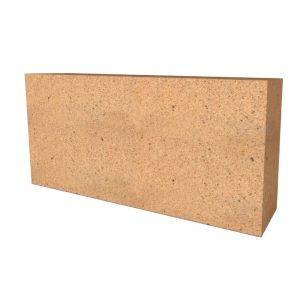 Fire Bricks 230x114x64mmSpecial Price £2.40 £2.00 Regular Price £4.79 £3.99 As low as £2.04 £1.70
Fire Bricks – VITCAS Refractory Fire Clay Bricks 230x114x64mm. High-temperature fire bricks engineered for domestic and outdoor use, including fireplaces, stoves, pizza ovens, barbecue grills, heating appliances and furnaces. Suitable for both indoor and outdoor pizza ovens, these durable refractory fire bricks deliver excellent heat resistance and long-lasting thermal performance.
Read more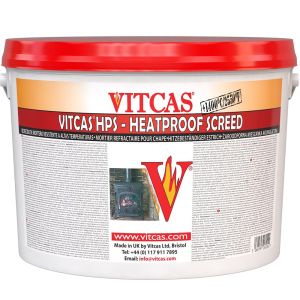 HPS - Heatproof ScreedAs low as £23.99 £19.99 Regular Price £35.99 £29.99
Fireproof Screed, a cement-like product, is resistant to 1400°C / 2550°F. For interior and exterior use. Its function is for Screeding Masonry and making replacement fire bricks for Kilns, Fireplaces, Barbeques and Pizza Ovens. Protects vulnerable materials, which are in danger of being damaged by high heat exposure.
Read more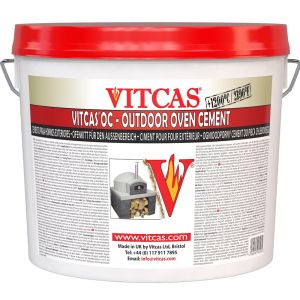 OC - Outdoor Oven CementAs low as £17.99 £14.99 Regular Price £23.99 £19.99
Vitcas Outdoor Pizza Oven Cement is an hydraulic-set mortar designed for exterior jointing with fire bricks in applications such as pizza ovens, barbecues, smokehouses, bread ovens, fire pits and other high-temperature applications. This kind of outdoor fire cement is water-insoluble, resistant to rain and frost and cures without the need for heat.
Read more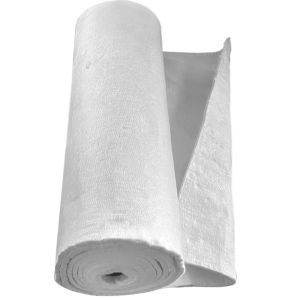 Glass Needled Felt Insulation - Fiberglass Mat -per MetreSpecial Price £14.40 £12.00 Regular Price £24.00 £20.00
Glass Fibre Needled Felt is a flexible insulation blanket, resistant to 600°C (1110°F) for short-term and 550°C (1020°F) for continuous working temperatures. Fibreglass mat is lightweight, easy to handle, and ideal for industrial applications. Non-toxic, ensuring safe use by workers and around chemicals.
Read more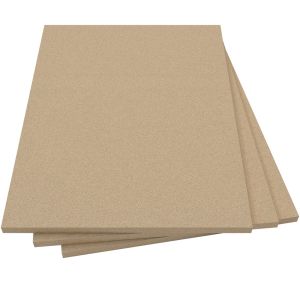 Vermiculite Fire Board Fire-proof InsulationAs low as £35.99 £29.99 Regular Price £71.98 £59.98
Vermiculite Fire Resistant Board – VITCAS Fireproof Insulation, refractory up to 1100ºC / 2010ºF, designed for use as a heat shield, register plate, or replacement for fire bricks in wood-burning and multi-fuel stoves. This versatile board provides excellent thermal insulation and fire resistance.
Read more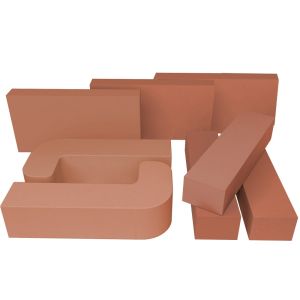 VITCAS Fire Bricks-Red£3.00 £2.50 Regular Price £4.80 £4.00
Red Fire Bricks, expertly manufactured for both function and beauty. These red-hued bricks are perfect for adding a touch of colour and elegance to any setting. Ideal for use in fireplaces, wood-fired ovens, barbeques, and other heating applications, they not only enhance the aesthetic appeal of your space but also provide durable and efficient heat resistance.
Read more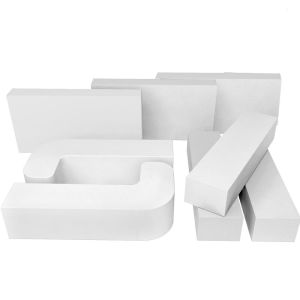 Vitcas-Fire Bricks-White£3.00 £2.50 Regular Price £4.80 £4.00
Coloured Fire Bricks in an antique Off White shade. These firebricks are perfect for decorative purposes in both interior and exterior settings. Ideal for use in wood-fired bread and pizza ovens, barbeques and fireplaces, they add a sophisticated touch to any space while offering functional versatility.
Read more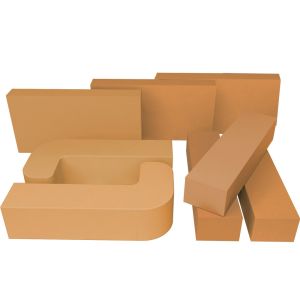 Vitcas-Fire Bricks-Yellow£3.00 £2.50 Regular Price £4.80 £4.00
Sand Yellow Fire Bricks - where functionality meets a warm aesthetic. Their soft, sand-yellow hue evokes the tranquillity of sunlit beaches, adding a light, airy touch to any setting. Ideal for fireplaces, garden wood-fired pizza ovens and barbeques, due to their exceptional heat resistance and enduring quality.
Read more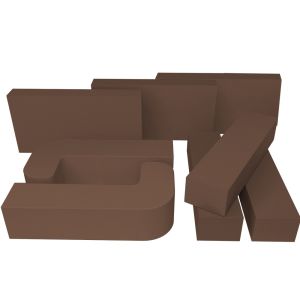 VITCAS Fire Bricks-Brown£3.00 £2.50 Regular Price £4.80 £4.00
Earthy Brown Fire Bricks, exuding a natural, earth-toned radiance. Made to complement any setting, these bricks emanate rustic elegance and organic beauty. Perfectly suited for fireplaces, outdoor pizza ovens and barbeques, they not only enhance your space with their warm, earthy hues but also offer outstanding durability and superior heat resistance.
Read more
How to Build a Brick Smoker or Garden Smokehouse
A masonry smoker is a small combustion, heat-transfer and food-processing system rather than simply a brick cupboard with a fire beneath it. Its performance depends on the relationship between the firebox, smoke route, cooking or smoking chamber, air inlet and exhaust. The materials on this page can be used to create refractory linings, heat-retaining masonry, weather-resistant joints and protected insulation within a correctly designed outdoor structure.
Begin by deciding whether the installation is intended for hot smoking, cold smoking or both. This determines where the fire is located, how much heat must be removed before the smoke reaches the food, and how precisely the airflow must be controlled. Chamber temperature is a process measurement; it is not the same as the internal temperature of the food.
Functional Zones in a Masonry Smoker
| Zone | Main Duty | Key Design Considerations | Typical Material Role |
|---|---|---|---|
| Foundation and hearth | Support the complete masonry load and isolate it from the ground | Bearing capacity, settlement, frost conditions, drainage and a level non-combustible base | Structural foundation designed for the site, with refractory material used only where heat exposure requires it |
| Firebox | Contain fuel, flame, embers and the highest local temperatures | Thermal cycling, combustion air, ash removal, door hardware and separation from combustibles | Dense fire bricks, outdoor oven cement where specified, and heatproof screed for suitable protective or formed sections |
| Smoke-transfer passage | Carry smoke from the firebox to the chamber | Length, cross-section, heat loss, condensate drainage, access for cleaning and absence of leakage | Heat-resistant, non-combustible construction selected for the anticipated gas temperature |
| Food chamber | Hold racks or hooks and distribute smoke around the food | Cleanability, internal volume, rack spacing, drip collection, temperature measurement and hygiene | Stable masonry shell with suitable food-zone surfaces and protected insulation where required |
| Outer enclosure and roof | Protect the thermal construction from weather and mechanical damage | Rain shedding, frost exposure, ventilation details, corrosion resistance and maintainable joints | Decorative fire bricks can provide a heat-resistant coloured finish where appropriate |
| Exhaust | Establish draught and discharge products of combustion | Adjustability, safe termination, weather protection, deposits and cleaning access | A compatible flue or chimney assembly designed for the operating conditions |
Materials Available for Smoker Construction
| Material | Published Temperature Rating | Relevant Use in a Smoker Project | Selection Note |
|---|---|---|---|
| Dense fire bricks, 230 × 114 × 64 mm | Up to 1300°C | Firebox lining, hearth and other zones needing refractory strength and thermal mass | Dense brick stores heat; it is not a substitute for a low-conductivity insulation layer |
| Outdoor Oven Cement | Up to 1200°C | Jointing fire bricks in specified exterior and weather-exposed high-temperature construction | Hydraulic-setting dry mix; rain- and frost-resistant after correct setting; follow the stated joint, mixing and drying instructions |
| Heatproof Screed | Up to 1400°C | Protective screeding of masonry and casting or forming suitable refractory sections | Use as a screed or mouldable section at the specified thickness, not as a general-purpose thin-joint mortar |
| Glass Needled Felt | Continuous duty to 550°C; brief exposure to 600°C | Flexible thermal insulation in a protected cavity or enclosed assembly | Keep within its service limit and fully contain the fibre layer against damage, moisture and contamination |
| Vermiculite Fire Board | Up to 1100°C | Rigid thermal barrier or heat shield in a covered, correctly supported location | The board is insulating rather than load-bearing; protect it from weather and mechanical impact |
| Decorative fire bricks in red, white, yellow or brown | Rated to 1200°C | Visible coloured masonry and heat-exposed detailing | Confirm the available thickness and allow for normal shade, dimensional and fired-surface variation |
A published maximum temperature is a material classification, not a recommended chamber setting. Every component must also suit the location, mechanical load, weather exposure, joint design and expected heating cycle. The lowest-rated or most vulnerable component in the assembly can govern the practical limit.
Hot Smoking and Cold Smoking Are Different Processes
| Process | Heat Arrangement | Purpose | Critical Control |
|---|---|---|---|
| Hot smoking | The firebox supplies smoke and enough heat to cook or finish the food; chamber temperatures are commonly managed within an elevated range selected for the product | Cook while developing smoke flavour, colour and surface character | Verify both chamber temperature and the safe internal time-and-temperature treatment of the food |
| Cold smoking | The smoke generator is separated from the food chamber so that substantially less heat reaches the product; many processes operate below 30°C | Apply smoke flavour without cooking | Use a validated curing and hygiene process, maintain refrigeration controls and manage the microbiological hazards of an uncooked product |
Cold smoking should not be described as a stand-alone preservation method. It does not cook the food and cannot by itself establish that meat, fish or another product is safe or shelf-stable. Do not improvise curing-salt quantities, process times or storage periods. Use an authoritative, product-specific procedure and observe all applicable food-safety requirements.
Direct-Fired, Offset and Dual-Purpose Layouts
A direct-fired smoker places the heat source beneath or immediately beside the chamber. It is compact and responds quickly, but the design must prevent flame impingement, excessive radiant heat and fat dripping into the fire. A refractory baffle or diffuser can reduce hot spots, provided that it does not obstruct the necessary flow or create an inaccessible grease trap.
An offset smoker uses a separate firebox and a transfer passage. The additional distance helps lower the gas temperature before smoke reaches the food and offers finer separation between combustion and processing. It also introduces more surfaces on which moisture, soot and tar can condense, so the duct must be accessible and arranged to avoid hidden liquid traps.
A dual-purpose smokehouse can be designed with selectable smoke paths or a remote smoke source, but changing a damper does not automatically convert a hot-smoking process into a safe cold-smoking process. The temperature distribution and food procedure must be verified independently for each operating mode.
Designing the Firebox
The firebox experiences the strongest flame contact and the most severe heating and cooling. Dense fire clay bricks are suited to this duty because they combine refractory resistance with thermal mass. Use the 230 × 114 × 64 mm format to establish the internal dimensions and bond pattern before calculating the exterior envelope.
- Provide a controlled low-level air inlet and an exhaust route that cannot be accidentally sealed while fuel is burning.
- Include safe access for lighting, refuelling and ash removal without reaching beneath suspended food.
- Support grates, doors and baffles independently where metal expansion could otherwise load or fracture the brickwork.
- Keep timber, fencing, stored fuel and other combustible items outside the required separation distance for the completed design.
- Do not use ordinary decorative paint, galvanised sheet, plastic-coated parts or unidentified reclaimed components in a hot smoke path.
Outdoor Oven Cement is intended for high-temperature external firebrick jointing and is rated to 1200°C. The product guidance gives approximately 200 ml of clean water per kilogram, accepts joints from 3 mm, and directs gap filling above 15 mm to Heatproof Screed. These figures are product instructions, not a general mortar rule; the substrate preparation, joint geometry and drying conditions still have to be followed.
Using Heatproof Screed
Heatproof Screed is a coarse, cementitious refractory material rated to 1400°C. It can protect masonry surfaces or be compacted into a suitable mould to form refractory sections. Its maximum aggregate size is 5 mm, so it belongs in a screeded or cast layer rather than a fine joint. The product instructions require new masonry to cure first, followed by controlled curing, natural drying and gentle preheating of the screed. If residual water is driven off too quickly, the layer may crack or spall.
Smoke Passage, Baffles and Condensate
Smoke must move continuously from the combustion zone, through or around any baffle, across the food and out through the exhaust. Oversized passages can weaken velocity and make temperature control sluggish; undersized passages can restrict draught, cause smoke leakage and produce poor combustion. Because performance depends on the entire geometry, there is no universal duct diameter or chimney height for every masonry smoker.
Provide removable access panels or clean-out points at changes of direction. Horizontal runs should not contain low points where acidic condensate, water or tar can collect. Where a fall is required, direct it to a serviceable collection point away from food and masonry vulnerable to prolonged saturation. Any metal duct, damper or fastener must be suitable for the anticipated temperature and corrosion conditions.
Food Chamber and Internal Fittings
The food chamber should be smooth enough to inspect and clean, with sufficient clearance around racks or hanging products for smoke circulation. Fit a drainable, removable drip tray where the process may release fat or liquid. Keep dripping food away from open flame and prevent residues from accumulating on insulation or inaccessible masonry ledges.
- Measure chamber temperature close to the food level rather than relying only on a thermometer in the roof or door.
- Use a separate clean probe thermometer to check the core temperature of food that must be cooked.
- Select racks, hooks, trays and fasteners that are corrosion-resistant and expressly suitable for food use at the intended temperature.
- Separate raw and ready-to-eat food, equipment and handling areas to prevent cross-contamination.
- Design doors and seals so that they can be inspected, renewed and cleaned without releasing loose fibres into the chamber.
Refractory bricks, mortars, screeds and insulation are construction materials. Their temperature resistance alone does not prove suitability for direct food contact. Place food on appropriate racks or trays and obtain confirmation before using any construction product as an exposed food-contact surface.
Air Supply, Exhaust and Carbon Monoxide
Combustion needs an adequate air supply. Restricting the fire excessively can create unstable draught, heavy deposits and increased carbon monoxide production. Use the inlet to regulate the burn while maintaining a clear exhaust path; do not close both ends around a live or smouldering fire.
Operate the smoker only outdoors in a well-ventilated location. Never use it inside a house, garage, shed, tent, caravan, covered enclosure or another space where combustion gases could accumulate or enter an occupied area. Position the exhaust away from doors, windows, air intakes, neighbours and combustible construction. Local fire, environmental, planning and smoke-control requirements may affect siting and use.
Insulation and External Heat Protection
Insulation can reduce heat loss, improve temperature stability and lower the temperature of an outer casing. Safe clearances are still required even when insulation is included. Calculate the hot-face condition, heat path and cold-face target before choosing the product and thickness.
Glass Needled Felt is a flexible E-glass mat measuring 10 mm thick and 1000 mm wide. Its maximum continuous temperature is 550°C, with temporary exposure permitted up to 600°C. It should sit inside a closed, dry assembly and be restrained so that it cannot slump, abrade or release fibres into the food zone. Vermiculite Fire Board is a machinable rigid insulator rated to 1100°C and intended for indoor or covered locations. Do not treat it as structural masonry, expose unsupported edges to impact, or leave it unprotected against rain.
Where a cavity is enclosed, allow for differential expansion and avoid compressing flexible insulation to the point that its thermal performance is materially reduced. Close joints and penetrations in a manner compatible with the temperatures on both sides of the assembly.
Foundation, Weathering and Masonry Movement
A brick smokehouse is heavy. Its foundation must suit the finished mass, ground conditions and local frost depth rather than only the footprint of the firebox. Prevent surface water from draining towards the walls, introduce a damp-control detail appropriate to the construction, and protect the top of the masonry with a weather-shedding cap or roof.
Hot internal masonry and cooler external masonry move by different amounts. Avoid rigidly locking long hot faces into cold structural work. Changes of section, metal frames and openings need details that accommodate thermal expansion without creating uncontrolled cracks. Decorative coloured fire bricks may be incorporated into the visible masonry, but normal shade and size variation should be planned into the bond rather than treated as a defect after installation.
Curing, Drying and First Firing
- Complete the supporting structure and allow ordinary structural materials to achieve the required cure before applying refractory finishes.
- Mix and install Outdoor Oven Cement or Heatproof Screed exactly as stated in the current product instructions.
- Protect fresh work from rain, frost, direct sun and premature heating.
- Allow the complete masonry assembly to dry; thick walls and shaded cavities retain moisture for longer than exposed joints.
- Begin with gentle, well-ventilated heating and increase the duty progressively over subsequent cycles.
- Stop and investigate if steam, new cracking, spalling or unexpected smoke leakage appears.
The Heatproof Screed instructions say to keep the layer cool and damp for 24 hours, then allow another 48 hours for natural drying before controlled preheating. Outdoor Oven Cement lists a 24-hour drying time at approximately 20°C. Cold or wet conditions can extend practical drying, so do not treat these minimum figures as permission to drive residual water rapidly from a complete thick-walled structure.
Food-Safety Controls
For food that requires cooking, the Food Standards Agency cooking guidance gives 70°C for two minutes at the centre of the food, or a validated equivalent time-and-temperature combination. Check the thickest part with a cleaned and disinfected probe, avoiding bone where it could distort the reading. A chamber reading cannot confirm the core treatment.
Cold-smoked products remain uncooked. Their safety depends on controls such as raw-material quality, curing, process time, temperature, hygiene, chilling, packaging and shelf life. Ready-to-eat smoked fish requires particular care because of the recognised Listeria risk. Vulnerable consumers should follow current public-health advice.
Commercial and artisanal producers need a documented, hazard-based system with validated critical limits and records. The Food Standards Agency food-safety management guidance explains the responsibilities of food businesses. Fish intended to be eaten raw or lightly cooked can also be subject to parasite-control requirements. Obtain competent process advice rather than adapting a domestic smoking schedule for sale.
Fuel and Smoke Quality
Use only clean, untreated wood that is known to be suitable for smoking food. Do not burn painted, varnished, pressure-treated or preservative-treated timber, plywood, MDF, OSB, laminated board, construction waste or contaminated pallets. Do not use petrol or another accelerant to light the smoker.
Clean combustion is controlled by dry fuel, appropriate air supply and a stable draught. Dense white smoke, bitter deposits or persistent tar indicate that the combustion or airflow needs attention. The desired wood species, moisture level and smoke intensity depend on the food and process; more smoke is not automatically better.
Estimating Material Quantities
Prepare dimensioned drawings before ordering. Separate the firebox lining, smoke duct, chamber, insulation and outer masonry into measurable areas or brick counts. Allow for openings, cuts, bond pattern, joint width and reasonable installation waste.
- Calculate fire-brick quantity from the actual 230 × 114 × 64 mm unit size and the selected bond, not from wall area alone.
- Outdoor Oven Cement is stated to joint approximately 15 standard fire bricks per 10 kg tub, or about 0.44 m² at a 10 mm joint; thinner or different joints change consumption.
- Heatproof Screed coverage is stated as approximately 0.35 m² per 20 kg at 25 mm thickness.
- Glass Needled Felt is 1000 mm wide and sold by length; include overlaps, joints and full containment.
- Calculate board quantity from the cutting layout and add an allowance for edge damage and offcuts.
Recommended Construction Sequence
- Define the intended foods, hot- or cold-smoking process, batch size and required cleanability.
- Select a safe outdoor position and check local fire, planning, nuisance-smoke and food-business requirements.
- Produce drawings showing the foundation, firebox, smoke path, chamber, doors, drains, thermometers and exhaust.
- Design the foundation for the full masonry weight and site conditions.
- Dry-lay the fire bricks and check door, grate, baffle and clean-out positions.
- Construct and joint the refractory firebox with compatible materials.
- Install the smoke-transfer passage with access for inspection and deposit removal.
- Build the food chamber and provide food-safe removable racks, hooks and drip collection.
- Install insulation behind a secure, cleanable and weather-protected enclosure.
- Complete the exhaust and verify that intake and discharge remain unobstructed.
- Cure and dry all materials, then carry out progressive commissioning fires without food.
- Map chamber temperatures, confirm draught and leakage performance, and establish a safe food process before use.
Inspection and Maintenance
Inspect the smoker before each season and at intervals matched to its use. Look for loose bricks, open mortar joints, displaced insulation, corroded fittings, blocked drains, damaged doors and signs of water entry. Remove soot, grease and tar before deposits become a fire or contamination hazard. Clean flues, baffles and hidden turns through the access points included in the design.
Investigate cracks that widen, pass through several components or release smoke. Do not cover an active structural or thermal-movement defect with a cosmetic skim. Replace exposed or damaged insulation, and keep repairs out of service until the replacement material has cured and dried.
Frequently Asked Questions
What materials are needed to build a brick smoker?
A typical masonry smoker needs a load-bearing foundation, dense fire bricks in the firebox, a compatible refractory jointing material, a cleanable smoke passage and chamber, controlled air inlet and exhaust, suitable doors and food-safe racks. Insulation and an outer weatherproof shell may also be required.
Are a smoker and a smokehouse the same thing?
The terms overlap. A smoker can be a compact direct- or offset-fired appliance, whereas a smokehouse usually describes a larger chamber in which food is hung or racked. Both require controlled smoke flow, safe combustion and a food process appropriate to the intended product.
What is the difference between hot smoking and cold smoking?
Hot smoking combines smoke with enough heat to cook or finish the food. Cold smoking adds smoke flavour while keeping the product uncooked, commonly below 30°C. Cold smoking therefore requires separate, validated controls for curing, hygiene, chilling and shelf life.
Does cold smoking preserve food?
Cold smoking must not be treated as a stand-alone preservation step. It does not cook food and does not by itself prove that a product is microbiologically safe or shelf-stable. Follow an authoritative process designed for the specific food.
Is chamber temperature the same as food core temperature?
No. The chamber thermometer shows the air or local gas temperature, while a clean probe measures the centre of the food. Food that requires cooking must achieve the applicable safe core time and temperature regardless of the chamber reading.
What internal food temperature should hot smoking achieve?
The target depends on the food and process. As general UK consumer guidance, the Food Standards Agency gives 70°C for two minutes at the centre, or a validated equivalent. Follow product-specific guidance and use a probe thermometer.
Can standard fire bricks be used in a smoker firebox?
Dense refractory fire bricks are appropriate for the high-temperature lining and add useful thermal mass. The listed 230 × 114 × 64 mm bricks are rated to 1300°C. The surrounding joints, supports and metalwork must also be compatible with the duty.
Can ordinary house bricks be used instead of fire bricks?
Ordinary bricks are not automatically suitable for direct flame or repeated thermal cycling and may crack or spall. They may be used in cooler structural or decorative zones only where their strength, moisture resistance and temperature capability are adequate for the design.
What is Outdoor Oven Cement used for?
Outdoor Oven Cement is a hydraulic-setting refractory mortar for jointing fire bricks in exterior high-temperature construction. It is rated to 1200°C, sets without a heat cure and resists rain and frost after correct installation. Follow the current product instructions for preparation, water addition, joint width and drying.
When should Heatproof Screed be used?
Use Heatproof Screed for compatible protective screeding or for forming suitable refractory sections. It is rated to 1400°C and can fill applications too wide for ordinary mortar when installed at the specified thickness. It requires controlled curing, drying and initial heating.
Can vermiculite board line the firebox?
Vermiculite board is a lightweight insulating board rated to 1100°C, but the correct location depends on flame exposure, abrasion, mechanical support and the complete lining design. Dense fire brick is generally better suited to a hard-wearing firebox hot face; board can serve as protected insulation or a heat shield.
Can glass needled felt be exposed inside the food chamber?
No exposed fibrous insulation is recommended in a food chamber. Install the felt inside a fully contained assembly so that fibres cannot be damaged, shed onto food or absorb grease and moisture. Keep it within the published continuous and short-term temperature limits.
Can decorative coloured fire bricks be used outdoors?
The listed coloured fire bricks are suitable for interior and exterior decorative applications and are rated to 1200°C. Use a compatible jointing system, protect the overall structure from persistent water entry, and allow for natural shade and dimensional variation.
Can a brick smoker be used indoors or in a shed?
No. Operate it outdoors in a well-ventilated position. Burning wood or charcoal produces carbon monoxide and other combustion gases that can accumulate in enclosed or partly enclosed spaces, even when the fire is only smouldering.
What wood can be used for smoking food?
Use clean, untreated wood known to be suitable for food smoking. Never burn painted, varnished, pressure-treated or preservative-treated timber, engineered boards, building waste or contaminated pallets. Use dry fuel and do not light it with petrol or another accelerant.
Does a masonry smoker need both an air inlet and a chimney?
Yes. An inlet supplies combustion air and an exhaust establishes the flow that carries smoke through the chamber. Both need controlled adjustment, but the live fire must always retain a clear discharge route. The dimensions depend on the whole layout rather than one universal formula.
How should a smoker chimney be sized?
Size it as part of the complete system, considering firebox output, chamber volume, smoke-path resistance, bends, termination and local wind effects. An arbitrary diameter or height can produce weak or excessive draught. Large or commercial designs require competent engineering input.
How long should a new brick smoker dry before use?
Follow the longest curing and drying requirement among the installed products and allow extra time for thick, damp or cold masonry. Heatproof Screed specifies 24 hours of curing and 48 hours of natural drying before gentle preheating; Outdoor Oven Cement lists 24 hours at about 20°C. Commission the complete structure gradually.
How is a brick smoker cleaned?
Remove ash after it is completely cold, clean racks and drip trays as food-contact equipment, and clear soot, grease, tar and condensate from the chamber, baffles, ducts and chimney. Do not soak unprotected insulation. Repair loose joints or damaged surfaces before the next firing.
Can refractory construction materials touch food directly?
Do not assume that heat resistance equals food-contact approval. Keep food on suitable racks, hooks or trays and obtain written confirmation before using a brick, mortar, screed, board or insulation product as an exposed direct-contact surface.
What additional controls apply to a commercial smokehouse?
A food business needs a documented food-safety management system with validated critical limits for the product and process. Controls may include curing formulation, chamber and core temperature, time, chilling, contamination prevention, packaging, shelf life, traceability and cleaning. Registration and local regulatory requirements also apply.