
Refractory Mortars
Ready-Mixed Mortars for Fire Bricks and Refractory Linings
Refractory mortars are used to form thin, heat-resistant joints between compatible fire bricks and refractory components in furnaces, kilns, foundries and high-temperature process equipment. The VITCAS range comprises ready-mixed, air-setting grades for general fire-brick work, lightweight insulating bricks and specialised high-alumina linings. Product temperature ratings extend from 1400°C to 1860°C, while application methods include trowelling and, for selected grades, dipping, coating or spraying. Specify the mortar according to the refractory material, joint design, operating temperature, process conditions and the product’s drying and initial heat-up instructions.
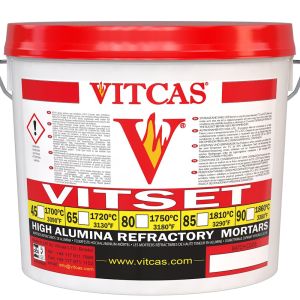 Vitset 45-Refractory Mortar Ready Mixed 1700°CAs low as £17.99 £14.99 Regular Price £35.99 £29.99
Vitset 45 is a versatile, ready-mixed refractory mortar designed to withstand temperatures as high as 1700°C /3100°F. Ideal for trowelling, patching and setting various high-grade refractory and insulation fire bricks rated above 1400°C. Suitable for use with ceramic fibre boards and blankets, making it a practical solution for both repairs and new installations in high-temperature environments.
Read more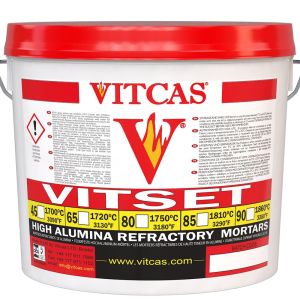 Vitset 80-Refractory Mortar Ready Mixed 1750°CSpecial Price £66.00 £55.00 Regular Price £96.00 £80.00
Vitcas Refractory Mortar – Vitset 80 is a ready-mixed, high-alumina mortar that withstands temperatures up to 1750°C / 3180°F. It is air-setting and ideal for setting, dipping, coating, and spraying refractory bricks. Suitable for industrial applications like steel production and foundries.
Read more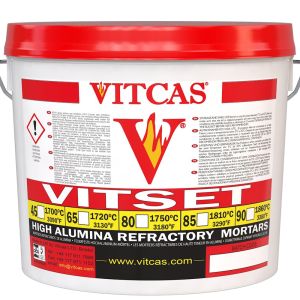 Vitset 85-Refractory Mortar Ready MixedSpecial Price £78.00 £65.00 Regular Price £108.00 £90.00
Vitcas Refractory Mortar- Vitset 85. A high alumina content, ready mixed cement which rates up to 1810ºC / 3290oF.
Read moreEnquire about this product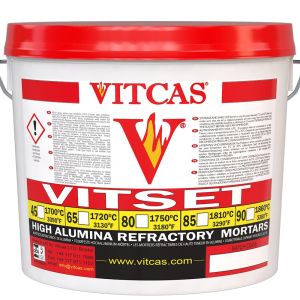 Vitset 90 - VITCAS Refractory Mortar 1860°CSpecial Price £83.99 £69.99 Regular Price £118.80 £99.00
Vitset 90 is a high alumina, ready-mixed refractory mortar, renowned for its exceptional heat resistance and stability up to 1860°C (3380°F). Ideal for industrial applications such as setting pre-cast shapes and sliding gate plates, this air-setting mortar offers practicality and reliability in demanding thermal environments.
Read more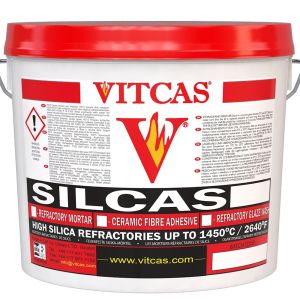 Silcas A-Refractory Mortar 1400°CSpecial Price £35.99 £29.99 Regular Price £47.99 £39.99
VITCAS Silcas A is a ready-mixed, air-setting refractory mortar that offers high-temperature resistance up to 1400°C / 2550°F. It is specifically designed for jointing and setting fire bricks, making it ideal for use in high-heat applications such as kilns, furnaces, and other industrial heating equipment.
Read more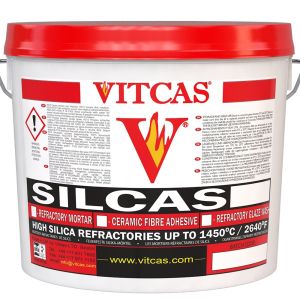 Silcas M-White Refractory Mortar 1430°CAs low as £15.59 £12.99 Regular Price £23.99 £19.99
VITCAS Silcas M - Air Setting Ready Mixed Refractory Mortar for lightweight firebricks and insulation materials up to 1430°C / 2600°F. It is a white refractory mortar so may be used where white mortar is needed for visual and aesthetic purposes. Used for setting and jointing of bricks and other products.
Read more
Refractory Mortars for Industrial Furnaces, Kilns and Refractory Linings
VITCAS manufactures specialist ready-mixed refractory mortars for setting, jointing and bonding compatible fire bricks, insulating fire bricks and refractory shapes in high-temperature equipment. Designed for thin-joint refractory construction, these air-setting mortars provide practical installation characteristics together with reliable performance across a wide range of industrial furnace, kiln and lining applications.
Refractory mortar forms an integral part of the complete refractory lining system. Correct selection should consider the chemistry and density of the brick or refractory shape, designed joint thickness, service temperature, application method, process atmosphere and exposure to slag, molten material, combustion products, abrasion or thermal cycling.
VITCAS offers refractory mortars for applications ranging from general fire-brick and insulating-brick installation to demanding high-alumina linings in foundries, steelworks and specialist high-temperature process equipment.
Refractory Mortar Product Comparison
| Product | Temperature rating | Principal use | Selection note |
|---|---|---|---|
| Silcas A | 1400°C | Setting and jointing fire bricks and precast refractory shapes | Smooth, ready-mixed mortar for kiln and furnace walls, roofs, kiln-car work and refractory maintenance |
| Silcas M | 1430°C | Lightweight insulating bricks and compatible ceramic fibre insulation | Silica-based, off-white mortar suited to Grade 23 insulating bricks, colour-matched joints and selected investment-casting applications |
| Vitset 45 | 1700°C | Dense and insulating refractory bricks, ceramic fibre products and local patching | High-temperature trowelling mortar with a stated maximum bed thickness of 3–5mm |
| Vitset 80 | 1750°C | High-alumina refractory brickwork in steelworks, foundries, ladles and tundishes | Suitable for trowelling, dipping, coating or spraying in demanding industrial lining work |
| Vitset 85 | 1810°C | Specialist high-temperature alloy processing and treatment vessels | High-alumina mortar for severe temperature duties and specialised industrial refractory applications |
| Vitset 90 | 1860°C | Precast refractory shapes, sliding-gate plates and purging nozzles | High-purity, high-alumina grade for specialised steel, furnace and ladle applications |
Industries & Applications
VITCAS refractory mortars are used in the installation and maintenance of refractory linings across a broad range of high-temperature industries:
- Steel & Metallurgy – high-alumina brickwork, pouring ladles, tundishes, sliding-gate plates, purging nozzles and specialised refractory assemblies.
- Foundry & Metal Casting – foundry furnaces, ladles, refractory brickwork and high-temperature lining maintenance.
- Cement & Lime – rotary kilns and high-temperature refractory brick installations.
- Kilns & Ceramics – kiln walls, roofs, kiln cars, fire-brick structures and insulating brick systems.
- Furnace & Heat Treatment – refractory linings, precast shapes and high-temperature furnace components.
- Alloy & Specialist Process Applications – high-temperature alloy processing, treatment vessels and selected specialised refractory systems.
The appropriate VITCAS refractory mortar should be matched to the refractory substrate, operating temperature, process environment and installation method required by the lining design.
Silcas A – General Refractory Mortar up to 1400°C
Silcas A is a smooth, ready-mixed refractory mortar rated to 1400°C. It is designed for setting and jointing compatible fire bricks and precast refractory shapes and provides a practical solution for kiln, furnace and general refractory construction.
Typical applications include furnace and kiln sidewalls, arch-brick roofs, kiln-car bases and the installation of refractory components such as peep-hole blocks and thermocouple tubes.
Its ready-mixed consistency supports efficient installation and consistent thin-joint application, making Silcas A well suited to both new refractory construction and maintenance work.
Silcas M – Mortar for Insulating Fire Bricks
Silcas M is an off-white, silica-based refractory mortar rated to 1430°C. It is particularly suited to lightweight insulating fire bricks, including Grade 23 brickwork, and compatible ceramic fibre insulation.
The off-white colour and smooth finish make Silcas M useful where the appearance of the refractory joint or exposed lining surface is important in addition to thermal performance.
Applications can include insulating refractory structures, kiln and furnace linings and selected investment-casting installations where compatible lightweight refractory materials are used.
Vitset High-Alumina Refractory Mortars
VITCAS Vitset mortars are developed for progressively more demanding industrial refractory duties where higher service temperatures, high-alumina brickwork and specialised process conditions require carefully matched jointing and bonding materials.
Vitset 45 – High-Temperature Mortar up to 1700°C
Vitset 45 is a versatile ready-mixed refractory mortar rated to 1700°C. It can be used with compatible dense refractory bricks, lightweight insulating bricks and selected ceramic fibre products.
Its trowelling consistency makes it suitable for setting, jointing and approved local patching applications. Product instructions specify a maximum bed thickness of 3–5mm, making correct brick geometry and controlled thin-joint installation important to lining performance.
Vitset 80 – High-Alumina Industrial Mortar up to 1750°C
Vitset 80 is a high-alumina refractory mortar developed for demanding industrial lining applications and rated to 1750°C. It can be applied by trowelling, dipping, coating or spraying according to the requirements of the refractory installation.
Typical duties include high-alumina brickwork in steelworks and foundries, safety linings in pouring ladles and refractory components within continuous-casting tundishes.
Vitset 85 – Specialist High-Temperature Mortar up to 1810°C
Vitset 85 is designed for specialised refractory applications involving higher-temperature alloys and treatment vessels. Its high-temperature capability makes it suitable for demanding installations where the refractory mortar must be compatible with both the lining material and severe process conditions.
Vitset 90 – High-Purity Refractory Mortar up to 1860°C
Vitset 90 is a high-purity, high-alumina refractory mortar rated to 1860°C. It is developed for specialised steel, furnace and ladle applications requiring a mortar suited to very high-temperature refractory systems.
Typical applications include precast refractory shapes, sliding-gate plates and purging nozzles.
Matching Refractory Mortar to the Lining System
Refractory mortar should be specified as part of the complete lining rather than selected solely by maximum service temperature. The mortar must work with the brick, refractory shape or insulation material and with the thermal, chemical and mechanical conditions of the equipment.
The service capability of the complete refractory system is determined by the lining design and by the applicable limits of its critical components, including refractory bricks, mortar, insulation, anchors, coatings and adjacent materials.
A higher mortar temperature rating therefore provides additional capability where required by the application, but it does not alter the operating limit of other lining components.
Key Engineering Selection Criteria
- Refractory compatibility: match the mortar to dense, insulating, aluminosilicate, high-alumina or other specialist refractory bricks and shapes.
- Service temperature: select a suitable temperature rating while allowing for temperature gradients, hot spots and the engineering margin specified for the lining.
- Process atmosphere: consider oxidising, reducing and other furnace or process environments.
- Process exposure: assess possible contact with flame, combustion gases, slag, molten material, chemicals and process deposits.
- Abrasion and thermal cycling: consider mechanical wear, repeated heating and cooling and movement within the lining.
- Joint geometry: follow the joint thickness specified for the selected mortar and refractory design.
- Application method: select a grade suitable for trowelling, dipping, coating, spraying or other specified installation techniques.
- Drying and commissioning: follow the applicable drying period and controlled heat-up procedure for the mortar and complete refractory lining.
Thin-Joint Refractory Brickwork
VITCAS refractory mortars are designed primarily for controlled thin-joint installation. Accurate brick dimensions, correctly prepared surfaces and consistent mortar thickness help produce a continuous refractory lining with well-supported joints.
The mortar should provide full contact between compatible refractory surfaces without being used to compensate for excessive gaps or poorly fitting brickwork. Joint dimensions should follow the requirements of the refractory design and the technical instructions for the selected mortar.
For example, Vitset 45 has a stated maximum bed thickness of 3–5mm. Other mortar grades may have different application requirements.
Refractory Surface Preparation
Correct surface preparation supports good mortar contact and reliable refractory installation. Brick and refractory surfaces should be sound, clean and suitable for the selected air-setting mortar.
- Remove dust and loose refractory particles.
- Ensure surfaces are free from oil, grease and incompatible contamination.
- Inspect refractory bricks and shapes for damage before installation.
- Maintain the joint dimensions required by the lining design.
- Prepare the mortar according to the applicable VITCAS product instructions.
Application of Ready-Mixed Refractory Mortar
VITCAS ready-mixed refractory mortars support efficient installation without the need for on-site formulation. Where specified, the material should be stirred before use to restore a uniform working consistency.
Apply an even mortar bed to achieve full contact between the refractory units. Excess mortar can be removed as installation progresses to maintain clean, controlled joints.
The supplied formulation should be maintained unless adjustment is specifically permitted by the technical documentation for the selected product. Uncontrolled addition of water or other materials can change consistency, joint geometry, drying behaviour and final refractory performance.
Movement and Expansion Joints
Thermal expansion and movement must be incorporated into the refractory lining design. Purpose-designed expansion or movement joints should remain functional according to the engineering specification.
Refractory mortar should only be introduced into these areas where the lining design specifically requires it. This allows thermal movement to be managed as intended during heating, operation and cooling.
Mortar, Castable or Plastic Mouldable?
Different refractory material forms are engineered for different installation geometries and repair duties.
| Material type | Typical installation | Typical application |
|---|---|---|
| Refractory mortar | Thin-joint trowelling, dipping, coating or other approved application | Setting and jointing refractory bricks, insulating bricks and shapes |
| Refractory castable | Mixed with controlled water and cast or placed into position | Monolithic refractory linings, larger sections and engineered repairs |
| Plastic mouldable refractory | Shaped and mechanically rammed into position | Local lining repairs, shaped refractory zones and mechanically consolidated repairs |
Using the material form designed for the required geometry helps achieve the intended installation quality and refractory performance.
Drying and Commissioning
Air-setting refractory mortar develops initial integrity as the material dries, but controlled commissioning remains important for the complete refractory lining.
The installed mortar should be allowed to dry for the period specified in the current product documentation before gradual firing. Silcas A and Vitset 45, for example, specify 24 hours at room temperature before controlled heat-up.
Drying behaviour can be influenced by ambient temperature, humidity, substrate porosity, joint thickness and the overall lining construction. The complete refractory system should therefore be commissioned according to the relevant VITCAS product instructions and equipment heat-up procedure.
Application Limits and Specification Considerations
VITCAS refractory mortars are engineered for defined refractory jointing, bonding and lining applications. Correct specification helps the mortar perform as intended within the complete refractory system.
- The mortar chemistry should be compatible with the selected brick, shape or insulation material.
- Maximum service temperature should be considered together with process atmosphere and lining design.
- Mortar joint thickness should remain within the limits specified for the selected product.
- Compatibility with slag, molten materials, chemicals and process deposits should be assessed where these exposures occur.
- Expansion and movement joints should follow the refractory lining design.
- Deep cavities and substantial missing lining sections generally require an appropriately specified monolithic repair material rather than a thin mortar joint.
- Drying and controlled heat-up requirements should form part of the installation and commissioning procedure.
Why Specify VITCAS Refractory Mortars?
- Specialist refractory manufacturing expertise for high-temperature industrial applications.
- Ready-mixed, air-setting formulations for efficient and consistent installation.
- Solutions for fire bricks, insulating bricks and refractory shapes across a wide variety of lining designs.
- High-alumina mortar technology for demanding steel, foundry and process applications.
- High-temperature capability for specialist refractory systems.
- Multiple application methods available with selected grades, including trowelling, dipping, coating and spraying.
- Industrial applications including steelworks, foundries, kilns, furnaces, ladles, tundishes and specialist process equipment.
- Engineering-led selection based on refractory compatibility, temperature, process conditions and installation requirements.
By combining specialist refractory manufacturing knowledge with application-focused formulations, VITCAS provides refractory engineers, furnace operators and maintenance teams with dependable mortar solutions for new lining installation, refurbishment and high-temperature maintenance.
Frequently Asked Questions
What is refractory mortar?
Refractory mortar is a heat-resistant jointing and bonding material formulated for compatible fire bricks, insulating bricks and refractory shapes. It is primarily used to form controlled thin joints in kilns, furnaces and other high-temperature equipment.
What is the difference between refractory mortar and ordinary masonry mortar?
Refractory mortar is formulated for high-temperature refractory systems and compatible refractory substrates. Ordinary building mortar is designed for conventional masonry and does not provide the same high-temperature performance required in furnaces, kilns and industrial refractory linings.
Is refractory mortar the same as fire cement?
Refractory mortar is primarily designed for setting and jointing compatible refractory bricks and shapes in controlled joints. Fire cement is generally used for different sealing, repair and domestic high-temperature applications. Product selection should reflect the substrate, joint geometry and operating conditions.
What is the difference between refractory mortar and refractory castable?
Refractory mortar bonds individual refractory bricks or shapes in relatively thin joints. Refractory castable is placed as a monolithic material to form thicker lining sections, shapes or engineered repairs.
Are VITCAS refractory mortars ready to use?
Products such as Silcas and Vitset ready-mixed refractory mortars are supplied in a prepared air-setting consistency for efficient installation. Follow the instructions for the selected product regarding stirring, application and storage.
Which refractory mortar should be used with fire bricks?
The mortar should be matched to the fire-brick chemistry, density, service temperature, joint thickness and process conditions. Silcas A is suitable for general compatible fire-brick and refractory-shape installation, while higher-temperature Vitset grades are available for more demanding refractory systems.
Which mortar is suitable for insulating fire bricks?
Silcas M is particularly suited to lightweight insulating fire bricks, including Grade 23 brickwork, and compatible ceramic fibre insulation. Other VITCAS mortars may also be suitable for specified insulating refractory applications depending on temperature and lining design.
Which refractory mortar is suitable for high-alumina brickwork?
VITCAS Vitset high-alumina mortars are developed for demanding industrial refractory applications. The appropriate grade should be selected according to brick chemistry, operating temperature, process atmosphere and required application method.
Which VITCAS refractory mortars are used in steelworks and foundries?
High-alumina Vitset mortars are used in demanding steel and foundry applications including refractory brickwork, pouring ladles, continuous-casting tundishes, sliding-gate plates, purging nozzles and other specialised refractory systems.
How thick should a refractory mortar joint be?
Joint thickness should follow the technical requirements for the selected mortar and the refractory lining design. These products are primarily intended for thin-joint construction. Vitset 45, for example, has a stated maximum bed thickness of 3–5mm.
Can refractory mortar be used for large lining repairs?
Refractory mortar is primarily a jointing and bonding material. Larger cavities, missing monolithic sections and deep repairs are normally better addressed using an appropriately specified refractory castable, plastic mouldable or other engineered repair system.
How long should refractory mortar dry before firing?
Drying time depends on the selected product and installation conditions. Silcas A and Vitset 45 specify 24 hours at room temperature before gradual firing. Other grades may have different requirements, so the current product documentation should be followed.
Does a higher-temperature mortar increase the temperature rating of the complete lining?
The operating capability of a complete refractory lining depends on all critical components, including bricks, mortar, insulation, anchors, coatings and adjacent materials. The selected mortar should therefore be specified as part of the complete engineered refractory system.
Can refractory mortar be used in expansion joints?
Expansion and movement joints should follow the refractory lining design. Mortar should only be introduced where the engineering specification requires it, allowing the lining to accommodate thermal movement as intended.
What industries use VITCAS refractory mortars?
Applications include steel and metallurgy, foundry and metal casting, cement and lime, kilns and ceramics, furnaces and heat treatment, alloy processing and other specialised high-temperature refractory installations.
What information is useful when specifying refractory mortar?
Useful engineering information includes refractory brick or shape chemistry, service temperature, process atmosphere, joint thickness, application method, contact with slag or molten material, thermal cycling and the drying and commissioning requirements of the complete lining.
Where can refractory engineers obtain further VITCAS technical information?
For demanding industrial applications, refer to the current VITCAS technical and safety documentation or contact VITCAS with details of the refractory materials, equipment, process conditions and intended installation method to support appropriate product selection.