
Boiler Refractory & Insulation
Refractory Linings and High-Temperature Insulation for Boilers
Boiler refractory and insulation systems contain combustion heat, protect the casing and pressure-part interfaces, maintain the designed furnace geometry and limit unwanted heat loss. The VITCAS range includes dense refractory castable and fire bricks for hot-face duties; refractory mortars and mouldable compounds for construction and repair; fibre blankets for low-mass insulation; and rope, adhesive, rigidiser and zircon coating for defined ancillary functions. These materials may be considered for industrial steam and hot-water boilers, shell and water-tube units, biomass and waste-wood systems, burner surrounds, doors, flue-gas passages and planned lining maintenance. Selection must be based on the boiler manufacturer's design, fuel and ash chemistry, measured or calculated lining temperatures, gas velocity, mechanical wear, thermal cycling and the condition of the retained lining. A product temperature rating is not a boiler operating limit or evidence that a complete lining is suitable for the pressure system.
 Vitcas Refractory Castable Grade 1600°C-Refractory ConcreteSpecial Price £47.99 £39.99 Regular Price £53.99 £44.99
Castable Refractory (Refractory Concrete) is used for repairs to boiler linings, boiler doors and incinerator linings. For use where localised temperatures are higher; for example in gas or oil burner blocks and where forced air is being used.
Read more Bio Soluble Insulation Fibre Blanket 1200°C£72.00 £60.00 Regular Price £118.80 £99.00
Vitcas Bio-soluble fibre insulation blanket offers exceptional thermal performance, withstanding temperatures up to 1200ºC (2192ºF). Its low bio-persistence and biodegradable fibres ensure safety and minimal environmental impact. With a density of 128 kg/m³, it provides reliable insulation for high-temperature applications..
Read more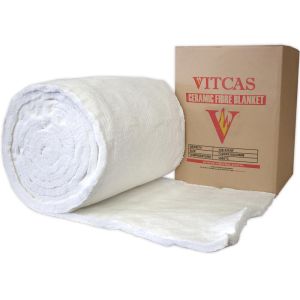 Ceramic Fibre Blanket 1260°C£66.00 £55.00 Regular Price £96.00 £80.00
VITCAS Ceramic Fibre Blanket is resistant to a maximum service temperature of 1260°C (2300°F), with a density of 128kg/m³. Available in thicknesses of 13mm, 25mm, and 50mm, it is widely used in industries like petrochemical, steel, and ceramics. Ideal for insulation and furnace lining applications.
Read more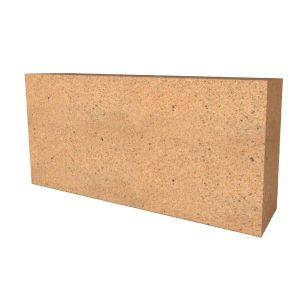 VITCAS Fire bricks 230x114x76mmSpecial Price £3.00 £2.50 Regular Price £4.79 £3.99
VITCAS Fire Bricks, made with 42% Alumina content. Sized at 230 x 114 x 76mm and designed to endure extreme conditions up to 1430°C. Ideal for a range of high-temperature applications including kiln linings, ceramics, metal casting, forges, and brazing hearths, these bricks are the perfect choice for ensuring durability and efficiency in your heat-intensive projects.
Read more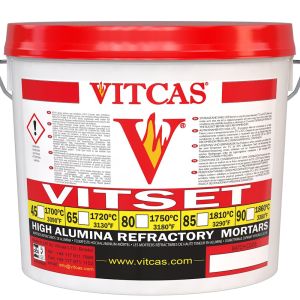 Vitset 45-Refractory Mortar Ready Mixed 1700°CAs low as £17.99 £14.99 Regular Price £35.99 £29.99
Vitset 45 is a versatile, ready-mixed refractory mortar designed to withstand temperatures as high as 1700°C /3100°F. Ideal for trowelling, patching and setting various high-grade refractory and insulation fire bricks rated above 1400°C. Suitable for use with ceramic fibre boards and blankets, making it a practical solution for both repairs and new installations in high-temperature environments.
Read more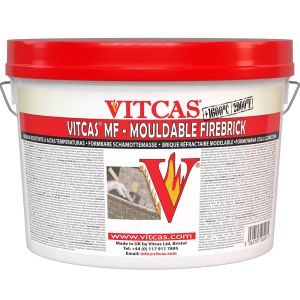 MF - Mouldable FirebrickSpecial Price £23.99 £19.99 Regular Price £35.99 £29.99
Firebrick Replacement Material. Vitcas Mouldable Firebrick is a specially formulated blend of high quality refractory (heat resistant) aggregates and bonding fire clay, resulting in a product which can be moulded into any shape to replace ordinary firebrick.
Read more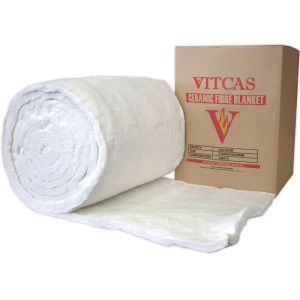 Ceramic Fibre Blanket 1430°C£90.00 £75.00 Regular Price £130.80 £109.00
VITCAS Ceramic Fibre Blanket. Resistant to 1430°C / 2600°F. Density of 128kg/m3. Available in thickness of 13mm, 25mm and 50mm. Can be used in ceramic kilns and in firing stoneware, in making of porcelain or bone china, and in stress relieving insulation, fire protection and power generation.
Read more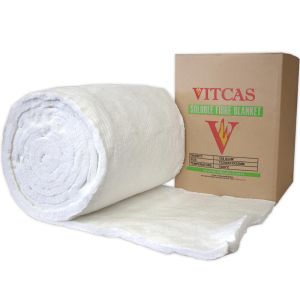 Bio-Soluble Insulation Blanket 1200°C - per Metre£14.39 £11.99 Regular Price £19.19 £15.99
VITCAS Bio soluble fibre insulation blanket is designed to withstand temperatures up to 1200°C (2192°F). This insulation blanket presents a very low health risk due to its low bio-persistence and is safe to handle, making it suitable for both industrial and environmental standards. The blanket is 25 mm thick, 610 mm wide, with a density of 128 kg/m³.
Read more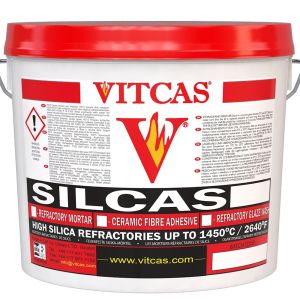 Silcas A-Refractory Mortar 1400°CSpecial Price £35.99 £29.99 Regular Price £47.99 £39.99
VITCAS Silcas A is a ready-mixed, air-setting refractory mortar that offers high-temperature resistance up to 1400°C / 2550°F. It is specifically designed for jointing and setting fire bricks, making it ideal for use in high-heat applications such as kilns, furnaces, and other industrial heating equipment.
Read more Square Glass Fibre Packing RopeAs low as £2.40 £2.00 Regular Price £3.60 £3.00
VITCAS Square Glass Fibre Thermal Rope is designed for high-temperature applications, providing exceptional thermal insulation. It is widely used in boilers, ovens, and furnaces for sealing door seals, gaskets, and other industrial uses. This rope ensures reliable heat resistance, durability, and enhanced sealing in extreme environments.
Read more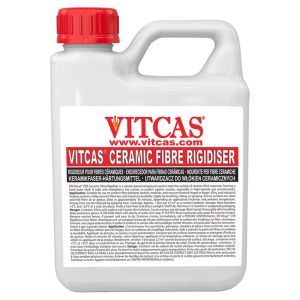 VITCAS Ceramic Fibre RigidiserSpecial Price £15.59 £12.99 Regular Price £47.99 £39.99
Vitcas Ceramic Fibre Rigidiser- a silicate compound. The rigidiser is used for coating the surfaces of ceramic fibre materials. These include the ones used in ceramic kilns, forges and those exposed to high velocity gases. The product acts as a hardener and sealant for these different ceramic fibre surfaces.
Read more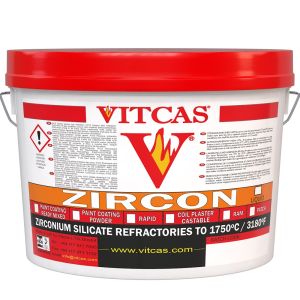 VITCAS Zircon Paint Coating 1750°CSpecial Price £47.99 £39.99 Regular Price £83.99 £69.99
VITCAS Zircon Refractory Paint Coating. It has a creamy consistency and can be applied directly. For spray application, it has to be thinned with water. Its maximum service temperature is of 1750°C / 3180°F. For use on furnaces, ladles, ceramic fibre linings and refractories in contact with molten alloys and glass.
Read more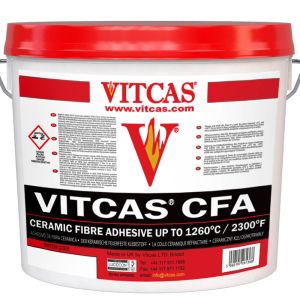 CFA - Ceramic Fibre Adhesive-VitcasAs low as £11.99 £9.99 Regular Price £23.99 £19.99
CFA - Ceramic Fibre Adhesive is a high-temperature, air-setting cement that is specifically designed for use as an adhesive for sticking ceramic fibre materials to brickwork, pizza ovens, or metal. This silica-based adhesive is ideal for use in a wide range of applications where high temperatures are involved, and a strong, durable bond is required.
Read more Refractory Plastic Mouldable 1600°C - VITPLAST 45ABSpecial Price £42.00 £35.00 Regular Price £54.00 £45.00
Vitcas Plastic Mouldable Refractory- Vitplast 45AB. It rates to high temperatures not exceeding 1600°C / 2900°F. The plastic mouldable is exceptionally rapid setting and perfect for applications such as repairing launders and ladles in foundries and repairing boiler doors and boiler linings.
Read more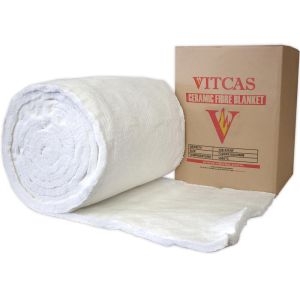 Ceramic Fibre Blanket 1260°C -per Metre£11.99 £9.99 Regular Price £19.19 £15.99
VITCAS Ceramic Fibre Insulation Blanket offers low thermal conductivity and high tensile strength, withstanding temperatures up to 1260ºC (2300ºF). Available by the metre, it comes in 13mm and 25mm thicknesses, 610mm wide, with a density of 128kg/m³, ideal for high-temperature insulation.
Read more
Boiler Refractory Is a Designed Lining System
A boiler lining is rarely a single material. The hot face must withstand flame radiation, combustion gases, ash, deposits and cleaning, while the backup layer controls heat flow to the casing. Mortars, anchors, expansion joints, tube-wall interfaces, burner openings, doors and penetrations must work with both layers. Replacing one component with a higher-temperature product does not correct incompatible chemistry, poor expansion provision, failed anchors or an unsuitable dry-out procedure.
The refractory protects and shapes the combustion enclosure; it is not the boiler's pressure boundary. Tube, drum, shell, header, valve and protective-device integrity must be assessed under the boiler manufacturer's requirements and the applicable pressure-system inspection regime. Do not cover suspected pressure-part corrosion, cracking or leakage with refractory repair material.
Material Functions Within a Boiler Lining
| Material type | Primary function | Critical selection factors |
|---|---|---|
| Dense refractory brick | Forms a robust, dimensionally controlled hot face | Temperature, ash chemistry, abrasion, load, thermal cycling, brick shape and joint design |
| Dense refractory castable | Creates monolithic sections, burner blocks and local repairs | Placement geometry, anchors, water addition, compaction, curing, dry-out and local heat flux |
| Refractory mortar | Sets compatible refractory bricks in controlled joints | Brick chemistry, setting mechanism, joint thickness, service temperature and atmosphere |
| Mouldable refractory | Rebuilds defined areas by hand placement or ramming | Repair depth, substrate condition, compaction, retained anchors and heat-up schedule |
| Fibre blanket | Provides flexible, low-mass thermal insulation and accommodates selected joints | Temperature grade, shrinkage, compression, fixings, gas velocity, abrasion and fibre controls |
| Rope, adhesive, rigidiser or coating | Performs a defined sealing, fixing, surface-hardening or protective function | Substrate, movement, exposure temperature, gas tightness, chemistry and installation method |
Dense Hot-Face, Jointing and Repair Materials
Dense products are appropriate where the lining must retain its shape and resist direct combustion exposure or mechanical wear. They normally store and conduct more heat than fibre insulation, so their high temperature rating must not be interpreted as evidence of low thermal conductivity.
| Product | Temperature | Potential boiler-lining role |
|---|---|---|
| Refractory Castable Grade 1600 | 1600°C | Dense monolithic lining, burner-area shapes and repairs where the grade is compatible with the duty |
| 42% Alumina Fire Bricks | 1430°C | Dense brick hot faces and shaped boiler areas requiring a high-duty refractory unit |
| Vitset 45 Refractory Mortar | 1700°C | Ready-mixed, air-setting mortar for compatible dense or insulating refractory brickwork |
| Silcas A Refractory Mortar | 1400°C | Ready-mixed jointing mortar for compatible fire-brick construction and repairs |
| Mouldable Firebrick | 1600°C | Small, formed repairs or replacement of damaged fire-brick sections in suitable domestic and light-industrial equipment |
| VITPLAST 45AB Plastic Mouldable | 1600°C | Ram-installed local repairs to compatible industrial brick and monolithic linings |
| Zircon Refractory Coating | 1750°C | Thin protective coating on compatible refractory substrates where chemical suitability has been established |
Temperature alone does not determine suitability. Compare bulk density, apparent porosity, strength, permanent linear change, thermal conductivity and resistance to the actual ash or deposit. A zircon coating must not be used to bridge movement joints, restore missing lining thickness or conceal an unsound substrate.
Flexible Insulation, Sealing and Installation Products
| Product | Temperature | Potential boiler-lining role |
|---|---|---|
| Biosoluble Fibre Blanket | 1200°C | Flexible insulation supplied in full rolls, subject to the required thickness, temperature and exposure |
| Biosoluble Insulation Blanket per Metre | 1200°C | Cut-length version for smaller insulation areas and planned maintenance quantities |
| Ceramic Fibre Blanket 1260 | 1260°C | Flexible, low-mass insulation for protected lining layers, joints and suitable boiler zones |
| Ceramic Fibre Blanket 1260 per Metre | 1260°C | Cut-length version for smaller projects, repairs or replacement sections |
| Ceramic Fibre Blanket 1430 | 1430°C | Higher-temperature flexible insulation in a suitably designed and mechanically secured system |
| Square Glass Fibre Packing Rope | 550°C | Compressible sealing or packing at compatible doors, covers and joints away from unsuitable flame exposure |
| CFA Ceramic Fibre Adhesive | 1400°C | Bonding compatible fibre products to prepared refractory or metal substrates as part of the specified fixing method |
| Ceramic Fibre Rigidiser | 1000°C | Surface hardening of compatible ceramic fibre where limited erosion control is required |
The blanket products have a published density of 128kg/m³, but insulation thickness still requires a heat-transfer calculation using thermal-conductivity data at the relevant mean temperatures. Include every lining layer, joints, metal anchors, casing, ambient conditions and the allowable external surface temperature. A blanket's maximum temperature does not predict the casing temperature.
Adhesive and rigidiser are ancillary products, not substitutes for engineered anchors or a durable refractory hot face. Rigidising a fibre surface does not make it suitable for direct flame impingement, severe particulate erosion or structural load. Square glass fibre packing is rated to 550°C and must not be selected for a hotter location merely because other products in the category have higher ratings.
Selecting Materials by Boiler Type
Shell and Fire-Tube Boilers
Refractory may be present at burner throats, furnace fronts, reversal chambers, doors and gas-path transitions. Repairs must preserve access, tube-end clearances, expansion and the original combustion geometry. Inspect adjacent tube plates, stay areas and shell surfaces before closing them behind new refractory. A local lining defect may be the visible result of flame misalignment, gas leakage or movement at a metal-to-refractory interface.
Water-Tube Boilers
Water-tube units can use refractory at burner quarls, furnace corners, headers, floors, inspection openings and areas not fully screened by membrane walls. Tube movement and differential expansion are fundamental. Do not rigidly bridge designed clearances or apply repair material over pressure parts without the boiler designer's detail. High-velocity gas and fly ash may require a more erosion-resistant hot face than protected backup insulation.
Biomass and Waste-Wood Boilers
Fuel moisture, particle size, bark, contamination and combustion control affect furnace temperature and deposit formation. Biomass ash can contain alkalis, chlorides and other constituents that promote slagging, glazing or chemical penetration of refractory. Grates, fuel-entry zones, hearths and ash-discharge areas also experience mechanical wear. Select from fuel and ash analysis, operating history and failed-lining examination rather than temperature rating alone.
Oil- and Gas-Fired Boiler Burner Zones
Burner surrounds experience concentrated radiant heat and high local gas velocity. The castable or shaped refractory must retain the geometry and clearances specified by the burner and boiler manufacturer. An altered throat profile can disturb flame shape, recirculation and heat distribution. Investigate repeated cracking or scorching with burner commissioning data; a hotter refractory grade will not correct an incorrectly set or impinging flame.
Solid-Fuel and Domestic Boiler Repairs
Mouldable firebrick and compatible mortar may support limited repairs where the appliance manufacturer permits them and the retained lining is sound. Do not use generic refractory materials to alter combustion-air passages, firebox dimensions, baffles or clearances. Modern condensing boilers and proprietary combustion systems normally require model-specific components and service procedures rather than site-applied refractory.
Selecting Materials by Boiler Zone
| Boiler zone | Typical exposure | Specification priorities |
|---|---|---|
| Burner throat, quarl and front wall | High heat flux, flame proximity, gas velocity and cycling | Exact geometry, dense refractory capability, anchoring, thermal expansion and controlled dry-out |
| Furnace floor and combustion chamber | Radiant heat, ash, slag, impact and cleaning | Mechanical strength, abrasion, fuel chemistry, joints and replaceability |
| Doors, inspection ports and covers | Frequent cycling, movement, air leakage and compression | Seal profile, temperature, resilience, closure load and gas tightness |
| Tube, header and casing interfaces | Differential expansion, vibration and local heat paths | Movement allowance, compatible fibre or refractory detail, pressure-part access and inspection |
| Ash hopper, grate and discharge | Abrasion, impact, clinker and chemical deposits | Wear resistance, ash analysis, cleaning method, slope and repair accessibility |
| Flue-gas turns and downstream ducts | Particulate erosion, temperature gradients and possible condensation | Gas velocity, dew point, condensate chemistry, erosion protection and drainage |
Temperature, Fuel and Ash Chemistry
Record several temperatures rather than relying on a single boiler set point: combustion-gas temperature, local hot-face temperature, temperature at each lining interface and external casing temperature. The flame-facing surface may experience local peaks that are not represented by a bulk gas sensor. Conversely, a 1600°C or 1700°C refractory rating does not mean that the boiler is designed or permitted to operate at that temperature.
Ash chemistry can be as important as peak temperature. Alkalis, chlorides, sulphur compounds, vanadium-bearing oil ash and low-melting deposits may react with or penetrate a lining. Oxidising and reducing conditions can alternate during start-up, shutdown or poor combustion. Request current technical data for the proposed refractory and, for demanding industrial duties, compare it with laboratory analysis of fuel, ash, deposit or failed material.
Downstream gas paths can be cooler but chemically more severe if the metal or lining falls below the acid or water dew point. A material that performs in a dry furnace chamber is not automatically suitable for wet acidic condensate. Identify the temperature and chemistry at each location rather than extending a single material through the complete gas path.
Anchors, Expansion and Lining Thickness
Anchors must be designed for the lining thickness, material density, temperature gradient, alloy temperature, spacing, orientation and expected movement. Inspect retained anchors after demolition; concealed oxidation, distortion or weld failure can make an otherwise sound patch unsafe. Fibre adhesive does not replace mechanical fixing where anchors are required.
Provide expansion joints and compressible interfaces according to the original design or an engineered repair detail. Mortar-filled expansion gaps, over-compressed rope and rigid patches across moving tube or casing interfaces can transfer stress and cause cracking or displacement. Preserve burner, sensor, inspection and tube-expansion clearances.
Installation, Curing and Controlled Dry-Out
Remove loose material back to sound refractory and establish whether the damage is local or part of a wider failure. Record lining layers, dimensions, anchors, joints and openings before demolition. Prepare substrates, install formwork and protect pressure parts in accordance with the approved method statement.
For castable, measure clean water accurately, mix with clean equipment, place within the working time and compact without segregation. Excess water can increase porosity, shrinkage and the quantity of moisture that must be removed. Brick mortars should be used at the specified joint thickness; they are not bulk gap fillers. Mouldable refractory requires systematic placement or ramming against a sound, correctly prepared substrate.
Curing and dry-out are separate stages. Chemically bonded material must first develop its intended bond, after which free and combined moisture must be removed progressively. Rapid firing can generate internal steam pressure, cracking or disruptive spalling. Establish the schedule from the product instructions, repair thickness, total water-bearing volume, lining configuration, ventilation and boiler manufacturer's start-up limits. A room-temperature drying time does not authorise immediate full-load firing.
Inspection and Maintenance
- Trend casing temperature: compare readings under equivalent load and ambient conditions; investigate new or expanding hot spots.
- Inspect the hot face: map open joints, displaced bricks, cracking, spalling, glazing, chemical penetration and loss of section.
- Check burner areas: look for flame impingement, eroded throats, changed geometry and heat damage around openings.
- Assess anchors and interfaces: exposed, distorted or corroded anchors and recurring cracks at metal interfaces can indicate deeper failure.
- Examine seals: replace rope or packing that is hardened, frayed, compressed beyond recovery or no longer maintains the specified closure.
- Inspect pressure parts separately: refractory condition does not establish the integrity of tubes, drums, shell, headers or protective devices.
- Record the work: retain product batch, location, thickness, water addition, installation, curing, dry-out and post-start-up inspection data.
Minor stable cracking does not always require immediate replacement, while a narrow crack associated with movement, hot gas tracking or anchor failure may be significant. Assess location, depth, width, change over time and the condition behind the hot face. Repeated failure warrants root-cause analysis rather than successive surface patching.
Pressure-System and Maintenance Safety
For boilers used at work in Great Britain, qualifying pressure systems require safe operating limits and a suitable written scheme of examination under the Pressure Systems Safety Regulations 2000. Statutory examination does not replace routine maintenance, and refractory maintenance does not replace examination of the pressure system. Work must be coordinated with the boiler owner or user, competent person and equipment manufacturer as applicable.
Before entry or demolition, isolate and secure fuel, electrical, mechanical, steam, hot-water and pressure energy sources. Cool, drain and vent the equipment using an approved safe system of work, and determine whether confined-space controls and atmospheric testing are required. Biomass fuel stores can present separate carbon-monoxide and oxygen-depletion hazards.
Review current safety data sheets and complete a task-specific COSHH assessment before cutting, mixing, spraying, sweeping or removing refractory and fibre products. Use suitable dust suppression or extraction and the specified respiratory, eye and skin protection. Older boilers and plant rooms may contain asbestos insulation, rope, gaskets, lagging or board; establish the asbestos status before disturbing existing materials.
Frequently Asked Questions
What refractory material is used in boilers?
Boilers may use dense fire bricks or castable at the hot face, compatible mortar in brick joints, mouldable refractory for defined repairs and fibre behind the hot face for insulation or movement accommodation. The correct combination depends on the boiler design and zone.
Should I use fire brick or refractory castable in a boiler?
Brickwork provides controlled units, joints and local replaceability. Castable forms monolithic shapes around burners, doors and complex interfaces, but requires suitable anchoring, accurate mixing, curing and dry-out. Many boiler linings use both.
Is Refractory Castable Grade 1600 an insulation material?
It is a dense refractory concrete intended for heat-facing and structural lining duties. Its 1600°C rating does not make it equivalent to a low-density fibre insulation. Use measured or published thermal-conductivity data to design the insulation layer.
Can I use the highest-temperature product throughout the boiler?
No. A higher temperature rating does not guarantee the required thermal conductivity, thermal-shock behaviour, abrasion resistance, ash compatibility or movement capability. Specify every zone from its actual exposure and mechanical function.
What is the difference between 1200°C, 1260°C and 1430°C fibre blanket?
They are different fibre grades with different published maximum temperatures. Selection also requires shrinkage, thermal-conductivity, density, classification and handling data at the intended continuous duty. Do not select by the headline temperature alone.
Can ceramic fibre blanket be exposed directly to a boiler flame?
Only if the complete design is verified for the local temperature, flame pattern, gas velocity, chemistry and fixing system. Flexible blanket used successfully as protected backup insulation may erode or shrink when exposed as an unsupported hot face.
What is ceramic fibre rigidiser used for?
It hardens the outer surface of compatible ceramic fibre and can reduce limited surface erosion. It does not convert blanket into a structural refractory or make it suitable for severe burner impingement. Its published temperature is 1000°C.
Can ceramic fibre adhesive replace boiler-lining anchors?
Not where the design requires mechanical retention. Adhesive can support a specified bonding detail, but anchor type, alloy, spacing and installation must carry the lining loads and accommodate temperature and movement.
Can square glass fibre packing seal a boiler door?
It may be suitable where the required section, compression, closure arrangement and exposure remain within its 550°C rating. Confirm the boiler manufacturer's seal profile and do not use it in a hotter or direct-flame location without evidence.
Which refractory mortar should be used with fire bricks?
Match the mortar to the brick chemistry, temperature, setting method and specified joint thickness. Silcas A and Vitset 45 have different published ratings and may serve different duties. The mortar is a jointing product, not a substitute for missing brick thickness.
Can mouldable refractory repair a cracked boiler lining?
It can repair a defined area when the retained refractory, anchors and substrate are sound. Remove loose material, establish the cause and follow the specified preparation, compaction and heat-up method. Do not patch over damaged pressure parts.
Why does boiler refractory crack?
Causes include thermal cycling, restrained expansion, excessive installation water, rapid dry-out, failed anchors, flame impingement, chemical attack, vibration and movement at metal interfaces. Crack width alone does not identify the cause or required repair.
Why is a refractory dry-out schedule necessary?
Castables and mortars retain installation moisture. If heated too rapidly, steam pressure can crack or explosively spall the lining. Dry-out must reflect the product, thickness, total repair volume, ventilation and boiler start-up restrictions.
What causes a hot spot on the boiler casing?
Possible causes include missing or compressed insulation, open joints, cracked refractory, failed anchors, hot-gas tracking and burner impingement. Compare temperatures at similar load, inspect the lining and check the combustion system before choosing a repair.
Do biomass boilers need a different refractory?
They may. Biomass ash can contain alkalis and chlorides, while fuel variability affects temperature, slagging and deposits. Grates and ash handling add mechanical wear. Use fuel and ash analysis and operating history to establish the actual duty.
Can a refractory coating prevent every form of boiler corrosion?
No. Coating performance depends on the substrate, application, temperature and specific chemistry. Zircon coating cannot protect unseen pressure parts, compensate for acidic condensation or restore a structurally unsound lining without supporting evidence.
Does refractory repair make a boiler compliant with pressure-system law?
No. Refractory maintenance and pressure-system compliance are separate. A qualifying boiler used at work requires defined safe operating limits and examination under a suitable written scheme, together with routine maintenance and safe operation.
What information is needed to specify a boiler lining?
Provide the boiler manufacturer and model, boiler type, fuel and ash analysis, drawings, operating and upset temperatures, burner data, gas velocity, existing lining build-up, damage map, anchor condition, casing-temperature target, available shutdown and required curing and dry-out arrangements.