Special Price£15.59£12.99Regular Price£47.99£39.99
Fast Shipping
Trusted Quality
-68%
5060197262242
RCF-RIGIDISER
Benefits of Shopping with VITCAS
Direct from Manufacturer
Tooltip
We offer a wide range of high-quality products supplied directly by the manufacturer.
Fast shipping – dispatch even within 24 hours
Tooltip
Orders placed by 12:00 (with correct details and product availability) are usually dispatched on the same business day. Deliveries are carried out in cooperation with reputable external courier companies. The delivery time depends on the selected carrier as well as the size and weight of the shipment — whether courier or pallet freight.
UK warehouse dispatch – Worldwide shipping
Tooltip
Quick dispatch from our UK warehouse with international shipping available.
Secure payments – Visa, Mastercard, AmEx, PayPal, Apple Pay & Google Pay
Tooltip
All transactions are encrypted and secure. We accept payments via Visa, Mastercard, American Express, PayPal, Apple Pay and Google Pay.
14-day returns guarantee
Tooltip
If you change your mind after receiving your order, you have 14 days to return the goods. Please contact us to request a returns form.
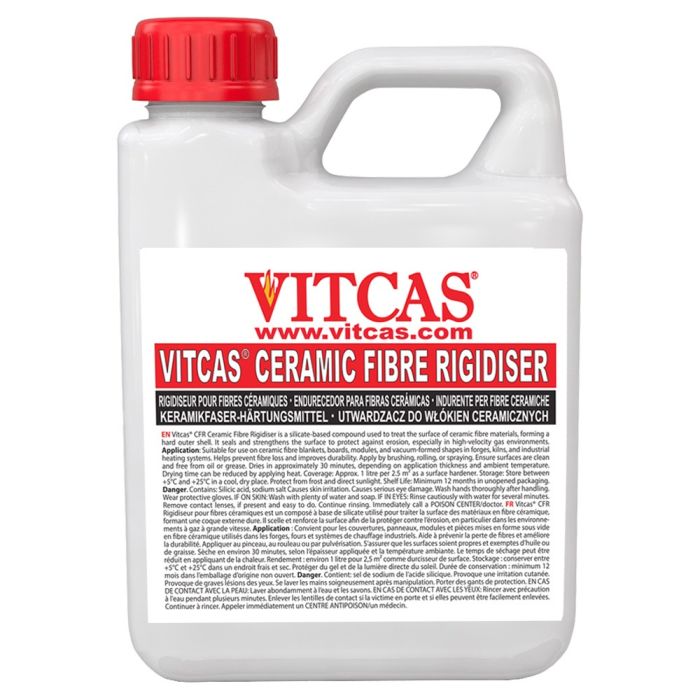
Vitcas® Ceramic Fibre Rigidiser is a silicate-based compound designed to treat ceramic fibre products such as blankets, modules, boards, and vacuum-formed components. It forms a hard outer shell, offering surface protection and sealing against erosion, especially in high-velocity environments. Ceramic Fibre Rigidizer is temperature resistant up to 1000°C (1832°F)
Applications:
Surface Coating: Protects ceramic fibre materials exposed to high-velocity gases.
Hardening Coat: Reinforces ceramic fibres used in forges.
Sealing Coat: Prevents fibre shedding in ceramic kilns, ensuring cleaner work environments.
Surface Hardener: Enhances durability of vacuum-formed ceramic fibre shapes.
Installation:
Ensure the heating equipment is switched off and completely cool. The ceramic fibre must be securely installed before treatment.
Ensure the surface is dry, clean and free from grease, oil, dust and loose contamination.
Use the Ceramic Fibre Rigidiser as supplied. It can be applied by brushing, dipping, rolling or spraying.
Apply an even coat, allowing the rigidiser to penetrate the outer fibres to an approximate depth of 3 mm, without forming runs, puddles or heavily saturated areas.
Pay particular attention to cut edges, joints and surfaces exposed to high-velocity gases or mechanical abrasion.
Avoid excessive application, as over-saturation may reduce the flexibility of ceramic fibre blanket and produce a brittle surface.
Allow approximately 1 litre per 2.5 m². Actual coverage may vary depending on the porosity of the ceramic fibre and the application method.
Allow approximately 30 minutes for drying. Ensure the surface is completely dry before returning the equipment to service.
Provide adequate ventilation and wear suitable personal protective equipment, particularly when spraying. Do not exceed the maximum service temperature of 1000°C (1832°F).
Alternative Product Recommendation:
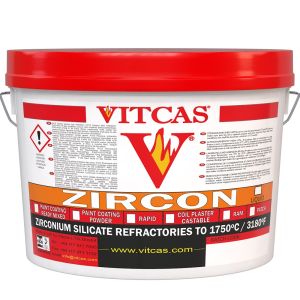
For high-performance applications requiring extreme heat resistance, VITCAS Zircon Paint Refractory Coating is highly recommended. Withstanding temperatures up to 1750°C (3182°F), it is ideal for kilns, furnaces, and industrial heat processing. This coating offers superior protection against thermal shock, abrasion, and chemical attack, ensuring long-lasting durability in the most demanding conditions.
Please, mind that only logged in users can submit questions
Product FAQs
Question
Which ceramic fibre products can this rigidiser treat?
Answer
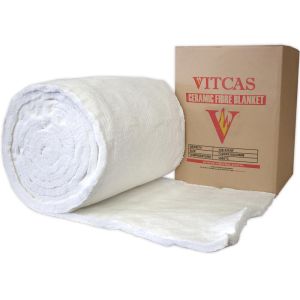
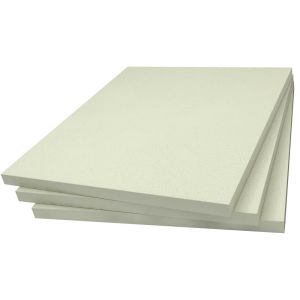
Vitcas® Ceramic Fibre Rigidiser is designed for ceramic fibre blankets, modules, boards and vacuum-formed components. It penetrates the outer fibres and forms a hard surface layer, helping to seal and protect materials against erosion, fibre shedding and mechanical abrasion.
Question
How does rigidiser reduce ceramic fibre shedding and erosion?
Answer
VITCAS Ceramic Fibre Rigidiser penetrates the exposed outer fibres and creates a firmer, more erosion-resistant surface. This helps reduce fibre shedding from ceramic fibre blankets, boards, modules and vacuum-formed components, particularly around cut edges, joints and areas exposed to high-velocity gases or mechanical abrasion.
Question
Can ceramic fibre rigidiser replace anchors or mechanical fixings?
Answer
No. The rigidiser is a surface-hardening and sealing treatment, not a fixing product. Ceramic fibre insulation must be mechanically secured in accordance with the equipment design before treatment. Suitable anchors or fixings are still required to hold the insulation safely in position.
Question
How should ceramic fibre be prepared before applying rigidiser?
Answer
Switch off and isolate the kiln, forge, furnace or other heating equipment, then allow the lining to cool completely. The ceramic fibre must be securely installed, dry, sound and free from oil, grease, dirt and loose contamination. Protect burners, heating elements, thermocouples, door seals and nearby surfaces from accidental coating.
Question
Which application method should I use for ceramic fibre rigidiser?
Answer
The ready-to-use liquid can be brushed, rolled, sprayed or used as a dip treatment. Brush gently to avoid compressing soft fibre, and use a lightly loaded roller only on firm, flat surfaces. Spraying requires controlled equipment, adequate ventilation and suitable respiratory protection. Dipping is useful for small removable parts and vacuum-formed components.
Question
How can I avoid over-saturating ceramic fibre blanket?
Answer
Apply an even coat that wets and penetrates the outer fibres without creating runs, puddles or heavily saturated areas. Excessive application may reduce the flexibility of ceramic fibre blanket and produce a brittle surface. Use light, controlled application and give additional attention only to cut edges, joints and areas exposed to abrasion or fast-moving gases.
Question
How long should rigidiser dry before heating the equipment?
Answer
Under suitable conditions, the treated surface dries in approximately 30 minutes. Lower temperatures, high humidity, restricted ventilation or heavier application may extend this period. Do not operate the equipment until the coating is completely dry. When commissioning, increase the temperature gradually and follow the normal procedure for the ceramic fibre lining and heating appliance.
Question
Is ceramic fibre rigidiser suitable for kilns and forges?
Answer
It can be used as a hardening coat for ceramic fibres in forges and as a sealing coat in ceramic kilns. In kiln applications, the hardened surface helps reduce fibre shedding and prevents loose fibres from falling onto the work, provided the operating temperature does not exceed 1000°C.