
Fire Pit Construction
Precast Fire Pits and Refractory Materials for Fire Pit Construction
Create a permanent outdoor fire feature using either a sectional precast refractory-concrete fire pit or a purpose-designed masonry structure. The VITCAS precast fire pit is supplied in manageable sections for above-ground or in-ground installation and is available in three assembled heights. For bespoke construction, dense 230 × 114 × 64 mm fire bricks form a durable combustion-zone lining with useful thermal mass.
The four-product range also includes VITCAS-OC Outdoor Oven Cement for weather-exposed firebrick joints and VITCAS-HPS Heatproof Screed for protective screeding, forming refractory sections and filling larger high-temperature voids. HPS is a dense cementitious refractory, not a substitute for low-conductivity insulation. Match each material to the design temperature, joint size, fuel type and exposure conditions. Provide a level non-combustible base, drainage, safe separation from buildings and combustible landscaping, and sufficient open-air ventilation. Cure all wet-applied materials and commission the fire pit gradually. Wood- and charcoal-fired installations must remain outdoors; any natural-gas or LPG version requires a purpose-designed burner system and competent installation.
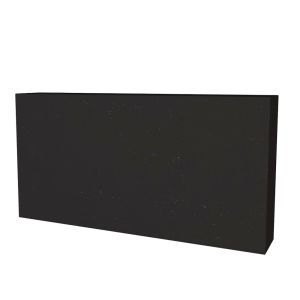 VITCAS Fire Bricks-BlackSpecial Price £3.00 £2.50 Regular Price £4.80 £4.00 As low as £1.92 £1.60
Charcoal Black Fire Bricks provide a unique fusion of style and functionality. These firebricks boast a deep, charcoal black hue, exuding a contemporary, chic appeal. Perfectly suited for high-temperature environments like fireplaces, wood-fired pizza ovens and barbeques, they offer not just a striking visual impact but also unparalleled durability and efficient heat management.
Read more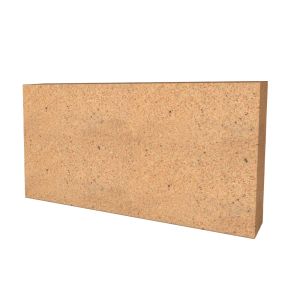 Fire bricks 230x114x32mmSpecial Price £2.40 £2.00 Regular Price £4.79 £3.99 As low as £1.56 £1.30
VITCAS Refractory Fire Bricks are expertly crafted for use in a variety of high-temperature domestic applications. Ideal for wood burning stoves, solid fuel cookers, ranges, fireplaces, barbecues and wood-fired pizza ovens, they are designed to efficiently manage intense heat. Whether you're baking a pizza or cosying up by the fireplace, these bricks ensure durability and optimal heat distribution.
Read more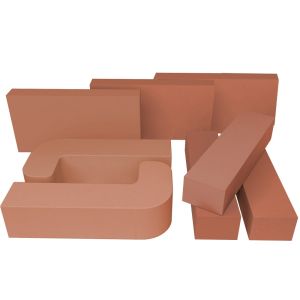 VITCAS Fire Bricks-Red£3.00 £2.50 Regular Price £4.80 £4.00
Red Fire Bricks, expertly manufactured for both function and beauty. These red-hued bricks are perfect for adding a touch of colour and elegance to any setting. Ideal for use in fireplaces, wood-fired ovens, barbeques, and other heating applications, they not only enhance the aesthetic appeal of your space but also provide durable and efficient heat resistance.
Read more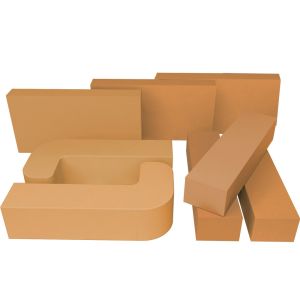 Vitcas-Fire Bricks-Yellow£3.00 £2.50 Regular Price £4.80 £4.00
Sand Yellow Fire Bricks - where functionality meets a warm aesthetic. Their soft, sand-yellow hue evokes the tranquillity of sunlit beaches, adding a light, airy touch to any setting. Ideal for fireplaces, garden wood-fired pizza ovens and barbeques, due to their exceptional heat resistance and enduring quality.
Read more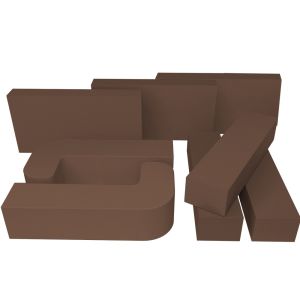 VITCAS Fire Bricks-Brown£3.00 £2.50 Regular Price £4.80 £4.00
Earthy Brown Fire Bricks, exuding a natural, earth-toned radiance. Made to complement any setting, these bricks emanate rustic elegance and organic beauty. Perfectly suited for fireplaces, outdoor pizza ovens and barbeques, they not only enhance your space with their warm, earthy hues but also offer outstanding durability and superior heat resistance.
Read more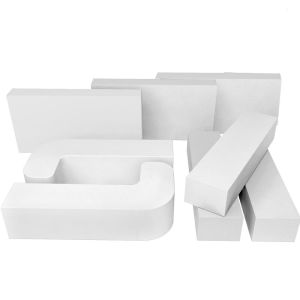 Vitcas-Fire Bricks-White£3.00 £2.50 Regular Price £4.80 £4.00
Coloured Fire Bricks in an antique Off White shade. These firebricks are perfect for decorative purposes in both interior and exterior settings. Ideal for use in wood-fired bread and pizza ovens, barbeques and fireplaces, they add a sophisticated touch to any space while offering functional versatility.
Read more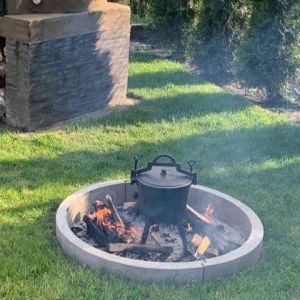 Precast Concrete Fire PitAs low as £310.80 £259.00 Regular Price £418.80 £349.00
Ready made, high temperature concrete fire pit which will definitely be the focal point of your outdoor patio or garden. It doubles as a cosy heat source and a cooking appliance for yummy foods over the open fire. Vitcas precast concrete fire pit is the perfect choice for anyone looking to add both beauty and functionality to their outdoor living space.
Read more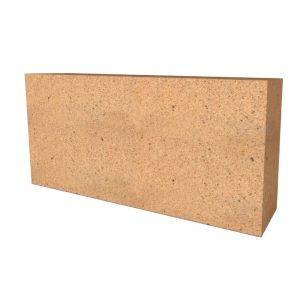 Fire Bricks 230x114x64mmSpecial Price £2.40 £2.00 Regular Price £4.79 £3.99 As low as £2.04 £1.70
Fire Bricks – VITCAS Refractory Fire Clay Bricks 230x114x64mm. High-temperature fire bricks engineered for domestic and outdoor use, including fireplaces, stoves, pizza ovens, barbecue grills, heating appliances and furnaces. Suitable for both indoor and outdoor pizza ovens, these durable refractory fire bricks deliver excellent heat resistance and long-lasting thermal performance.
Read more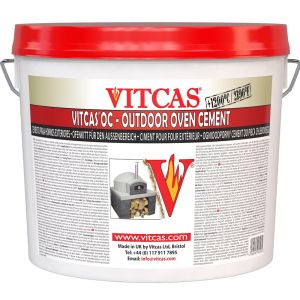 OC - Outdoor Oven CementAs low as £17.99 £14.99 Regular Price £23.99 £19.99
Vitcas Outdoor Pizza Oven Cement is an hydraulic-set mortar designed for exterior jointing with fire bricks in applications such as pizza ovens, barbecues, smokehouses, bread ovens, fire pits and other high-temperature applications. This kind of outdoor fire cement is water-insoluble, resistant to rain and frost and cures without the need for heat.
Read more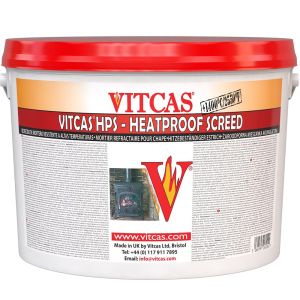 HPS - Heatproof ScreedAs low as £23.99 £19.99 Regular Price £35.99 £29.99
Fireproof Screed, a cement-like product, is resistant to 1400°C / 2550°F. For interior and exterior use. Its function is for Screeding Masonry and making replacement fire bricks for Kilns, Fireplaces, Barbeques and Pizza Ovens. Protects vulnerable materials, which are in danger of being damaged by high heat exposure.
Read more
Designing a Safe and Durable Outdoor Fire Pit
A fire pit concentrates flame, glowing fuel and radiant heat within a garden feature that is exposed continuously to rain, frost and ground moisture. Successful construction therefore depends on more than the temperature rating of the inner lining. The base must remain stable, the combustion chamber must tolerate repeated thermal cycling, water must be able to drain, and the surrounding space must protect people, buildings and landscaping from flame, sparks and stored heat.
This application category contains four VITCAS products. One is a complete sectional refractory-concrete fire-pit body; the other three support custom masonry construction and repair. They can be used for different project routes and should not all be assumed necessary for the same installation. Ancillary items such as the foundation, drainage layer, approved burner or solid-fuel support, spark control, cooking grid and external finish must be selected separately where required.
Choose Between a Precast and Masonry Fire Pit
| Construction Route | Main Advantages | Design Checks |
|---|---|---|
| Sectional precast refractory-concrete fire pit | Defined circular geometry, three available heights and fewer site-formed refractory joints | Access, component weights, base capacity, drainage, final height, clearances and gradual first firing |
| Custom firebrick fire pit | Flexible diameter, shape, wall arrangement and integration with a wider landscaping scheme | Brick bond, wall stability, compatible mortar, thermal expansion, drainage and separation from combustible materials |
| In-ground installation | Low visual profile and close integration with patios or garden levels | Surface-water entry, subsoil drainage, safe edge detailing, airflow and protection from combustible roots or buried services |
| Raised installation | More visible flame enclosure and easier integration with surrounding seating | Stable non-combustible plinth, radiant heat at seating height and secure support for every component |
VITCAS Products for Fire Pit Construction
| Product | Published Performance | Fire Pit Function | Critical Selection Point |
|---|---|---|---|
| FIREPIT Precast Concrete Fire Pit | Manufactured from high-temperature refractory concrete Up to 1400°C | Sectional circular fire-pit body for above-ground or in-ground outdoor heating and suitable open-fire cooking arrangements | Install level on a base designed for the component weights, observe clearances and begin with a small, gradual first fire |
| VITCAS-OC Outdoor Oven Cement | Up to 1200°C | Hydraulically setting exterior mortar for jointing compatible fire bricks in weather-exposed fire-pit masonry | Use at the specified consistency and joint dimensions; direct gaps above 15 mm to a suitable screed rather than overfilling the mortar |
| FB40/64MM Fire Bricks, 230 × 114 × 64 mm | Up to 1300°C | Dense refractory lining around the fuel bed and flame zone, providing strength and thermal mass | Dense fire brick is not low-conductivity insulation; account for heat transfer through the wall and natural dimensional tolerances |
| VITCAS-HPS Heatproof Screed | Up to 1400°C | Protective refractory screeding, local forming work, casting compatible sections and filling larger high-temperature voids | It is a coarse cementitious refractory rather than a normal brick mortar or insulating blanket; complete its damp cure, drying and preheating stages |
The highest temperature in this table must not be applied to the complete installation. A fire pit also contains foundation materials, external finishes, surrounding paving and possibly metal or gas components with different limits. Evaluate each part at its own position, including direct flame, radiant heat, retained heat after shutdown, moisture and freeze-thaw exposure.
Precast Fire Pit Dimensions and Configurations
The VITCAS FIREPIT is supplied as separate refractory-concrete components to simplify transport and site assembly. The circular base has a diameter of 1000 mm and a thickness of 50 mm, with each base part weighing approximately 45 kg. Each ring section forms part of a ring with a 1000 mm external diameter, a 900 mm internal diameter and a height of 130 mm; the published weight is approximately 23 kg per ring part. Plan safe handling, access and base capacity before delivery.
| Set | Assembled Height | External Diameter | Internal Diameter |
|---|---|---|---|
| 4-part set | 180 mm | 1000 mm | 900 mm |
| 6-part set | 310 mm | 1000 mm | 900 mm |
| 8-part set | 460 mm | 1000 mm | 900 mm |
Select the height for the intended position, visibility of the flame and method of use. A low installation still requires a clearly defined exclusion zone, while a taller wall can radiate heat towards people and nearby finishes at a different level. The stated dimensions describe the refractory body only; allow additional space for access, seating, paving, optional cladding and safe separation.
Building a Custom Firebrick Fire Pit
FB40/64MM fire bricks are rated to 1300°C and have a published density of 2200 kg/m³, minimum alumina content of 40% and approximate unit weight of 3.5 kg. Their dense construction provides a robust hot face and heat storage around a solid-fuel chamber. It does not stop heat from travelling into adjoining construction, so the wall build-up and distance to temperature-sensitive materials must be designed accordingly.
Set out the complete ring or wall before mixing mortar. Circular work may require tapered joints, accurately cut bricks or a segmented geometry; excessive mortar should not be used to compensate for an unsuitable layout. The brick product allows a manufacturing tolerance of approximately ±3 mm, so dry-laying helps distribute dimensional variation and identify cuts before permanent installation.
VITCAS-OC is mixed with approximately 200 ml of clean water per kilogram. Dampen the fire bricks, apply the mortar from a published minimum joint thickness of 3 mm and keep the mix at a workable trowelling consistency. The indicative coverage for a 10 kg tub is around 15 standard 230 × 114 × 64 mm bricks or 0.44 m² at a 10 mm joint, although a circular fire pit, variable joints and site waste can change consumption. Allow the material to set and dry in accordance with the current instructions.
Where Heatproof Screed Fits into the Design
HPS is a water-mixed refractory screed with a maximum aggregate size of 5 mm. It can protect compatible masonry surfaces, form replacement refractory sections and fill substantial local voids where OC is not appropriate. The product page directs gaps over 15 mm away from OC and towards HPS, but this does not make the screed a universal structural infill for an inadequately supported wall.
Prepare the substrate mechanically and remove loose material before application. HPS must initially cure for 24 hours while kept cool and damp, followed by another 48 hours of natural drying. Gentle preheating is then required to remove residual moisture before full fire exposure. Calling this material insulation would be misleading: it is a dense protective refractory and thermal-accumulation material rather than a lightweight insulating layer.
Foundation, Drainage and Weather Exposure
- Foundation: provide a level, stable, non-combustible base capable of carrying the fire pit, optional cladding, fuel and any imposed cooking loads without settlement.
- Surface water: prevent surrounding paving from directing rain into the chamber. Standing water can soak refractory components and create severe thermal stress at the next firing.
- Subsoil drainage: an in-ground pit needs a drainage strategy suited to the soil and local water table. Do not create a sealed depression that remains flooded after rain.
- Freeze-thaw exposure: keep joints sound and minimise saturation before freezing conditions. Water-resistant mortar does not remove the need for weather-conscious detailing.
- Covering: a suitable cover can reduce water and debris entry after the fire pit is completely cold, but it should not trap moisture in newly installed or damp materials.
Solid Fuel, Gas and LPG Designs
A wood- or charcoal-fired fire pit needs an open outdoor location, controlled fuel loading and space for ash removal. Burn only clean, suitable fuel; do not use the appliance to dispose of household or garden waste. Smoke and fumes must not create a nuisance or endanger road traffic, and temporary restrictions may apply during dry weather.
Refractory bricks and cement can tolerate high temperatures, but they do not constitute a gas appliance. A natural-gas or LPG fire pit requires a purpose-designed burner, controls, ventilation, pipework, clearances and combustion arrangement compatible with the fuel and enclosure. Do not place a loose burner or homemade gas conversion inside a masonry bowl. Obtain competent design and installation and follow the burner manufacturer's instructions and applicable gas-safety requirements.
Recommended Installation Sequence
- Confirm the location. Check property boundaries, overhead obstructions, buried services, local restrictions, prevailing wind and distances from buildings, fences, sheds, trees, decking and dry vegetation.
- Select the construction route. Choose the precast configuration or develop a stable firebrick design with defined internal diameter, height, wall thickness and access.
- Design the groundworks. Provide a load-bearing non-combustible base and a route for rainwater to escape without undermining the foundation.
- Plan handling and access. Account for the published weights of the precast components or the total quantity and mass of dense fire bricks.
- Dry-assemble or dry-lay. Verify levels, joints, component interfaces and final dimensions before applying mortar or screed.
- Install the refractory materials. Mix and apply OC or HPS only as directed, using the correct substrate preparation, water addition and application thickness.
- Complete ancillary work. Fit approved fuel, burner, spark-control or cooking components without drilling or modifying the refractory body contrary to its instructions.
- Allow full curing and drying. Protect fresh work from rain, frost and premature heat while maintaining any product-specific damp-curing requirement.
- Commission gradually. Start the first firing with a modest flame for a short period. Raise the temperature in controlled stages and inspect the assembly as it cools.
- Establish a maintenance routine. Remove cold ash, keep drainage open and inspect for loose components, open joints, impact damage and water retention before reuse.
Fire Pit Safety
- Operate the fire pit outdoors in an open, well-ventilated area and never inside a house, garage, tent, shed, conservatory or other enclosed space.
- Keep it well away from buildings, fences, trees, stored fuel, furniture and anything else that can ignite. Do not install it on combustible decking or a balcony.
- Check wind and dry-ground conditions before lighting. Do not use the fire pit when sparks or smoke could create an unacceptable risk.
- Never use petrol, paraffin or other flammable liquids to start or revive the fire.
- Supervise the fire continuously and keep children and pets outside a clearly defined safety zone.
- Keep an appropriate extinguishing method nearby and make sure the fire and embers are fully out after use.
- Do not touch, cover, clean or dismantle refractory or metal components until they are completely cold.
Frequently Asked Questions
What products are included in the Fire Pit Construction category?
The category contains the VITCAS FIREPIT sectional precast concrete fire pit, VITCAS-OC Outdoor Oven Cement, FB40/64MM dense fire bricks and VITCAS-HPS Heatproof Screed. The precast product is one construction route, while OC, fire bricks and HPS support bespoke masonry work and selected repairs.
Is it easier to install a precast or brick-built fire pit?
The precast system provides fixed circular dimensions and reduces site-formed refractory masonry, but its heavy sections still require safe handling, a suitable base and accurate levelling. A brick-built pit allows more control over shape and size but requires competent setting-out, cutting, jointing and stability design.
Can the VITCAS precast fire pit be installed in the ground?
Yes. The current product information allows above-ground or in-ground installation. An in-ground project must still provide a load-bearing base, drainage, ventilation and safe edge detailing, while remaining clear of combustible roots, buried services and vulnerable landscaping.
What sizes are available for the precast fire pit?
All three configurations have a 1000 mm external diameter and a 900 mm internal diameter. The 4-part set is 180 mm high, the 6-part set is 310 mm high and the 8-part set is 460 mm high.
Which mortar should be used for an outdoor firebrick fire pit?
VITCAS-OC Outdoor Oven Cement is the listed hydraulically setting mortar for exterior firebrick joints and is rated to 1200°C. Prepare and dampen the bricks, use the specified water ratio and keep joints within the product instructions. For gaps exceeding 15 mm, the manufacturer directs the project to HPS rather than an oversized OC joint.
Does a firebrick fire pit need insulation?
Dense fire bricks provide a durable hot face and thermal mass, but they are not low-conductivity insulation. Whether an additional thermal barrier is required depends on the wall arrangement, adjacent materials and required surface temperatures. HPS should not be presented as lightweight insulation; it is a dense refractory screed and forming material.
How should a new fire pit be fired for the first time?
Ensure the components are secure, level, cured and dry. Begin with a small fire and let the temperature rise slowly before progressing to normal fuel loads. HPS has separate curing, drying and preheating requirements that must be completed before severe exposure. Gradual commissioning reduces, but cannot eliminate, cracking caused by moisture or thermal stress.
Can a fire pit be used for cooking?
The VITCAS precast fire pit is promoted for outdoor heating and open-fire cooking. Use a stable, heat-resistant cooking support and utensils intended for the purpose, keep food away from unsuitable construction surfaces and burn only appropriate cooking fuel. The masonry products alone do not supply a cooking grate or establish a complete food-contact system.
Can I install a gas burner in a brick fire pit?
Only as part of a properly designed gas or LPG appliance system. High-temperature masonry does not validate burner sizing, aeration, controls, drainage or gas pipework. Use a compatible purpose-made burner and obtain competent installation; do not improvise a conversion from a solid-fuel bowl.
Can a fire pit be placed on a patio or wooden deck?
A suitable non-combustible patio may support a fire pit only if it is level, structurally adequate and detailed for heat and drainage. Do not place or build a permanent fire pit directly on wooden or composite decking. Radiant and conducted heat, sparks and embers can ignite combustible construction.
How should a fire pit be protected from rain?
Use drainage-aware construction and prevent surface water from collecting in the chamber. Once the fire pit is completely cold, a suitable ventilated cover can limit water and debris entry. Do not cover hot embers or seal residual moisture into newly cured refractory work.
What can be burned in a garden fire pit?
Use clean, dry fuel appropriate for the fire-pit design. Do not burn household waste, treated or painted timber, plastics, aerosols or other hazardous material. Control smoke so it does not cause a statutory nuisance or create danger for nearby roads and properties.