
High-Temperature Sewing Threads
High-Temperature Sewing Threads for Heat-Resistant Stitching
VITCAS supplies high-temperature sewing threads for assembling and repairing thermal insulation covers, technical textile components, heat-resistant barriers and other fabricated products exposed to elevated temperatures. Different fibre constructions provide different combinations of thermal capability, tensile strength, flexibility and resistance to mechanical wear.
VITCAS sewing-thread options include para-aramid thread rated to 400°C, PTFE-coated and wire-reinforced glass fibre threads rated to 600°C, and silica fibre sewing thread rated to 1000°C continuous service with short-term resistance up to 1400°C. Selected glass fibre threads incorporate wire reinforcement to increase tensile strength and seam stability in mechanically demanding assemblies.
Select the thread according to the continuous and peak temperature, fabric or insulation being joined, required seam strength, flexibility, abrasion or chemical exposure and the intended stitching method. Depending on the product and fabrication process, these threads can be used for hand or machine stitching, but the temperature capability of the thread alone does not determine the performance or certification of the completed textile assembly.
 Kevlar Sewing ThreadSpecial Price £35.99 £29.99 Regular Price £96.00 £80.00
Kevlar / Para-Aramid Sewing Thread provides exceptional high-temperature resistance and strength. Its high durability and resistance to corrosive chemicals and abrasion make it ideal for tough, high-temperature applications.
Read more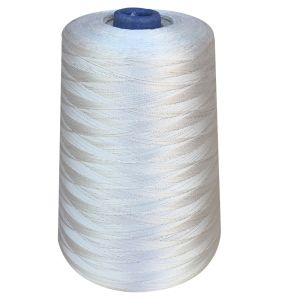 Fiberglass Sewing Thread With WireSpecial Price £96.00 £80.00 Regular Price £144.00 £120.00
Vitcas Fibreglass Sewing Thread Reinforced with Wire is high strength and resistant to corrosive, harmful acids and alkalis. It is also highly heat resistant at 600°C. The glass fibre sewing thread with wire can be used for machine stitiching of e.g. fire protective clothing etc.
Read more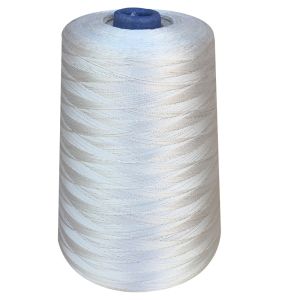 Silica Fibre Sewing ThreadSpecial Price £96.00 £80.00 Regular Price £144.00 £120.00
Vitcas Silica Fibre Sewing Thread can be used in high temperature industrial applications due to its very high heat resistance at 1400°C / 2552°F. The silica fibre thread has high tensile strength making it very suitable for sewing fire blankets, welding and fireproof garments, as well as insulating products.
Read more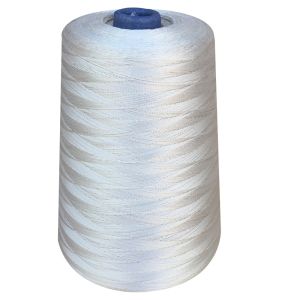 Fiberglass Sewing ThreadSpecial Price £72.00 £60.00 Regular Price £120.00 £100.00
Glass Fibre Sewing Thread with PTFE Coating is resistant to 600°C / 1110°F. The PTFE coating adds flexibility to the fibreglass sewing thread which makes it suitable for sewing heat resistant fabrics and protective clothing to wear in high temperature industrial settings.
Read moreEnquire about this product
Choosing High-Temperature Sewing Thread by Fibre, Temperature & Seam Duty
High-temperature sewing threads are used to fabricate and repair insulation jackets, thermal covers, technical textile barriers, filter assemblies, flexible seals and other products exposed to elevated temperatures. The correct thread depends not only on heat resistance, but also on tensile strength, abrasion, chemical exposure, stitch method, fabric compatibility and the mechanical duty of the finished seam.
VITCAS sewing threads use different fibre constructions to cover different thermal and mechanical requirements. Para-aramid provides high tensile and abrasion resistance, glass fibre threads provide higher temperature capability for technical textile fabrication, wire reinforcement increases seam stability, and silica fibre extends continuous service into substantially higher-temperature applications.
High-Temperature Sewing Thread Comparison
| Thread | Temperature capability | Key characteristic | Typical use |
|---|---|---|---|
| Para-Aramid Sewing Thread | Up to 400°C | High tensile strength, abrasion resistance and resistance to many oils, fuels and chemicals | Technical textiles, protective covers, filtration, automotive and other mechanically demanding seams |
| PTFE-Coated Glass Fibre Sewing Thread | Up to 600°C | Glass fibre thread with PTFE coating for improved flexibility and handling during stitching | Heat-resistant fabrics, insulation covers and compatible protective textile assemblies |
| Wire-Reinforced Glass Fibre Sewing Thread | Up to 600°C | Wire reinforcement increases tensile strength and seam stability | Mechanically demanding insulation covers, industrial textiles and high-temperature fabrication |
| Silica Fibre Sewing Thread | 1000°C continuous; 1400°C short-term | High-temperature silica construction for severe thermal duty | Compatible silica fabrics, fire and welding barriers, insulation products and high-temperature textile assemblies |
Para-Aramid Sewing Thread
VITCAS Para-Aramid Sewing Thread is designed for applications where mechanical strength is a primary requirement. It is rated up to 400°C and provides high tensile strength together with good abrasion resistance and resistance to many oils, fuels and chemicals.
Unlike many thermoplastic fibres, para-aramid does not melt when heated. The material begins to decompose at approximately 500°C, so its 400°C temperature capability should remain the basis for normal product selection.
Typical uses include technical covers, protective textiles, filtration systems, automotive and aerospace components, marine applications and other assemblies where seam strength and mechanical durability are important alongside heat resistance.
PTFE-Coated Glass Fibre Sewing Thread
VITCAS Glass Fibre Sewing Thread uses a PTFE-coated glass fibre construction and is rated up to 600°C. The PTFE coating improves flexibility and handling, making the thread easier to use when stitching compatible high-temperature fabrics.
This thread is well suited to general fabrication of heat-resistant cloths, insulation covers and other technical textile assemblies where glass fibre temperature capability is required without the additional mechanical reinforcement of a wire core.
Wire-Reinforced Glass Fibre Sewing Thread
VITCAS Wire-Reinforced Glass Fibre Sewing Thread is also rated up to 600°C, but its construction is optimised for more mechanically demanding seams. Wire reinforcement increases tensile strength and dimensional stability within the stitched assembly.
The reinforcement should be understood primarily as a mechanical advantage. It does not raise the nominal temperature rating above that of the other 600°C glass-fibre sewing thread.
The product is also resistant to many acids and alkalis, making it useful in selected industrial environments, but chemical compatibility should still be checked against the actual process medium, concentration and temperature.
Silica Fibre Sewing Thread
VITCAS Silica Fibre Sewing Thread is the higher-temperature option in this thread family, rated to 1000°C continuous service with short-term resistance up to 1400°C.
It is intended for compatible severe-heat textile fabrication, including silica fabrics, thermal barriers, insulation products, welding-related assemblies and other applications where the continuous temperature exceeds the capability of glass-fibre or para-aramid thread.
The 1400°C figure is a short-term limit and should not be used as the normal design temperature. Repeated or prolonged exposure above the 1000°C continuous rating can reduce seam life and alter the mechanical condition of the thread.
Thread Temperature Must Match the Fabric and the Seam
A stitched assembly is limited by its weakest component. Using a 1000°C silica thread does not make a 550°C glass cloth suitable for continuous operation at 1000°C, and a high-temperature fabric can still fail if the thread, seam geometry, fasteners or edge treatment are unsuitable.
For each seam, consider:
- continuous operating temperature at the stitch line;
- credible peak temperature and exposure duration;
- fabric temperature rating and coating limits;
- required tensile strength and seam loading;
- abrasion and flexing during operation or maintenance;
- chemical, oil or moisture exposure;
- stitch density and seam geometry;
- edge reinforcement, overlaps and closures;
- hand or machine stitching method.
PTFE Coating vs Wire Reinforcement
The two glass-fibre sewing threads share a similar temperature capability but solve different fabrication problems.
| Feature | PTFE-Coated Glass Fibre Thread | Wire-Reinforced Glass Fibre Thread |
|---|---|---|
| Temperature rating | Up to 600°C | Up to 600°C |
| Main benefit | Improved flexibility and stitching characteristics | Higher tensile strength and seam stability |
| Mechanical duty | General technical textile fabrication | More demanding seams and reinforced assemblies |
| Chemical resistance | Depends on complete PTFE/glass construction and process conditions | Good resistance to many acids and alkalis |
| Typical selection reason | Ease of sewing and flexible high-temperature stitching | Mechanical reinforcement at the seam |
Applications of Heat-Resistant Sewing Threads
Removable Insulation Jackets
High-temperature sewing thread is used to assemble removable insulation covers for valves, flanges, pipework, vessels, ducting and other thermal equipment. The thread must be compatible with both the outer facing fabric and the internal insulation layer.
Seam placement is important because local hot spots, movement and repeated removal can create higher mechanical stresses than those experienced by the surrounding cloth.
Fire Curtains, Heat Barriers & Welding Blankets
Glass and silica fibre threads can be used to fabricate compatible high-temperature curtains, thermal barriers and welding-related textile assemblies. The required thread depends on the temperature, fabric construction, seam loading and expected exposure to sparks, radiant heat or direct flame.
A high-temperature sewing thread does not by itself make the finished curtain or blanket a certified fire-protection or welding product. Performance depends on the complete fabric, seam, overlap, support and fixing arrangement.
Protective Clothing & PPE Components
Para-aramid, glass fibre and silica threads may be used as components in protective garments and other heat-resistant textile products where the selected thread is compatible with the fabric and hazard.
Raw thread should not be treated as certified PPE. Garment performance depends on the complete construction, including fabric layers, stitching, closures, coverage and the applicable conformity requirements for the intended hazard.
Industrial Filter Bags & Technical Filtration
Heat-resistant thread can be used to stitch high-temperature filter bags and other technical filtration textiles. Selection must consider not only gas temperature but also dust chemistry, process atmosphere, pressure, cleaning cycles and chemical exposure.
The temperature capability of the thread alone does not establish filtration efficiency or emissions performance.
Gaskets, Expansion Joints & Flexible Seals
High-temperature sewing threads are also used in fabricated textile gaskets, bellows, expansion-joint layers and flexible seals. In these assemblies, the seam may experience repeated flexing, vibration and mechanical movement in addition to heat.
The stitched textile component should therefore be selected as part of the complete engineered joint rather than on thread temperature alone.
Hand Stitching & Machine Sewing
Selected VITCAS threads are suitable for hand or machine stitching. Machine suitability depends on thread diameter, needle size, feed system, fabric thickness, stitch pattern and the mechanical characteristics of the thread.
High-strength or reinforced threads can require different machine settings from conventional textile thread. Trial stitching on representative fabric is useful where seam quality, thread tension or needle compatibility is critical.
Seam Strength Depends on More Than Tensile Strength
A strong thread does not automatically create a strong seam. Seam performance depends on how the load is distributed through the fabric and stitching.
Important factors include:
- thread tensile strength;
- fabric tear strength;
- stitch spacing and pattern;
- distance from the fabric edge;
- number of stitched rows;
- edge reinforcement or hemming;
- temperature and chemical exposure;
- movement, vibration and repeated flexing.
Where the textile is repeatedly removed or flexed, mechanical fatigue at the stitch line can become more important than the nominal tensile strength of the unused thread.
Continuous vs Short-Term Temperature
Continuous and short-term temperature ratings should not be treated as equivalent.
A continuous rating represents the normal sustained thermal duty specified for the product. A short-term value permits temporary exposure to a higher temperature but should not be used as the standard operating point.
This distinction is particularly important for Silica Fibre Sewing Thread, which is rated to 1000°C continuously but can tolerate up to 1400°C only for short-duration exposure.
Technical Thread vs Finished Protective Product
Sewing thread is one component within a fabricated high-temperature textile assembly. The performance of a finished insulation jacket, curtain, blanket, garment, filter or expansion joint also depends on the fabric, insulation, seams, closures, fasteners and supporting structure.
Where a completed product must meet a specific fire, welding, PPE or process standard, the complete assembly must provide the required documented performance. A thread temperature rating does not transfer automatically to the finished product.
Frequently Asked Questions
What temperature ranges are available for VITCAS sewing threads?
VITCAS options include para-aramid thread rated to 400°C, glass-fibre threads rated to 600°C and silica fibre thread rated to 1000°C continuous service with short-term resistance up to 1400°C.
Which sewing thread should I use with glass fibre cloth?
PTFE-coated or wire-reinforced glass fibre thread is commonly suited to compatible glass-fibre fabrics. The correct choice depends on temperature, seam strength, flexibility and mechanical exposure.
What is the advantage of wire-reinforced glass fibre thread?
The reinforcement increases tensile strength and seam stability. It is particularly useful where the stitched assembly will experience mechanical stress, vibration or repeated handling.
Does wire reinforcement increase the temperature rating?
Not in this product family. The wire-reinforced VITCAS glass fibre thread is rated to 600°C, so the primary advantage of the reinforcement is mechanical rather than a higher nominal operating temperature.
When should silica sewing thread be used?
Silica thread is appropriate where the seam temperature exceeds the continuous capability of glass-fibre or para-aramid threads and the surrounding fabric is also suitable for the higher-temperature duty.
Can silica thread be used continuously at 1400°C?
No. Its continuous rating is 1000°C. The 1400°C figure refers to short-term exposure and should not be treated as the normal operating temperature.
Can these threads be machine sewn?
Selected threads can be used for hand or machine stitching. Machine settings, needle selection, feed system and thread tension should be matched to the selected thread and technical fabric.
Can high-temperature sewing thread be used for PPE?
It can be used as a component in suitable protective textile assemblies, but the thread itself is not certified PPE. The finished garment or protective product must meet the required performance and conformity requirements for its intended use.
Can the same thread be used for every high-temperature fabric?
No. Match thread temperature capability, tensile strength, flexibility and chemical resistance to the fabric and service conditions. A stronger or higher-temperature thread does not compensate for a fabric with a lower thermal or mechanical limit.
What determines the life of a high-temperature seam?
Service life depends on temperature, stitch design, fabric strength, seam loading, abrasion, flexing, vibration, chemical exposure and fabrication quality. The thread should always be selected as part of the complete textile assembly.