
Firebacks & Fireplace Lintels
Heat-Resistant Firebacks and Throat-Forming Fireplace Lintels
VITCAS manufactures heat-resistant concrete firebacks and matching throat-forming lintels for the construction and refurbishment of traditional open fireplaces. The single-piece fireback forms the heat-exposed rear of the fire chamber, while the matching lintel helps establish the fireplace throat and guide combustion products towards the chimney.
Both components are available in nominal 16-inch and 18-inch sizes and are rated to a maximum of 1400°C. Nominal size does not represent the overall external width, so selection should take account of the fireback dimensions, fireplace opening, grate position and chimney geometry before installation.
The fireback lintel is a throat-forming refractory component rather than a declared structural lintel for supporting masonry. Correct installation also requires suitable throat geometry, expansion allowance and compatible refractory, insulating and sealing materials appropriate to the fireplace construction.
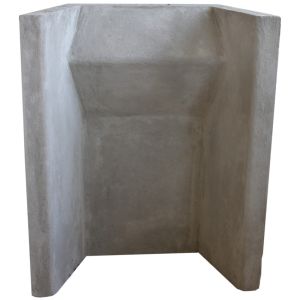 Heat Resistant Concrete FirebackAs low as £82.80 £69.00 Regular Price £120.00 £100.00
Heat Resistant Concrete Fireback is a refractory fireback designed for installation on the wall behind a fireplace. Available in 16" (400mm) and 18" (460mm) nominal sizes. Any open spaces left behind the fireback can be filled using Vitcas Vermiculite Insulating Cement to ensure a secure fit and optimal heat insulation.
Read more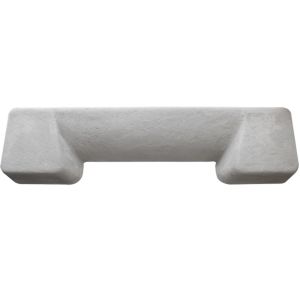 Heat Resistant Fireback LintelAs low as £23.99 £19.99 Regular Price £60.00 £50.00
VITCAS Heat Resistant Fireback Lintel is available in 16" (400mm) and 18" (460mm), designed for use in open fireplaces. It helps the fireplace retain more heat in the room, prevents the formation of carbon monoxide, and serves as a decorative addition. Best used in combination with Vitcas Heat Resistant Firebacks.
Read more
Selecting Firebacks & Throat-Forming Fireplace Lintels
A traditional open fireplace has to manage intense radiant heat while providing a controlled route for smoke and combustion products into the chimney. The fireback and throat-forming lintel perform different but complementary functions within this geometry and should be selected as part of the complete fireplace construction rather than by nominal size alone.
VITCAS heat-resistant concrete firebacks form the rear of the fire chamber, while matching throat-forming lintels help establish the restricted passage between the fire and chimney. Both components are rated to 1400°C and are available in nominal 16-inch and 18-inch sizes.
Fireback and Throat Lintel Functions
| Component | Primary function | Key selection points |
|---|---|---|
| Heat-Resistant Concrete Fireback | Forms the heat-exposed rear surface of the open fireplace and helps shield the masonry behind it from direct flame and radiant heat. | Nominal size, internal and external width, height, depth, grate position, fireplace opening and expansion allowance. |
| Throat-Forming Fireback Lintel | Works with the fireback to form the fireplace throat and guide combustion products towards the chimney. | Matching nominal size, orientation, throat opening, fireback position and chimney geometry. |
Fireback Sizes & Actual Dimensions
The 16-inch and 18-inch descriptions are nominal fireplace sizes. They do not represent the overall external width of the fireback, so actual dimensions should be checked before ordering or rebuilding a fireplace.
| Nominal size | Internal front width | External front width | Overall height | Overall depth |
|---|---|---|---|---|
| 16 inch | 15.5 in / 39.5 cm | 19 in / 48.5 cm | 22.25 in / 56.5 cm | 8.5 in / 21.6 cm |
| 18 inch | 17.5 in / 44.5 cm | 22 in / 56 cm | 22.25 in / 56.5 cm | 8.5 in / 21.6 cm |
Measure the fireplace opening, available depth, grate or fire-basket dimensions and throat position before selecting the fireback. An existing grate described as 16-inch or 18-inch should not be assumed to fit solely because the fireback carries the same nominal designation.
1400°C Heat Resistance for Traditional Open Fireplaces
The VITCAS concrete fireback and matching throat-forming lintel are rated to a maximum of 1400°C and are designed for compatible traditional open-fireplace construction.
The temperature rating applies to the individual refractory component. It does not establish the permissible temperature or overall performance of the completed fireplace, which also depends on the grate, surrounding masonry, insulation, joints, chimney, ventilation and installation geometry.
These components are not general replacement liners for closed stoves, cassette fires or appliance-specific combustion chambers. Such appliances should use components appropriate to their own design.
Forming the Fireplace Throat
The fireplace throat is the restricted passage between the fire chamber and the chimney. Its proportions influence the way hot combustion products leave the chamber and enter the flue.
VITCAS installation instructions specify a distance of 110mm ±10mm between the fireback and the throat-forming lintel. This dimension should be established together with the fireplace opening and chimney geometry rather than considered in isolation.
The lintel is positioned on its curved side with the U-shaped opening facing the rear of the fireplace. Correct orientation is important because reversing the component alters the intended throat profile.
Throat-Forming Lintel vs Structural Fireplace Lintel
The VITCAS fireback lintel is specified as a throat-forming refractory component. Its published product information does not provide a structural span or load-bearing specification for supporting masonry, chimney-breast construction or other imposed loads.
Where masonry above a fireplace opening requires structural support, that function should be provided by a separately specified structural lintel or another suitable supporting system. The throat-forming lintel should not be substituted for such a component solely because it is described as a lintel.
Allowing the Fireback to Expand
Firebacks repeatedly expand and contract during heating and cooling. They should therefore not be rigidly trapped by the surrounding masonry.
The VITCAS installation method uses an expansion space around the rear and sides of the fireback so that the refractory component can move as its temperature changes. Restricting this movement can increase mechanical stress and contribute to cracking or displacement.
Materials Used Around the Fireback
| Location | Typical VITCAS material | Function |
|---|---|---|
| Behind the fireback | VIC Vermiculite Insulating Cement | Lightweight insulating fill behind the refractory component while maintaining the installation arrangement. |
| Above the fireback | HPS Heatproof Screed | Heat-resistant refractory build-up between the fireback and rear chimney area where specified. |
| Front perimeter | Suitable heat-resistant rope and sealant | Compressible sealing arrangement that accommodates movement between the fireback and fireplace surround. |
These materials perform different functions. Insulating fill, refractory screed and compressible sealing should not be replaced by one rigid mortar joint around the entire fireback.
Insulation Behind the Fireback
VIC Vermiculite Insulating Cement is used as lightweight insulating infill behind the fireback in the specified construction method.
Its purpose is different from that of the fireback itself. The fireback forms the high-temperature rear surface of the fire chamber, while the insulating material behind it helps control heat transfer into the surrounding fireplace structure.
VIC is an insulating material rather than a structural support. The fireback and surrounding masonry require stable construction independently of the insulating fill.
Sealing the Fireback to the Surround
The front perimeter of the fireback must allow for thermal movement while limiting unwanted gaps around the installation.
The specified arrangement uses suitable heat-resistant rope as compressible packing together with an appropriate heat-resistant sealant. The compressible detail allows movement that a completely rigid mortar joint would restrict.
Do not fill designed expansion spaces indiscriminately with hard-setting mortar or cement, as this can restrain the fireback during heating.
Drying & First Firing
Newly installed firebacks, insulating fill, screed and surrounding masonry can retain moisture. This moisture should be allowed to escape gradually before the fireplace is exposed to normal firing conditions.
VITCAS instructions state that a fireback taken from open storage should not be fired for three days after installation. Additional drying time may be needed where surrounding masonry or refractory materials remain damp.
Begin with a small, short-duration fire, allow the installation to cool and then increase firing progressively over subsequent cycles. Applying a powerful fire to damp refractory construction can generate steam pressure and excessive thermal stress, increasing the risk of cracking or surface damage.
Fireplace Performance Depends on the Complete System
A correctly shaped throat helps combustion products enter the chimney, but the fireback and lintel cannot compensate for an unsuitable or obstructed flue, inadequate combustion air or incorrect fireplace geometry.
The complete installation should provide:
- an appropriately proportioned fire chamber and throat;
- a suitable and unobstructed chimney or flue;
- adequate combustion air and room ventilation;
- a stable hearth and surrounding masonry structure;
- appropriate expansion and sealing details;
- dry refractory materials before first firing;
- compatible insulation and heat-resistant construction materials.
The throat-forming lintel helps guide combustion products towards the chimney, but it should not be represented as a component that independently prevents carbon monoxide formation. Safe combustion and removal of flue gases depend on the complete fireplace, air supply and chimney system.
Inspecting Firebacks & Fireplace Joints
Open-fireplace components should be inspected periodically for signs of movement or deterioration, particularly before periods of regular use.
- Check the fireback for widening cracks, displacement or loose material.
- Inspect the throat-forming lintel and surrounding refractory joints.
- Check compressible rope and sealant around the fireback perimeter.
- Investigate gaps that could allow hot gases to reach surrounding construction.
- Keep the chimney free from soot, debris and obstruction.
- Investigate repeated cracking rather than simply covering it with additional mortar.
BS 1251 and Open Fireplace Components
BS 1251:2015 is the British Standard covering open-fireplace components, including firebacks and throat-forming lintels. Where compliance with a particular standard or edition forms part of a project specification, product-specific conformity should be established from the applicable technical documentation.
Frequently Asked Questions
What is a fireplace fireback?
A fireback is a heat-resistant refractory component that forms the rear surface of the fire chamber in a traditional open fireplace. It is exposed to flame and radiant heat and helps protect the masonry behind it.
What does a throat-forming fireback lintel do?
It works with the fireback to create the restricted fireplace throat between the fire chamber and chimney, helping guide combustion products into the flue.
Are the fireback and throat lintel used together?
Yes. They are complementary components and should be selected with matching size and compatible geometry. The complete fireplace dimensions should still be checked rather than relying on nominal size alone.
Should I choose a 16-inch or 18-inch fireback?
Choose according to the measured fireplace opening, available depth, grate dimensions and matching lintel. A 16-inch fireback has an internal front width of approximately 15.5 inches, while the 18-inch version has an internal front width of approximately 17.5 inches.
Is the nominal fireback size the same as its overall width?
No. The 16-inch version is approximately 19 inches wide externally at the front, while the 18-inch version is approximately 22 inches wide. Always check the complete dimensions before ordering.
What temperature are VITCAS firebacks and throat lintels rated to?
Both are listed to a maximum of 1400°C. This rating applies to the individual refractory component rather than the entire fireplace construction.
What gap should there be between the fireback and throat lintel?
VITCAS installation instructions specify a throat distance of 110mm ±10mm between the fireback and lintel. The fireplace opening and chimney geometry must also be suitable.
Which way round should the throat lintel be installed?
The lintel is positioned on its curved side with the U-shaped opening facing towards the rear of the fireplace.
Can the throat-forming lintel support masonry?
It should not be substituted for a structural fireplace lintel. The VITCAS product is specified as a throat-forming component and its published information does not provide a structural span or load-bearing specification for supporting masonry.
What should be installed behind the fireback?
The VITCAS installation method uses an expansion space and VIC Vermiculite Insulating Cement behind the fireback. The fireback must retain sufficient freedom for thermal movement.
Why does a fireback need expansion space?
The refractory concrete expands when heated and contracts as it cools. Expansion allowance reduces restraint and the mechanical stresses that can otherwise contribute to cracking or displacement.
When can the fireplace be fired after installing a new fireback?
Allow the fireback and all surrounding refractory materials to dry before heating. Where a fireback has been stored in the open, VITCAS instructions specify at least three days after installation before firing. Begin with a small fire and increase heat gradually over subsequent firings.