
Forge Construction & Repair
Refractory and Insulation Materials for Forge Construction and Repair
Forge linings must retain heat while resisting flame impingement, hot-gas erosion, scale, fuel abrasion, thermal cycling and local mechanical damage. The VITCAS range includes dense fire bricks, refractory castables, mouldable repair compounds and high-temperature mortars for compatible hot-face construction; insulating fire bricks, fibre blankets and boards for low-thermal-mass lining systems; and adhesives, rigidiser and zircon coating for specified bonding or surface-treatment duties. Products are available with published temperature ratings from 1000°C to 1750°C for gas, coal and coke forges, heat-treatment equipment and related metalworking installations. Select each layer from the fuel and burner arrangement, chamber temperature, flame path, workpiece and flux exposure, required heat storage, casing-temperature target and planned start-up cycle. The highest temperature rating is not automatically the best lining choice, and no individual product replaces a complete design for the shell, anchors, joints, burner ports, exhaust, ventilation and safe clearances.
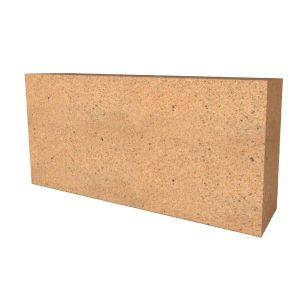 VITCAS Fire bricks 230x114x76mmSpecial Price £3.00 £2.50 Regular Price £4.79 £3.99
VITCAS Fire Bricks, made with 42% Alumina content. Sized at 230 x 114 x 76mm and designed to endure extreme conditions up to 1430°C. Ideal for a range of high-temperature applications including kiln linings, ceramics, metal casting, forges, and brazing hearths, these bricks are the perfect choice for ensuring durability and efficiency in your heat-intensive projects.
Read more Vitcas Refractory Castable Grade 1600°C-Refractory ConcreteSpecial Price £47.99 £39.99 Regular Price £53.99 £44.99
Castable Refractory (Refractory Concrete) is used for repairs to boiler linings, boiler doors and incinerator linings. For use where localised temperatures are higher; for example in gas or oil burner blocks and where forced air is being used.
Read more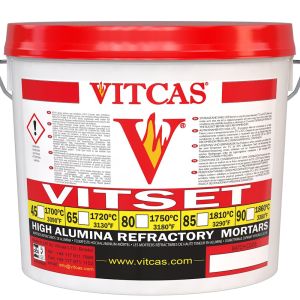 Vitset 45-Refractory Mortar Ready Mixed 1700°CAs low as £17.99 £14.99 Regular Price £35.99 £29.99
Vitset 45 is a versatile, ready-mixed refractory mortar designed to withstand temperatures as high as 1700°C /3100°F. Ideal for trowelling, patching and setting various high-grade refractory and insulation fire bricks rated above 1400°C. Suitable for use with ceramic fibre boards and blankets, making it a practical solution for both repairs and new installations in high-temperature environments.
Read more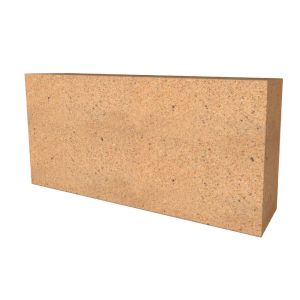 VITCAS Refractory Fire bricks 60% AL2O3Special Price £4.20 £3.50 Regular Price £6.00 £5.00
VITCAS Fire Bricks, 60% Alumina, sized at 230x114x64mm. These high-grade refractory bricks are designed for extreme temperatures up to 1600°C / 2910°F. Ideal for demanding applications like kiln linings, ceramics, metal casting, forges, and brazing hearths, they offer exceptional durability for the most challenging environments.
Read more Refractory Castable Grade 1700°CSpecial Price £56.39 £46.99 Regular Price £59.99 £49.99
VITCAS Refractory Castable 1700 is ideal for industrial purposes and home foundry projects, particularly for lining a metal drum to create a small-scale crucible furnace. With its ability to withstand temperatures up to 1700°C (3090°F), it is even suitable for melting cast iron, ensuring excellent performance and durability in high-temperature applications.
Read more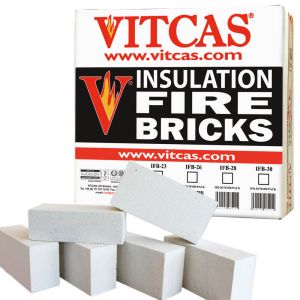 Insulating Fire Bricks-VITCAS Grade 26 -2600°F/ 1430°CSpecial Price £3.35 £2.79 Regular Price £8.39 £6.99
Vitcas Insulation Fire Bricks- Grade 26. Resistant to 1430°C (2600°F). Dimensions: 230x114x76mm. The insulating firebricks can be used in a variety of high temperature industrial applications, such as in insulating refractories- gas producers, kilns, furnaces and stress relieving furnaces.
Read more Bio Soluble Insulation Fibre Blanket 1200°C£72.00 £60.00 Regular Price £72.00 £60.00
Vitcas Bio-soluble fibre insulation blanket offers exceptional thermal performance, withstanding temperatures up to 1200ºC (2192ºF). Its low bio-persistence and biodegradable fibres ensure safety and minimal environmental impact. With a density of 128 kg/m³, it provides reliable insulation for high-temperature applications..
Read more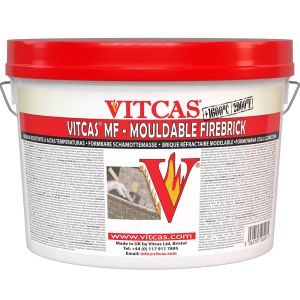 MF - Mouldable FirebrickSpecial Price £23.99 £19.99 Regular Price £35.99 £29.99
Firebrick Replacement Material. Vitcas Mouldable Firebrick is a specially formulated blend of high quality refractory (heat resistant) aggregates and bonding fire clay, resulting in a product which can be moulded into any shape to replace ordinary firebrick.
Read more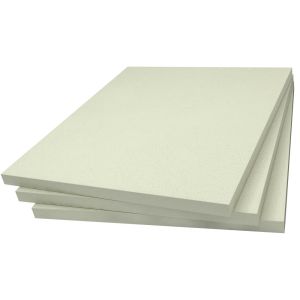 Ceramic Fibre Board 1430°C-VITCAS Insulating BoardAs low as £90.00 £75.00 Regular Price £115.19 £95.99
VITCAS Ceramic Fibre Insulating Fibre Board is resistant to 1430°C / 2600°F. Dimensions: 1200x1000x25mm and 1200x1000x50mm. Due to its high heat resistance and lower thermal mass, heating/ cooling takes quicker and makes it ideal for glass slumping and ceramic kilns.
Read more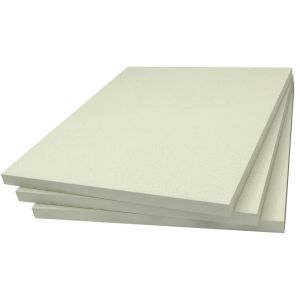 Bio-Soluble Fibre Board 1300°C-VITCAS Insulating BoardAs low as £90.00 £75.00 Regular Price £115.19 £95.99
VITCAS Bio-Soluble Fibre Board 1300°C is a rigid, high-performance thermal insulation board with a density of 300 kg/m³, designed for demanding high-temperature applications. Combining low thermal conductivity with low heat storage and excellent dimensional stability, it is ideal for furnace and kiln linings, heat-treatment equipment, boiler systems and refractory back-up insulation. The bio-soluble fibre composition provides a low-biopersistence alternative to traditional refractory ceramic fibre insulation.
Read more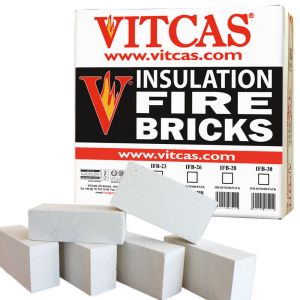 Insulating Fire Bricks-VITCAS Grade 23 - 2300°F/ 1260°CSpecial Price £2.76 £2.30 Regular Price £7.19 £5.99
Vitcas Insulation Firebricks- Grade 23. Resistant to a high temperature of 1260°C / 2300°F. Dimensions: 230x114x76mm. Ideal for situations where heat storage properties are not desired, and for insulating in different refractories- ceramic kilns, furnaces, flues and other high temperature industrial equipment.
Read more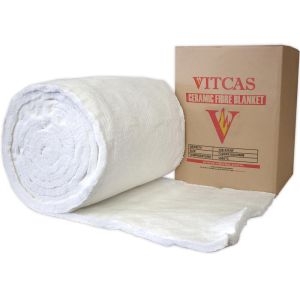 Ceramic Fibre Blanket 1260°C -per Metre£11.99 £9.99 Regular Price £19.19 £15.99
VITCAS Ceramic Fibre Insulation Blanket offers low thermal conductivity and high tensile strength, withstanding temperatures up to 1260ºC (2300ºF). Available by the metre, it comes in 13mm and 25mm thicknesses, 610mm wide, with a density of 128kg/m³, ideal for high-temperature insulation.
Read more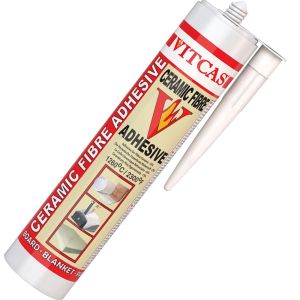 CFA - Ceramic Fibre AdhesiveSpecial Price £11.99 £9.99 Regular Price £23.99 £19.99
VITCAS CFA Ceramic Fibre Adhesive is a versatile bonding solution for ceramic fibre products like blankets, boards, and modules. Ideal for affixing insulation to brick, concrete, or metal, it’s perfect for reinforcing forge interiors or insulating wood-fired ovens.
Read more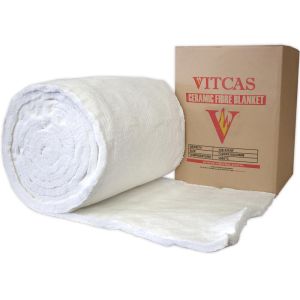 Ceramic Fibre Blanket 1260°C£66.00 £55.00 Regular Price £96.00 £80.00
VITCAS Ceramic Fibre Blanket is resistant to a maximum service temperature of 1260°C (2300°F), with a density of 128kg/m³. Available in thicknesses of 13mm, 25mm, and 50mm, it is widely used in industries like petrochemical, steel, and ceramics. Ideal for insulation and furnace lining applications.
Read more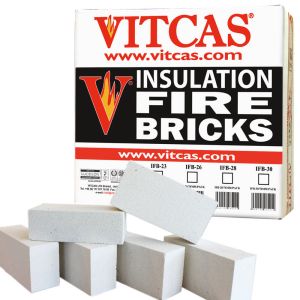 Insulating Fire Bricks-VITCAS Grade 28 -2800°F/ 1530°CSpecial Price £4.56 £3.80 Regular Price £9.59 £7.99
Vitcas Insulation Firebricks- Grade 28. Dimensions: 230x114x76mm. Resistant to 1530°C / 2800°F. The lightweight insulating fire bricks can be used in different industrial applications such as in lining ceramic kilns and furnaces, in areas that are not in contact with molten materials, etc.
Read more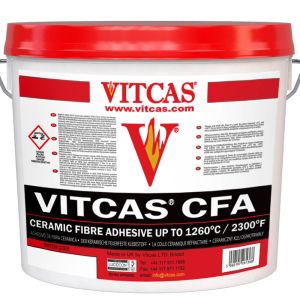 CFA - Ceramic Fibre Adhesive-VitcasAs low as £11.99 £9.99 Regular Price £23.99 £19.99
CFA - Ceramic Fibre Adhesive is a high-temperature, air-setting cement that is specifically designed for use as an adhesive for sticking ceramic fibre materials to brickwork, pizza ovens, or metal. This silica-based adhesive is ideal for use in a wide range of applications where high temperatures are involved, and a strong, durable bond is required.
Read more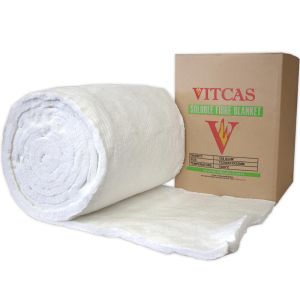 Bio-Soluble Insulation Blanket 1200°C - per Metre£14.39 £11.99 Regular Price £19.19 £15.99
VITCAS Bio soluble fibre insulation blanket is designed to withstand temperatures up to 1200°C (2192°F). This insulation blanket presents a very low health risk due to its low bio-persistence and is safe to handle, making it suitable for both industrial and environmental standards. The blanket is 25 mm thick, 610 mm wide, with a density of 128 kg/m³.
Read more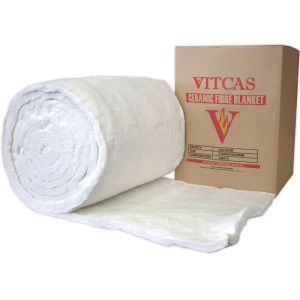 Ceramic Fibre Blanket 1430°C£90.00 £75.00 Regular Price £130.80 £109.00
VITCAS Ceramic Fibre Blanket. Resistant to 1430°C / 2600°F. Density of 128kg/m3. Available in thickness of 13mm, 25mm and 50mm. Can be used in ceramic kilns and in firing stoneware, in making of porcelain or bone china, and in stress relieving insulation, fire protection and power generation.
Read more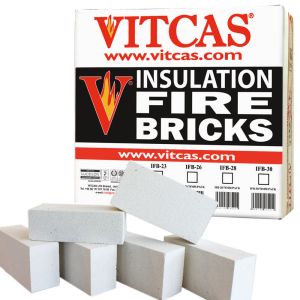 Insulating Fire Bricks-VITCAS Grade 30 -3000°F/ 1650°CSpecial Price £5.88 £4.90 Regular Price £11.94 £9.95
Vitcas Insulation Firebricks- Grade 30. Dimensions: 230x114x76mm. Rates at 1650°C / 3000°F. The lightweight insulation fire bricks can be used for industrial applications such as in hot blast stoves, as primary hot face linings, for back up insulation for kilns and furnaces and for flue insulation.
Read more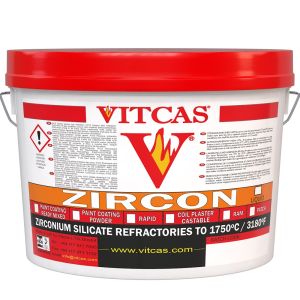 VITCAS Zircon Paint Coating 1750°CSpecial Price £47.99 £39.99 Regular Price £83.99 £69.99
VITCAS Zircon Refractory Paint Coating. It has a creamy consistency and can be applied directly. For spray application, it has to be thinned with water. Its maximum service temperature is of 1750°C / 3180°F. For use on furnaces, ladles, ceramic fibre linings and refractories in contact with molten alloys and glass.
Read more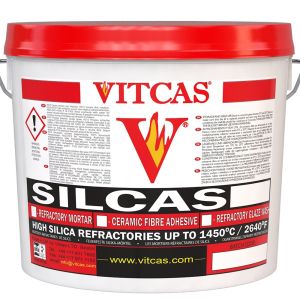 Silcas M-White Refractory Mortar 1430°CAs low as £15.59 £12.99 Regular Price £23.99 £19.99
VITCAS Silcas M - Air Setting Ready Mixed Refractory Mortar for lightweight firebricks and insulation materials up to 1430°C / 2600°F. It is a white refractory mortar so may be used where white mortar is needed for visual and aesthetic purposes. Used for setting and jointing of bricks and other products.
Read more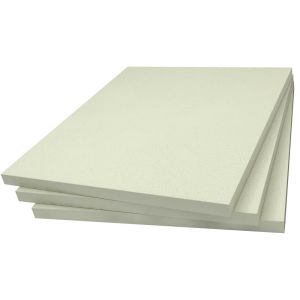 Ceramic Fibre Board 1260°C-VITCAS Insulating BoardAs low as £66.00 £55.00 Regular Price £95.99 £79.99
Vitcas Ceramic Fibre Insulating Board. Resistant to 1260°C/ 2300°F. Dimensions: 1200x1000x25mm and 1200x1000x50mm. Has a low heat conductivity at high temperatures and resists high gas velocity, which makes it ideal for boiler ducts, for kiln linings in glass and ceramics and for stack lining.
Read more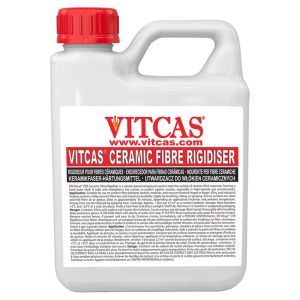 VITCAS Ceramic Fibre RigidiserSpecial Price £15.59 £12.99 Regular Price £47.99 £39.99
Vitcas Ceramic Fibre Rigidiser- a silicate compound. The rigidiser is used for coating the surfaces of ceramic fibre materials. These include the ones used in ceramic kilns, forges and those exposed to high velocity gases. The product acts as a hardener and sealant for these different ceramic fibre surfaces.
Read more Refractory Plastic Mouldable 1600°C - VITPLAST 45ABSpecial Price £42.00 £35.00 Regular Price £54.00 £45.00
Vitcas Plastic Mouldable Refractory- Vitplast 45AB. It rates to high temperatures not exceeding 1600°C / 2900°F. The plastic mouldable is exceptionally rapid setting and perfect for applications such as repairing launders and ladles in foundries and repairing boiler doors and boiler linings.
Read more
A Forge Lining Is a Layered Thermal System
The steel shell, backup insulation, hot-face material, joints, burner openings, hearth, door or access opening and exhaust path operate as one system. Their functions should be defined before materials are ordered. Dense refractories provide strength and resistance to local wear but absorb and store more heat. Lightweight bricks, boards and blankets reduce heat flow and thermal mass but require protection where tools, fuel, scale, flux or high-velocity flame can damage them.
Record the forge type, fuel, burner output, chamber geometry, normal and maximum operating temperatures, duty cycle and proposed lining thickness. For an existing forge, identify why the previous lining failed before patching it. Cracking beside a burner port, glazed or flux-damaged hearth material, eroded fibre, loose brick joints and an overheated casing have different causes and require different repairs.
Functions Within the Lining
| Function | Typical material | Principal selection factors |
|---|---|---|
| Wear-resistant hot face | Dense fire brick, castable or rammed refractory | Service temperature, atmosphere, flame, scale, flux, abrasion, load and thermal cycling |
| Low-mass hot face | Insulating fire brick or engineered fibre construction | Temperature margin, shrinkage, gas velocity, surface protection and mechanical exposure |
| Backup insulation | Insulating brick, fibre blanket or fibre board | Thermal conductivity, thickness, casing-temperature target, joints and containment |
| Brick joint | Compatible refractory mortar | Brick type, joint thickness, temperature, setting mechanism and dry-out |
| Local repair | Castable, mouldable firebrick or plastic mouldable refractory | Damage depth, substrate, compaction, anchors, working time and heat-up procedure |
| Surface treatment | Rigidiser or compatible refractory coating | Substrate, exposure, coating temperature, erosion, chemistry and repairability |
Dense Hot-Face Materials and Repairs
| Product | Published rating | Potential forge duty |
|---|---|---|
| VITCAS 42% Alumina Fire Bricks | 1430°C | Replaceable dense hot face for compatible hearths, walls and fuel-bed zones requiring strength and abrasion resistance |
| VITCAS 60% Alumina Fire Bricks | 1600°C | Higher-temperature dense brick for demanding hot-face areas after checking atmosphere, slag, scale and flux compatibility |
| Refractory Castable Grade 1700 | 1700°C | Dense monolithic lining or formed component where the design provides suitable thickness, support, joints and controlled dry-out |
| Refractory Castable Grade 1600 | 1600°C | Dense cast or trowelled repair in compatible high-temperature zones, including selected burner blocks |
| Vitset 45 Refractory Mortar | 1700°C | Ready-mixed air-setting mortar for thin joints between compatible dense or insulating refractory bricks |
| MF Mouldable Firebrick | 1600°C | Compacted local replacement or repair of a compatible fire-brick section; confirm suitability for the particular forge duty |
| VITPLAST 45AB Plastic Mouldable | 1600°C | Hand- or pneumatically rammed local repair to compatible brick or monolithic linings |
| Zircon Refractory Coating | 1750°C | Thin surface coating on a compatible refractory substrate where process chemistry and application method have been verified |
Dense castables and fire bricks withstand heat but are not backup insulation. Their mass can lengthen warm-up and cool-down, while their strength makes them useful in areas exposed to fuel, scale, workpieces and tools. A castable lining requires a defined minimum thickness, reinforcement or anchoring strategy where applicable, expansion provision and a path for moisture to escape. Never cast over a corroded or distorted shell, damaged burner component or unidentified failed lining.
Mortar should form the specified joint rather than compensate for badly cut bricks or large dimensional gaps. Keep joints consistent and avoid forcing an air-setting mortar into an expansion joint. A thin coating cannot restore missing refractory thickness or structural support, and its 1750°C published rating does not raise the service temperature of the underlying lining.
Insulating Fire Bricks
| Product | Published rating | Potential forge duty |
|---|---|---|
| Grade 23 Insulating Fire Bricks | 1260°C | Low-thermal-mass lining or backup insulation where the calculated exposure remains within the grade limit |
| Grade 26 Insulating Fire Bricks | 1430°C | Higher-temperature lightweight forge lining or secondary insulating course |
| Grade 28 Insulating Fire Bricks | 1530°C | Low-mass insulation for elevated-temperature zones with limited mechanical and chemical attack |
| Grade 30 Insulating Fire Bricks | 1650°C | Highest-rated insulating-brick option in this category for properly engineered primary or backup layers |
| Silcas M White Refractory Mortar | 1430°C | Ready-mixed mortar for compatible lightweight insulating bricks, particularly Grade 23, and selected ceramic-fibre bonding |
Insulating fire bricks heat rapidly and reduce stored energy because of their porous structure. The same porosity makes them more vulnerable than dense brick to impact, abrasion and flux penetration. Do not place a lightweight brick in a forge floor, solid-fuel bed or tool-contact zone merely because its temperature rating is sufficient. Use a dense, chemically compatible sacrificial or hot-face layer where the service demands it.
Select the grade from the verified hot-face temperature and a suitable design margin, not from fuel type alone. Published maximum or classification temperature should not be assumed to equal recommended continuous use in every atmosphere. Obtain thermal conductivity, permanent linear change and continuous-use data when calculating lining thickness or casing temperature.
Fibre Blankets and Boards
| Product | Rating | Potential forge duty |
|---|---|---|
| Biosoluble Fibre Blanket | 1200°C | Full-roll flexible backup insulation or a protected lining layer where its temperature and shrinkage limits are suitable |
| Biosoluble Insulation Blanket per Metre | 1200°C | Cut-length 25mm backup insulation for smaller forge construction or maintenance work |
| Ceramic Fibre Blanket 1260 per Metre | 1260°C | Cut-length flexible insulation for a securely retained and suitably protected lining |
| Ceramic Fibre Blanket 1260 | 1260°C | Full-roll insulation for low-mass forge and furnace constructions with engineered attachment and surface protection |
| Ceramic Fibre Blanket 1430 | 1430°C | Higher-temperature flexible insulation where the actual hot-face duty exceeds the lower blanket grades |
| Ceramic Fibre Board 1430 | 1430°C | Vacuum-formed low-mass board for compatible forge walls, baffles or backup insulation requiring greater rigidity than blanket |
| Ceramic Fibre Board 1260 | 1260°C | Rigid insulation board for suitable forge and furnace lining zones below its service limit |
Blanket should be mechanically retained or bonded by an engineered method and protected from direct tool contact, loose fuel, scale and damaging gas velocity. Pay particular attention to cut edges, seams, burner ports and the floor. A rigidised surface may resist limited erosion, but it does not convert blanket into dense refractory or make an exposed fibre floor suitable for workpiece contact.
Review the current safety data sheet before cutting or removing any fibre product. Prevent or adequately control dust exposure, use suitable extraction and cleaning methods, and select personal protective equipment from the task-specific risk assessment. Do not describe biosoluble fibre as risk-free, and do not assume that every ceramic-fibre product has the same regulatory classification.
Fibre Adhesives and Surface Hardening
| Product | Rating | Potential forge duty |
|---|---|---|
| CFA Ceramic Fibre Adhesive, 310ml | 1260°C | Cartridge-applied bonding of compatible fibre to clean brick or metal where the verified adhesive limit is adequate |
| CFA Ceramic Fibre Adhesive | 1260°C | Trowel- or brush-applied bonding of compatible blanket, board or module; use the lower limit until the discrepancy is resolved |
| Ceramic Fibre Rigidiser | 1000°C | Surface hardening of securely installed fibre in zones that remain within the rigidiser limit |
Adhesive supplements the specified mechanical retention; it should not be assumed to support a suspended lining through repeated heating cycles without a verified attachment design. Prepare the substrate, apply the adhesive to the correct surface, respect the stated drying time and introduce heat gradually. Rigidiser is a shallow surface treatment, not a structural binder, hot-face replacement or permission to exceed 1000°C at the treated surface.
Gas, Coal and Coke Forge Considerations
- Gas-fired forge: map the flame path and prevent direct burner impingement on a vulnerable edge or unprotected blanket. Burner ports must remain stable, correctly shaped and free from loose fibre.
- Solid-fuel forge: provide a robust hearth and fuel-bed construction able to withstand coke or coal movement, clinker, scale, poking tools and local thermal gradients.
- Heat-treatment chamber: prioritise temperature uniformity, controlled circulation, low thermal mass where rapid cycling is required and protection of the load from loose lining debris.
- Flux exposure: identify the flux and metal scale chemistry. Borate fluxes and molten contaminants can penetrate or attack some aluminosilicate refractories; provide a compatible, replaceable hearth detail.
- Openings: size the work opening and exhaust path with the combustion system. Restricting an opening to retain heat can alter burner pressure, combustion quality and carbon-monoxide production.
Construction, Dry-Out and Commissioning
Inspect the shell for corrosion, distortion, failed welds and inadequate support before lining. Set out burner ports, doors, exhaust openings, thermocouple positions, brick bonds, expansion joints and layer transitions. Keep combustible building elements, hoses, regulators, cylinders, electrical cables and stored materials outside their required clearances and radiant-heat exposure.
Measure castable water by mass or calibrated volume and never add extra water merely to improve workability. Mix only the quantity that can be placed within the working time, compact it without segregation and follow the product-specific cure. New castable, mortar and mouldable repairs retain moisture even when the surface looks dry. Apply a controlled heat-up with suitable hold periods before full firing; rapid heating can create internal steam pressure, cracking and disruptive spalling.
A gas or LPG forge requires a combustion and fuel system designed, installed and maintained by a person competent for the applicable setting. Provide adequate combustion air and extraction of combustion products. Establish safe purging, lighting, flame-failure and shutdown procedures. Carbon monoxide is colourless and odourless, so visible flame appearance alone is not an exposure-control method; assess ventilation and use appropriate monitoring.
During commissioning, record chamber, hot-face and shell temperatures at representative positions. Check for flame leakage, abnormal hot spots, loose lining, cracking, fibre erosion and movement around burner ports. Stop and investigate a casing temperature that continues to rise beyond the design expectation. After cooling, inspect the first heat cycle and repair defects before routine use.
Frequently Asked Questions
What is the difference between dense refractory and forge insulation?
Dense brick and castable provide strength, wear resistance and a durable hot face but store more heat. Insulating brick, board and blanket reduce heat flow and warm-up energy but are generally less resistant to tools, fuel, scale and flux. Many forges require both functions in separate layers.
How should the temperature rating for a forge lining be selected?
Use the highest credible material temperature, not simply the average chamber reading, then apply the manufacturer's continuous-use guidance and a suitable design margin. Consider flame impingement, atmosphere, shrinkage, flux and the lowest-rated adhesive, rigidiser or coating in the assembly.
Which lining materials are suitable for a gas forge?
A design may combine securely retained fibre or insulating brick with a compatible protected hot face, plus dense refractory at the floor and burner port. The correct arrangement depends on burner velocity, flame path, chamber temperature, workpiece handling and required shell temperature.
Which refractory is appropriate for a coal or coke forge?
The hearth and fuel bed normally require a dense material selected for abrasion, clinker, scale, chemical exposure and local heat. Lightweight brick or blanket can be used as protected backup insulation but should not be exposed where fuel and tools will damage it.
Can ceramic fibre blanket remain exposed inside a forge?
Do not assume that exposed blanket is acceptable. Direct flame, high gas velocity, tools and workpieces can erode it. Use an engineered retention and surface-protection system, keep loose fibres out of the work zone and follow the current safety data sheet.
Does rigidiser turn fibre blanket into a hard refractory lining?
No. It hardens only the treated surface and is published with a 1000°C limit. It does not give blanket the strength or wear resistance of dense refractory and does not replace mechanical retention or a compatible hot-face layer.
Can Zircon Refractory Coating increase the temperature rating of a lining?
No. The underlying brick, castable, fibre, adhesive and shell remain limited by their own properties. Use the coating only on a compatible substrate and for a verified chemical or surface-protection duty.
Which insulating fire-brick grade should I use?
Grades 23, 26, 28 and 30 have published ratings of 1260°C, 1430°C, 1530°C and 1650°C respectively. Choose from the calculated exposure, continuous-use data, thermal conductivity, atmosphere and mechanical duty rather than selecting the highest grade automatically.
Should Vitset 45 or Silcas M be used for insulating bricks?
Silcas M is positioned for lightweight insulating bricks, particularly Grade 23, and is rated to 1430°C. Vitset 45 is rated to 1700°C and is described for compatible dense and insulating refractory products. Confirm brick compatibility, joint thickness and maximum service temperature before installation.
When should castable be used instead of fire brick?
Castable is useful for monolithic shapes, burner blocks and repairs where brick geometry is impractical. Fire brick provides replaceable units and predictable joints. The decision also depends on anchors, shell geometry, installation thickness, curing, dry-out and access for future maintenance.
What is plastic mouldable refractory used for?
VITPLAST 45AB is compacted by hand ramming or pneumatic hammering into compatible local repairs. It is not a pourable castable and should not be spread loosely or used to conceal a failed shell, anchor system or extensively detached lining.
Why must new forge refractory be dried gradually?
Castable, mortar and mouldable materials retain installation water. If heat is applied too quickly, steam pressure can exceed the early strength or permeability of the lining and cause cracking or spalling. Follow the material-specific cure and heat-up schedule.
Is refractory castable an insulation material?
Not in this context. The listed Grade 1600 and Grade 1700 castables are dense hot-face materials. If a casing-temperature target must be achieved, calculate a separate backup-insulation layer and account for every thermal bridge and opening.
Why does flux damage a forge floor?
Some forge-welding fluxes melt and penetrate porous refractory, then react with the lining during repeated firing. Identify the flux chemistry and use a compatible, maintainable hearth or sacrificial layer rather than relying on temperature resistance alone.
How can the outside temperature of a forge be controlled?
Calculate the lining from hot-side temperature, thermal conductivity at the relevant mean temperature, layer thickness, contact resistance, steel shell and ambient conditions. Validate the result with temperature measurements during commissioning; material rating alone cannot predict casing temperature.
What is the difference between biosoluble and ceramic fibre insulation?
They differ in fibre chemistry, biopersistence, temperature capability and regulatory classification. Read the current product safety data sheet and technical data sheet for the exact grade. Apply dust controls to cutting, installation and removal regardless of marketing terminology.
Are the cartridge and tub CFA adhesives interchangeable?
Do not assume so. The cartridge page does not display a temperature in its product attributes, while the larger CFA page shows 1260°C in attributes and 1400°C in its copy. Confirm package, application method, coverage and documented service limit before specification.
What information is required to specify a forge lining?
Provide forge type, fuel, burner details, chamber dimensions, work opening and exhaust, normal and maximum temperatures, duty cycle, workpiece and flux, shell material, required outer temperature, available lining thickness, mechanical exposure, existing damage, power or fuel controls and installation method.