
High-Temperature Sealants
High-Temperature Sealants - Advanced Heat-Resistant Sealing Solutions
Vitcas manufactures high-temperature sealants and sealing compounds for industrial jointing, bonding, filling and maintenance applications exposed to elevated temperatures. The range includes high-temperature sealing compounds, flexible heat-resistant silicone, fire and flue cements, fillers, board adhesives, ceramic fibre adhesives and specialist fire-rated sealants.
Suitable applications extend across furnaces, kilns, boilers, thermal processing equipment, refractory linings and high-temperature insulation systems. Products within the category differ considerably in temperature rating, flexibility, substrate compatibility and intended function, so selection should be based on the joint or material being sealed, the operating conditions and the individual product specification.
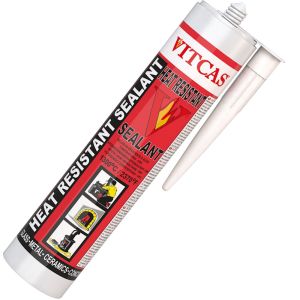 HRS - Heat Resistant Sealant 1300°CSpecial Price £9.59 £7.99 Regular Price £11.99 £9.99
VITCAS Heat Resistant Sealant is a high-performance, high-temperature caulking compound engineered for fixing, jointing and fire-sealing applications. Rated for continuous exposure up to 1300°C / 2370°F, it provides reliable bonding and airtight sealing on ceramics, metals, silica-based materials and glass in demanding high-heat environments.
Read more Heat Resistant SILICONE 315°CSpecial Price £5.99 £4.99 Regular Price £11.99 £9.99
VITCAS High Temperature Silicone is a flexible sealant designed to withstand high temperatures up to 315ºC. It is perfect for joints in contact with high temperatures, such as flues, ovens, gaskets, stoves, boilers, and more. Heat Resistant silicone sealant provides excellent adhesion to most building materials, ensuring a strong and durable bond.
Read more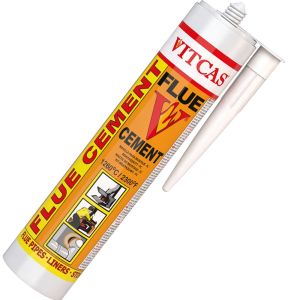 FC - Flue Cement 1250°CSpecial Price £2.39 £1.99 Regular Price £5.99 £4.99
VITCAS Flue Cement is a high-temperature, ready-mixed fireproof mortar, specially formulated for the safe installation and jointing of clay and concrete flue liners. It is ideal for use with domestic fires and stoves, including coal, wood-burning, and gas (including flame effect) appliances.
Read more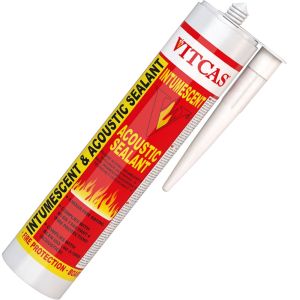 IS- Intumescent Acoustic Sealant - Fire Resistant MasticSpecial Price £2.39 £1.99 Regular Price £3.59 £2.99
VITCAS Intumescent Acoustic Sealant Mastic provides a 4-hour fire barrier by expanding when exposed to heat, offering enhanced protection in the event of a fire. Additionally, its excellent sound damping properties make it ideal for sealing gaps around door frames, window sills, and other areas requiring both fire resistance and acoustic insulation.
Read more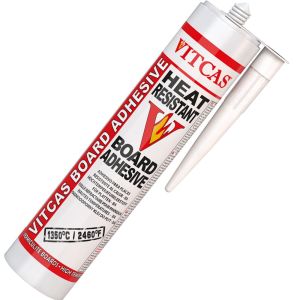 BA - Heat Resistant Board AdhesiveSpecial Price £11.99 £9.99 Regular Price £23.99 £19.99
Vitcas Heat Resistant Board Adhesive (310ml) is capable of withstanding temperatures up to 1350°C. It is ideal for jointing and adhering high-temperature plasterboards, vermiculite boards, insulation boards, and construction boards to brickwork or blockwork. Perfect for use in high-temperature applications.
Read more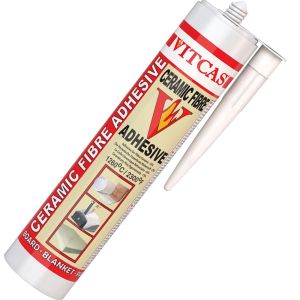 CFA - Ceramic Fibre AdhesiveSpecial Price £11.99 £9.99 Regular Price £23.99 £19.99
VITCAS CFA Ceramic Fibre Adhesive is a versatile bonding solution for ceramic fibre products like blankets, boards, and modules. Ideal for affixing insulation to brick, concrete, or metal, it’s perfect for reinforcing forge interiors or insulating wood-fired ovens.
Read more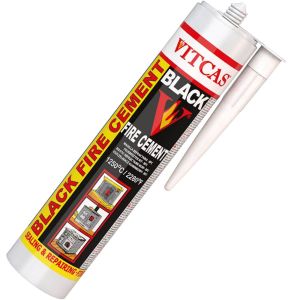 BFC - Black Fire Cement 1250°CSpecial Price £3.59 £2.99 Regular Price £5.99 £4.99
Black fire cement for both domestic and commercial applications, ideal for use on fire bricks, grates, flue pipes, boilers, and other areas exposed to extreme heat. It provides excellent adhesion to fire bricks, blockwork, stone, and clayware. Resistant to high temperatures up to 1250°C / 2280°F
Read more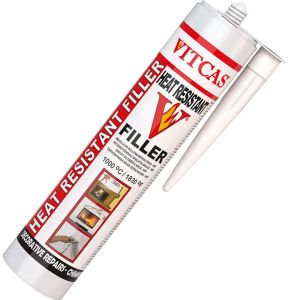 HRF - Heat Resistant Filler 1000°CSpecial Price £11.99 £9.99 Regular Price £23.99 £19.99
Vitcas® Heat Resistant Filler is a perfect solution for filling in small cracks and joints in high-temperature environments. Ideal for use with HT High Temperature Plasterboard joints, this filler offers unmatched heat resistance, up to 1000°C / 1830°F, ensuring durability and reliability.
Read more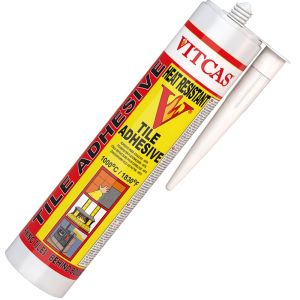 HRTA - Heat Resistant Tile Adhesive 1000°CSpecial Price £3.59 £2.99 Regular Price £8.99 £7.49
Heat Resistant Tile Adhesive in Cartridge packaging to ensure easy use and application. Vitcas Heat Resistant Tile Adhesive should be used for fixing tiles in areas subject to high temperatures, such as fire surrounds, behind boilers, ranges, cookers and radiators.
Read more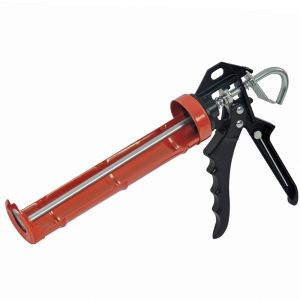 Silicone Caulking Cartridge GunSpecial Price £6.60 £5.50 Regular Price £8.39 £6.99
The heavy duty cartridge gun for use with Vitcas adhesives, sealants and silicones reaching a volume of 310 ml. The gun has longevity so you do not need to worry about it breaking quickly and having to be replaced.
Read more Fire Retardant SiliconeSpecial Price £5.99 £4.99 Regular Price £11.99 £9.99
Vitcas Fire Rated Silicone Sealant is designed for fire protection purposes in the joints inside buildings. In the event of a fire, it will be able to maintain integrity and insulation value for 4 hours.
Read moreEnquire about this product
High-Temperature Sealants for Industrial Sealing & Jointing
Industrial high-temperature sealing involves more than choosing a product with a sufficiently high temperature rating. The sealant or compound must also suit the materials being joined, the amount of movement in the joint, the application method and the conditions encountered during operation.
The Vitcas range contains products for different functions, including sealing refractory and high-temperature substrates, filling joints and cracks, bonding insulation materials and creating fire-resistant seals. These products are not interchangeable, and the correct choice depends on how and where the material will be used.
High-Temperature Sealing Compounds for Thermal Equipment
High-temperature sealing compounds are intended for fixing, jointing and sealing materials exposed to substantial thermal loads. Depending on the individual product, compatible substrates can include ceramics, metals, glass and silica-based refractory materials.
These products are relevant to industrial furnaces, kilns, boilers, heat-treatment equipment and other thermal installations where conventional general-purpose sealants may not be suitable. The operating temperature and substrate should always be checked against the specification of the selected product.
Flexible High-Temperature Silicone for Moving Joints
Heat-resistant silicone performs a different function from refractory sealing compounds. Its flexibility makes it suitable for compatible joints where thermal movement or expansion and contraction need to be accommodated within the product's specified temperature range.
For industrial installations, this can include selected joints around flues, boilers, ovens, gaskets, metal components and other heated equipment. Flexible silicone should not be selected simply because a joint becomes hot; its maximum service temperature must remain suitable for the actual exposure.
Fire Cements & High-Temperature Jointing Compounds
Fire cements and flue cements provide rigid jointing and sealing solutions for specific high-temperature applications. Depending on the formulation, they can be used with refractory brickwork, clayware, flue components and other compatible mineral substrates.
These materials perform a different role from flexible silicone. Where movement needs to be accommodated, a suitable flexible product may be required; where a rigid high-temperature joint is appropriate, a cement or refractory sealing compound may be the better option. Always follow the intended use stated for the individual product.
Fillers for High-Temperature Boards & Joints
Heat-resistant fillers are intended for filling selected cracks, joints and surface imperfections rather than functioning as general-purpose joint sealants.
Within high-temperature construction and insulation systems, they can be used where compatible boards or similar materials need joints or small defects to be filled before the installation is completed. Product-specific temperature limits, substrates and application instructions should be checked before use.
Adhesives for Refractory & High-Temperature Insulation Systems
The category also includes specialist bonding compounds for installing materials used around industrial heat.
Heat-resistant board adhesives are used for jointing and fixing compatible high-temperature, insulation and construction boards to suitable substrates. Ceramic fibre adhesives are intended for bonding ceramic fibre products such as blankets, boards and modules to compatible refractory, brick or metal surfaces.
These products are particularly relevant to furnace, kiln and thermal insulation work where the material needs to be secured as part of a high-temperature lining or insulation system.
Fire-Rated & Intumescent Sealants
Fire-rated and intumescent sealants should be distinguished from products designed primarily for continuous high-temperature service. Their principal role is fire protection within specified joints or building elements rather than routine exposure to the operating temperature of a furnace or process installation.
An intumescent product reacts to fire conditions in a different way from a refractory sealing compound or heat-resistant silicone. Fire resistance, high-temperature resistance and flexibility are therefore separate properties and should not be treated as equivalent when selecting a sealant.
Industrial Applications for High-Temperature Sealants
High-temperature sealants and associated compounds can be used throughout industrial thermal installations for joining, sealing, bonding and maintenance tasks. Depending on the selected product, applications may include:
- industrial furnaces and kilns;
- boilers and high-temperature plant;
- heat-treatment equipment;
- refractory linings and brickwork;
- ceramic fibre and insulation systems;
- high-temperature boards and thermal enclosures;
- flues and exhaust-related components;
- metal, ceramic and glass components exposed to heat;
- industrial fire-protection joints where a suitable fire-rated product is specified.
The products required for these applications can differ substantially. A flexible joint, refractory joint, insulation bond and fire-rated penetration or construction joint should not automatically use the same sealing material.
Choosing the Right High-Temperature Sealant
For industrial applications, consider the complete service conditions before selecting a sealant or bonding compound.
- Maximum service temperature – check the rating of the individual product against the expected operating temperature.
- Joint movement – establish whether the finished joint needs to remain flexible or can be rigid.
- Substrate – identify whether the material will be applied to metal, ceramic, glass, refractory brick, board, ceramic fibre or another surface.
- Function – determine whether the product needs to seal, joint, fill, bond or provide a specified fire-protection function.
- Thermal exposure – consider continuous heat, intermittent heat and thermal cycling where relevant to the installation.
- Application location – establish whether the material will be used within thermal equipment, around a heated component or as part of a building fire-protection system.
- Preparation and curing – follow the surface preparation, curing and initial heating instructions given for the individual product.
A higher temperature rating does not automatically make one sealant more suitable than another. The correct product is the one whose temperature range, physical characteristics and intended application match the actual joint or installation.
Frequently Asked Questions
What are industrial high-temperature sealants used for?
Industrial high-temperature sealants are used for sealing, jointing, fixing or filling selected areas exposed to elevated temperatures. Applications can include furnaces, kilns, boilers, thermal processing equipment, refractory components and high-temperature insulation systems. The required material depends on the substrate, operating temperature, joint movement and whether the application requires sealing, bonding, filling or another specific function.
How do I choose between high-temperature silicone and a refractory sealant?
The main considerations are temperature exposure and joint movement. High-temperature silicone remains flexible and is suitable for compatible joints that need to accommodate movement within its specified temperature range. A refractory high-temperature sealing compound is intended for substantially hotter applications and compatible refractory, ceramic, metal, glass or silica-based materials. Check the individual temperature rating and intended use rather than treating the two products as interchangeable.
How do I choose between fire cement, high-temperature sealant and heat-resistant silicone?
Choose according to the type of joint and operating conditions. Fire cement is suited to selected rigid high-temperature joints and repairs, while a high-temperature refractory sealant is used for sealing and jointing compatible materials under greater thermal exposure. Heat-resistant silicone remains flexible and is more appropriate where compatible joints need to accommodate movement. Always check temperature and substrate compatibility before selection.
Are all high-temperature sealants flexible?
No. High-temperature sealing products can have very different physical characteristics. Silicone products are designed to retain flexibility, whereas cements, fillers and other refractory compounds can form comparatively rigid joints or repairs. Flexibility should therefore be treated as a specific product requirement rather than a general characteristic of all high-temperature sealants.
Can high-temperature sealants be used on metal, ceramic and glass?
Selected products can be used on metal, ceramic, glass and silica-based materials, but compatibility varies by formulation. The substrate should be identified before choosing the sealant, especially where different materials meet in the same joint. Check the product page or technical information to confirm that the selected compound is suitable for each surface involved.
Can high-temperature sealants be used in furnaces and kilns?
Yes, selected high-temperature sealing and bonding products are suitable for furnace, kiln and other industrial thermal applications. The appropriate product depends on where it will be installed and what it needs to do. A refractory joint, ceramic fibre bond, board joint and flexible connection may each require a different material, even within the same furnace or kiln installation.
Can high-temperature sealants be exposed to direct flames?
Direct flame resistance depends on the formulation and must not be assumed for every high-temperature sealant. Flue cement is intended for high-temperature flue jointing applications, while flexible heat-resistant silicone is designed for lower-temperature joints where movement may occur. For applications inside or close to a combustion area, use only a product specifically stated as suitable for direct flame exposure and check the individual product specification before installation.
What is the difference between a high-temperature sealant and a fire-rated sealant?
A high-temperature sealant is selected primarily for service in an environment exposed to elevated operating temperatures. A fire-rated or intumescent sealant is designed to provide a specified fire-protection function in appropriate building joints or penetrations. A product being fire resistant does not automatically mean it is suitable for continuous furnace temperatures, and high-temperature resistance does not automatically provide a particular fire rating.
Can ceramic fibre adhesive be used as a general-purpose high-temperature sealant?
It should be selected primarily for its intended bonding application. Ceramic fibre adhesive is designed to secure compatible ceramic fibre products, including blankets, boards and modules, to suitable surfaces such as refractory materials or metal. If the requirement is to seal a joint rather than bond insulation, a dedicated sealing compound may be more appropriate.
How should surfaces be prepared before applying a high-temperature sealant?
Surface preparation depends on the individual product, but the substrate generally needs to be suitable for bonding and prepared in accordance with the product instructions. Remove contamination or loose material where specified and observe any requirements concerning dryness, application thickness or tooling. Do not apply one preparation procedure to every sealant in the category because different formulations can have different requirements.
Do high-temperature sealants need to cure before the equipment is heated?
Curing and initial heating requirements vary between products. Some sealing compounds cure or set at room temperature and may require controlled heating afterwards, while silicones, cements, fillers and adhesives can have different procedures. Follow the instructions supplied with the individual product before exposing the completed joint or bond to its normal operating temperature.