
Exhaust Insulation & Heat Wraps
High-Temperature Exhaust Pipe Insulation & Heat Wraps
VITCAS exhaust pipe insulation wraps provide flexible thermal management for exhaust pipes, manifolds and other compatible high-temperature pipework. Manufactured from heat-treated E-glass or basalt fibre, they help reduce heat loss from external surfaces and limit radiant heat exposure to nearby components.
Solutions include E-glass exhaust wrap rated up to 550°C and basalt fibre tape rated up to 700°C, supporting automotive, motorsport, industrial and compatible dry-marine exhaust applications.
Select the wrap according to the actual surface temperature at the installation point, together with pipe diameter, required coverage, mechanical exposure and operating environment. Exhaust-gas temperature alone should not be used as the tape selection temperature.
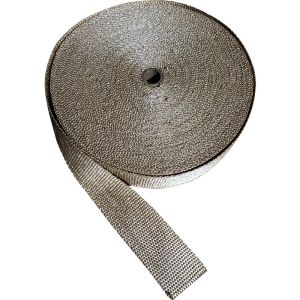 Titanium Basalt Fiber TapeSpecial Price £2.28 £1.90 Regular Price £3.60 £3.00
Vitcas Texturised Basalt Fibre Tapes, also known as Webbing Tapes, are high-performance exhaust insulation wraps. They are resistant to temperatures up to 700°C (1290°F) and provide protection against radiation and chemicals, making them ideal for insulating pipes in high-temperature industrial environments.
Read more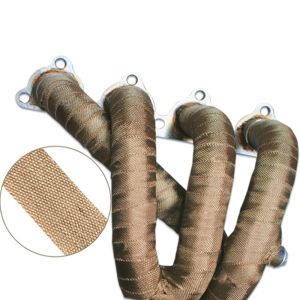 Heat Treated Exhaust Tape 50mm x 2mmSpecial Price £1.86 £1.55 Regular Price £3.60 £3.00
Heat Treated Thermal Exhaust Tape is made from 'E' type glass fibre, ideal for wrapping cables, wiring, and exhausts. It provides insulation, reduces fire risks, and minimises condensation in pipework, making it perfect for high-temperature industrial and automotive applications.
Read more
Exhaust Pipe Insulation for Automotive, Industrial & Marine Applications
VITCAS exhaust pipe insulation tapes are designed for thermal management around compatible exhaust pipes, manifolds and other high-temperature pipework. Heat-treated E-glass and basalt fibre constructions provide different temperature capabilities, allowing the wrap to be matched to the actual surface temperature and operating conditions of the installation.
Key Characteristics of Exhaust Insulation Tapes
- Thermal Management: helps reduce heat loss from external exhaust surfaces and limit radiant heat around compatible pipes, manifolds and nearby components.
- High-Temperature Options: heat-treated E-glass exhaust tape is rated up to 550°C, while basalt fibre tape is rated up to 700°C.
- Flexible Textile Construction: the woven tape can be wrapped around curved exhaust pipes, manifolds and other compatible pipework where rigid insulation would be impractical.
- Suitable for Demanding Installations: installation method and retention should be selected according to vibration, movement, abrasion and mechanical exposure.
- Radiant Heat Control: correctly specified wrapping can help reduce radiant heat exposure to surrounding compatible components and equipment.
Applications of Exhaust Pipe Insulation
- Vehicle Exhaust Systems: for wrapping compatible exhaust pipes, headers and manifolds to manage external surface heat and radiant heat within the engine bay.
- Turbocharged & Motorsport Systems: suitable for compatible headers, manifolds and exhaust pipework where control of under-bonnet radiant heat is required.
- Industrial Equipment: for selected exhausts and hot pipework in machinery and process equipment where the tape temperature capability suits the operating conditions.
- Marine Dry Exhausts: suitable for compatible dry metallic exhaust systems and high-temperature pipework where textile insulation is permitted by the equipment manufacturer.
- Process & High-Temperature Pipework: can be used on selected hot pipework where the fibre type, temperature rating, mechanical exposure and process environment are compatible.
E-Glass vs Basalt Exhaust Wrap
Heat-treated E-glass exhaust tape provides flexible thermal insulation for compatible exhaust systems operating at surface temperatures up to 550°C. It is suitable for many automotive, industrial and general exhaust-wrapping duties where this temperature capability is sufficient.
Basalt fibre exhaust tape provides a higher temperature capability of up to 700°C, making it suitable for compatible exhaust and pipework applications where the external surface temperature exceeds the working range of E-glass tape.
Selecting the Correct Exhaust Wrap
Exhaust insulation tape should be selected according to the actual surface temperature at the installation point, rather than exhaust-gas temperature alone. The gas temperature inside a pipe can differ significantly from the temperature experienced by the wrap on the external surface.
Other selection factors include:
- continuous and peak surface temperature;
- pipe diameter and geometry;
- required wrap coverage and overlap;
- vibration and mechanical movement;
- abrasion and external exposure;
- moisture, oils and other process contaminants;
- clearance to nearby components;
- the equipment manufacturer's requirements for exhaust insulation.
Wrapping an exhaust component changes the way heat is retained and dissipated from the pipe surface. This can affect pipe-wall temperature, thermal expansion and the operating environment around joints, sensors and adjacent components, so the complete exhaust system should be considered when specifying the insulation.
To learn more, read our article about the protection and insulation of exhaust pipes.
Frequently Asked Questions
Should exhaust wrap be selected by exhaust-gas temperature or pipe surface temperature?
Select exhaust insulation from the temperature experienced by the wrap on the external pipe surface. Exhaust-gas temperature inside the pipe can be significantly higher than the temperature at the tape location, so surface temperature provides the more relevant basis for material selection.
Can exhaust wrap increase the temperature of the exhaust pipe itself?
Yes. Wrapping reduces heat loss from the external pipe surface, which changes how heat is retained within the exhaust component. This can increase pipe-wall temperature and influence thermal expansion, joints, sensors and nearby components, so the complete exhaust-system design should be considered.
How do I choose between E-glass and basalt exhaust wrap?
Use E-glass exhaust wrap where the external surface temperature remains within its 550°C capability. Basalt exhaust wrap provides additional temperature margin up to 700°C for hotter compatible exhaust and pipework applications.
How does pipe diameter affect exhaust wrap installation?
Pipe diameter influences the amount of tape required, the wrap angle and the number of turns needed for the desired coverage. Smaller-diameter pipes generally require tighter wrapping geometry, while larger sections may need more material to maintain consistent overlap.
How much overlap should be used when wrapping an exhaust pipe?
The required overlap depends on the tape width, component geometry and intended thermal coverage. Greater overlap increases the number of textile layers and finished insulation thickness, so the wrap pattern should be selected to suit the installation rather than using one universal overlap for every exhaust system.
Can exhaust insulation tape be used around manifolds and headers?
Yes. Flexible woven exhaust tape can be used around compatible headers, manifolds and curved exhaust pipework where the fibre temperature capability, wrapping geometry and retention method suit the component.
What should be considered when using exhaust wrap in high-vibration applications?
For motorsport, machinery and other high-vibration environments, consider tape retention, abrasion points, movement at joints and contact with brackets or adjacent components. Mechanical exposure can be as important as temperature when selecting and installing the wrap.
Can exhaust wrap be used in marine applications?
Exhaust wrap can be used on compatible marine dry exhaust systems where textile insulation is permitted by the equipment design. Selection should account for temperature, vibration, moisture, salt exposure and the required mechanical retention.
Does exhaust wrap reduce under-bonnet radiant heat?
Correctly specified exhaust insulation can help reduce radiant heat exposure around wrapped headers, manifolds and exhaust pipes. This can improve thermal management around nearby components where the wrap is suitable for the surface temperature and installation conditions.
What is the best way to choose exhaust wrap for a modified or motorsport system?
Base the selection on the actual surface temperature, pipe geometry, expected vibration, mechanical exposure, required overlap and clearance to nearby components. Modified systems can operate under different thermal conditions from standard installations, so the wrap should be matched to the real duty rather than the vehicle type alone.