
Bioethanol Fireplaces
Heat-Resistant Materials for Bioethanol & Ethanol Fireplaces
VITCAS heat-resistant materials for constructing and finishing bioethanol fireplaces, ethanol fireplaces and decorative flame features. The range includes flexible bio-soluble fibre insulation, rigid vermiculite boards in plain and decorative finishes, and high-temperature spray paints for compatible heat-exposed metal and fireplace surfaces.
Bioethanol fireplaces use liquid fuel and are commonly designed without the conventional chimney or flue required by solid-fuel appliances. Their clean-lined format makes them particularly suited to modern living spaces, apartments, feature walls, recessed installations and minimalist interiors, where the visible flame can form a contemporary architectural focal point.
Bioethanol is commonly produced from renewable biological feedstocks and burns without producing ash or soot, giving these fireplaces a different environmental and maintenance profile from traditional solid-fuel fires. The surrounding construction must still manage heat from the burner while maintaining the manufacturer's specified clearances, ventilation and flame geometry.
 Bio Soluble Insulation Fibre Blanket 1200°C£72.00 £60.00 Regular Price £72.00 £60.00
Vitcas Bio-soluble fibre insulation blanket offers exceptional thermal performance, withstanding temperatures up to 1200ºC (2192ºF). Its low bio-persistence and biodegradable fibres ensure safety and minimal environmental impact. With a density of 128 kg/m³, it provides reliable insulation for high-temperature applications..
Read more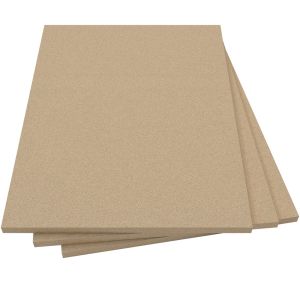 Vermiculite Fire Board Fire-proof InsulationAs low as £35.99 £29.99 Regular Price £71.98 £59.98
Vermiculite Fire Resistant Board – VITCAS Fireproof Insulation, refractory up to 1100ºC / 2010ºF, designed for use as a heat shield, register plate, or replacement for fire bricks in wood-burning and multi-fuel stoves. This versatile board provides excellent thermal insulation and fire resistance.
Read more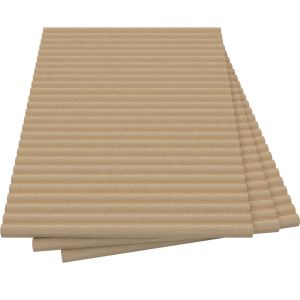 Vermiculite Fire Board-Reeded-Fire-proof InsulationAs low as £35.99 £29.99 Regular Price £71.99 £59.99
VITCAS Reeded Fire Resistant Insulation Board is resistant to 1100ºC (2010ºF). Vermiculite Board with fire-proof insulation is used as a head shield, a register plate or as replacement fire bricks for wood burning or multi fuel stoves, range cookers.
Read more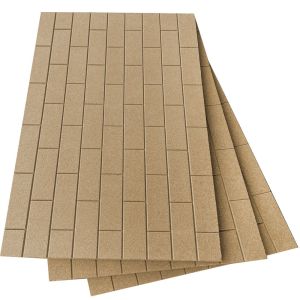 Vermiculite Fire-proof Insulation -Brick EffectAs low as £35.99 £29.99 Regular Price £71.99 £59.99
VITCAS Vermiculite Fire Resistant Insulation Board with a Brick Pattern is resistant to 1100ºC /2010ºF. Vermiculite Fire Resistant Insulation Board is used as a head shield, register plate or as replacement fire bricks for wood burning or multi fuel stoves, fireplaces, and hobby kilns.
Read more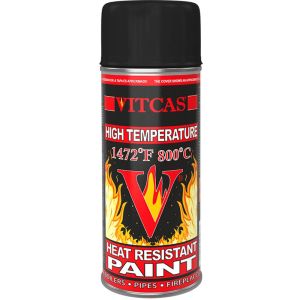 Heat Resistant Spray Paint - Black 800°CSpecial Price £8.39 £6.99 Regular Price £15.59 £12.99
Vitcas Heat Resistant Paint – High Temperature Spray 400ml – Black is designed to withstand extreme temperatures up to 800°C (1472°F). Ideal for painting furnaces, heaters, barbecues, boilers, pipes, and other equipment exposed to high heat in both domestic and industrial environments.
Read more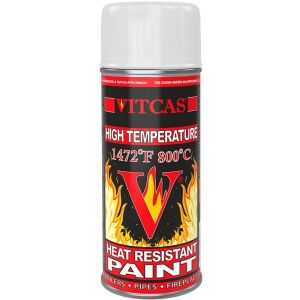 Heat Resistant Spray Paint - White 800°CSpecial Price £8.39 £6.99 Regular Price £15.59 £12.99
Vitcas Heat Resistant Paint – High Temperature Spray 400ml – White is a heat-resistant spray paint designed to withstand temperatures up to 800°C (1472°F). It is ideal for painting stoves, radiators, furnaces, heaters, barbecues, boilers, pipes, and other equipment exposed to high temperatures in both domestic and industrial settings.
Read more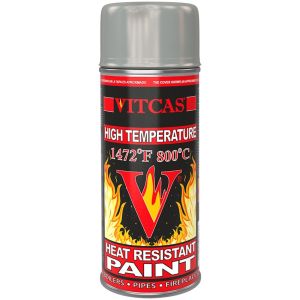 Heat Resistant Spray Paint - Silver 800°CSpecial Price £8.39 £6.99 Regular Price £15.59 £12.99
Vitcas Heat Resistant Paint – High Temperature Spray 400ml – Silver is designed to withstand temperatures up to 800°C (1472°F). It is ideal for painting furnaces, heaters, barbecues, boilers, pipes, and other equipment exposed to high heat.
Read more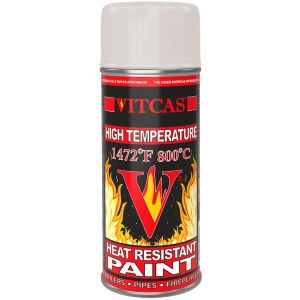 Heat Resistant Spray Paint - Cream/Beige 800°CSpecial Price £8.39 £6.99 Regular Price £15.59 £12.99
Vitcas Heat Resistant Paint - High Temperature Spray 400ml - Cream/Beige is resistant to 800°C (1472°F). This high-temperature spray paint is ideal for painting furnaces, heaters, barbecues, boilers, pipes, and other equipment exposed to extreme heat.
Read more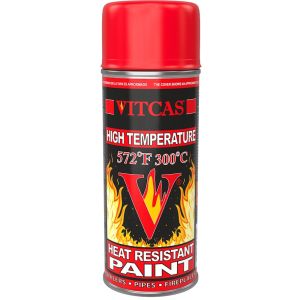 Heat Resistant Spray Paint – Red 300°CSpecial Price £8.39 £6.99 Regular Price £15.59 £12.99
Vitcas Heat Resistant Paint – High Temperature Spray 400ml – Red is designed to withstand temperatures up to 300°C (572°F). It is ideal for painting brake callipers on cars and motorbikes, as well as furnaces, heaters, barbecues, boilers, pipes, and other metal surfaces exposed to high heat.
Read more
Materials for Bioethanol Fireplace Construction & Heat Protection
A bioethanol fireplace differs from a wood-burning stove or open fireplace because it does not require a refractory firebox for solid fuel, ash or burning logs. The construction around the burner is instead designed to provide a suitable decorative enclosure while managing heat transfer to adjacent surfaces.
VITCAS materials in this application category provide three main functions: flexible thermal insulation, rigid insulating and decorative panels, and heat-resistant surface finishing. The appropriate material depends on its position relative to the burner, the enclosure design and the temperatures specified by the appliance manufacturer.
Bioethanol Fireplace Material Guide
| Application | Recommended VITCAS Material | Primary Function |
|---|---|---|
| Flexible insulation behind compatible panels or cladding | Bio-Soluble Fibre Blanket | Lightweight flexible thermal insulation for suitable high-temperature construction |
| Rigid fireplace lining or heat shield | Vermiculite Fire Board | Lightweight rigid insulation and heat shielding on compatible indoor or covered surfaces |
| Decorative insulated surface | Reeded Vermiculite Fire Board | Rigid thermal insulation with a textured decorative face |
| Brick-effect insulated surface | Brick Pattern Vermiculite Fire Board | Insulating board with a decorative brick-effect finish |
| Heat-exposed metal or compatible fireplace surfaces | Heat Resistant Spray Paint | Decorative high-temperature finishing within the selected colour's temperature limit |
Bioethanol Fireplaces & Heat-Resistant Construction
Bioethanol appliances are often selected where a decorative live flame is required without a conventional solid-fuel chimney system. Although their installation can be simpler than that of a wood-burning appliance, the burner still produces significant local heat and the surrounding materials must be suitable for the temperatures reached during operation.
The enclosure should therefore be designed around the specific burner rather than around a generic fireplace opening. Burner dimensions, required clearances, ventilation openings, nearby combustible materials and the manufacturer's permitted finishing materials should all be established before the surround is constructed.
Bio-Soluble Fibre Blanket for Flexible Insulation
VITCAS Bio-Soluble Fibre Blanket is a flexible calcium-magnesium-silicate fibre insulation rated up to 1200°C. It is supplied in 13mm and 25mm thicknesses with a density of approximately 128kg/m³.
Its flexible format is useful where insulation needs to follow curved, irregular or concealed surfaces behind compatible fireplace panels and cladding. The blanket is an insulation layer rather than a rigid construction panel, so it requires suitable containment or support within the designed enclosure.
Vermiculite Fire Board for Bioethanol Fireplace Surrounds
VITCAS Vermiculite Fire Board is a lightweight rigid insulation board rated up to 1100°C. It can be sawn, drilled and sanded with suitable woodworking tools, making it practical for custom fireplace panels, recess linings and heat shields where its properties suit the installation.
Vermiculite board is intended for indoor or protected applications. Its temperature capability applies to the board material itself and does not establish the required clearance between a bioethanol burner and surrounding construction.
Plain, Reeded or Brick-Pattern Vermiculite Board?
The VITCAS vermiculite board range includes plain, reeded and brick-pattern surfaces. All provide the thermal characteristics of rigid vermiculite insulation, while the decorative versions can also contribute to the visible fireplace design.
Plain board provides a neutral surface for installations where another finish will be applied. Reeded board introduces a textured linear surface, while brick-pattern board creates the appearance of small-format masonry without requiring a separate brick lining.
Using Vermiculite Board as a Visible Fireplace Surface
Decorative vermiculite boards can provide both insulation and a finished visual surface where their appearance suits the fireplace design. VITCAS also allows compatible vermiculite boards to be finished with suitable heat-resistant spray paint, providing another option for coordinating the enclosure with the surrounding interior.
Where the board remains visible, cutting, joint layout and fixing positions should be planned before installation because these details form part of the finished fireplace appearance.
Heat-Resistant Paint for Bioethanol Fireplace Features
VITCAS heat-resistant spray paints are suitable for compatible metal and heat-exposed surfaces where the selected coating's temperature limit is appropriate. Black, white, silver and cream/beige variants in the current range are rated up to 800°C, while the red version has a lower published temperature rating of 300°C.
Select paint according to the actual surface temperature rather than assuming that every colour has the same thermal capability. The substrate should also be clean, dry and correctly prepared before coating.
Insulation Blanket vs Vermiculite Board
Flexible fibre blanket and rigid vermiculite board solve different construction requirements. Bio-Soluble Fibre Blanket conforms to curved or concealed areas and provides lightweight thermal insulation, while Vermiculite Fire Board provides a rigid surface that can be cut into panels and used as a lining or heat shield.
The two formats may be used in different positions within the same purpose-designed enclosure where the fireplace construction requires both concealed flexible insulation and a rigid internal surface.
Bioethanol Fireplace Recesses & Wall-Mounted Features
Built-in and wall-mounted ethanol fireplaces require particular attention to the surfaces above, behind and beside the burner. Heat distribution depends on the burner design, flame height, enclosure geometry and ventilation around the appliance.
Insulating board or blanket can reduce heat transfer through compatible parts of the construction, but these materials should complement rather than alter the clearances, openings and ventilation path required by the burner manufacturer.
Flueless Does Not Mean Heat-Free
Many purpose-designed bioethanol fireplaces operate without a conventional chimney or flue, but the absence of a flue does not remove the need for heat management around the appliance. The flame still transfers heat by radiation and convection to the surrounding enclosure and room.
Follow the appliance instructions for minimum room size, ventilation, clearances and permitted construction materials. Local requirements for indoor combustion appliances should also be considered where applicable.
Fuel Handling & Burner Safety
Use only the fuel type specified by the bioethanol fireplace or burner manufacturer. Fuel should be stored and handled according to its instructions, and the burner arrangement should not be modified by surrounding it with materials that obstruct its designed openings or change the flame path.
Before refilling, follow the appliance manufacturer's shutdown and cooling procedure. Construction materials around the fireplace are intended to manage heat exposure; they do not change the operating requirements of the liquid-fuel burner itself.
Selecting Materials for a Bioethanol Fireplace
- Concealed insulation: use flexible bio-soluble fibre blanket where the design requires lightweight insulation around suitable irregular or concealed surfaces.
- Rigid lining or heat shield: select vermiculite board where a shaped, self-supporting insulating panel is required.
- Decorative lining: consider reeded or brick-pattern vermiculite board where the insulation surface will remain visible.
- Painted surfaces: match the paint colour and formulation to the temperature reached by the actual component.
- Burner integration: preserve the manufacturer's specified clearances, ventilation paths and burner geometry throughout the construction.
The most effective bioethanol fireplace build starts with the burner dimensions and required airflow, then develops the insulation and decorative enclosure around those fixed operating requirements.
Modern Fireplace Design & Decorative Finishes
Bioethanol fireplaces are frequently used as architectural features in contemporary interiors because the burner can be integrated into clean-lined wall recesses, feature panels and minimalist fireplace surrounds. Plain vermiculite board provides a neutral background, while reeded and brick-pattern boards introduce texture without requiring a conventional masonry firebox.
Compatible heat-resistant spray paints can further customise the finished appearance, allowing the fireplace surround or selected metal components to coordinate with modern, industrial or minimalist interior schemes.
Environmental & Maintenance Benefits of Bioethanol Fireplaces
Bioethanol is commonly derived from renewable biological feedstocks and burns without producing ash, soot or creosote. This can reduce the solid combustion residue and chimney-related maintenance associated with wood-burning fireplaces.
The overall environmental impact depends on factors including fuel production, transport and the efficiency of the individual burner, so bioethanol is best considered as a different fuel and installation option rather than automatically assuming that every system has the same environmental performance.
Frequently Asked Questions About Bioethanol Fireplaces
Does a bioethanol fireplace need a chimney or flue?
Many purpose-designed bioethanol fireplaces operate without a conventional chimney or flue. Follow the individual appliance instructions and the ventilation and installation requirements applicable in the country and room where the fireplace is used.
Does a flueless bioethanol fireplace still need heat-resistant materials?
Yes. A bioethanol flame still transfers heat to surfaces above, behind and beside the burner. Suitable insulation or heat-resistant panels may therefore be required according to the fireplace design and the clearances specified by the appliance manufacturer.
Which is better for a bioethanol fireplace: vermiculite board or insulation blanket?
They perform different functions. Vermiculite board provides a rigid insulating surface that can be cut and shaped, while Bio-Soluble Fibre Blanket provides flexible insulation for suitable concealed or irregular areas. Select the format according to the construction geometry.
Can Vermiculite Fire Board be cut to fit a fireplace recess?
Yes. VITCAS Vermiculite Fire Board can be sawn, drilled and sanded using suitable woodworking tools. Plan the finished dimensions, joints and fixing arrangement before cutting so that the enclosure maintains the required burner clearances.
Can vermiculite board be left visible in a bioethanol fireplace?
Yes, where the appliance design and installation conditions are compatible. Plain, reeded and brick-pattern VITCAS boards provide different visual options, and suitable boards can also be finished with compatible VITCAS Heat Resistant Spray Paint.
Are all VITCAS heat-resistant spray paints rated to the same temperature?
No. Black, white, silver and cream/beige variants in this application range are rated up to 800°C, while the red spray paint is rated up to 300°C. Select the coating according to the temperature of the surface being painted.
Does the 1100°C rating of vermiculite board determine how close it can be to the burner?
No. The 1100°C rating describes the temperature capability of the board material itself. Required burner clearances are determined by the fireplace or burner design and manufacturer's installation instructions.
Can insulation be used to reduce the manufacturer's clearance around a bioethanol burner?
Insulation should not be used independently to reduce a clearance specified by the appliance manufacturer. Build the enclosure around the required clearances first, then select insulation and finishing materials that suit the resulting construction.
What should be checked before building a bioethanol fireplace enclosure?
Confirm the burner dimensions, required clearances, ventilation openings, surrounding substrates, expected surface temperatures and intended decorative finish. The insulation and enclosure should then be designed around those appliance-specific requirements rather than modifying the burner arrangement to suit the surround.