Acid-Resistant Linings & Chemical Processing
Acid-Proof Lining Systems for Chemical and Process Plant
Acid-resistant linings protect floors, walls, tanks, vessels, ducts, chimneys and secondary containment areas against corrosive liquids, vapours and condensates. The VITCAS range combines low-porosity fireclay acid-resistant bricks with two-part, silicate-based Acidcas mortar, render and concrete. Acidcas products are rated up to 1400°C and provide at least 96% acid resistance in accordance with BS 784, while the acid-resistant bricks are rated to 400°C. These ratings are product specific and not interchangeable. The system resists most acids but excludes hydrofluoric acid and is unsuitable for extended alkaline exposure. Final selection must account for the chemical, concentration, temperature, contact duration, mechanical duty, substrate and lining design.
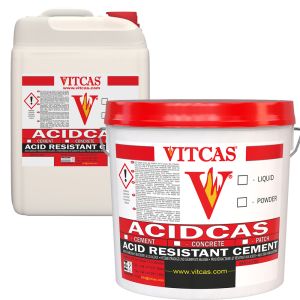 Acid proof Cement MortarSpecial Price £47.99 £39.99 Regular Price £59.99 £49.99
Acid proof Mortar Acidcas is a heat resistant, acid-proof cement, which can be utilised for different applications such as use in chemical and petrochemical industries, in the food and pharmaceuticals industry, and in jointing of acid resistant bricks and tiles and lining chimneys.
Read more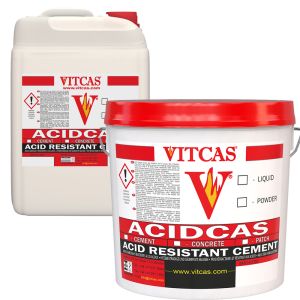 Acid Resistant ConcreteSpecial Price £47.99 £39.99 Regular Price £59.99 £49.99
Vitcas Acidcas Concrete is an acid resistant aggregate/concrete mix. Can be used in many industrial applications such as in petrochemicals and chemical industries, as well as in chimneys which deal with acidic gases and in laying floors which are vulnerable to attack by acids. Rates to 1400°C.
Read more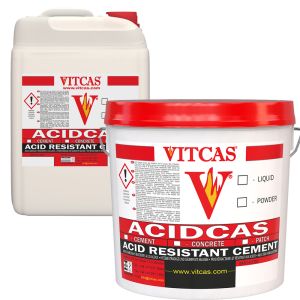 Acid-proof RenderSpecial Price £47.99 £39.99 Regular Price £59.99 £49.99
Vitcas Acidcas Render/Patch is an acid-proof, heat-resistant material designed to withstand temperatures up to 1400°C / 2550°F while offering strong resistance against acid corrosion. It is suitable for a wide range of industrial applications, including the petrochemical, food, and chemical industries, as well as for use in chimneys exposed to acidic gases.
Read more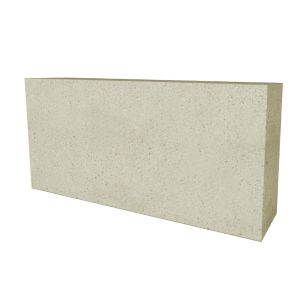 Acid Resistant BricksSpecial Price £3.60 £3.00 Regular Price £4.80 £4.00
Vitcas Acid Resistant Clay Firebricks are heat resistant to 400°C / 752°F. The acid resistant bricks are also resistant to chemicals including most mineral acids and resistant to abrasion. They are suitable for use in applications such as in power generation and in the cement, steel, and aluminium industries.
Read more
Engineering Acid-Resistant Linings for Industrial Service
Chemical attack can degrade conventional masonry, concrete and metallic plant, leading to loss of section, damaged joints and contamination of the supporting structure. Exposure may arise from continuous contact, intermittent immersion, spills, splash, vapour or acidic condensate. An effective lining must therefore be designed around the actual process duty rather than a generic description such as “acid service”.
The VITCAS acid-resistant materials form a complementary range for brick-lined and monolithic construction. Acidcas Mortar beds and joints acid-resistant bricks and tiles. Acidcas Render provides a protective layer on suitable vertical masonry or concrete. Acidcas Concrete creates monolithic sections and larger acid-resistant surfaces. Fireclay acid-resistant bricks provide a dense, abrasion-resistant working face where unit construction is preferred.
Acid-Resistant Material Selection
| Material | Primary function | Temperature rating | Key specification points |
|---|---|---|---|
| Acid Resistant Bricks | Dense working face for vessels, chimneys, pits, floors and process structures | 400°C | Low-porosity fireclay bricks resistant to abrasion and most mineral acids; not resistant to hydrofluoric acid. Bed and joint with Acidcas Mortar. |
| Acidcas Mortar | Jointing and bedding acid-resistant bricks and tiles | 1400°C | Two-part silicate-based system supplied as 25kg powder and 11.5kg liquid. At least 96% acid resistance in accordance with BS 784. |
| Acidcas Render | Protective lining for suitable vertical masonry and concrete surfaces | 1400°C | Two-part system supplied as 25kg dry mix and 10kg liquid. Intended for walls, tanks, ducts, chimneys and containment surfaces. |
| Acidcas Concrete | Cast monolithic floors, linings and acid-resistant components | 1400°C | Graded aggregate and silicate cement system supplied as 25kg dry mix and 7.5kg liquid. Intended where heavy mechanical loading is not the principal duty. |
The temperature rating of one material does not increase the rating of the complete lining. For example, a brick system incorporating the acid-resistant bricks cannot be assumed to operate above the bricks’ 400°C rating merely because Acidcas Mortar is rated to 1400°C. The substrate, joints, anchors, membranes, insulation and all other critical components must also satisfy the design conditions.
Brick-Lined Systems
Acid-resistant bricks are suited to installations requiring a dense, low-porosity and abrasion-resistant working surface. Typical locations include floors, pits, channels, vessel linings, chimneys and areas exposed to chemical splash. The bricks measure 230 × 114 × 64mm and are installed with Acidcas Mortar, which provides chemically compatible bedding and filled joints. Ordinary Portland-cement mortar should not be substituted within the exposed acid-resistant lining.
Monolithic Linings and Surface Protection
Acidcas Render is intended for suitable vertical masonry and concrete where an acid-resistant protective layer is required, including walls, ducts and chimney surfaces. Acidcas Concrete is the monolithic option for floors, larger lining areas and cast components. Product selection must reflect the required thickness, orientation, substrate, mechanical loading and exposure regime. Acidcas Concrete is not presented as the first choice where heavy mechanical loads are the dominant design condition.
Where Acid-Resistant Linings Are Used
- Chemical and petrochemical plant: floors, channels, tanks, vats, towers, reaction areas and equipment exposed to acidic liquids or vapours.
- Chimneys, flues and ducts: linings exposed to acidic flue gases and condensate. Gas composition, surface temperature and acid-dew-point conditions must be assessed.
- Secondary containment: bunds, pits and controlled drainage areas intended to limit damage following leaks or spills, subject to the complete containment design.
- Power generation and heavy industry: process areas affected by acid gases, chemical treatment or acidic residues, including selected applications in steel, aluminium and cement production.
- Water treatment, battery production, mining, pulp and paper: areas exposed to specified acidic process solutions, provided the full chemical duty has been verified.
- Food, beverage and pharmaceutical processing: surfaces exposed to acidic process media or cleaning chemicals, where all separate hygiene, food-contact and regulatory requirements have also been confirmed.
Information Required for Correct Specification
| Design factor | Information to establish | Why it matters |
|---|---|---|
| Chemical exposure | Every acid, solvent, salt, alkali and cleaning chemical, including mixtures and contaminants | Compatibility cannot be determined from pH or the principal acid alone. |
| Concentration and temperature | Minimum, normal and maximum concentration; process, wall and cleaning temperatures | Chemical attack may change substantially with concentration and temperature. |
| Contact regime | Continuous immersion, intermittent contact, splash, vapour, condensate or emergency spill | Duration, replenishment and drying cycles influence the severity of exposure. |
| Mechanical duty | Traffic, impact, abrasion, vibration, hydrostatic load and cleaning method | The chemical lining must also withstand the physical service conditions. |
| Substrate and geometry | Concrete, masonry or existing lining; condition, moisture, falls, corners, penetrations and joints | Adhesion, lining continuity and movement accommodation depend on correct detailing. |
| Thermal movement | Temperature gradients, cycling, expansion joints and dissimilar materials | Uncontrolled movement can crack rigid linings or open chemical pathways at joints. |
| Commissioning | Ambient conditions, available cure time, first chemical exposure and heating programme | Premature service can prevent the lining from developing its intended properties. |
Chemical and Temperature Limitations
Acidcas is a two-part silicate-based range with resistance to most hot and cold acids, but it is not suitable for hydrofluoric acid. The manufacturer also states that Acidcas materials are not suitable for extended exposure to alkaline substances. “Acid resistant” must not be interpreted as resistance to every chemical, mixture or concentration.
The stated 1400°C rating for Acidcas Mortar, Render and Concrete describes high-temperature capability; it does not constitute a compatibility chart for hot liquid immersion. Chemical identity, concentration, temperature and duration must be checked together. Where sulphuric, hydrochloric, nitric or mixed acids are present, obtain confirmation for the defined operating envelope rather than relying solely on the general “most acids” statement.
Installation and Quality Control
The supporting structure must be stable, sound and correctly detailed before lining work begins. Remove contamination, laitance, damaged material and residues that could impair adhesion. Locate cracks, construction joints, penetrations and changes of material, then incorporate them into the lining design instead of bridging them without assessment.
Acidcas Mortar, Render and Concrete are supplied as matched powder and liquid components. Mix only in the product-specific ratio and sequence stated in the current instructions; do not dilute with water or combine components from different Acidcas grades. Control batch size, application thickness, joint filling and working time so that a continuous lining is formed without weak interfaces.
Protect the installation throughout curing and do not introduce heat, process chemicals, washdown or mechanical traffic before the stated commissioning conditions have been met. Record batch references, mixing, ambient conditions, applied thicknesses and inspection results. For critical containment and process plant, include inspection, holiday or continuity testing where appropriate to the specified lining system, and define a planned maintenance regime.
Frequently Asked Questions
What is an acid-resistant lining?
An acid-resistant lining is a protective working layer installed between a corrosive process environment and the supporting structure. It may use acid-resistant bricks and mortar or a monolithic render or concrete, depending on the geometry, exposure and mechanical duty.
Are Acidcas materials resistant to every acid?
No. They are described as resistant to most acids, but hydrofluoric acid is specifically excluded. Compatibility must also be checked for the actual acid concentration, temperature, contact time, mixtures and process contaminants.
Can Acidcas be used with hydrofluoric acid?
No. Hydrofluoric acid is excluded from the stated chemical resistance of the Acidcas range and the acid-resistant bricks. A separately verified lining material is required.
Are Acidcas products resistant to alkalis?
They are not recommended for extended exposure to alkaline substances. Mixed acid and alkali duties, alkaline cleaning cycles and pH excursions must be considered during chemical compatibility review.
What is the maximum service temperature?
Acidcas Mortar, Render and Concrete are rated up to 1400°C. The acid-resistant bricks are rated to 400°C. The permissible temperature of the complete lining is governed by the lowest-rated critical component and the actual chemical and mechanical conditions.
What is the difference between Acidcas Mortar, Render and Concrete?
Acidcas Mortar is used to bed and joint acid-resistant bricks or tiles. Acidcas Render forms a protective layer on suitable vertical masonry or concrete. Acidcas Concrete is a graded monolithic material for casting floors, larger surfaces and shaped components.
Can acid-resistant bricks be laid with ordinary mortar?
Not within the exposed chemical lining. Ordinary building mortar can become a vulnerable path through an otherwise resistant brick surface. The bricks are intended to be installed and jointed with Acidcas Mortar.
Can Acidcas Render be applied over existing concrete?
It is formulated for suitable masonry and concrete surfaces, but the substrate must first be assessed for strength, contamination, moisture, cracks and movement. Unsound or chemically contaminated concrete requires appropriate preparation or removal before lining.
Is Acidcas Concrete suitable for industrial floors?
It is intended for floor areas exposed to acidic substances. However, the manufacturer describes it for locations where heavy mechanical loads are not the principal concern. Traffic, impact, abrasion and point loads must be included in the floor-system design.
Can these materials line tanks and vessels?
They are used in selected tank, vat and vessel linings, but suitability is project specific. Chemical immersion, hydrostatic load, temperature, structural movement, penetrations, joints and secondary containment requirements must all be engineered.
Does acid resistance mean that the lining is waterproof?
No. Chemical resistance and liquid-tightness are separate performance requirements. Joint design, substrate cracking, penetrations, movement and any required membrane or secondary barrier must be addressed by the complete lining specification.
Can Acidcas be used in food or pharmaceutical plants?
It may be considered for surfaces exposed to specified acidic process media, but this application statement does not establish food-contact approval, hygienic classification, cleanroom suitability or compliance with sector-specific regulations. Confirm every applicable requirement separately.
Which information is needed before selecting an acid-resistant lining?
Provide the full chemical list, concentrations, operating and cleaning temperatures, contact duration, immersion or splash conditions, mechanical loading, substrate details, geometry, movement joints and required commissioning time. This information defines the service envelope against which compatibility can be assessed.