
Marine Refractory & Insulation
Refractory and High-Temperature Insulation for Marine Vessels
Marine machinery, combustion and heating systems combine high operating temperatures with vibration, structural movement, restricted clearances, moisture, salt exposure and demanding inspection access. The VITCAS range includes refractory castable, mortar and mouldable compounds for suitable boiler and incinerator linings; boards and fibre blankets for thermal insulation; rope, fire cement and sealants for compatible appliance and flue joints; wraps and coated fabrics for selected dry exhaust, duct, heat-shield and removable-jacket applications; and pipe jointing compound for specified threaded services. These materials may support projects on commercial ships, passenger vessels, ferries, fishing vessels, workboats, service craft, yachts, boats and barges. Selection must follow the equipment manufacturer, vessel design, flag-state, class and survey requirements, as well as the actual temperature, movement and exposure. A material's temperature rating or reaction-to-fire classification does not by itself approve a complete marine installation, fire division, penetration seal or exhaust system.
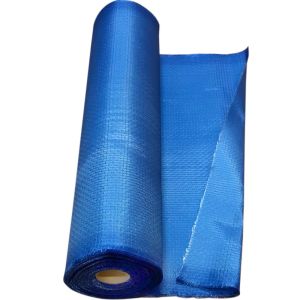 Acrylic Double-Sided Fiberglass Cloth - BlueSpecial Price £9.60 £8.00 Regular Price £12.00 £10.00
Acrylic Coated Fibreglass Cloth is double-sided with a blue acrylic coating, enhancing abrasion resistance. Its rigid structure and excellent insulation properties make it perfect for use in insulation jackets, expansion joints, and seals, providing durability and protection in high-temperature environments.
Read more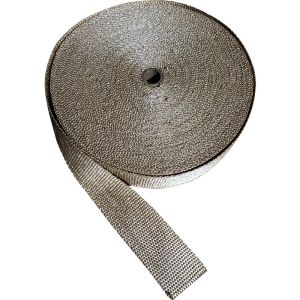 Titanium Basalt Fiber TapeSpecial Price £2.28 £1.90 Regular Price £3.60 £3.00
Vitcas Texturised Basalt Fibre Tapes, also known as Webbing Tapes, are high-performance exhaust insulation wraps. They are resistant to temperatures up to 700°C (1290°F) and provide protection against radiation and chemicals, making them ideal for insulating pipes in high-temperature industrial environments.
Read more Vitcas Refractory Castable Grade 1600°C-Refractory ConcreteSpecial Price £47.99 £39.99 Regular Price £53.99 £44.99
Castable Refractory (Refractory Concrete) is used for repairs to boiler linings, boiler doors and incinerator linings. For use where localised temperatures are higher; for example in gas or oil burner blocks and where forced air is being used.
Read more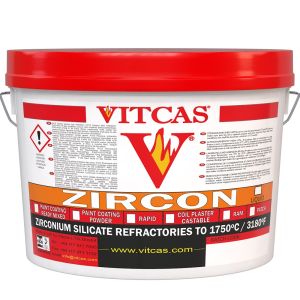 VITCAS Zircon Paint Coating 1750°CSpecial Price £47.99 £39.99 Regular Price £83.99 £69.99
VITCAS Zircon Refractory Paint Coating. It has a creamy consistency and can be applied directly. For spray application, it has to be thinned with water. Its maximum service temperature is of 1750°C / 3180°F. For use on furnaces, ladles, ceramic fibre linings and refractories in contact with molten alloys and glass.
Read more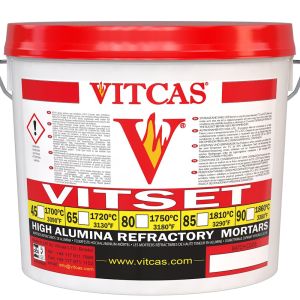 Vitset 45-Refractory Mortar Ready Mixed 1700°CAs low as £17.99 £14.99 Regular Price £35.99 £29.99
Vitset 45 is a versatile, ready-mixed refractory mortar designed to withstand temperatures as high as 1700°C /3100°F. Ideal for trowelling, patching and setting various high-grade refractory and insulation fire bricks rated above 1400°C. Suitable for use with ceramic fibre boards and blankets, making it a practical solution for both repairs and new installations in high-temperature environments.
Read more Refractory Plastic Mouldable 1600°C - VITPLAST 45ABSpecial Price £42.00 £35.00 Regular Price £54.00 £45.00
Vitcas Plastic Mouldable Refractory- Vitplast 45AB. It rates to high temperatures not exceeding 1600°C / 2900°F. The plastic mouldable is exceptionally rapid setting and perfect for applications such as repairing launders and ladles in foundries and repairing boiler doors and boiler linings.
Read more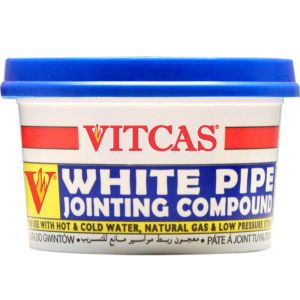 White Pipe Jointing CompoundSpecial Price £2.99 £2.49 Regular Price £5.99 £4.99
VITCAS® White Pipe Jointing Compound 400g is a non-hardening material for creating an airtight seal in pipe threads in plumbing. Prevents water leaks in natural gas and water systems. Conforms to BS EN 751-2:1997 and to BS6956 Part 5: 1992.
Read more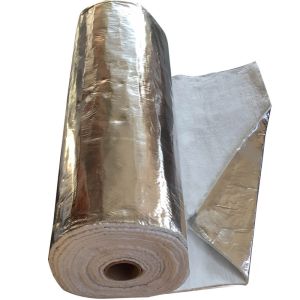 Aluminium Coated Insulation - Flue Wrap 12mm x 1m -per MetreSpecial Price £24.00 £20.00 Regular Price £30.00 £25.00
Flue Chimney Wrap Insulation Blanket suitable for insulating flues and flue liners inside the chimney. Aluminium Coated Glass Fibre Insulating Mat will reduce risk of condensation, tar formation, as well as chimney fires and hence elongate the life of your flue liner and maximise its performance.
Read more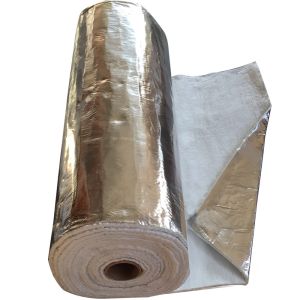 Aluminium Coated Insulation - Flue Wrap 12mm x 1mSpecial Price £166.80 £139.00 Regular Price £300.00 £250.00
Vitcas Aluminium Coated Insulation Flue Wrap provides high-performance thermal insulation for flues and liners in stove chimneys, enhancing efficiency and safety by minimising heat loss, condensation, and the risk of chimney fires.
Read more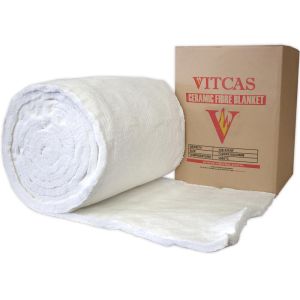 Ceramic Fibre Blanket 1260°C£66.00 £55.00 Regular Price £96.00 £80.00
VITCAS Ceramic Fibre Blanket is resistant to a maximum service temperature of 1260°C (2300°F), with a density of 128kg/m³. Available in thicknesses of 13mm, 25mm, and 50mm, it is widely used in industries like petrochemical, steel, and ceramics. Ideal for insulation and furnace lining applications.
Read more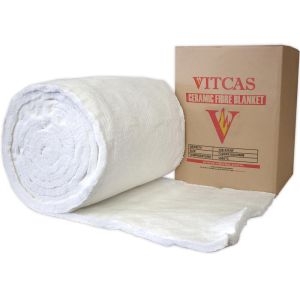 Ceramic Fibre Blanket 1260°C -per Metre£11.99 £9.99 Regular Price £19.19 £15.99
VITCAS Ceramic Fibre Insulation Blanket offers low thermal conductivity and high tensile strength, withstanding temperatures up to 1260ºC (2300ºF). Available by the metre, it comes in 13mm and 25mm thicknesses, 610mm wide, with a density of 128kg/m³, ideal for high-temperature insulation.
Read more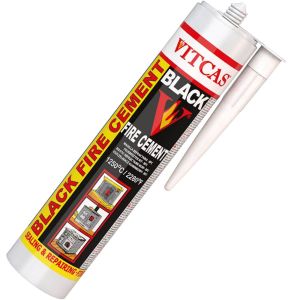 BFC - Black Fire Cement 1250°CSpecial Price £3.59 £2.99 Regular Price £5.99 £4.99
Black fire cement for both domestic and commercial applications, ideal for use on fire bricks, grates, flue pipes, boilers, and other areas exposed to extreme heat. It provides excellent adhesion to fire bricks, blockwork, stone, and clayware. Resistant to high temperatures up to 1250°C / 2280°F
Read more White Stove Rope Seal + Adhesive (Kit)As low as £4.68 £3.90 Regular Price £8.39 £6.99
Stove Rope Replacement Kit is in diameters from 6mm to 12mm. Contains 2 metres of Vitcas White Fire Rope, Vitcas Rope Adhesive and Protective Gloves. The kit is for renewal of any sealing in your stove e.g. in its flue system, or between the stove door and body of the stove, or in the stove glass.
Read more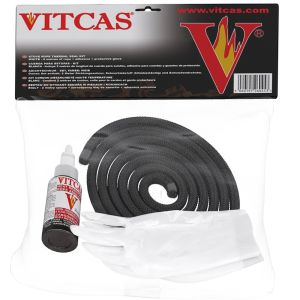 Black Rope + Adhesive - Kit for Fireplaces & StovesAs low as £5.40 £4.50 Regular Price £11.40 £9.50
The Vitcas Black Stove Rope Kit contains 2 metres of fire rope, black rope adhesive, and protective gloves, making it perfect for sealing stove doors and joints. Available in diameters ranging from 6mm to 12mm, it ensures a secure and heat-resistant seal in high-temperature applications.
Read more Heat Resistant SILICONE 315°CSpecial Price £5.99 £4.99 Regular Price £11.99 £9.99
VITCAS High Temperature Silicone is a flexible sealant designed to withstand high temperatures up to 315ºC. It is perfect for joints in contact with high temperatures, such as flues, ovens, gaskets, stoves, boilers, and more. Heat Resistant silicone sealant provides excellent adhesion to most building materials, ensuring a strong and durable bond.
Read more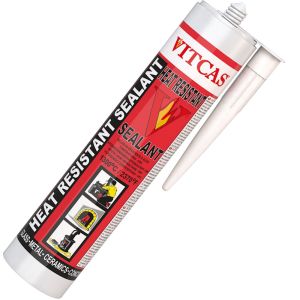 HRS - Heat Resistant Sealant 1300°CSpecial Price £9.59 £7.99 Regular Price £11.99 £9.99
VITCAS Heat Resistant Sealant is a high-performance, high-temperature caulking compound engineered for fixing, jointing and fire-sealing applications. Rated for continuous exposure up to 1300°C / 2370°F, it provides reliable bonding and airtight sealing on ceramics, metals, silica-based materials and glass in demanding high-heat environments.
Read more HT - High Temperature FireboardSpecial Price £35.99 £29.99 Regular Price £47.99 £39.99
VITCAS High Temperature Plasterboard is a non-combustible fireproof board which does not contain any gypsum. Can be used with Vitcas Heat Resistant Plaster in areas where Vitcas Fireplace Render cannot be applied. Non-flammable rating A1 in accordance with EN 13501-1:2019. Fire and water-resistant, mould and mildew resistant.
Read more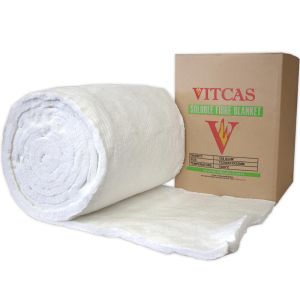 Bio-Soluble Insulation Blanket 1200°C - per Metre£14.39 £11.99 Regular Price £19.19 £15.99
VITCAS Bio soluble fibre insulation blanket is designed to withstand temperatures up to 1200°C (2192°F). This insulation blanket presents a very low health risk due to its low bio-persistence and is safe to handle, making it suitable for both industrial and environmental standards. The blanket is 25 mm thick, 610 mm wide, with a density of 128 kg/m³.
Read more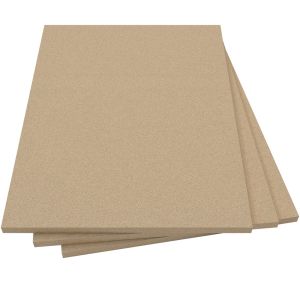 Vermiculite Fire Board Fire-proof InsulationAs low as £35.99 £29.99 Regular Price £71.98 £59.98
Vermiculite Fire Resistant Board – VITCAS Fireproof Insulation, refractory up to 1100ºC / 2010ºF, designed for use as a heat shield, register plate, or replacement for fire bricks in wood-burning and multi-fuel stoves. This versatile board provides excellent thermal insulation and fire resistance.
Read more Bio Soluble Insulation Fibre Blanket 1200°C£72.00 £60.00 Regular Price £72.00 £60.00
Vitcas Bio-soluble fibre insulation blanket offers exceptional thermal performance, withstanding temperatures up to 1200ºC (2192ºF). Its low bio-persistence and biodegradable fibres ensure safety and minimal environmental impact. With a density of 128 kg/m³, it provides reliable insulation for high-temperature applications..
Read more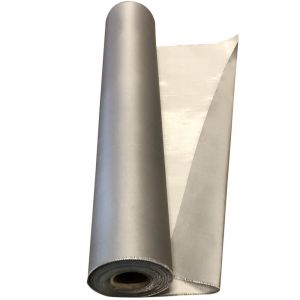 Polyurethane PU Coated Fiberglass ClothSpecial Price £8.40 £7.00 Regular Price £12.00 £10.00
Polyurethane (PU) Coated Glass Fibre Cloth is a halogen-free, gas-impermeable, Fire & Smoke fabric. It withstands short-term temperatures up to 600°C (1110°F) and offers high durability and thermal stability, making it ideal for applications requiring reliable heat and flame resistance.
Read more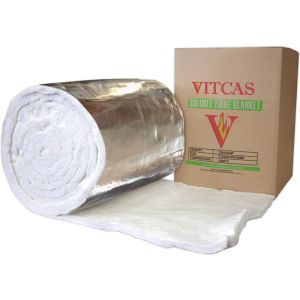 Bio Insulation Blanket with Aluminium Foil£94.80 £79.00 Regular Price £106.80 £89.00
Bio Insulation Blanket with Aluminium Foil is a high-performance thermal insulation solution resistant up to 1200°C (2190°F). Made from bio-soluble fibres, it offers excellent thermal resistance while being eco-friendly and safe. The aluminium foil layer boosts insulation by reflecting radiant heat, making it ideal for high-temperature applications and thermal processing equipment.
Read more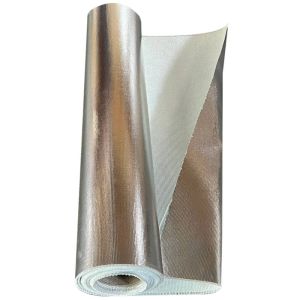 Aluminium Foil E-Glass Fiberglass ClothAs low as £8.40 £7.00 Regular Price £12.00 £10.00
Aluminium Foiled Glass Fibre Cloth, single-sided laminated with aluminium foil. The aluminium layer reduces heat loss and minimises fabric fraying. Designed for thermal insulation of machines, installations, and industrial equipment. Also used in the production of protective clothing, including gloves, for high-temperature environments.
Read more
Marine Thermal Protection Is an Installed System
A marine installation must control heat without obstructing inspection, ventilation, drainage, emergency access or movement of the supporting structure. The hot component, insulation, outer covering, fixings, joints and adjacent materials must be considered together. A product suitable for a small heating appliance may be unsuitable on a propulsion-engine exhaust, inside a refractory-lined auxiliary boiler or within a regulated structural fire division.
Establish the vessel type, service and operating area first. A recreational craft, inland vessel, fishing vessel, workboat, commercial ship, ferry and passenger vessel can be subject to different construction, survey and approval routes. Retain the appliance, engine, boiler, incinerator, exhaust and vessel manufacturer's installation details. Consult the surveyor, certifying authority, classification society or flag Administration wherever statutory or class approval is required; SOLAS requirements do not automatically apply to every marine vessel.
Functions Within a Marine Thermal System
| Material function | Typical marine use | Selection priorities |
|---|---|---|
| Dense refractory | Hot-face lining and local repair in compatible boilers, incinerators and combustion equipment | Temperature, flame pattern, fuel ash, erosion, anchors, vibration, curing and dry-out |
| Fibre or board insulation | Heat-flow control around suitable appliances, ducts, casings and protected machinery zones | Thermal conductivity, thickness, shrinkage, surface temperature, moisture and fixing method |
| Rope or rigid sealant | Specified stove-door, glass, flue and refractory joints | Joint movement, section, compression, substrate, temperature and gas tightness |
| Wrap or coated fabric | Selected dry exhausts, flues, ducts, removable insulation jackets and heat shields | Component temperature, coating limit, oil contamination, fastening, abrasion and inspection |
| Pipe thread compound | Approved threaded joints carrying a listed medium within defined pressure and temperature limits | Fluid, pipe material, thread form, pressure, temperature and system approval |
| Structural fire protection | Tested bulkheads, decks, linings, doors and penetrations | Complete assembly, FTP test, type approval, fire class, orientation, joints and approved fixings |
Marine Heating Appliances and Flues
| Product | Published limit | Potential use |
|---|---|---|
| Vermiculite Fire Board | 1100°C | Workable insulation board around compatible covered heating installations where the complete clearance detail is verified |
| HT High Temperature Fireboard | 650°C; A1 reaction to fire | Non-gypsum board for suitable heat-exposed linings and finishes outside an unverified marine fire division |
| White Stove Rope and Adhesive Kit | 550°C | Replacement glass-fibre gasket for compatible stove doors, glass and defined flue joints |
| Black Stove Rope and Adhesive Kit | 550°C | Black replacement gasket for compatible solid-fuel stove doors and other specified grooves |
| Aluminium-Coated Flue Wrap per Metre | Glass fibre 550°C; foil best suited up to 300°C | Cut-length insulation around suitable flues or liners where the flue design permits wrapping |
| Aluminium-Coated Flue Wrap Roll | Glass fibre 550°C; foil best suited up to 300°C | Longer-length version for an approved flue-insulation detail |
| Heat Resistant Silicone | 315°C | Flexible sealing at compatible lower-temperature joints and external interfaces |
| BFC Black Fire Cement | 1250°C | Rigid fine joints and minor repairs in compatible stove, fire-brick and internal flue assemblies |
| HRS Heat Resistant Sealant | 1300°C | Rigid high-temperature joints on compatible refractory, metal, silica or glass substrates |
Install a solid-fuel appliance and chimney to the manufacturer's marine instructions and the standard, code or examination scheme applicable to the vessel. Secure the appliance and hearth to the structure, maintain the prescribed clearances from combustible linings and furnishings, support the chimney independently and provide the required combustion air and accommodation ventilation. An insulation wrap must not be used to convert an unsuitable single-wall flue into an approved twin-wall or insulated chimney.
Choose rope by the original gasket section and groove, not by door size alone. An undersized rope can leak; excessive section or compression can prevent the latch from closing correctly. Black Fire Cement and HRS cure as rigid materials and should not replace a flexible gasket or bridge a joint designed to move. Heat Resistant Silicone remains flexible but is limited to 315°C and belongs only where the measured or calculated joint temperature stays within that limit.
Marine Boilers, Incinerators and Refractory Repairs
| Product | Published temperature | Potential use |
|---|---|---|
| Refractory Castable Grade 1600 | 1600°C | Dense monolithic hot-face sections, burner areas and local repairs in compatible combustion equipment |
| Vitset 45 Refractory Mortar | 1700°C | Air-setting mortar for jointing compatible dense or insulating refractory bricks |
| VITPLAST 45AB Plastic Mouldable | 1600°C | Ram-installed local repair of compatible brick and monolithic industrial linings |
| Zircon Refractory Coating | 1750°C | Thin coating over an approved refractory substrate where the process chemistry supports its use |
Survey the original lining, anchors, expansion allowances, burner geometry and adjacent metalwork before demolition. Movement and vibration can expose weak interfaces that remain hidden in a stationary installation. Do not cover corroded boiler pressure parts, damaged burner components or failed anchors with refractory repair material.
Dense castable is not thermal insulation merely because it withstands high temperature. The hot face and backup insulation have different density, strength and heat-flow functions. Measure installation water accurately, cure the material and apply a controlled dry-out schedule before returning the equipment to full firing. A surface that appears dry can still contain enough moisture to create internal steam pressure and spalling.
Blankets for Thermal Insulation
| Product | Published temperature | Potential use |
|---|---|---|
| Biosoluble Fibre Blanket | 1200°C | Full-roll flexible insulation for protected equipment and lining zones |
| Biosoluble Insulation Blanket per Metre | 1200°C | Cut-length flexible insulation for small areas and maintenance quantities |
| Biosoluble Blanket with Aluminium Foil | Blanket 1200°C; foil limit not stated | Faced blanket for suitable protected insulation and removable-jacket constructions after verifying the foil exposure |
| Ceramic Fibre Blanket 1260 | 1260°C | Full-roll flexible insulation for suitably contained and protected high-temperature zones |
| Ceramic Fibre Blanket 1260 per Metre | 1260°C | Cut-length version for smaller maintenance and insulation projects |
Calculate insulation thickness from the required external surface temperature, hot-side temperature, thermal conductivity at the relevant mean temperature, ambient conditions and every layer in the construction. Maximum material temperature does not predict the temperature of the casing, outer foil or nearby timber and composite linings.
In machinery spaces, insulation should be enclosed or faced where necessary to resist oil mist, fuel contamination, moisture and mechanical damage. Wet or contaminated insulation can lose performance and create an additional hazard. Arrange cladding, seams and drainage so that inspection for leakage and corrosion remains possible. Do not assume that an aluminium-facing temperature equals the higher rating of the fibre beneath it.
Dry Exhausts, Heat Shields and Technical Fabrics
| Product | Published limit | Potential use |
|---|---|---|
| Titanium Basalt Fibre Tape | 700°C | Wrap for compatible dry exhaust or high-temperature pipework where the equipment manufacturer permits insulation |
| Acrylic Double-Sided Glass Fibre Cloth | 550°C stated for the cloth | Weather-resistant outer fabric for compatible removable jackets, covers and expansion details |
| PU-Coated Glass Fibre Cloth | 550°C continuous; 600°C short term | Low-permeability outer cloth for engineered fire, smoke or removable-insulation constructions |
| Aluminium-Foil E-Glass Cloth | 550°C stated for the composite cloth | Low-emissivity facing and outer layer for compatible insulation jackets and heat shields |
First identify whether an exhaust is dry, water-injected or otherwise cooled. Do not wrap a wet exhaust hose or unapproved component with a material intended for a dry metallic exhaust. Adding insulation changes metal temperature, thermal expansion and the visibility of cracks or leakage; obtain permission from the engine or exhaust manufacturer and retain access to joints, sensors, bellows and supports.
Secure fabrics and tapes against vibration, chafe and exhaust gas velocity. Locate seams away from likely leakage paths and inspect fasteners after initial heat cycles. The temperature resistance of a base fabric does not necessarily apply to its acrylic, polyurethane, adhesive or aluminium-facing layer. Use the lowest applicable continuous limit in the complete construction.
Threaded Pipe Joints
Pipe Jointing Compound is described for threaded hot- and cold-water, natural-gas, LPG and low-pressure steam services up to 7 bar and 200°C. Confirm that the exact fluid, thread standard, pipe material, pressure and temperature fall within its certified scope and the vessel's approved piping specification. Do not infer suitability for diesel, petrol, hydraulic oil, potable water or a safety-critical marine fuel system from the words general purpose or non-toxic.
Structural Fire Protection and Marine Approval
Reaction to fire describes how an individual product contributes to ignition and fire growth. Fire resistance describes how a complete bulkhead, deck, door or penetration maintains integrity and insulation for a defined time. HT Fireboard's European A1 reaction-to-fire classification does not by itself create a marine A-class or B-class division. Likewise, the EN 45545-2 railway classification stated for HRS is not an IMO FTP Code approval.
Where SOLAS or national merchant-shipping rules apply, fire-safety products and assemblies may require testing under the IMO Fire Test Procedures Code and type approval by the flag Administration or an authorised body. Confirm the approval certificate, exact product identity, thickness, density, substrate, orientation, joint arrangement, fixings and permitted penetrations. Substitution or site-built combinations outside the certificate may invalidate the claimed class.
No material in this category should be described as marine approved, SOLAS approved, MED approved, an A-60 system or an approved penetration seal unless current documentation expressly covers that product and the installed assembly.
Moisture, Salt, Vibration and Corrosion
- Exclude water: protect absorbent boards and blankets from bilge water, spray, condensation and rain during storage and installation.
- Control contamination: replace insulation soaked with fuel, oil or chemicals in accordance with the vessel's maintenance procedure.
- Allow movement: accommodate vibration, hull flexing, thermal expansion and movement at equipment mounts without forcing rigid sealants into flexible joints.
- Prevent chafe: use compatible mesh, cladding, edge protection and fasteners where machinery vibration can abrade textiles.
- Inspect beneath insulation: provide removable sections or planned access for corrosion and leakage checks.
- Verify materials: select fixings and outer coverings that remain compatible with the substrate and marine atmosphere at temperature.
Installation and Maintenance Checks
Record the original clearances, material build-up, fasteners, penetrations and service temperatures before removing insulation. Isolate and cool the appliance, boiler, engine or exhaust and secure all relevant fuel, electrical, pressure and mechanical energy. Remove salt, oil, soot, corrosion and loose material using controls appropriate to the hazard.
After installation, commission the equipment under the manufacturer's procedure and inspect for smoke or gas leakage, abnormal casing temperature, odour, loose fixings and movement. Recheck after the first operating cycles because gaskets settle and wraps can relax. Keep repairs visible in the vessel maintenance record, including material batch, location, thickness, curing and any surveyor acceptance.
Inspect stove door rope, flue connections, chimney support, roof penetration, hearth, heat shields and nearby combustible surfaces regularly. In machinery spaces, examine exhaust joints, lagging, cladding, support brackets and signs of oil or water ingress. A new hot spot, soot mark, burnt edge, frayed fabric or hard and flattened gasket warrants investigation rather than another layer of insulation.
Frequently Asked Questions
Which materials may be used around a solid-fuel appliance on a marine vessel?
Possible components include a compatible vermiculite or high-temperature board, correctly sized rope gasket, rigid fire cement for suitable joints and an approved insulated chimney. The complete arrangement must follow the appliance manufacturer's marine instructions and the standard, code or examination scheme applicable to the vessel.
Can flue wrap replace an insulated marine chimney?
No. A wrap can insulate a compatible flue only where the design permits it. It does not convert ordinary single-wall pipe into a tested twin-wall chimney or establish the required clearance through a deck, roof or combustible lining.
What rope size is required for a marine heating appliance?
Use the appliance manufacturer's specification or match the original gasket and cleaned groove. The rope should seal evenly without stretching and must not be so large that the door or latch cannot close correctly.
Should I use silicone or fire cement on a flue joint?
Silicone remains flexible but is limited to 315°C. Black Fire Cement is rigid and rated to 1250°C. Select from the measured joint temperature, movement and flue manufacturer's specified jointing method; neither is universally interchangeable.
Can HRS sealant be used as a flexible expansion joint?
Do not assume that it remains elastomeric after curing. HRS is a high-temperature rigid sealing compound. Use a gasket or joint system specifically designed for the expected movement where flexibility is required.
Is HT Fireboard an A-class marine bulkhead?
No. Its A1 classification concerns reaction to fire under EN 13501-1. A marine A-class or B-class division is a complete assembly tested and approved with defined framing, insulation, joints and fixings.
Does the HRS railway fire certificate provide marine approval?
No. EN 45545-2 applies to railway vehicles. Marine installations governed by SOLAS or national rules may require IMO FTP testing and flag-state or recognised type approval for the exact product and assembly.
Can biosoluble or ceramic fibre blanket be used in an engine room?
It may form part of a designed insulation system if temperature, thickness, containment, fixings and exposure are suitable. Protect it against oil, fuel, moisture, gas velocity and mechanical damage, and confirm any required marine approval.
Does a 1200°C blanket mean the aluminium foil also withstands 1200°C?
No. The fibre and facing are different components. The exposed foil, adhesive or laminate may have a much lower limit. Obtain the facing data and apply the lowest relevant continuous temperature to the construction.
Can basalt tape be wrapped around a marine engine exhaust?
Only on a compatible dry exhaust where the engine or exhaust manufacturer permits wrapping. Check metal temperature, expansion, supports and inspection access. Do not apply it to a wet exhaust hose or water-injected component without specific approval.
What is the difference between exhaust insulation and a heat shield?
Insulation reduces heat flow from the hot component, while a shield intercepts radiant heat and normally includes a controlled air gap. Either can increase temperature elsewhere, so the complete geometry, ventilation and surface-temperature target must be assessed.
Can refractory castable repair a marine boiler?
It can repair a compatible refractory lining after the damage cause, anchors and substrate have been assessed. It must not be used to conceal damaged tubes, shell, burner components or other pressure and safety-critical parts.
Why is controlled dry-out required after a refractory repair?
Castable and mortar retain installation moisture. Heating a fresh repair too quickly can turn that water into pressurised steam, leading to cracks or explosive loss of material. Set the drying and heat-up stages from the product instructions, repair geometry and equipment manufacturer's start-up limits.
Can coated cloth make a fire- or smoke-tight marine barrier?
Only if the complete barrier, seams, supports and penetrations have been tested and approved for that duty. A fabric's temperature or low-permeability claim alone does not establish integrity under a marine fire test.
Can White Pipe Jointing Compound be used in a marine fuel system?
Use it only for a listed medium within the stated pressure and temperature and where the approved piping specification permits it. The visible scope names water, natural gas, LPG and low-pressure steam; it does not establish suitability for petrol or diesel.
What causes insulation to fail on a vessel?
Common causes include water or oil contamination, vibration, chafe, loose fasteners, compressed fibre, foil damage, excessive temperature and unsealed edges. Corrosion or leakage beneath the insulation can also remain hidden until planned inspection.
How should marine insulation be inspected?
Check external temperature, seams, fasteners, cladding, staining, odour, wet areas and mechanical damage. Remove designated inspection sections to look for exhaust leakage, substrate corrosion and contamination beneath the insulation.
What information is needed to specify a marine thermal system?
Provide vessel type and use, survey regime, equipment manufacturer and model, fuel, dry or wet exhaust design, normal and maximum temperatures, target surface temperature, clearances, substrate, vibration, moisture and oil exposure, existing construction, required fire class and approval authority.