
Heatproof Mortars & Cements
Heatproof Mortars & Refractory Cements for Fireplaces & Stoves
High-temperature fireplace and stove construction requires mortars and cementitious materials matched to the joint geometry, substrate, installation environment and thermal duty. VITCAS heatproof mortars and refractory cements provide specialist solutions for setting fire bricks, constructing and repairing fireplaces and stoves, forming heat-resistant screeds and providing lightweight insulation around compatible heating structures.
Solutions include ready-mixed Heatproof Mortar for thin firebrick joints in indoor or protected installations, Outdoor Oven Cement for weather-exposed refractory construction, Heatproof Screed for thicker heat-resistant build-ups and repairs, and Vermiculite Insulating Cement where lightweight thermal insulation is required.
These materials can also be used in compatible oven, kiln and furnace applications where their individual specifications match the construction. Select the product according to the firebrick or substrate, required joint or layer thickness, indoor or outdoor exposure, insulation requirement and service temperature.
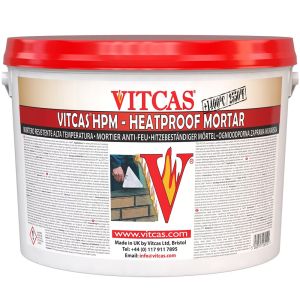 HPM - Heatproof MortarSpecial Price £23.99 £19.99 Regular Price £35.99 £29.99
VITCAS Heatproof Mortar is a ready-mixed, air-setting refractory cement specifically designed for indoor applications in high-temperature environments. This air-setting mortar is designed for setting fire bricks, brick slips, and insulation materials in heating appliances and fire protection systems. It offers excellent adhesion and forms strong, smoke- and gas-tight joints, withstanding continuous exposure to temperatures up to 1400°C (2552°F).
Read more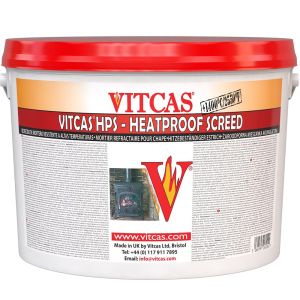 HPS - Heatproof ScreedAs low as £23.99 £19.99 Regular Price £35.99 £29.99
Fireproof Screed, a cement-like product, is resistant to 1400°C / 2550°F. For interior and exterior use. Its function is for Screeding Masonry and making replacement fire bricks for Kilns, Fireplaces, Barbeques and Pizza Ovens. Protects vulnerable materials, which are in danger of being damaged by high heat exposure.
Read more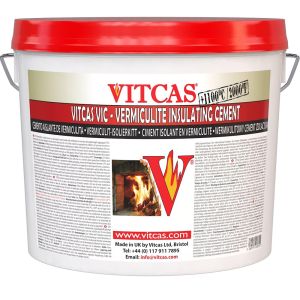 VIC - Vermiculite Insulating Cement£35.99 £29.99 Regular Price £47.99 £39.99
Vitcas Vermiculite Insulating Cement is a non-combustible, pre-mixed lightweight aggregate cement mix. Used for backing insulation and non-structural infill. Suitable for filling in gaps between firebacks and fireplaces, cast iron fireplaces and outdoor pizza ovens.
Read more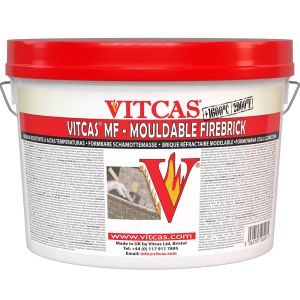 MF - Mouldable FirebrickSpecial Price £23.99 £19.99 Regular Price £35.99 £29.99
Firebrick Replacement Material. Vitcas Mouldable Firebrick is a specially formulated blend of high quality refractory (heat resistant) aggregates and bonding fire clay, resulting in a product which can be moulded into any shape to replace ordinary firebrick.
Read more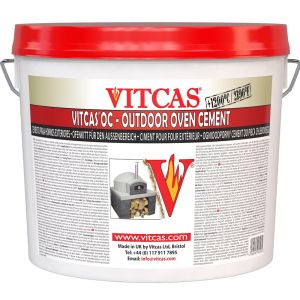 OC - Outdoor Oven CementAs low as £17.99 £14.99 Regular Price £23.99 £19.99
Vitcas Outdoor Pizza Oven Cement is an hydraulic-set mortar designed for exterior jointing with fire bricks in applications such as pizza ovens, barbecues, smokehouses, bread ovens, fire pits and other high-temperature applications. This kind of outdoor fire cement is water-insoluble, resistant to rain and frost and cures without the need for heat.
Read more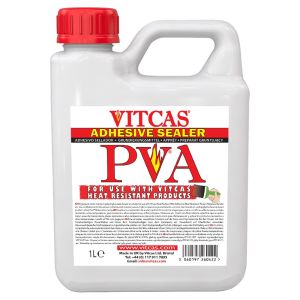 PVA - Adhesive SealerSpecial Price £9.59 £7.99 Regular Price £14.39 £11.99
VITCAS PVA Adhesive Sealer is a high-viscosity, water-resistant, rapid-drying emulsion primer designed for use in conjunction with VITCAS Heat Resistant Products. It is ideal for application on fireboards, tiles, and other porous surfaces.
Read more Vitset 45-Refractory Mortar Ready Mixed 1700°CAs low as £17.99 £14.99 Regular Price £35.99 £29.99
Vitset 45 is a versatile, ready-mixed refractory mortar designed to withstand temperatures as high as 1700°C /3100°F. Ideal for trowelling, patching and setting various high-grade refractory and insulation fire bricks rated above 1400°C. Suitable for use with ceramic fibre boards and blankets, making it a practical solution for both repairs and new installations in high-temperature environments.
Read more Vitset 80-Refractory Mortar Ready Mixed 1750°CSpecial Price £66.00 £55.00 Regular Price £96.00 £80.00
Vitcas Refractory Mortar – Vitset 80 is a ready-mixed, high-alumina mortar that withstands temperatures up to 1750°C / 3180°F. It is air-setting and ideal for setting, dipping, coating, and spraying refractory bricks. Suitable for industrial applications like steel production and foundries.
Read more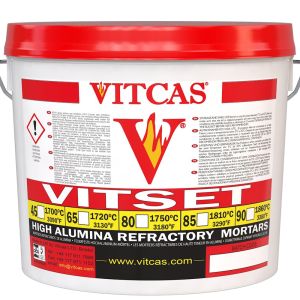 Vitset 85-Refractory Mortar Ready MixedSpecial Price £78.00 £65.00 Regular Price £108.00 £90.00
Vitcas Refractory Mortar- Vitset 85. A high alumina content, ready mixed cement which rates up to 1810ºC / 3290oF.
Read moreEnquire about this product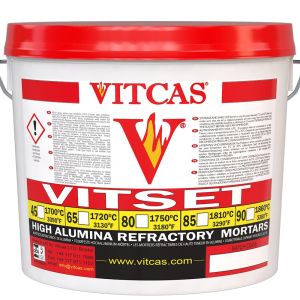 Vitset 90 - VITCAS Refractory Mortar 1860°CSpecial Price £83.99 £69.99 Regular Price £118.80 £99.00
Vitset 90 is a high alumina, ready-mixed refractory mortar, renowned for its exceptional heat resistance and stability up to 1860°C (3380°F). Ideal for industrial applications such as setting pre-cast shapes and sliding gate plates, this air-setting mortar offers practicality and reliability in demanding thermal environments.
Read more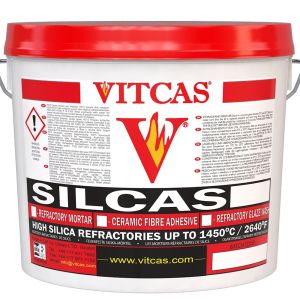 Silcas A-Refractory Mortar 1400°CSpecial Price £35.99 £29.99 Regular Price £47.99 £39.99
VITCAS Silcas A is a ready-mixed, air-setting refractory mortar that offers high-temperature resistance up to 1400°C / 2550°F. It is specifically designed for jointing and setting fire bricks, making it ideal for use in high-heat applications such as kilns, furnaces, and other industrial heating equipment.
Read more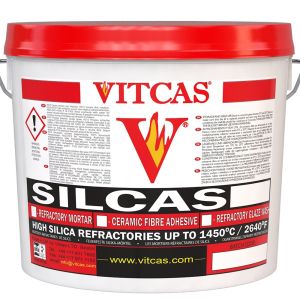 Silcas M-White Refractory Mortar 1430°CAs low as £15.59 £12.99 Regular Price £23.99 £19.99
VITCAS Silcas M - Air Setting Ready Mixed Refractory Mortar for lightweight firebricks and insulation materials up to 1430°C / 2600°F. It is a white refractory mortar so may be used where white mortar is needed for visual and aesthetic purposes. Used for setting and jointing of bricks and other products.
Read more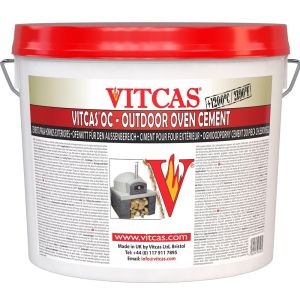
Choosing Heatproof Mortars & Refractory Cements
Heat-resistant masonry requires more than a material with a high temperature rating. The joint width, substrate, installation environment, required layer thickness and thermal function all influence whether a heatproof mortar, outdoor refractory cement, screed or insulating cement is the correct choice.
VITCAS provides specialist materials for thin-joint firebrick construction, exterior refractory masonry, thicker heat-resistant build-ups and lightweight insulating infill. These products perform different functions and should be selected as part of the complete fireplace, stove or refractory construction rather than treated as interchangeable cements.
Heatproof Mortars & Refractory Cements at a Glance
| Product | Primary function | Temperature capability | Typical application |
|---|---|---|---|
| HPM Heatproof Mortar | Ready-mixed thin-joint refractory mortar | Up to 1400°C | Indoor or protected firebrick construction, fireplaces, stoves and compatible refractory insulation |
| OC Outdoor Oven Cement | Weather-resistant refractory jointing cement | Up to 1200°C | Outdoor fireplaces, barbecues, fire pits and compatible exterior refractory masonry |
| HPS Heatproof Screed | Heat-resistant screed, thicker build-up and refractory repair material | Up to 1400°C | Larger joints or voids, masonry build-ups, screeding and compatible refractory shapes or repairs |
| VIC Vermiculite Insulating Cement | Lightweight non-structural insulating infill | Insulating function | Behind firebacks, cast-iron fireplaces and within compatible insulated refractory structures |
HPM Heatproof Mortar for Thin Firebrick Joints
VITCAS HPM Heatproof Mortar is a ready-mixed, air-setting refractory mortar formulated for high-temperature brickwork in indoor or otherwise protected environments.
Rated to 1400°C, HPM is suitable for compatible fire bricks, brick slips and refractory insulation materials used in fireplaces, wood-burning stoves, indoor ovens and other heat-exposed masonry.
HPM is designed for relatively thin joints, typically around 3–5mm. Thin refractory joints help maintain consistent brick geometry and reduce the amount of jointing material exposed within the hot-face construction.
A 10kg container provides approximate coverage for around 40 standard 230 × 114 × 64mm fire bricks when used at the specified joint thickness, although practical consumption depends on brick condition, joint geometry and application losses.
Where HPM Is Most Appropriate
- internal fireplace firebrick construction;
- compatible masonry around wood-burning stoves;
- brick slips and suitable refractory-facing materials;
- indoor or protected oven construction;
- jointing compatible refractory insulation products;
- minor refractory masonry work requiring a controlled thin joint.
HPM should not be used as a thick levelling compound or as a substitute for Heatproof Screed where large voids or substantial build-up are required.
OC Outdoor Oven Cement for Exterior Refractory Masonry
VITCAS OC Outdoor Oven Cement is a dry, water-mixed refractory cement formulated for exterior high-temperature masonry exposed to weather.
OC is rated to 1200°C and, after setting, provides a water-insoluble joint suitable for compatible outdoor refractory construction exposed to rain and frost.
Typical applications include outdoor fireplaces, masonry barbecues, fire pits, smokehouses, tandoor structures and wood-fired oven construction. Within this Fireplace & Stove category, its primary value is providing a weather-resistant refractory joint where an indoor mortar such as HPM would not be the appropriate choice.
For standard exterior firebrick construction, VITCAS recommends OC for joints in the approximate 3–10mm range. Larger joints, voids or thicker refractory sections should use a material such as HPS Heatproof Screed where the construction permits.
HPS Heatproof Screed for Larger Joints & Build-Ups
VITCAS HPS Heatproof Screed is a cement-like refractory material rated to 1400°C for thicker high-temperature construction and repair applications.
Unlike thin-joint mortar, HPS can be used where the installation requires a more substantial cementitious layer. Applications include filling larger compatible joints and voids, screeding heat-exposed masonry, forming refractory build-ups and casting suitable replacement firebrick shapes.
HPS can be used on compatible new or existing masonry and is suitable for indoor and outdoor applications when the surrounding construction is correctly designed for the environment.
Large mortar beds should not be used simply to compensate for unstable brickwork or incorrect geometry. The supporting construction must remain secure and properly set out before the refractory screed is applied.
VIC Vermiculite Insulating Cement for Lightweight Infill
VITCAS VIC Vermiculite Insulating Cement performs a different function from HPM, OC and HPS. It is a lightweight insulating cement based on exfoliated vermiculite aggregate and is used where reduced heat transfer and low weight are required.
Typical fireplace applications include filling suitable voids behind firebacks and Victorian-style cast-iron fireplaces. VIC can also be used as non-structural insulating infill within compatible refractory and outdoor oven constructions where it is fully protected from water ingress.
VIC is approximately 20% of the weight of a conventional cement mix and provides high insulation efficiency with relatively low material thickness.
VIC is not a structural cement. It should not be relied upon to support masonry, firebacks or other loaded components and is not suitable for areas subject to regular abrasion. It must also be protected from rain, persistent moisture and water penetration.
Which Mortar or Cement Should I Use?
| Application | Typical VITCAS material | Selection consideration |
|---|---|---|
| Thin internal firebrick joints | HPM Heatproof Mortar | Typically 3–5mm joints in indoor or protected construction |
| Outdoor firebrick joints | OC Outdoor Oven Cement | Weather-exposed refractory construction; approximately 3–10mm joints |
| Larger joints or voids | HPS Heatproof Screed | Use where thicker cementitious filling or build-up is required |
| Heat-resistant screed or refractory build-up | HPS Heatproof Screed | Suitable for thicker applications and compatible casting or repair work |
| Insulating infill behind a fireback | VIC Vermiculite Insulating Cement | Lightweight, non-structural insulation |
| High-alumina or specialist industrial refractory brickwork | Vitset or Silcas Refractory Mortar | Select according to brick chemistry, temperature and industrial process duty |
Mortar Joint Thickness Matters
Joint thickness is a functional part of refractory masonry design. Heatproof mortar should not be treated like conventional building mortar and applied in unnecessarily thick beds.
For standard fireclay brickwork:
- HPM Heatproof Mortar: typically 3–5mm for suitable internal joints;
- OC Outdoor Oven Cement: approximately 3–10mm for compatible exterior firebrick joints;
- HPS Heatproof Screed: use where larger gaps, voids or thicker refractory build-ups are required.
Accurate brick cutting and setting-out should be used to control masonry geometry. Mortar or screed should not be relied upon to correct unstable foundations, severely uneven brickwork or poorly designed arches.
Indoor and Outdoor Refractory Construction
The installation environment is an important distinction between products in this category.
HPM Heatproof Mortar is intended for indoor or protected high-temperature masonry. Where refractory brickwork is exposed to outdoor moisture, rain or frost, use a product formulated for exterior exposure such as OC Outdoor Oven Cement or another suitable material for the required layer thickness.
HPS Heatproof Screed can be used in compatible exterior construction, but outdoor durability depends on more than the refractory material alone. The complete structure should prevent persistent water saturation and should incorporate suitable insulation, drainage, weatherproofing and expansion detailing.
VIC Vermiculite Insulating Cement used outdoors must remain enclosed and protected from water ingress because it is an insulating infill rather than a weatherproof outer finish.
Fireplaces & Wood-Burning Stoves
Heatproof mortars and refractory cements can be used in compatible masonry fireplace and stove installations where bonded refractory construction is required.
HPM is particularly suited to thin-joint firebrick masonry, while HPS can form thicker refractory details or repairs. VIC provides lightweight backing insulation behind compatible firebacks and cast-iron fireplace structures.
Replacement bricks inside manufactured wood-burning or multi-fuel stoves should not automatically be mortared into place. Many appliance liners are designed to be dry-fitted and retained mechanically so that they can expand and be replaced. Use mortar only where the appliance or construction design requires a bonded joint.
Outdoor Fireplaces, Barbecues & Fire Features
Outdoor refractory structures are exposed to both high temperature and weather. OC Outdoor Oven Cement provides the primary weather-resistant refractory jointing solution for compatible firebrick construction, while HPS can be used for larger refractory sections, screeds and void filling.
The surrounding construction must also account for rain, freeze-thaw conditions, drainage and retained moisture. A weather-resistant mortar does not by itself make the complete fireplace, barbecue or fire feature weatherproof.
Compatible Oven, Kiln & Furnace Applications
Although this category primarily supports fireplace and stove construction, selected products also have compatible applications in ovens, kilns and furnaces.
HPM can be used for suitable protected firebrick masonry, HPS for thicker refractory construction and repair, and OC for exterior oven structures. More demanding industrial refractory brickwork can require dedicated Vitset or Silcas refractory mortars matched to high-alumina or insulating refractory bricks.
Process atmosphere, refractory chemistry, abrasion, slag, molten material and mechanical duty should be assessed separately in industrial equipment. Domestic heatproof mortar should not be selected for severe process service solely because its temperature rating appears adequate.
Surface Preparation & Application
Refractory masonry surfaces should be stable and free from dust, soot, grease, loose mortar and other contamination that could interfere with bonding.
Preparation and mixing depend on the selected product:
- HPM is supplied ready mixed and should be used at the specified thin-joint thickness.
- OC is supplied as a dry powder and mixed with approximately 200ml of clean water per kilogram to a workable trowelling consistency. Firebricks should be suitably prepared before jointing.
- HPS is mixed with clean water to a stiff trowelling consistency and can be applied in thicker refractory sections.
- VIC is mixed for use as lightweight insulating infill rather than structural masonry.
Do not add ordinary Portland cement, gypsum plaster, pigments or unapproved admixtures to refractory materials unless the individual product specifically requires them.
Drying, Curing & First Heating
New refractory mortar, cement and screed contain moisture that must be allowed to escape before the installation reaches normal operating temperature.
Allow each product to complete its specified setting and drying period. HPS, for example, requires an initial curing stage followed by natural drying before heat is applied. Other mortars and cements have their own procedures.
Initial heating should be gradual. Rapidly heating wet refractory masonry can create steam pressure, cracking or local loss of adhesion. Thick masonry and insulated structures can retain moisture for longer than the exposed surface suggests.
Temperature Rating Is Only One Selection Criterion
A maximum temperature value applies to the individual product under its specified conditions. It does not establish the operating temperature of the entire fireplace, stove or refractory assembly.
For example, a 1400°C mortar does not increase the service limit of a lower-rated firebrick, insulation material, appliance component or adjoining construction.
Selection should therefore consider:
- brick or substrate type;
- joint or layer thickness;
- indoor or outdoor exposure;
- maximum operating temperature;
- required insulation;
- thermal expansion and movement;
- mechanical loading and abrasion;
- drying and commissioning requirements.
Engineering & Application Considerations
- HPM is a thin-joint refractory mortar. It should not be used as a bulk filling material.
- OC is designed for exterior refractory jointing. Weather resistance of the complete structure still depends on appropriate enclosure and moisture protection.
- HPS performs a thicker construction and screeding function. It is not simply a wider mortar joint used to correct poor brick geometry.
- VIC is insulating and non-structural. It should not support masonry, firebacks or mechanically loaded components.
- Mortar is not an expansion joint. Designed movement spaces should remain free or use the specified compressible material.
- Replacement stove bricks may be dry fitted. Do not automatically bond removable appliance liners.
- Temperature rating does not define the complete refractory system. Brick, mortar, insulation and surrounding components must all suit the operating duty.
- Outdoor installations require moisture control. Saturated refractory construction should be dried before firing.
Why Choose VITCAS Heatproof Mortars & Refractory Cements?
- Specialist formulations for different refractory functions rather than one universal masonry cement.
- HPM Heatproof Mortar rated to 1400°C for controlled thin-joint refractory construction.
- OC Outdoor Oven Cement rated to 1200°C for weather-exposed firebrick masonry.
- HPS Heatproof Screed rated to 1400°C for thicker refractory build-ups, screeds and repairs.
- VIC Vermiculite Insulating Cement for lightweight backing insulation and non-structural infill.
- Complementary refractory materials for fireplace, stove and compatible oven, kiln and furnace construction.
Matching the mortar or cement to the joint thickness, substrate, exposure and thermal function creates a more reliable refractory construction than selecting on temperature rating alone. HPM, OC, HPS and VIC address different parts of fireplace and stove construction, allowing the bonding, refractory build-up and insulation functions to be specified separately.
Frequently Asked Questions
What is the difference between heatproof mortar and refractory cement?
Heatproof mortar such as HPM is designed primarily for bonding compatible refractory bricks in relatively thin joints. Refractory cementitious products such as OC and HPS can serve different functions, including exterior jointing, thicker build-ups, screeding and repair. The correct material depends on the installation rather than the product name alone.
Which mortar should I use for fire bricks in a fireplace?
For compatible internal firebrick construction with approximately 3–5mm joints, HPM Heatproof Mortar is a typical choice. Confirm that the brick, joint geometry and installation position are suitable for the mortar.
Which mortar should I use outdoors?
OC Outdoor Oven Cement is formulated for compatible exterior refractory brickwork and is suitable for joints of approximately 3–10mm. For larger gaps or thicker refractory sections, HPS Heatproof Screed may be more appropriate.
What is the difference between HPM and OC?
HPM is a ready-mixed, air-setting mortar for indoor or protected thin-joint refractory masonry and is rated to 1400°C. OC is a dry, water-mixed cement rated to 1200°C and formulated for weather-exposed exterior refractory construction.
When should HPS Heatproof Screed be used?
Use HPS where the installation requires a thicker refractory layer, screed, larger compatible void, masonry build-up or suitable cast refractory shape. It is rated to 1400°C and performs a different function from thin-joint mortar.
What is Vermiculite Insulating Cement used for?
VIC is used as lightweight, non-structural insulating infill, particularly behind firebacks, cast-iron fireplaces and within compatible insulated refractory structures. It reduces heat transfer while adding considerably less weight than conventional cement mixes.
Can VIC support a fireback or masonry?
No. VIC is an insulating infill and should not be relied upon for structural support. The fireback, masonry and other components require their own stable supporting construction.
Can ordinary building mortar be used with fire bricks?
Ordinary masonry mortar should not be assumed suitable for the hot face of a fireplace or stove construction. Use a refractory jointing material matched to the firebrick, temperature, joint thickness and exposure conditions.
Can heatproof mortar fill large gaps?
HPM is designed for controlled thin joints and should not be used to fill substantial voids. HPS Heatproof Screed is the more appropriate option for larger compatible gaps and thicker refractory build-ups.
Can these materials be used with replacement stove bricks?
Only where the appliance design requires a bonded joint. Many replacement stove liners are dry-fitted and retained mechanically, allowing expansion and later replacement. Follow the appliance installation requirements rather than automatically mortaring every replacement brick.
Do refractory mortars and cements need to dry before firing?
Yes. Allow the selected material to complete its specified setting, curing and drying stages before significant heat exposure. Bring new refractory masonry up to operating temperature gradually so that retained moisture can escape safely.
Is the product with the highest temperature rating always the best choice?
No. Joint thickness, substrate, weather exposure, insulation requirement and construction method are equally important. A 1400°C mortar can still be the wrong choice for an exterior joint, insulating cavity or thick refractory build-up.