
Heat Accumulation Materials
Heat Storage Materials for Fireplaces, Stoves & Thermal Mass Systems
VITCAS manufactures heat accumulation materials designed to add controlled thermal mass to fireplaces, stoves and specialist heating systems. High-density accumulation fireboards and ceramic accumulation rings absorb heat generated by the appliance, store it within the refractory structure and release it gradually over a longer period.
Supporting products include heat-resistant adhesives, heatproof screed and preparation materials used to construct, assemble and maintain compatible heat-storage systems. By moderating the immediate release of heat and extending the period over which stored warmth is returned to the room, thermal mass can help make more effective use of heat already produced by the appliance.
Heat accumulation and thermal insulation perform different functions. Accumulation materials are deliberately dense and designed to accept and store heat, while insulation materials are selected primarily to restrict heat transfer. Product selection should therefore consider the required heat-storage capacity, construction method, installation position and interaction with the surrounding insulating layers.
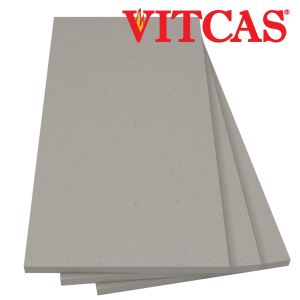 ACC - Heat Accumulation FireboardAs low as £35.99 £29.99 Regular Price £47.99 £39.99
VITCAS® Heat Accumulation Fireboards are high density ceramic refractory panels for heat accumulation and storage. Easy to fix without wires or framework. Fireboards can be used around fireplaces and stoves. Fireboards can eliminate overheating in the room, returning the heat gradually over time.
Read more Heat Accumulation RingSpecial Price £59.99 £49.99 Regular Price £83.99 £69.99
Vitcas Heat Accumulation Ceramic Fire Rings are of a high density, with good thermal conductivity and high heat accumulation and heat storage properties. This refractory ring accumulate the heat from fireplaces or stoves, and return that heat back into the room. Saves money and energy.
Read more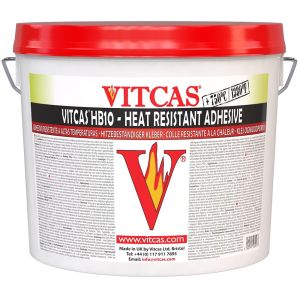 HB10-Rapid Setting Adhesive 750°CAs low as £23.99 £19.99 Regular Price £35.99 £29.99
VITCAS HB10 Rapid Setting Heat Resistant Adhesive for building fireplaces, stoves, tiled stoves and especially with heat accumulation boards. The short working time and setting time facilitates continuous construction without waiting for the material to set.
Read more HB60-Hydraulic Bonded AdhesiveAs low as £23.99 £19.99 Regular Price £35.99 £29.99
Vitcas HB60 is a hydraulically setting, heat-resistant adhesive formulated for fixing tiles, fire bricks, and for use in the construction of stoves, wood-fired pizza ovens, tiled stoves, barbecue grills, and fireplaces. It is also suitable for gap filling and offers an extended working time, allowing for accurate positioning and adjustment during installation.
Read more HPS - Heatproof ScreedAs low as £23.99 £19.99 Regular Price £35.99 £29.99
Fireproof Screed, a cement-like product, is resistant to 1400°C / 2550°F. For interior and exterior use. Its function is for Screeding Masonry and making replacement fire bricks for Kilns, Fireplaces, Barbeques and Pizza Ovens. Protects vulnerable materials, which are in danger of being damaged by high heat exposure.
Read more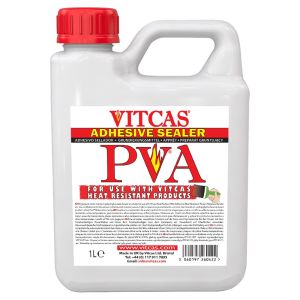 PVA - Adhesive SealerSpecial Price £9.59 £7.99 Regular Price £14.39 £11.99
VITCAS PVA Adhesive Sealer is a high-viscosity, water-resistant, rapid-drying emulsion primer designed for use in conjunction with VITCAS Heat Resistant Products. It is ideal for application on fireboards, tiles, and other porous surfaces.
Read more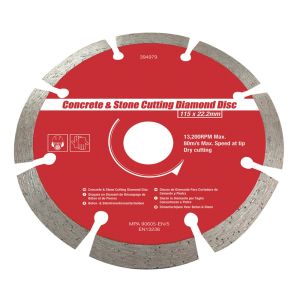 Brick & Concrete Cutting Diamond DiscSpecial Price £5.99 £4.99 Regular Price £8.39 £6.99
Brick & Concrete Cutting Diamond Disc is designed for cutting fire bricks, outdoor pizza oven bases, and concrete materials. It must be attached to a grinder or other power tool for use. The diamond cutting disc is durable and ensures precise cutting across various materials.
Read more
How Heat Accumulation Works in Fireplaces & Stoves
Heat accumulation changes the way heat is delivered from a fireplace or stove by adding thermal mass around the appliance. Instead of allowing all available heat to enter the room immediately, dense refractory materials absorb part of that energy while the fire is operating, store it within their mass and release it progressively as the appliance output falls.
VITCAS heat-storage systems use dedicated accumulation components such as ACC Heat Accumulation Fireboards and ceramic Heat Accumulation Rings. Adhesives, refractory screed and surface-preparation materials support the construction, but it is the density, quantity, position and arrangement of the accumulation material that determine how thermal mass is incorporated into the installation.
This makes heat accumulation particularly useful where the objective is to moderate a rapid release of heat and extend useful warmth beyond the period of peak firing. The actual response of the system depends on the appliance, amount of thermal mass, geometry, surrounding insulation and operating cycle rather than on any single component alone.
ACC Fireboards or Heat Accumulation Rings?
VITCAS uses two different component formats to introduce high-density thermal mass into compatible fireplace and stove systems. They share the same basic heat-storage principle but are suited to different forms of construction.
| Heat accumulation component | Form | Temperature | Key characteristic | Typical role |
|---|---|---|---|---|
| ACC Heat Accumulation Fireboard | High-density ceramic refractory panel | Up to 1400°C | Flat construction format for building thermal-mass surfaces and enclosures | Fireplace and stove surrounds, chimney-breast and purpose-built heat-storage structures |
| Heat Accumulation Ring | High-density ceramic refractory ring | Up to 1400°C | 2400kg/m³ density with high thermal conductivity | Suitable stove tops and areas around compatible flue pipes |
The board format is useful when thermal mass forms part of a built fireplace or stove enclosure. Rings provide concentrated thermal mass in a shaped component that can be positioned around compatible stove or flue arrangements where the installation design permits.
ACC Heat Accumulation Fireboards
VITCAS ACC Heat Accumulation Fireboards are high-density ceramic refractory panels manufactured specifically for heat accumulation and storage around compatible fireplaces and stoves.
The boards absorb heat while the appliance is operating and return it gradually as the immediate heat output reduces. This delayed release can help moderate rapid room heating while retaining useful warmth within the fireplace structure for longer.
ACC Fireboards are rated to 1400°C and are available in two panel sizes:
- 1000 × 500 × 30mm;
- 700 × 400 × 30mm.
The panel format allows purpose-built heat-storage surfaces and enclosures to be formed without a separate wire framework when installed using the specified construction method. The boards can also be cut with suitable masonry cutting equipment where the design requires shaped sections.
ACC Fireboards can accept compatible tiled finishes, allowing thermal mass to be incorporated into a finished fireplace or stove surround rather than remaining as an exposed refractory surface.
Heat Accumulation Rings
VITCAS Heat Accumulation Rings provide a different method of positioning thermal mass around compatible stoves and flue arrangements.
Each ceramic ring has a published density of 2400kg/m³ and good thermal conductivity, allowing it to receive heat efficiently before storing and subsequently releasing that energy into the surrounding room.
| Accumulation Ring specification | Value |
|---|---|
| Height | 200mm |
| Internal diameter | 220mm |
| External diameter | 360mm |
| Density | 2400kg/m³ |
| Temperature capability | Up to 1400°C |
Rings can be used on suitable stove tops or around compatible flue pipes where sufficient support, space and appliance compatibility are provided. Their mass should not simply be added to any stove or flue installation without considering the load, clearances and thermal design of the appliance.
Heat Accumulation vs Thermal Insulation
Heat accumulation and thermal insulation perform almost opposite thermal functions, although a well-designed fireplace or stove structure can require both.
| Function | Heat accumulation | Thermal insulation |
|---|---|---|
| Primary purpose | Absorb and store heat | Restrict or control heat transfer |
| Material behaviour | Deliberately provides thermal mass | Typically uses low thermal conductivity |
| Effect during firing | Accepts part of the generated heat | Limits heat flow towards protected areas |
| Effect after firing | Releases stored heat progressively | Continues to resist heat transfer |
| Typical design role | Heat-storage surfaces, surrounds and mass around compatible stove or flue zones | Protection of adjoining construction and control of unwanted heat transfer |
An accumulation board should therefore not automatically replace an insulating board, and an insulating board should not be expected to provide the same heat-storage effect as a high-density ACC panel.
The position of each layer matters. A thermal-mass layer must be able to receive sufficient heat to perform its storage function, while insulation may be required elsewhere to control the direction in which heat travels and protect surrounding construction.
Building a Heat Accumulation Fireboard System
ACC Fireboards form the heat-storage element, while other VITCAS materials are used to bond, reinforce, prepare or finish the construction.
For a compatible board-based fireplace construction, a VITCAS system can include the following sequence:
- Form the accumulation structure using ACC Heat Accumulation Fireboards.
- Bond the boards using HB10 Rapid Setting Adhesive.
- Prepare suitable porous surfaces with PVA Adhesive Sealer where specified.
- Reinforce the surface with high-temperature fibreglass mesh embedded in a compatible layer of HB60 Hydraulic Bonded Adhesive.
- Apply the appropriate finish where required, such as a compatible heat-resistant plaster system.
The exact construction should still be determined by the appliance, substrate, clearances, desired finish and fireplace design. The accumulation layer does not override the installation requirements of the stove or fireplace.
HB10 or HB60 in a Thermal Mass Construction?
HB10 Rapid Setting Adhesive is particularly relevant to heat accumulation construction because it is specified for bonding ACC Fireboards and other compatible fireplace and tiled-stove components.
HB10 is rated to 750°C and has a short working period of approximately 10 minutes. This allows construction to progress rapidly but requires boards to be measured, prepared and positioned before mixing and application.
HB60 Hydraulic Bonded Adhesive is also rated to 750°C but provides a significantly longer working period of approximately 60 minutes. It is useful where more time is needed for positioning, gap filling or for compatible reinforced finishing layers.
| Adhesive | Working characteristic | Typical role in accumulation construction |
|---|---|---|
| HB10 | Rapid setting, approximately 10-minute working time | Primary bonding and assembly of compatible ACC Fireboards |
| HB60 | Longer working time, approximately 60 minutes | Positioning, suitable gap filling and compatible reinforced surface construction |
The two products should therefore be chosen according to the construction stage and required working characteristics rather than simply comparing their temperature ratings.
Supporting Refractory Construction with Heatproof Screed
HPS Heatproof Screed is a refractory construction material rated to 1400°C. Within a heat accumulation project it can support suitable high-temperature masonry, screeding, build-up and repair work where a cement-like refractory material is required.
HPS is not itself a substitute for an ACC Fireboard or Accumulation Ring. The accumulation components are deliberately manufactured to provide thermal mass in defined board or ring formats, whereas HPS performs a refractory construction and screeding function.
What Determines Heat-Storage Performance?
The length and character of heat release cannot be defined by a single temperature rating. Thermal storage is influenced by the complete system.
Important factors include:
- Quantity of accumulation material – increasing thermal mass changes the amount of energy that can potentially be stored, subject to the appliance and design.
- Material density – dense refractory components provide the mass needed to absorb and retain substantial thermal energy.
- Position relative to the heat source – an accumulation component must receive sufficient heat to charge effectively.
- Surface area and geometry – these influence both heat absorption and later release into the room.
- Surrounding insulation – insulation controls the direction of heat flow and can significantly affect how an accumulation structure behaves.
- Appliance output and firing cycle – the amount and duration of heat available determine how fully the thermal mass is charged.
- Room conditions – room volume, ventilation, heat loss and existing building fabric influence the practical heating effect.
For this reason, a specific number of hours of retained warmth or a fixed percentage reduction in fuel consumption should not be assumed from the accumulation material alone.
Where Thermal Mass Can Be Used
Depending on appliance compatibility and construction design, VITCAS heat accumulation materials can form part of:
- heat-storage fireplace surrounds;
- wood-burning stove enclosures;
- tiled and masonry stove constructions;
- purpose-built thermal mass fireplaces;
- chimney-breast structures designed to store and release heat;
- ACC Fireboard assemblies;
- suitable stove-top heat-storage arrangements;
- compatible heat accumulation systems around flue pipes.
The accumulation material should always be positioned as part of an intentional thermal design. Adding dense refractory mass indiscriminately can change appliance temperatures, heat transfer, loading and clearances rather than automatically improving performance.
Can Thermal Mass Help Moderate Room Overheating?
ACC Fireboards can absorb part of the heat generated during periods of stronger appliance output instead of allowing all of that energy to enter the room immediately. The stored energy is then released more progressively as the fire output decreases.
In a suitably designed system, this can smooth the pattern of heat delivery and make the room less dependent on a short period of intense radiant or convective output followed by rapid cooling.
This effect should not be interpreted as a guaranteed room-temperature control system. The result depends on appliance output, thermal-mass quantity, room heat loss, ventilation, installation geometry and operating practice.
Using Stored Heat More Effectively
The potential economic benefit of thermal mass comes from making more effective use of heat already generated by the fireplace or stove. Energy absorbed during firing remains available within the accumulation structure and can continue to contribute warmth after combustion output has reduced.
This can reduce the need for rapid reheating in suitable installations, but accumulation material does not by itself determine appliance efficiency or fuel consumption. Fuel type, combustion performance, chimney draught, building heat loss and user operation remain important parts of overall heating performance.
Common Heat Accumulation Design Mistakes
- Confusing accumulation with insulation. A dense heat-storage board and a low-conductivity insulation board perform different thermal functions.
- Adding thermal mass without considering structural loading. High-density components add significant weight and require suitable support.
- Assuming more thermal mass is always better. The quantity and location must suit the appliance output and intended heating pattern.
- Positioning accumulation material where it receives insufficient heat. Thermal mass cannot store useful energy unless heat can reach it effectively.
- Ignoring stove clearances. Accumulation materials do not authorise reductions in the appliance manufacturer's specified distances or ventilation requirements.
- Selecting adhesives only by temperature rating. HB10 and HB60 have different working characteristics and construction roles despite having similar temperature capability.
- Using accumulation material as structural support. Boards and rings should be incorporated into a properly supported construction rather than relied upon to correct an unstable installation.
- Expecting a guaranteed heating duration. Stored-heat release depends on the complete thermal system, not on the ACC component alone.
Frequently Asked Questions
What are heat accumulation materials?
Heat accumulation materials are high-density components designed to absorb thermal energy while a fireplace or stove is operating, store it within their mass and release it progressively afterwards. VITCAS solutions include ACC Heat Accumulation Fireboards and ceramic Heat Accumulation Rings.
What is the difference between heat accumulation and insulation?
Heat accumulation deliberately stores heat for later release. Thermal insulation is primarily used to resist or control heat transfer. A fireplace or stove system can require both functions in different layers and locations.
What is the difference between an ACC Fireboard and an Accumulation Ring?
ACC Fireboards are flat ceramic refractory panels used to construct heat-storage surfaces and enclosures around compatible fireplaces and stoves. Accumulation Rings are dense shaped ceramic components designed for suitable stove-top or flue-area installations. Both provide thermal mass but use different geometries and installation methods.
What temperature are VITCAS heat accumulation components rated to?
ACC Heat Accumulation Fireboards and Heat Accumulation Rings are rated to 1400°C. This is the temperature capability of the individual refractory components and does not establish the permissible operating temperature of the complete fireplace, stove, adhesive system or surrounding construction.
How dense is a VITCAS Heat Accumulation Ring?
The published density is 2400kg/m³. Its high density and good thermal conductivity allow the ceramic component to receive and store substantial thermal energy before releasing it progressively.
What adhesive should be used with ACC Heat Accumulation Fireboards?
VITCAS specifies HB10 Rapid Setting Adhesive for compatible ACC Fireboard construction. HB10 provides a short working and setting time, so components should be prepared and aligned before application.
What is the difference between HB10 and HB60?
Both are heat-resistant hydraulic adhesives rated to 750°C, but they have different working characteristics. HB10 has an approximately 10-minute working time and is particularly useful for rapid ACC Fireboard assembly. HB60 provides around 60 minutes for positioning and can also be used in compatible gap-filling and reinforced finishing applications.
Can an ACC Fireboard replace an insulation board?
Not automatically. ACC Fireboard is designed to absorb and store heat, whereas an insulation board is selected primarily to restrict heat transfer. Substituting one for the other can significantly change the thermal behaviour of the fireplace or stove structure.
Can tiles be installed over ACC Heat Accumulation Fireboard?
Yes, compatible tiles can be installed over ACC Fireboard as part of a correctly prepared finishing system. The tile adhesive, surface preparation, tile type and expected surface temperature must all suit the installation.
Can heat accumulation materials be added to an existing stove?
Only where the appliance and surrounding construction are suitable for additional thermal mass. The proposed position, extra weight, clearances, flue arrangement and effect on heat transfer should be considered before adding boards or rings to an existing installation.
Do heat accumulation materials keep a stove warm for longer?
They are designed to absorb energy during firing and release that stored heat after the immediate appliance output decreases. How long the effect lasts depends on the amount and arrangement of thermal mass, appliance output, insulation, room conditions and firing cycle, so one fixed heat-retention time does not apply to every installation.
Do ACC Fireboards or rings need to cure?
The manufactured boards and ceramic rings themselves do not require curing in the same way as a wet-applied refractory material. However, HB10, HB60, Heatproof Screed, plaster or other installation materials used around them must complete their required setting, drying or curing stages before the fireplace or stove is commissioned.