We offer a wide range of high-quality products supplied directly by the manufacturer.
Fast shipping – dispatch even within 24 hours
Tooltip
Orders placed by 12:00 (with correct details and product availability) are usually dispatched on the same business day. Deliveries are carried out in cooperation with reputable external courier companies. The delivery time depends on the selected carrier as well as the size and weight of the shipment — whether courier or pallet freight.
UK warehouse dispatch – Worldwide shipping
Tooltip
Quick dispatch from our UK warehouse with international shipping available.
Secure payments – Visa, Mastercard, AmEx, PayPal, Apple Pay & Google Pay
Tooltip
All transactions are encrypted and secure. We accept payments via Visa, Mastercard, American Express, PayPal, Apple Pay and Google Pay.
14-day returns guarantee
Tooltip
If you change your mind after receiving your order, you have 14 days to return the goods. Please contact us to request a returns form.
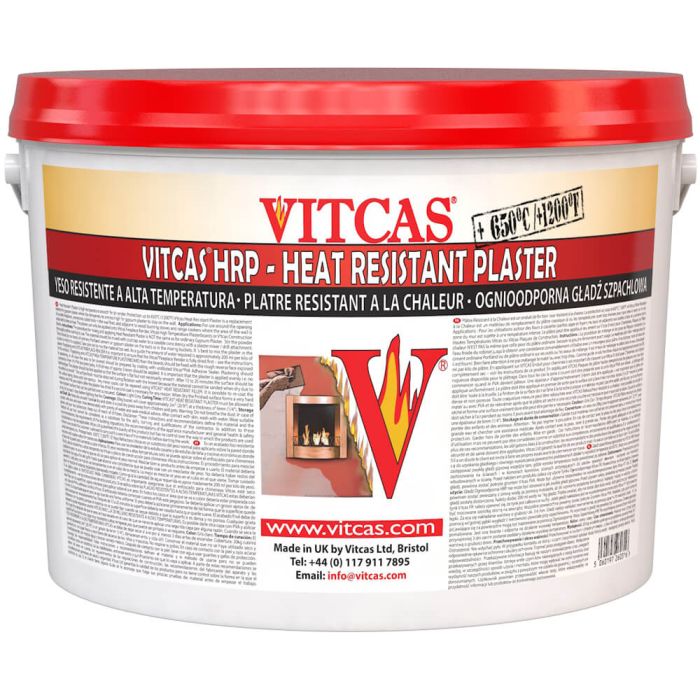
Vitcas Heat Resistant Plaster is a high-temperature smooth finish render, offering protection up to 650°C / 1200°F. It is a perfect replacement for gypsum plaster in areas where high temperatures would cause traditional plaster to fail. Heat resistant plaster is ideal for use around inset fireplaces, cassette stoves (hole-in-the-wall fires) and adjacent to wood-burning stoves and range cookers, where the wall is exposed to intense heat. The mixing and application process for heat resistant plaster differs from ordinary gypsum plaster.
Preparation:
The heat resistant plaster should be used in areas exposed to intense heat, covering approximately 3m² (32 ft²) around the fire opening, and can also be applied across the entire chimney breast and areas adjacent to the heating appliance.
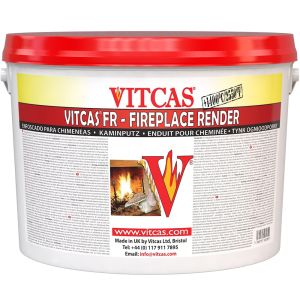
The plaster can only be applied onto Vitcas Fireplace Render or Vitcas High Temperature Plasterboards. It is recommended to render and plaster the whole chimney breast using the Vitcas Render & Plaster System.
The maximum recommended thickness is 6mm. If applying onto Vitcas Fireplace Render, it is crucial to ensure that the render is fully dried before applying the plaster. The fireplace render should be left to dry for at least 3 days at temperatures above +20°C and longer if moisture is still present, as indicated by the colour of the material. If possible, apply heat after day one (i.e., light the fire or use a heater).
When applying onto Vitcas HT High Temperature Plasterboard, ensure that the boards are fixed with the rough reverse face exposed for plastering.
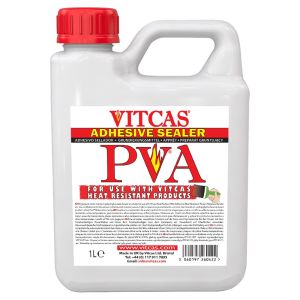
In both cases, prepare the area by coating it with undiluted Vitcas PVA Adhesive Sealer. Begin plastering once the PVA becomes tacky.
Application:
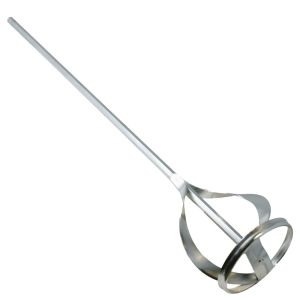
The material should be mixed with cold tap water to a usable consistency using a plaster mixer or drill attachment. Make sure no traces of Portland cement or gypsum plaster are present on tools or in mixing buckets.
It is recommended to mix the plaster in the bucket it is supplied in, and care should be taken not to mix the material too wet. As a guide, use approximately 200ml of water per 1 kg of plaster.
Apply a layer of 3-6mm evenly, avoiding feather edges. The plaster should first be applied so that the surface is flat but not necessarily smooth. After 15-20 minutes, trowel the surface to achieve a smooth finish.
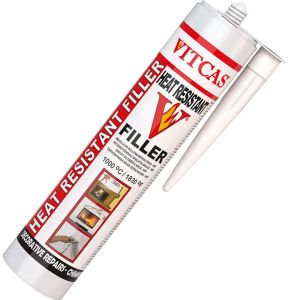
The surface finish must be obtained during trowelling, as the plaster cannot be sanded when dry due to its dense and non-porous nature. Any minor cracks can be repaired using Vitcas HRF Heat Resistant Filler.
It is possible to re-coat the material with Vitcas PVA Adhesive Sealer and re-skim after the heat resistant plaster has dried, if a second coat is necessary for any reason. When fully dry, the finished surface forms a hard, heat-resistant layer that can be painted over as needed.
For detailed instructions, you can also read ourinstruction manualon how to use Heat Resistant Plaster & Fireplace Render and watch the Vitcas Heat Resistant Plaster YouTube video.
Coverage: 10kg bucket of plaster covers approximately 1m² at a thickness of 6mm (10.8 ft² at 1/4 inch thickness)
Storage & Safety: Store unused material in a cool, dry place, away from children and pets. Avoid breathing dust, and in case of contact with skin or eyes, rinse immediately with water and seek medical advice. Use suitable gloves and eye protection.
Disclaimer: These recommendations guide the use of this product but cannot replace professional expertise. Ensure compliance with building regulations and health and safety standards. Vitcas guarantees product quality but not how it's applied. Testing before starting work is advised.
Can heat-resistant plaster be applied directly onto brickwork?
Answer
The heat resistant plaster should only be applied over VITCAS FR Fireplace Render, VITCAS HT High Temperature Fireboard or VITCAS CS Insulation Board. Brickwork and masonry should first receive the appropriate FR fireplace render rather than being skimmed directly. Using the specified substrate helps create a suitable base for the smooth heat-resistant finishing coat.
Question
How should the surface be prepared before plastering?
Answer
The substrate must be stable, dry and correctly installed. Coat VITCAS FR Fireplace Render or the rough reverse face of VITCAS HT High Temperature Fireboard or VITCAS CS Insulation Board with undiluted VITCAS PVA Adhesive Sealer. Begin plastering when the sealer becomes tacky. FR Fireplace Render should be allowed to dry for at least three days above 20°C, and longer if moisture remains.
Question
How much water is needed to mix the plaster?
Answer
Use approximately 200ml of cold tap water for each kilogram of HRP heat resistant plaster. Mix with a clean plaster mixer or drill attachment until a workable consistency is achieved, taking care not to make the mixture too wet. Buckets and tools must contain no traces of gypsum plaster or Portland cement, as contamination may affect the material.
Question
How thick should heat-resistant plaster be applied?
Answer
Apply an even layer between 3mm and 6mm thick, without creating feathered edges. First level the surface, then trowel it after approximately 15–20 minutes to produce the smooth finish. Do not exceed the recommended 6mm thickness; deeper or uneven areas should be corrected with the appropriate underlying render before plastering.
Question
Can the VITCAS HRP heat resistant plaster be sanded after it has dried?
Answer
The dry VITCAS HRP plaster forms a dense, non-porous surface that cannot be sanded like conventional gypsum plaster. The required smooth finish must therefore be achieved during trowelling. Minor cracks can be repaired with VITCAS HRF Heat Resistant Filler, while a larger finishing issue may require sealing with VITCAS PVA and applying another skim coat.
Question
How long should the heat resistant plaster dry before finishing?
Answer
The drying time is 72 hours at temperatures above 20°C. Cooler or damp conditions may extend this period, so the surface should be fully dry before it is painted or exposed to operating heat. Allowing adequate drying helps prevent retained moisture from affecting the completed heat-resistant finish.
Question
Can heat-resistant plaster be painted after application?
Answer
Yes. Once the plaster has dried fully, its hard, smooth surface can be painted, and emulsion may be applied directly without a mist coat. Painting provides the required decorative appearance but does not add heat resistance. Ensure the underlying render, plaster and any repaired areas are completely dry before decorating.
Question
Can ordinary plaster be used near a fireplace or stove?
Answer
No. Ordinary gypsum plaster may fail when exposed to intense heat. VITCAS HRP Heat Resistant Plaster provides a smooth finishing layer resistant to temperatures up to 650°C. It is intended for heated areas around inset fireplaces, cassette stoves, wood-burning stoves and range cookers, provided the correct heat-resistant substrate and preparation system are used.