
Build a Brick Barbecue Grill
Refractory Materials for Building a Brick Barbecue Grill
Build a durable outdoor barbecue by separating the load-bearing structure from the high-temperature firebox. Dense VITCAS fire bricks provide refractory strength and thermal mass around the fuel bed, while 64 mm and 32 mm formats allow the lining thickness to be matched to the design. Red, brown, sand-yellow and off-white fire bricks add heat-resistant colour to visible masonry without relying on ordinary facing bricks in the hottest zones.
The nine listed products also include VITCAS-OC Outdoor Oven Cement for exterior firebrick joints, VITCAS-HB60 Hydraulic Bonded Adhesive for compatible heat-exposed fixing applications up to 750°C, and VITCAS-HPS Heatproof Screed for protective screeding, forming refractory sections and filling larger voids. Select each material according to its position, joint geometry and maximum service temperature. Provide a stable non-combustible base, suitable metal fuel and cooking grates, controlled airflow and safe clearances from combustible objects. Allow all wet-applied materials to cure and dry fully before lighting a small commissioning fire. A solid-fuel barbecue must only be operated outdoors in a well-ventilated, open location.
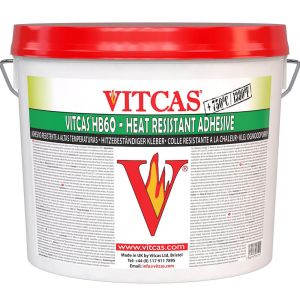 HB60-Hydraulic Bonded AdhesiveAs low as £23.99 £19.99 Regular Price £35.99 £29.99
Vitcas HB60 is a hydraulically setting, heat-resistant adhesive formulated for fixing tiles, fire bricks, and for use in the construction of stoves, wood-fired pizza ovens, tiled stoves, barbecue grills, and fireplaces. It is also suitable for gap filling and offers an extended working time, allowing for accurate positioning and adjustment during installation.
Read more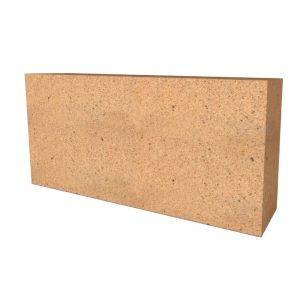 Fire Bricks 230x114x64mmSpecial Price £2.40 £2.00 Regular Price £4.79 £3.99 As low as £2.04 £1.70
Fire Bricks – VITCAS Refractory Fire Clay Bricks 230x114x64mm. High-temperature fire bricks engineered for domestic and outdoor use, including fireplaces, stoves, pizza ovens, barbecue grills, heating appliances and furnaces. Suitable for both indoor and outdoor pizza ovens, these durable refractory fire bricks deliver excellent heat resistance and long-lasting thermal performance.
Read more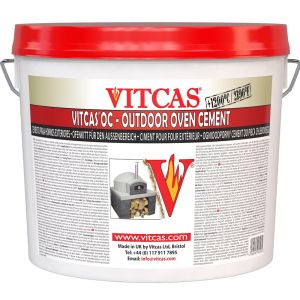 OC - Outdoor Oven CementAs low as £17.99 £14.99 Regular Price £23.99 £19.99
Vitcas Outdoor Pizza Oven Cement is an hydraulic-set mortar designed for exterior jointing with fire bricks in applications such as pizza ovens, barbecues, smokehouses, bread ovens, fire pits and other high-temperature applications. This kind of outdoor fire cement is water-insoluble, resistant to rain and frost and cures without the need for heat.
Read more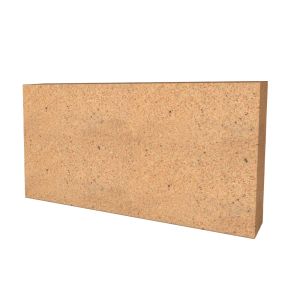 Fire bricks 230x114x32mmSpecial Price £2.40 £2.00 Regular Price £4.79 £3.99 As low as £1.56 £1.30
VITCAS Refractory Fire Bricks are expertly crafted for use in a variety of high-temperature domestic applications. Ideal for wood burning stoves, solid fuel cookers, ranges, fireplaces, barbecues and wood-fired pizza ovens, they are designed to efficiently manage intense heat. Whether you're baking a pizza or cosying up by the fireplace, these bricks ensure durability and optimal heat distribution.
Read more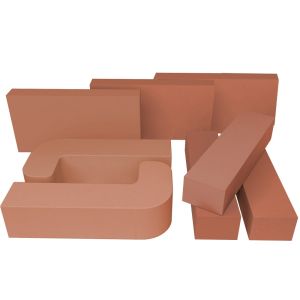 VITCAS Fire Bricks-Red£3.00 £2.50 Regular Price £4.80 £4.00
Red Fire Bricks, expertly manufactured for both function and beauty. These red-hued bricks are perfect for adding a touch of colour and elegance to any setting. Ideal for use in fireplaces, wood-fired ovens, barbeques, and other heating applications, they not only enhance the aesthetic appeal of your space but also provide durable and efficient heat resistance.
Read more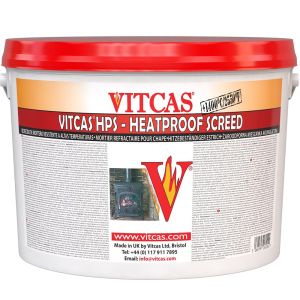 HPS - Heatproof ScreedAs low as £23.99 £19.99 Regular Price £35.99 £29.99
Fireproof Screed, a cement-like product, is resistant to 1400°C / 2550°F. For interior and exterior use. Its function is for Screeding Masonry and making replacement fire bricks for Kilns, Fireplaces, Barbeques and Pizza Ovens. Protects vulnerable materials, which are in danger of being damaged by high heat exposure.
Read more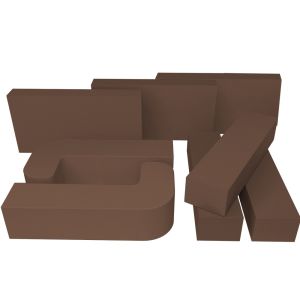 VITCAS Fire Bricks-Brown£3.00 £2.50 Regular Price £4.80 £4.00
Earthy Brown Fire Bricks, exuding a natural, earth-toned radiance. Made to complement any setting, these bricks emanate rustic elegance and organic beauty. Perfectly suited for fireplaces, outdoor pizza ovens and barbeques, they not only enhance your space with their warm, earthy hues but also offer outstanding durability and superior heat resistance.
Read more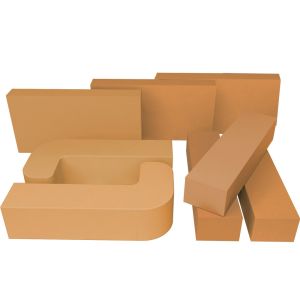 Vitcas-Fire Bricks-Yellow£3.00 £2.50 Regular Price £4.80 £4.00
Sand Yellow Fire Bricks - where functionality meets a warm aesthetic. Their soft, sand-yellow hue evokes the tranquillity of sunlit beaches, adding a light, airy touch to any setting. Ideal for fireplaces, garden wood-fired pizza ovens and barbeques, due to their exceptional heat resistance and enduring quality.
Read more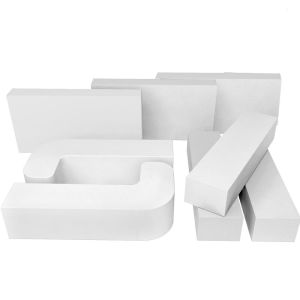 Vitcas-Fire Bricks-White£3.00 £2.50 Regular Price £4.80 £4.00
Coloured Fire Bricks in an antique Off White shade. These firebricks are perfect for decorative purposes in both interior and exterior settings. Ideal for use in wood-fired bread and pizza ovens, barbeques and fireplaces, they add a sophisticated touch to any space while offering functional versatility.
Read more
How to Plan and Build a Durable Brick Barbecue
A permanent brick barbecue is a small refractory structure rather than simply a stack of ordinary bricks around a metal grate. The design must carry its own weight, tolerate repeated heating and cooling, shed rainwater and keep intense radiant heat away from fences, sheds, trees, decking and other combustible materials. The firebox, joints, supporting masonry, fuel grate and cooking grid each perform a different duty, so no single product should be expected to meet every requirement.
This application category contains nine VITCAS products covering dense refractory bricks, decorative coloured fire bricks, exterior firebrick jointing, heat-resistant fixing and protective screeding. They support the heat-exposed parts of a barbecue but do not constitute a complete construction kit. A finished installation will also require a suitable foundation, general structural masonry where specified, non-combustible work surfaces, corrosion-resistant metal supports, a fuel grate, an adjustable cooking grid and a safe method of removing ash.
Separate the Barbecue into Functional Zones
| Construction Zone | Main Duty | Material Requirement |
|---|---|---|
| Foundation and plinth | Support the full mass of the barbecue without settlement or movement | Stable, level and non-combustible construction designed for the ground conditions and imposed load |
| Outer supporting structure | Carry the firebox, shelves and cooking-grid supports | Weather-resistant structural masonry kept within its permissible temperature exposure |
| Firebox and fuel zone | Contain charcoal or wood embers and withstand flame, radiant heat and thermal cycling | Dense refractory fire bricks with a compatible high-temperature jointing material |
| Grate-support courses | Hold the fuel and cooking grids securely at the required levels | Accurately laid heat-resistant masonry and purpose-made metal supports that remain stable when hot |
| Visible heat-exposed finish | Provide a durable appearance around the cooking opening | Refractory or decorative fire bricks selected for the local temperature and weather exposure |
| Joints and local voids | Transfer load, accommodate the selected brick layout and prevent loose gaps | Outdoor refractory cement for normal joints and suitable screed for larger filling or forming work |
VITCAS Product Selection for Brick Barbecues
| Product | Published Rating | Suitable Barbecue Role | Selection Note |
|---|---|---|---|
| FB40/64MM Fire Bricks, 230 × 114 × 64 mm | Up to 1300°C | Dense firebox masonry, fuel-zone protection and heat-retaining refractory construction | The 64 mm thickness provides greater thermal mass than the 32 mm format; allow for stated manufacturing tolerances when setting out |
| VITCAS-HB60 Hydraulic Bonded Adhesive | Up to 750°C when correctly applied and fully cured | Fixing compatible tiles, fire bricks, boards and associated components in suitably specified heat-exposed zones | It is not interchangeable with a 1200°C exterior firebrick mortar; keep it within its temperature and substrate limitations |
| VITCAS-OC Outdoor Oven Cement | Up to 1200°C | Exterior jointing of fire bricks in weather-exposed barbecue masonry | Hydraulically setting and resistant to rain and frost after correct installation; use HPS for gaps above 15 mm |
| FB40/32MM Fire Bricks, 230 × 114 × 32 mm | Up to 1300°C | Slim refractory lining, local heat protection and firebox details where a 32 mm format is appropriate | A thinner brick does not provide the same thermal mass or section depth as the 64 mm format; verify support and joint layout |
| FB-RED VITCAS Coloured Fire Bricks | Up to 1200°C | Heat-resistant red finish for visible barbecue masonry and compatible firebox details | Natural shade, texture and dimensional variation should be expected; fire and weather can alter the appearance over time |
| VITCAS-HPS Heatproof Screed | Up to 1400°C | Protective refractory screeding, forming compatible sections and filling larger high-temperature voids | A coarse cementitious screed rather than a thin adhesive or low-conductivity insulation; cure, dry and preheat progressively |
| FB-BROWN VITCAS Coloured Fire Bricks | Up to 1200°C | Brown refractory finish for traditional or rustic outdoor cooking structures | Check the selected format, quantity and joint pattern before ordering; colour variation is a characteristic of fired clay |
| FB-YELLOW VITCAS Coloured Fire Bricks | Up to 1200°C | Sand-yellow heat-resistant finish for visible courses and design features | Dry-lay representative bricks first so natural shade differences can be distributed across the elevation |
| FB-WHITE VITCAS Coloured Fire Bricks | Up to 1200°C | Off-white refractory finish for contemporary or traditional barbecue designs | Soot, smoke and cooking deposits will be more visible on a pale surface, so provide access for appropriate cleaning |
A published temperature rating applies to the product under its specified conditions; it is not a design temperature for the entire barbecue. The supporting masonry, adhesive, metalwork and nearby construction may have much lower limits. Select the complete assembly according to the actual heat path, exposure duration, weather conditions and maintenance regime.
Choosing Between 64 mm and 32 mm Fire Bricks
Both buff firebrick formats are rated to 1300°C and contain a published minimum of 40% alumina. The 230 × 114 × 64 mm brick weighs approximately 3.5 kg and is generally the stronger choice where a substantial refractory section and useful thermal mass are required around the fuel bed. The 230 × 114 × 32 mm brick weighs approximately 1.75 kg and is useful where a slimmer lining or detail is needed.
Thickness should not be selected from price or appearance alone. Consider support, span, impact from fuel, grate loads, the frequency of firing and the temperature permitted at the back of the lining. Dense fire bricks store heat but are not equivalent to a dedicated low-conductivity insulation product. Where heat transfer towards surrounding construction is critical, obtain a competent design for the complete wall build-up and required clearances.
Using Outdoor Oven Cement, HB60 and Heatproof Screed Correctly
VITCAS-OC is the principal listed product for jointing fire bricks in an outdoor barbecue. It is supplied as a dry powder, mixed with approximately 200 ml of water per kilogram and applied to prepared, wetted fire bricks. The published guidance permits joints from 3 mm and directs filling above 15 mm to VITCAS-HPS. A 10 kg container provides indicative coverage for approximately 15 standard 230 × 114 × 64 mm bricks, or about 0.44 m² at a 10 mm joint, but actual consumption depends on brick tolerance, joint depth, waste and workmanship.
VITCAS-HB60 is a hydraulically bonded adhesive rated to 750°C after full cure. It can fix compatible tiles, fire bricks and construction boards in appropriate locations, and its working time supports careful positioning. It should not be substituted automatically for OC in the most severe or weather-exposed firebrick joints. Match the adhesive to the substrate, anticipated temperature and current application instructions.
VITCAS-HPS is rated to 1400°C and contains aggregate up to 5 mm. Use it where a trowellable refractory screed, moulded section or larger high-temperature fill is required. It is not a fine-joint adhesive and should not be described as the barbecue's main insulation layer. The installed screed must be kept cool and damp for the initial 24-hour cure, allowed a further 48 hours of natural drying and then preheated gently before normal firing.
Recommended Construction Sequence
- Select a safe position. Choose level, non-combustible ground in an open outdoor location, well away from buildings, fences, sheds, trees, dry vegetation and other materials that can ignite. Do not locate the barbecue on a balcony or combustible decking.
- Determine the finished layout. Set the firebox width, cooking-grid levels, fuel-grate position, ash access and work-surface dimensions before ordering materials.
- Provide a stable foundation. Design the base for the total masonry and metalwork load and for local ground conditions. Prevent settlement, rocking and retained water beneath the structure.
- Build the supporting masonry. Keep ordinary structural materials outside temperatures they are not designed to withstand. Allow for firebrick thickness and the intended joint width.
- Dry-lay the refractory courses. Check bond, cuts, dimensional tolerances and metal support positions. Mix coloured bricks from different packs to distribute natural shade variation.
- Install the firebox materials. Use the specified refractory jointing or fixing product at the correct thickness. Do not bridge large voids with an adhesive intended for thin or controlled application.
- Fit metal supports securely. Use purpose-made, heat-resistant fuel and cooking grates. Provide multiple cooking heights without leaving loose projections that can dislodge hot food or fuel.
- Finish larger refractory details. Apply HPS only to correctly prepared surfaces and at locations suited to a cementitious screed or formed refractory section.
- Protect the structure from water. Shape horizontal surfaces to drain and cover the cooled barbecue when not in use, without trapping moisture inside uncured masonry.
- Cure and commission gradually. Observe the current instructions for every wet-applied material. Begin with a small fire only after the assembly has cured and dried, then increase the heat progressively while checking the joints and metal supports.
Safe Operation and Maintenance
- Use a solid-fuel barbecue only outdoors in an open, well-ventilated location. Never light it in a room, garage, tent, caravan, shed or other enclosed space.
- Keep the barbecue on stable, non-combustible ground and maintain safe separation from anything that can catch fire.
- Do not use petrol, paraffin or other accelerants. Use a suitable lighting method intended for barbecue fuel.
- Never leave the fire unattended. Keep children, pets and combustible garden items outside the working area.
- Allow ash and embers to extinguish and cool completely before disposal. Smouldering fuel can remain hot and continue to produce carbon monoxide.
- Clean the cooking grid before use and keep raw-food utensils separate from equipment used for cooked or ready-to-eat food.
- Inspect refractory joints, loose bricks, metal supports and corrosion before each season. Repair defects with a material suited to the location rather than covering movement with an unsuitable surface coating.
Frequently Asked Questions
What materials are needed to build a brick barbecue grill?
A typical build requires a stable foundation, structural supporting masonry, dense fire bricks for the firebox, a compatible outdoor refractory jointing material, heat-resistant metal supports, a fuel grate, a cooking grid and safe ash access. The listed VITCAS products cover refractory bricks, exterior cement, heat-resistant adhesive, protective screed and decorative firebrick colours; they are not a complete barbecue kit.
Can ordinary house bricks be used inside a barbecue firebox?
Ordinary bricks and conventional masonry products should not be assumed suitable for direct flame or repeated severe thermal cycling. Use refractory fire bricks in the fuel and flame zone, and keep supporting materials within their declared temperature and exposure limits.
Should I use 64 mm or 32 mm fire bricks?
Use 64 mm fire bricks where the design needs a more substantial refractory section, greater thermal mass and stronger resistance to routine fuel loading. The 32 mm format is suitable for slimmer linings and details with adequate support. The correct choice depends on the barbecue geometry, heat path and mechanical loads.
Which mortar should I use for an outdoor brick barbecue?
VITCAS-OC Outdoor Oven Cement is the listed exterior refractory mortar for jointing fire bricks and is rated to 1200°C. HB60 is a separate hydraulically bonded adhesive rated to 750°C for compatible fixing applications. HPS Heatproof Screed is used for larger fills, screeding and forming work rather than normal firebrick joints.
Is Outdoor Oven Cement waterproof?
Once correctly mixed and set, VITCAS-OC is water-insoluble and formulated to resist rain and frost. This does not make the complete barbecue waterproof. The masonry still needs good detailing, drainage, curing and protection from prolonged saturation.
How long should a new brick barbecue dry before its first fire?
Follow the current instructions for every installed product and allow for weather, joint depth and substrate moisture. VITCAS-OC has a published drying time of approximately 24 hours at 20°C. HPS requires an initial 24-hour cool, damp cure followed by a further 48 hours of natural drying and gentle preheating. The complete structure may require longer, so do not commission it while moisture remains trapped in the masonry.
Can coloured fire bricks be used in a barbecue?
Yes. The listed red, brown, sand-yellow and off-white VITCAS fire bricks are rated to 1200°C and are suitable for heat-resistant decorative applications, including barbecue structures. Confirm the selected brick format and use compatible jointing. Expect natural variations in shade, texture and dimensions, together with possible appearance changes caused by heat, smoke and weather.
Can a brick barbecue be used beneath a roof or inside a building?
A domestic solid-fuel barbecue should be used outdoors in an open, well-ventilated location. Never light one in an enclosed space because combustion produces carbon monoxide and creates serious fire and smoke hazards. Any commercial or specially enclosed cooking installation requires competent design, suitable extraction, fire precautions and compliance with the applicable local requirements.
How can cracking in a new barbecue be reduced?
Use compatible materials, maintain the specified joint dimensions, avoid mixing products excessively wet and let every layer cure and dry fully. Commission the barbecue with a small fire and increase the heat gradually. Stable foundations, drainage and protection from water also reduce movement and freeze-thaw damage.
How do I know when barbecue food is safely cooked?
Do not judge food safety from surface charring alone. Use clean utensils and a clean food thermometer where appropriate. Food Standards Agency guidance states that the centre should reach 70°C for two minutes or an equivalent time-and-temperature combination. Poultry, pork, burgers, sausages and kebabs must be cooked thoroughly, and raw food must be kept separate from cooked and ready-to-eat food.