We offer a wide range of high-quality products supplied directly by the manufacturer.
Fast shipping – dispatch even within 24 hours
Tooltip
Orders placed by 12:00 (with correct details and product availability) are usually dispatched on the same business day. Deliveries are carried out in cooperation with reputable external courier companies. The delivery time depends on the selected carrier as well as the size and weight of the shipment — whether courier or pallet freight.
UK warehouse dispatch – Worldwide shipping
Tooltip
Quick dispatch from our UK warehouse with international shipping available.
Secure payments – Visa, Mastercard, AmEx, PayPal, Apple Pay & Google Pay
Tooltip
All transactions are encrypted and secure. We accept payments via Visa, Mastercard, American Express, PayPal, Apple Pay and Google Pay.
14-day returns guarantee
Tooltip
If you change your mind after receiving your order, you have 14 days to return the goods. Please contact us to request a returns form.
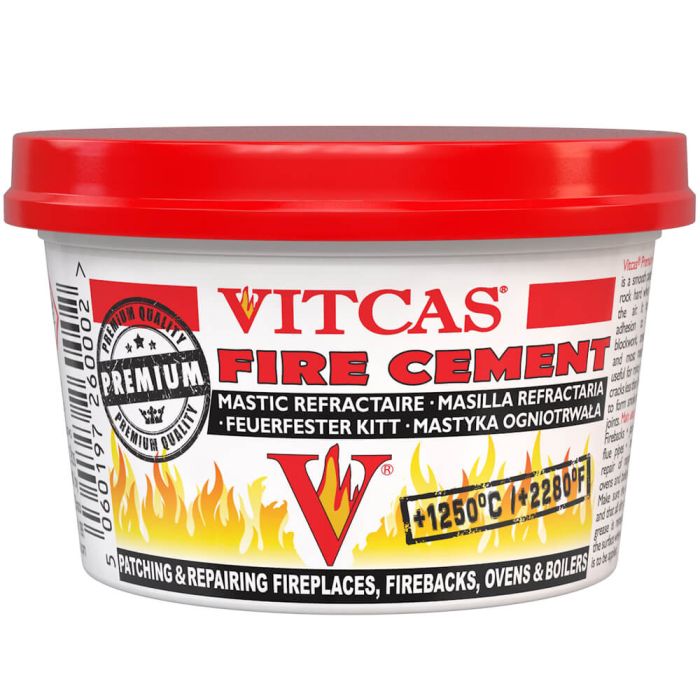
Vitcas Premium Fire Cement is a ready-to-use, putty-like product that can withstand temperatures up to 1250°C / 2280°F. Its high heat resistance makes it ideal for repairing fire bricks, fireplaces, stoves, boilers, and various other heating systems. Premium fire cement offers exceptional bonding for sealing, jointing, and repairing areas exposed to high temperatures.
Key Uses of Fire Cement:
Sealing and jointing internal flue pipes.
Repairing small cracks and damage on firebricks.
Fixing firebacks.
Performing seals and small repairs on fireplaces, gas cookers, stoves, ranges, central heating systems, and boilers.
Preparation: To ensure maximum adhesion, thoroughly clean the area by removing any dirt, dust, and rust. The surface should be completely clean before application.
Application Instructions:
Use Premium Fire Cement directly from the tub.
Apply with a trowel, knife, or by hand, working the material well into the area.
Fine joints can be made.
Gently heat dry the repaired surfaces as soon as possible, gradually increasing the temperature to full operating levels over 3-4 hours.
If fine cracks appear during the drying process, apply an additional layer of fire cement.
Storage: Keep unused material dry and store in a cool, dry place away from children and pets. In case of contact with skin or eyes, rinse immediately with plenty of water and seek medical advice. Wear gloves and eye/face protection during use.
Limitations & Alternative Product Recommendations:
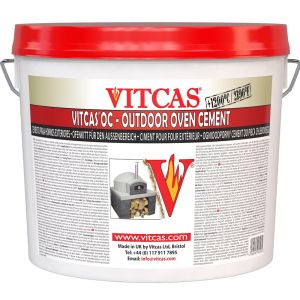
Premium Fire Cement is not suitable for prolonged contact with moisture or for outdoor applications. In such cases, we recommend using Vitcas HPS Heatproof Screed or OC Outdoor Oven Cement for optimal performance.
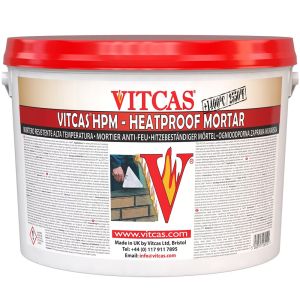
For mortar applications, such as jointing fire bricks, we suggest Vitcas HPM Heatproof Mortar, specifically designed for secure, heat-resistant bonding.
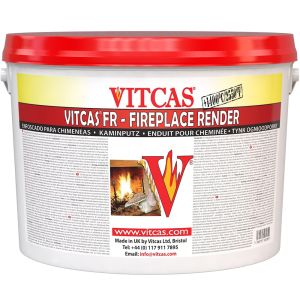
When rendering, opt for Vitcas FR Fireplace Render, which is formulated to provide excellent heat resistance and a durable finish in high-temperature environments.
Disclaimer: These recommendations provide guidance on product use but do not substitute for the skills or qualifications of a trained contractor. Ensure compliance with building regulations, appliance manufacturer recommendations and health & safety standards. Vitcas guarantees product quality but is not responsible for how the product is applied. Perform a test if unsure before starting the project.
Can I use this fire cement to repair cracked firebricks?
Answer
Yes. VITCAS Premium Fire Cement is suitable for repairing small cracks and minor damage in firebricks, firebacks, fireplaces and stoves. Remove all dirt, dust and rust before application, then work the cement firmly into the damaged area. It is intended for small repairs rather than rebuilding or jointing complete firebrick installations.
Question
Is Premium Fire Cement supplied ready to use?
Answer
Yes. The VITCAS fire cement has a ready-to-use, putty-like consistency, so no water or separate mixing is required. Apply it directly from the container using a trowel, knife or by hand. Keeping the surface clean before application helps the material achieve reliable adhesion.
Question
Can I use it to seal an internal flue pipe?
Answer
Yes. The product is suitable for sealing and jointing internal flue pipes where a heat-resistant cement is required. The joint must be clean and free from dust, dirt and rust before application. It is not suitable for external flue work or areas exposed to prolonged moisture.
Question
How should the repaired area be dried and cured?
Answer
Allow approximately 4–5 hours for drying at 20°C. Cure for 12 hours at a temperature above 100°C, for example by using the heating appliance. The repaired surface should then be heated gently, gradually increasing the temperature to the appliance’s full operating level over 3–4 hours. If fine cracks appear during this process, apply a further layer of fire cement where required.
Question
What maximum temperature can this fire cement withstand?
Answer
VITCAS Premium Fire Cement is rated for temperatures up to 1250°C. This makes it suitable for sealing, jointing and small repairs in high-temperature areas such as fireplaces, stoves, internal flue pipes, boilers and ranges. For project-specific operating conditions, confirm that the installation remains within the stated temperature limit.
Question
Can Premium Fire Cement be used outdoors?
Answer
No. The cement is intended for indoor use and is not suitable for prolonged contact with moisture or outdoor exposure. For external applications, VITCAS recommends a product designed for those conditions, such as OC Outdoor Oven Cement or HPS Heatproof Screed, depending on the type of installation.
Question
Is this suitable for laying and jointing firebricks?
Answer
It can be used for small firebrick repairs and fine joints, but it is not the recommended material for full mortar applications or constructing complete firebrick assemblies. For laying and jointing firebricks, VITCAS HPM Heatproof Mortar is the more appropriate product.
Question
How should I prepare the surface before applying fire cement?
Answer
Thorough preparation is essential because dust, loose material and corrosion can reduce adhesion. Remove all dirt, dust and rust, and make sure the surface is completely clean before applying the cement. Work the material firmly into the joint or repair rather than placing it loosely over the surface.